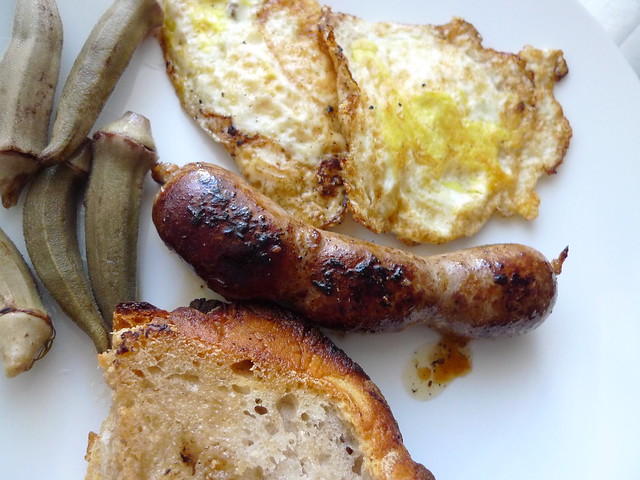
• Filipinos like their meat, but we especially love our pork. We love it so much that we will eat it three times a day–for breakfast, lunch and dinner. To start a traditional Filipino day, longganisa (also longaniza), or Filipino sausage, is one of the meat choices that pair up with eggs and fried rice. All three in one dish combined make longsilog: longganisa for “long”; sinangag, or fried rice, for “si”; itlog, or egg, for the “log”. All over the Philippines, you will encounter different combinations of -silogs.

    I usually dash out of the apartment during the week and eat a simple breakfast of yogurt with fruit or Three Sisters cereal when I get to work, but on weekends I splurge on time and make myself a huge breakfast especially if I’m coming from a morning bike ride around Central Park. That breakfast always includes eggs and some type of meat, be it bacon or leftover steak from the night before. I rarely have cooked rice at home (it’s a lot to waste when you’re living on your own), so my fallback is usually a salad or a type of vegetable, even if it’s a pickle. Down the list of breakfast meats after bacon that I like comes longganisa because it has a touch of sweetness and tastes so damn good with a dash of vinegar. My mouth is watering just thinking of sticky-sweet longganisa and runny fried eggs on top of hot fried rice.

    I promised myself that before the year ends, I will make my own sausages and use the attachments that I bought for my KitchenAid stand mixer. So during the long Thanksgiving weekend, I stayed busy in the kitchen and finally made them. I had asked my mother for a recipe because she’s originally from the province of Pampanga where longganisa is famous. She showed me an old copy of a Filipino recipe that used phosphate and food coloring! Fail! I then turned to my copy of Memories of Filipino Kitchens and substituted the rice wine and the rice vinegar for plain white vinegar and added brown sugar for the sweetness that I crave in these sausages. Their recipe also used lime zest which I thought was pretty interesting even though it got lost in the mix, so I have eliminated it from this version.

    I learned a few important things when I made my own sausage links for the first time:
    1. Making sausages is hard work, so another pair of hands is always helpful.
    2. Keep lemon handy. The smell of meat will stay on your fingers for several hours and I found only lemon juice removed the odor.
    3. White bread was invented to clean off your food grinder and sausage stuffer attachments.
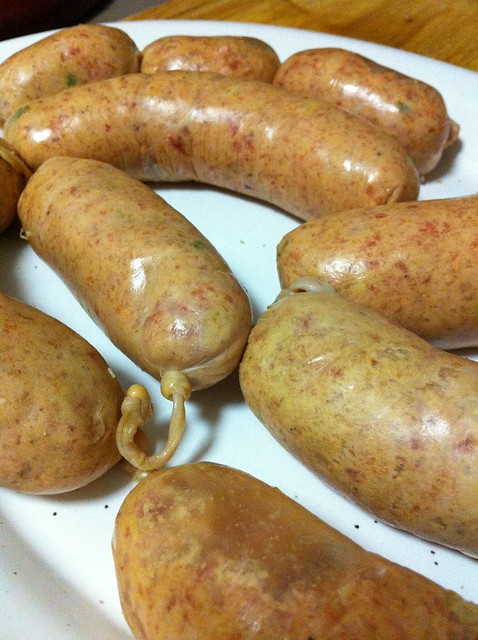
    This is a two-type recipe for longganisa. One is the easy way without any equipment or casings which makes the sausages naked, or hubad in Tagalog. The other is for sausage links which requires both the food grinder and sausage stuffer attachments with your KitchenAid stand mixer, plus sausage casings from your well-stocked butcher shop.

    Ingredients:
    2 tbsps vinegar
    2 tbsps brown sugar
    3 cloves garlic, minced
    salt
    pepper
    oil

    If making them naked:
    1 pound pork belly, grounded
    1/2 pound lean beef, grounded

    1. Add all ingredients together in a large mixing bowl and mix with your hands. Knead the meat until it holds together and you can shape the mixture into patties. Wrap in wax paper to store in the fridge or keep in the freezer.
    2. To fry longganisa patties, heat some oil in a deep skillet. Add longganisa and fry using low-medium fire until both sides are browned. Crumble and break into pieces and serve with two eggs, preferably over easy.

    If making links:
    1 pound pork belly, cut into 1-inch chunks
    1/2 pound lean beef, cut into 1-inch chunks
    sausage casings, soaked overnight in cold water, rinsed
    white bread slices

    1. Combine all the meats with the spices except the oil. Massage with your hands to mix well. Marinate for at least an hour or overnight in the fridge.
    2. When ready to make links, assemble the food grinder and sausage stuffer attachments with your mixer. Select a length of casing and run water from the tap through it in order to clear out any excess salt and spot any holes. Trim to remove the holes. Run the casing between your fingers to remove excess water. Stretch the open end of the casing around the attachment’s nozzle and gradually slide the rest of the casing onto the nozzle, an inch or 2 at a time, trying not to twist. Leave about 3 inches at the knotted end dangling free. This will be your end knot.
    3. Ground the meat and stuff the casing. Put the meat mixture in the hopper of the grinder and turn it on to speed 4. Hold the dangling casing with one hand, and with the other, feed the meat into the hopper with the plastic or wooden pestle at an even pace. Your stuffer will slowly stuff the ground meat into the casing. Gently guide the rest of the casing off the nozzle to aid the stuffing of the sausage. When you have 2 inches left at the other end, stop stuffing and remove the free casing from the nozzle. This is your other end knot. Repeat this process until all of the sausage meat has been used, pushing out the last bits of meat with a slice or two of bread. Discard grounded bread.
    4. Run your fingers over the casing to distribute the sausage evenly. Pinch every 3 inches or in empty spots and gently twist it to form separate links. Feel free to tie end knots.
    5. To fry longganisa links, heat some oil in a deep skillet. Add longganisa and fry using low-medium fire until all sides are browned. Gently pierce empty casing that bubbles up to avoid bursts of sausages! Serve with two eggs, preferably over easy.
    I realize that this is probably the longest recipe I have on this site, so I hope these photos will guide you to making your own sausages at home.

    1. Stretch the open end of the casing around the attachment’s nozzle and gradually slide the rest of the casing onto the nozzle, an inch or 2 at a time, trying not to twist. Leave about 3 inches at the knotted end dangling free.

    2. Hold the dangling casing with one hand, and with the other, feed the meat into the hopper with the plastic or wooden pestle at an even pace. Another pair of hands is always helpful.
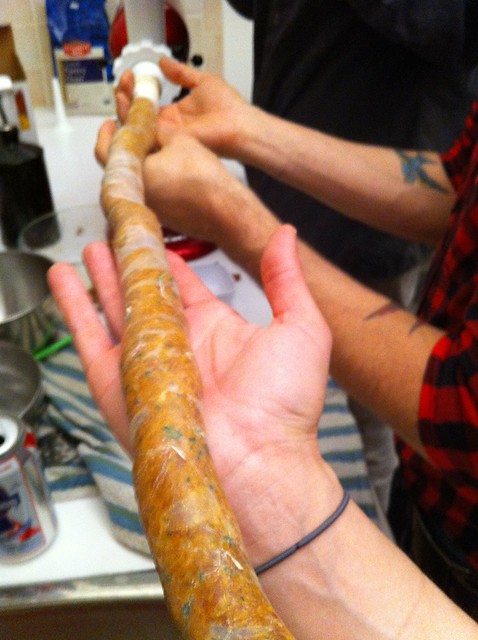
    3. Your stuffer will slowly stuff the ground meat into the casing. Gently guide the rest of the casing off the nozzle to aid the stuffing of the sausage.

    Please excuse the innuendos from the video above (which may not show up on your phones); they made sausage-making more fun though.

    Related post/s:
    You can buy sausage casings from Esposito Pork Shop in New York City
    Amazon.com also sells sausage casings
    These will be perfect holiday gifts: KitchenAid food grinder attachment and sausage stuffer

  • 469 Sixth Avenue between 11th and 12th Streets
    212/675.4295
    $100 for two with tip, with one cocktail
    wheelchair patron may wheel in, but bathrooms are downstairs
    ♥ ♥

    The last time I was on Sixth Avenue above 8th Street, I was at Jefferson Market buying blood sausages after a stranger tipped me about the store at Whole Foods. He saw how frustrated i was when I had to explain to the guy what blood sausages were. At Jefferson, sure enough, I found what I was looking for and noted that they also carried sweetbreads. (That’s another story.)

    To me, Sixth Avenue between 8th and 14th is pretty much the dead part of the West Village; there’s nothing past the nice Filipino guys behind the counter at Gray’s Papaya unless you’re buying Co.Bigelow handwash or your morcilla for Sunday breakfast. I think Harold Dieterle’s Kin Shop will change that.

    I was excited to eat at the Top Chef’s second restaurant in the city because of my experience at his first, Perilla. I had a very good meal there because of the straightforward cooking and I wanted to see what he could do with one of my favorite cuisines, a type that New York city overflows with but doesn’t excel at. (I’m sorry, but techno music and fake modern furniture do not make a good Thai restaurant–I’m looking at you Sea and all of you at Hell’s Kitchen.)

    Jennifer and I followed our server’s suggestion that we share a few dishes family-style. We usually share plates anyway but I like that this was how it should be at Kin. We started with the pork and oyster salad, a beautiful mix of textures. The pork was crispy while the fried oyster gave softly inside the breading. The celery was crisp and added a fresh contrast. I’ve never been to Thailand, sadly, but to me this dish represents the flavor profile I truly love about southeast Asian food: mint, lime and chiles.

    The soup with pork meatballs and bok choy was hard to resist. The broth had legs but was subtle, and the meatballs well-seasoned and bursted with flavor–just what I needed to warm up even more after the ALN cocktail with Thai pickle brine.

    We were warned that the duck laab salad was really spicy, but we still ordered it. I believe there were preserved Chinese long beans in there, one of my favorite Sichuan pickles to make at home. Toasted rice added to the crunch while the Romaine lettuce mimicked Korean and Vietnamese dishes. They’re not kidding when they tell you some of their dishes are hot. The Thai chiles kicked in right on the tip of our tongues which made us take advantage of the buttery roti and fragrant Jasmine rice. It woke our senses up and also filled us up that we didn’t have room to try the crab noodles that came next. The next night though, I peeled the plastic cover back and ate it for dinner with a squeeze of fresh lemon juice to keep the saltiness at bay that seemed to have settled overnight. This reminded me of the Filipino pancit, only with hardly any vegetables and more seafood flavor.

    The service was unobtrusive though we had to wait for a while to get our check. Our server acknowledged that she forgot to offer us the desserts, but we didn’t mind: we wheeled ourselves out of the restaurant.

    Related post/s:
    Harold Dieterle’s first effort was pretty good
    Wondee Siam I has really excellent Thai food

  • After the sixth egg, I just knew I had to finally get a real Italian to teach me how to knead pasta dough properly. I had wasted enough flour and eggs trying to make my own while following written instructions and videos online. For one reason or another, I just couldn’t get the dough to roll into one; it kept breaking into shard-like pieces. I had no idea how it should feel under the bottom of my palms and had no basis of comparison since I’ve never made my own pasta before.

    I’ve been trying to get in the recreational pasta class at the Institute of Culinary Education, but every time I checked their calendar, the class would be full. They never sent out any emails to announce when new classes opened up so I couldn’t even try to sign up earlier. Another search for pasta-making classes in New York City revealed Rustico Cooking in the midtown area. I signed up and spent half an afternoon in an open-loft kitchen with a few couples and, thankfully, some who came on their own. It turned out to be a very productive afternoon and a great–and more affordable–alternative to ICE or the French Culinary Institute.

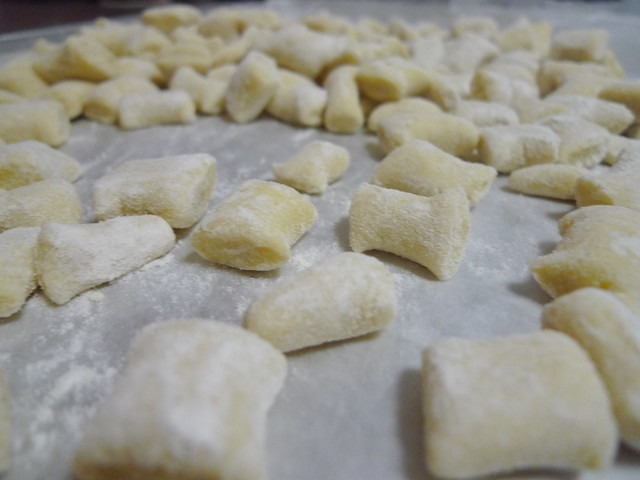
    During our three-hour class, we watched and followed founder and chef Micol’s instructions on how to make gnocchi, cavatelli and tagliatelle. I felt the mashed potato and the flour in my hands when making the gnocchi: I kneaded, rolled and cut the dough. I left the class feeling like I could do the three recipes on my own.

    This is my first attempt in trying to replicate the gnocchi-making technique I’ve learned in class. I bought my own potato ricer and dough cutter for this recipe. I didn’t really want to buy any more toys for my kitchen, but the potato ricer is one of the most amazing gadgets I’ve ever come across: mashing potato will never be the same.

    I think the dish turned out well even with my made-up sage cream sauce. Admittedly, my gnocchi wasn’t as light and fluffy as Micol’s, and I’m not sure if it’s because I used yellow potatoes instead of the recommended Yukon gold, or if I didn’t get the precise cup and a half measurement for the flour. But I can at least say that I’ve done it myself–there’s really no going anywhere from here except better pasta.

    Ingredients:
    1 1/2 pounds of yellow potatoes
    1 1/2 cups of unbleached flour, plus more for kneading
    1/2 stick of butter
    4 sage leaves
    1 cup of heavy cream
    1/2 cup of Parmigiano-Reggiano cheese, grated
    salt
    pepper

    1. Make the gnocchi. In a large pot, cover the potatoes with water and let boil under medium fire, until fork tender. Drain, peel and mash onto a clean counter surface using a potato ricer. Mix with flour and knead until smooth.
    2. Cut dough into small chunks and roll each chunk into a thin snake-like shape. Cut into one-inch pieces to make gnocchi. Gather all gnocchi on a lined bake sheet and sprinkle with flour to avoid sticking.
    3. Make the sage cream sauce. In a heavy skillet, melt the butter. Add the sage leaves and fry. When leaves are lightly browned, add the cream and the cheese with some pepper. Stir continuously with a whisk until well combined.
    4. In the meantime, cook the gnocchi. Put a pot of water to boil with some salt. Add the gnocchi and wait for them to float to the surface. Scoop the gnocchi using a slotted spoon and transfer to a sieve and then to a plate. Pour enough cream just to slightly cover the gnocchi.

    Related post/s:
    Sign up for a pasta-making class at Rustico
    My first attempt in making gnocchi wasn’t too successful
    Sage ice cream recipe

  • I don’t know how a planned dinner for three in my Harlem apartment turned into a pre-holiday dinner for seven, but that happened one Sunday night as soon as Mother Nature confirmed it was autumn in New York City. Our friend Marisol, who moved to Florida for work earlier this year, was in town for a meeting. Grabbing the opportunity to see her before the holiday craziness begins, I invited her over for dinner with Lily. Since the three of us were the only single ones in our group, I figured they would be the easiest to make plans with on short notice. It turned out that even the new moms who live in New Jersey were able to make some time to come over for dinner, tiny babies included.

    I bought two boneless pork shoulders that were already tied up. After distributing the seasoning on the pork, I simply rolled and tied the pork back up; the tied-up pork should resemble a log. Adjust the cooking time to 2 hours if you’re feeding a large group like I did because the meat will compete for the oven’s heat. If you see the pork drying up halfway through, you’ll need to add some more broth in the roasting pan, so keep extra broth handy. If you think the ends are good enough to eat, feel free to remove the pork from the oven and slice off the ends after it rests; put back the rest of the pork in the oven to cook the middle part. By the way, refrain from opening the oven when you check–I just turn the oven light on when I need to take a peek at whatever I’m cooking. This saves the oven from needing to heat again.

    Ingredients:
    1 boneless pork shoulder, about 3 pounds, trimmed
    salt
    pepper
    fennel fronds from one fennel bulb, roughly chopped
    3 garlic cloves, minced
    rosemary from 3 stalks
    1 tbsp fennel seeds, grounded
    2 tsps red pepper flakes
    2 cups chicken broth

    1. Preheat the oven to 300º. On a large cutting board, untie the pork shoulder and lay flat. Season the pork liberally with salt and pepper.
    2. In a small bowl, combine the fennel fronds, garlic, rosemary, fennel seeds and red pepper flakes and sprinkle two-thirds of the mixture over the pork. (Reserve one-third of the mixture.)
    3. Roll the pork up tightly. Using butcher twine, tie the pork every few inches. Season the outside of the pork with the reserved herb mixture and salt and pepper.
    4. Place the pork in the center of a rectangular roasting pan and pour the chicken broth around it. Roast the pork until well browned and an instant-read thermometer registers 150º, about 1 hour and 15 minutes. Remove to a chopping block and let stand for 10 minutes before slicing. Serve immediately.

    Related post/s:
    Serve this porchetta with my favorite Brussels sprouts salad

  • I have been craving Indian flavors ever since I came back from Portugal. For our last night in Lisbon, we had dinner at a Goan restaurant and celebrated our stay there with our last bottle of Vinho de Verde. For the first time in a long time, I connected what I learned in school with my travels and remembered how Vasco da Gama traveled far through strange waters to look for those spices favored by the royal families of the Age of Discovery. He brought back to Portugal the exotic flavors from India and influenced trade–and Portuguese cuisine–forever. It wasn’t all smooth: he wanted all Muslims expelled from a Hindu land. Today in Goa, India, a city is named after him.

    For this recipe, I tried both cod and albacore fish fillets and steaks. The albacore was more firm and withstood the simmering, but since cod fillets are easier to find and has a sweeter flesh, I’m using it here. (If you use albacore, or another firmer fish like monkfish, add 5 minutes to cook the fish through without overcooking.)

    May I also mention that buying 1 stalk of lemongrass and two chiles from Whole Foods cost me a mere 16 cents? The scale couldn’t even register the chiles because they were paper-light, so the clerk just weighed all three items together. (The lemongrass goes for a ridiculous $9.99 per pound! It’s about $1 for five stalks in Chinatown.) It was my record: least expensive grocery tab ever!

    Ingredients:
    3 pieces of cod fillets
    juice from 1 lime
    salt
    4 cloves of garlic
    a small knob of ginger, peeled, thinly sliced
    oil
    small red onion, thinly sliced
    1 lemongrass, chopped in 1-inch pieces, smashed with your knife handle
    1 Thai chile
    a dash of turmeric
    half a can of coconut milk
    parsley, finely chopped, optional

    1. A few minutes before starting to cook, pat the fish dry with paper towel and transfer to a shallow bowl. Season with lime juice and salt and leave standing for 15 minutes. (You can do this the night before; just cover and store in the fridge.)
    2. Using a mortar and pestle, grind garlic and ginger to a paste. Set aside.
    3. In a large skillet, heat some oil and sauté onions until soft. Add lemongrass and the garlic-ginger paste and sauté until brown. Toss in chile. Season with turmeric and mix well. Add the coconut milk and the fish and simmer, covered, for 10 minutes, turning the fish halfway through. (Smash the chile here for extra spice.) Sprinkle with parsley before serving with warm rice.

    Related post/s:
    Kona Blue kampachi with coconut cream sauce
    Fish with coconut milk, the Filipino way

  • I’ve never heard of blue eggs until I saw them from Holton Farms’ Web site the last time I ordered my CSA produce. Curious, I ordered a dozen even though they cost $7. After some research, I found out that the blue eggs come naturally from these Chilean chickens called Araucana that look like they have handlebar moustaches coming out of the sides of their faces. They’re super cute, but the eggs look even more beautiful and delicate.

    I used two of them to replicate this green tea pound cake recipe from About.com. I edited it after trying it two times. Because there is no liquid involved, I thought it was wrong to say that you have to “pour the batter” in a pan–it was more like transferring each glop with my spatula than pouring. I also cut the sugar in half because I wanted the green tea flavor to stand out. Forty minutes made it too dense so I stuck with half an hour the next time and thought it came out just right.

    When I brought the end product to work, everyone liked and ate it, but I made sure they knew it was a pound cake and not a sponge cake so that they’re not taken aback by the density of the bread. If you’d serve this warm and straight out of the oven, dust with a little bit of confectionary sugar to pretty it up.

    Ingredients:
    1 stick of butter
    2 large eggs, lightly beaten
    1 cup flour, sifted
    1/3 cup sugar
    1 tbsp matcha, or green tea powder
    1/2 tsp baking powder
    a small knob of butter for greasing the loaf pan

    1. Preheat oven to 350º. Meanwhile, in a large glass bowl, melt the butter in the microwave for 1 minute. Cream with a spatula and slowly mix in the beaten eggs. Combine well.
    2. Gradually add the flour with one hand while the other is making sure everything gets incorporated. Do the same with the sugar, the green tea powder and the baking powder. Transfer to a buttered loaf pan and gently pat even with your spatula.
    3. Bake in the oven for 30 minutes. Remove from oven–the remaining heat should cook it in place–and let stand until it’s cool enough to serve.

    Related post/s:
    Maeda-En Shiki Matcha Green Tea Powder is on Amazon.com
    Holton Farms is where I get my CSA produce from

  • Good thing Daddy knows how to drive stick!, the Dr. beamed proudly as we took another sharp turn on Sintra’s curvy roads. It took us at least an hour to find Casa Miradouro from Lisbon. We drove through the narrow stone streets of Sintra with its numerous forts, monasteries and castles and we kept getting lost because of the tight turns we always had to take. We squeezed past tour buses as they were finishing up for the day, halted to quick stops to read the rua signs and re-oriented ourselves several times to find our room for the night.

    The Dr. is not big on asking strangers for driving directions–no surprise, he is a guy after all–so I had to go to the tourist office alone to ask Onde Rua Sotto Mayor? The guy at the desk just assumed I spoke Portuguese and proceeded to tell me how to get to where we needed to be in his sh-sh-sh language. All I understood was the word for left, izquierda, because it was similar to Spanish so we went back on the road and turned left on the road across from the office. We will later learn that most of the locals choose to speak French rather than Spanish which is a curious thing to us because Spain is right next door. Almost everyone we met would switch to Parlez-vous Français? whenever we started talking to them in English or Spanish. Thankfully, the Dr.’s French lessons in high school paid off again. (The first was in Cuba, and then in Tunisia.)

    Getting lost was worth it when we finally found Casa Miradouro because it was a haven from the bustle of the town center. Charlotte, the proprietress of Casa Miradouro welcomed us to her home as it started to rain. It had been cloudy when we touched down Lisbon with some sunshine peaking through the clouds and I was a bit chilly from my lack of sleep on the plane and felt a cold coming in, but suddenly felt relaxed as soon as we entered the house. The first floor had several salons for entertaining, each one set up with a different style of furniture. Design books were on the modern coffee tables. Cathedral ceilings with ornate details and ceiling to floor curtains gave the rooms an airy feel.

    In our room, double doors opened towards the garden with a Juliet balcony that overlooked the town. Our queen-sized bed was covered in plain white sheets and two separate twin down comforters. (How come I never thought of that? No more blanket-stealing during cold nights in bed!) Blue and white tiles in the style of azulejos, an ubiquitous Portuguese touch, lined the bathroom walls. Hot water was aplenty!

    After cleaning up, we felt settled enough to take an afternoon walk in the town and check out our surroundings. We walked up and down small hills, through narrow alleys and past bakeries and souvenir shops. We stopped by Lojo do Vinho for a couple of glasses of wine before we walked to the unfortunately named GSpot for dinner. Charlotte had recommended two different types of restaurants and we opted for the more experimental one since we knew we would have the rest of the week to eat local fare.

    After a bottle of wine, foie gras, clams with squid-inked orzo and a mediocre sirloin steak, we set out into the drizzly night and walked back to Casa Miradouro. It felt like we had Sintra to ourselves; this fantasy land of castles looming above us. I could only think of Prague where I felt the same way at night but this was less gritty and more peaceful.

    Charlotte was up; we assumed she was waiting for us to get in because she turned off all the hallway lights as soon as we bid her good night. We had a nightcap of Port at the bar in one of the rooms and talked for a bit before heading to our bedroom. A few hours later, I woke up with a crushing headache. Sintra’s lights from our balcony made me pause in the dark when I got up to go to the bathroom. Headache be damned, I was falling in love with Sintra’s nighttime lights and couldn’t wait for the next morning when we would begin to see the rest of the country.

    The next morning, we enjoyed a very civilized breakfast in the basement. The Dr. and I have never been the best bed and breakfast guests because we’ve never really had good free breakfasts wherever we’ve stayed. The coffee is always weak, the bread cold and the butter like they serve it on airplanes. To our surprise, Charlotte prepared a spread of salmon, prosciutto, salami and ham with an assortment of pastries and fresh fruits. French-pressed coffee and freshly-squeezed orange juice completed our morning. We checked out, reloaded our stuff in the hatchback and drove to São Pedro to visit the Sunday flea market before we started our long drive up north.

    There was an assortment of colors at the Feira Grande de São Pedro. A cart selling only leitao, roasted pig, was in the middle of the square amidst a barrage of clothing, housewares, fig and olive plants, live finchess and other types of food. I watched a group of older ladies pull a tray of freshly-baked bread from a stone oven and bought two pieces only to discover sausage slices stuffed inside. We just ate, but happily ate again. Besides, lunch was still two hours away.

    Related post/s:
    Casa Miradouro Web site
    Day 1 Portugal Road Trip photos on Flickr: Belém
    Day 1 Portugal Road Trip photos on Flickr: Sintra

  • 103 West 77th Street between Amsterdam and Columbus Avenues
    212/362-3800
    about $167 for two, with drinks, with tip
    ♥ ♥ ♥

    Oh, this is your place? asked John Fraser, Dovetail’s chef. Erin and I ran into him as we were leaving the restaurant and we started telling him about our vegetarian-vegan restaurant project for this site. Erin has been bringing me to her places for the past month and now it’s my turn to bring her to one of mine.

    Dovetail has expanded their space. Gone is the sliver of a bar by the entrance; there’s actually a small room that looks out 77th Street now. I’ve eaten at Dovetail several times, but I guess it’s been a while since my last visit. The private room next to the kitchen is still downstairs though, and one day, I would like an intimate dinner there with some of my closest friends. Besides the space, not much has changed. The staff is still churning some impressive plates and concocting some fancy cocktails (what happened to the Asian hipster with the funky hair?); their pastry chef, Vera Tong, is still wowing diners with her amazing desserts.

    Dovetail started serving vegetable-focused menus on Monday nights and I thought it would be perfect to take Erin to one of my favorite restaurants to show her how talented kitchens could–and should–whip up vegetable, and even vegan, dishes. At $42 for four courses including dessert, it’s a deal you really can’t beat. The selections were so ridiculously difficult to choose from that I had to order an extra course. I simply couldn’t make up my mind between the sea urchin and the chanterelle mushrooms.

    There are fewer vegan choices, but Erin didn’t have a problem eating the peach salad with the avocados. I read that they came brushed with chili oil, but I was wondering if aged balsamic vinegar was involved as well. Her tofu had a hint of lemongrass in the chai curry: it was bright and didn’t weigh down the tempura breading. She needed my help by the time she got to the barbecue parsnip rib with potatoes, pineapple and peanuts and I was glad to pick on her plate.

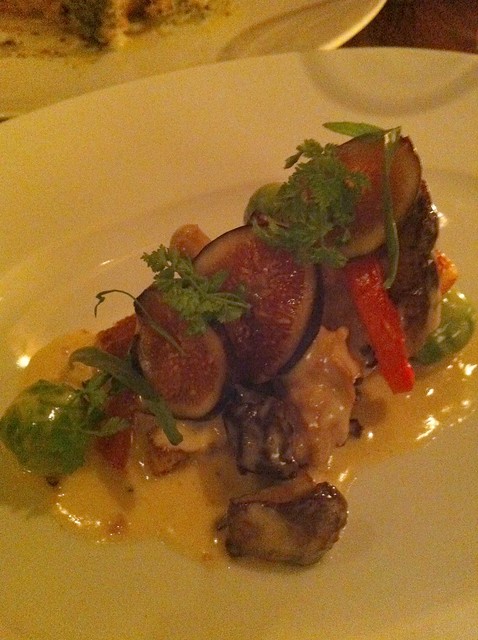
    I started with the lightly-breaded and fried squash blossom stuffed with cauliflower. A frisée salad had a salty kick with small bits of smoked trout which was in turn held back by the horseradish and peppermint white sauce. The “chanterelles on a shingle” came next, a play on a traditional wartime dish called Shit on a Shingle (or SOS) made of heavy cream. The Brussels sprouts were pebble-sized and tender and gave good texture to the soft figs. The military would have loved this version better.

    What came next blew my mind away: congee flavored with shiso leaves and topped with braised cucumbers and uni. It was so delicate and yet the flavors came out so strong. If John Fraser himself came up with this dish, then I want to have a drink with John Fraser. This dish, this dish is what makes a cook a chef. I ended with the button mushroom gnocchi in Bordelaise sauce. It was a little heavy after that heavenly porridge, but the radish cut through the French sauce. The butternut squash reminded me that autumn is here and if I eat any more Dovetail-caliber food in the next few months, I hope it stays.

    Related post/s:
    I went to Dovetail late 2007 and predicted it would be one of the best in 2008

  • 414 East 9th Street between First Avenue and Avenue A
    212/228.4873
    about $150 for two, with drinks, without tip
    ♥ ♥ ♥

    Kajitsu serves shojin, an ancient Japanese cuisine in which meals are prepared by following the Buddhist principle of not taking life. Leave it to Japanese culinary techniques to take a concept like vegetarianism and make it exceptional. I’ve never heard of Kajitsu before–but then again I’m rarely in the East Village–so I was glad when Erin introduced me to its serene ambiance and to vegetarian food prepared with finesse.

    We sat at the bar right in front of the chef when we visited. Bar seating is a favorite of mine because you can see what’s going on behind the scenes and you have a chance to talk to the chef in between courses. There’s not much cooking going on at the Kajitsu bar though. I think they’ve perfected the assembling of ingredients prepared earlier which, if I would guess, takes the stress away from making sure each course is paced and served on time. The dishes that needed cooking came from the side door, but we rarely heard a peep so common from open kitchens. It was Zen all the way in Kajitsu.

    What came out were beautifully crafted vegetable dishes that not only looked good but also tasted good. I was honestly preparing myself for another meal after our dinner because each course read more like poetry than a dish. After all, you don’t get to see “tofu chrysanthemum” on menus too often.

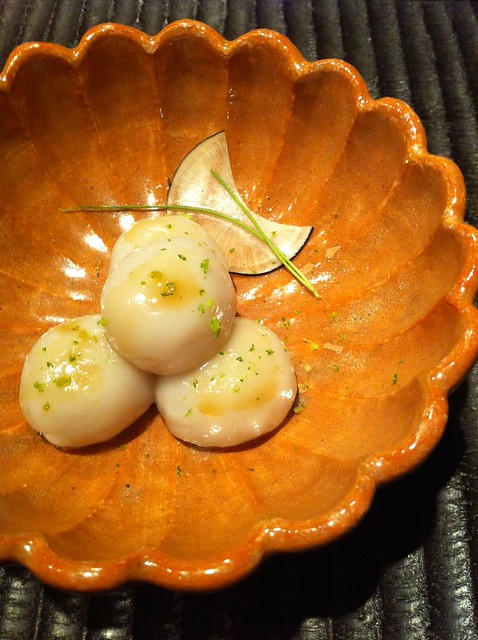
    We imbibed in the sake martini served like shaved ice. Harmless at first, but clearly damaging after our heads reminded us that there was alcohol in those summer drinks. Our first course blew me away on presentation: taro dumplings shaped like small spheres matched with a very thinly-sliced black daikon to mimic the shape of the moon outside and then topped with chives, ginger and a hint of soy.

    The tofu was sliced like a flower and floated in a light broth with two tempura-battered lobster mushrooms. I have no idea where the depth of the dish came from but I knew it wasn’t just the sake that was making me dizzy in satisfaction.

    For our main courses, I opted for the hot udon soup while Erin went for the cold soba noodles, both of which were made in-house and showcased what I truly enjoy about most Japanese cuisines: clean, subtle and deceptively simple.

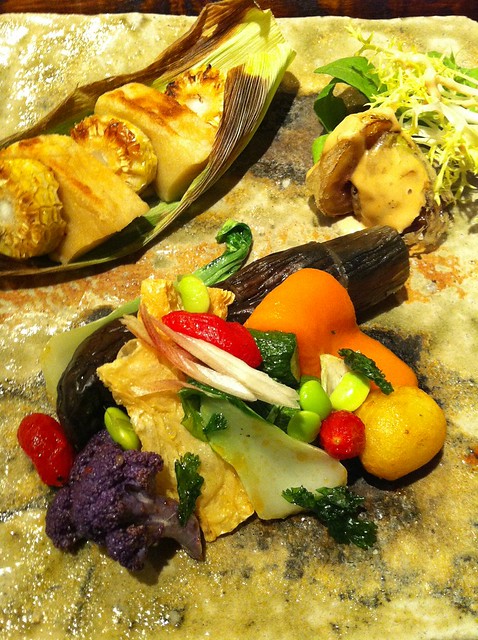
    The most beautiful plate of cooked summer vegetables I’ve ever laid my eyes on came next. I’ll let this photo speak for itself with one note: it tasted as good as it looked.

    The last course rounded up our entire experience: rice topped with yamaimo, the slimy Japanese mountain yam that I’ve always enjoyed at Sobaya, another noodle joint down the neighborhood. A trio of house-made pickles and toasted rice crispies added texture to its sliminess.

    Kajitsu was what I was looking for in vegetarian food. If more vegetarian restaurants could learn from shojin cuisine, I would be very happy to stay away from meat.

    Related post/s:
    Kajitsu vegetarian restaurant photos on Flickr
    Slimy mountain yam at Sobaya doesn’t need a long review

  • After reading about Bon Appétit, a sustainable-minded food catering company based in–of course–California, and its efforts to get even more local by switching the roles of some of their managers and chefs to “foragers”, I immediately thought, Well, they should call Wildman Steve.

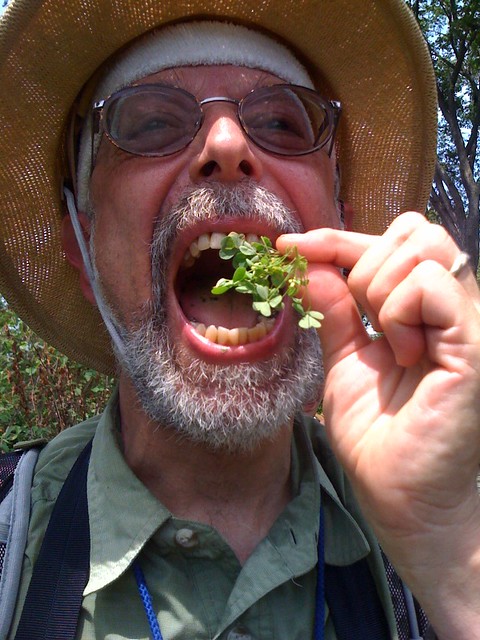
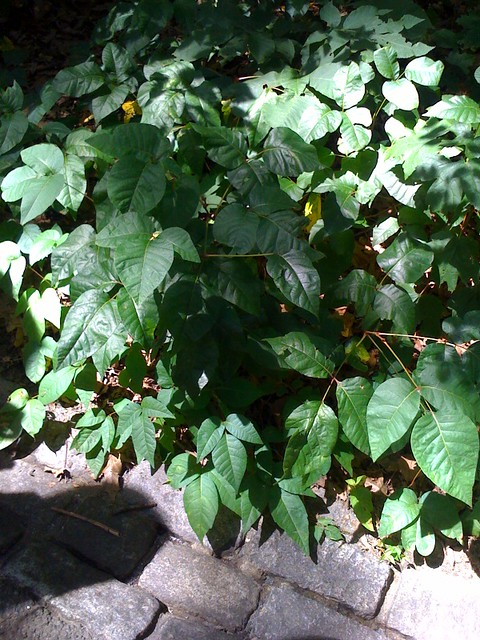
    I don’t remember how I first heard about Wildman Steve, but I’ve since kept him in the back of my head for when my schedule allowed me to join one of his foraging tours in Central Park. One super humid summer day, me and about fifteen others met in the upper west side of the park to forage for berries and cherries, epazotes and sasafras, and probably the last garlic bulb of spring and the first burdock of fall. The bonus was learning how to spot poison ivy; how amazing it was to see so many all over the park where clueless pedestrians and their pets run around!

    Unfortunately, the rest of the summer didn’t allow for much cooking in the kitchen so I wasn’t able to use the produce I took home except for the berries that went into a pint of homemade ice cream, but I did gnaw on all of the stuff the Wildman showed us along the way. I completely trusted that he knew what he was doing and picking. I’m glad to report that there were no weird stomach pains after.

    Here’s a list of plants we came across in and around 103rd Street and Central Park West:

    1. European Cut-leaf Blackberries – I was so surprised to see a fruit tree in the park! Now that I know where they are, I’ll just pick these in season.

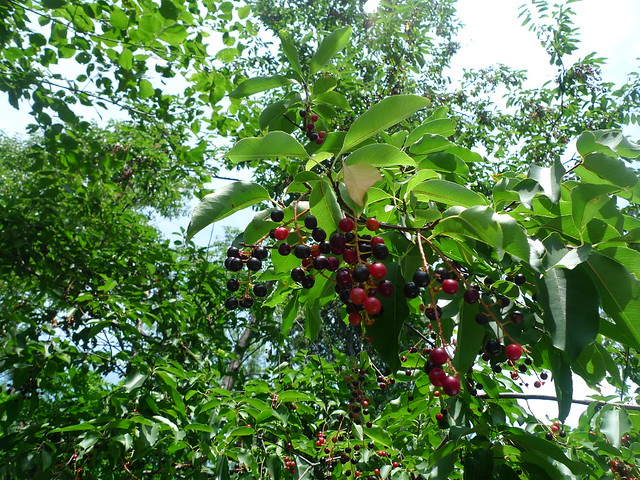
    2. Native Black Cherries – I took home a lot of these using the plastic take-out containers we were advised to bring. A subtle ice cream was made at home afterward.

    3. Epazote – You can dry and save these for use in a Mexican dish

    4. Lamb’s Quarters – You can use them in quiche or cook them like you would spinach

    5. Poor Man’s Pepper – They tasted like mustard seeds and Wildman said they would be great in miso soup

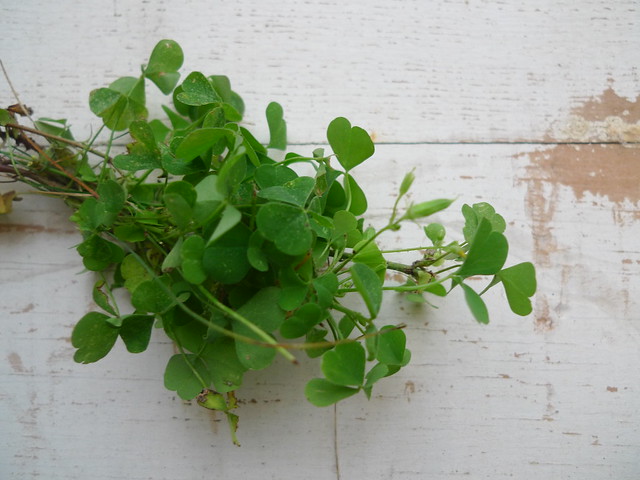
    6. Wood Sorrel – You’ve seen these growing like weeds and you thought that you could find a four-leaf clover among them. You won’t.

    7. Mayapple – Wildman crossed a fence and picked these small plums that taste like passionfruits

    8. Common Plantain – These are also everywhere in the park. I’ve always thought they were just some kind of weed, but you can mash the leaves and rub them all over yourself to keep the mosquitoes off. The small seeds had a hint of peanut taste.

    9. Garlic Mustard – The plant that keeps on giving: you can use the leaves for a garlic pesto, the buds and the sprouts like chives, the roots like horseradish, the seeds like mustard seeds!

    10. Jetberries – I see these all the time, too, and now I know that if a berry bush has some sharp and ragged-edged leaves, they are poisonous!

    11. Asiatic Dayflower – They look like tiny string beans

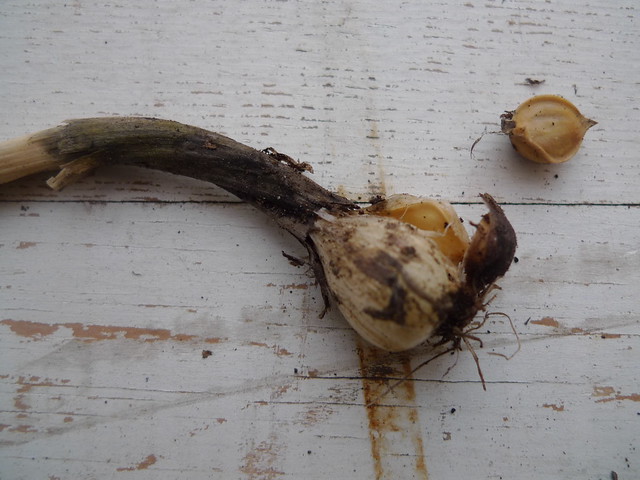
    12. Field Garlic – I was very happy to see garlic even though we only found one whole bulb because it’s way past spring. They’re definitely stronger than your grocery store garlic bulbs.

    13. Poison Ivy – We spotted a few plants around the park which took me by surprise because dog owners may be walking their pets along the paths not knowing they’re sniffing them! Now I know how to tell them apart: they have three leaves per stalk, but the smaller two connect directly to the twig.

    14. Sasafras – Commonly known as the plant that makes root beer, Wildman Steve showed us the leaves in three different shapes.

    15. Fawn Mushroom – Fortunately, we found one mushroom by some tree. Unfortunately, a squirrel got to it before we did. Fawn mushrooms grow on wood, have blush-pink gills and have a space in between their gills and stem. If you want to see more mushrooms, sign up for the tour after a whole lot of rain.

    16. Jewelweed – Wildman Steve sprinkled some water onto their leaves and the droplets repelled and looked like jewels, hence the name. They are known to help your poison ivy rash, so grab some of these after you step on the ivy plants during the tour.

    17. Sweet Pepper Bush – You can rub and juice the hell out of them to make your own soap

    18. Lemon Verbana relative – We couldn’t identify the plant that grew along the running water near the Lasker Pool. It had a somewhat citrus smell, but it wasn’t mint because it wasn’t minty enough, nor was it lemon verbana because it didn’t have pointy leaves. Can you help?

    19. Burdock – I first had burdock at The Tasting Room. I miss that place. They were cooking farm-to-table style years before every blogger started using that term.

    Although you won’t be on your hands or knees during the foraging trip, I highly recommend bringing a knife. I have a sample of the Ikon Folding Gentleman’s knife from the generous people at Wüsthof and I love it. It’s small enough to pack, yet very hefty and reliable when you’re cutting and slicing tougher items like burdock. Folding it back in takes a little getting used to–something my gentleman had to teach me to avoid accidentally cutting myself–but as soon as I got the hang of it, it was easy to reveal the 5-inch knife and fold back into the smooth Blackwood ebony handle.

    Related post/s:
    Wildman Steve Foraging photos on Flickr
    A 2003 review of The Tasting Room

    Recommended tool/s:
    Sign up for a foraging tour with Wildman Steve
    Williams-Sonoma sells the Ikon Folding Gentleman’s Knife

  • 300 East 12th Street off Second Avenue
    212/228.2909
    $33 for two without tip; BYOB

    It couldn’t have been the quinoa because it was light and fluffy. Could it have been the creamy cauliflower sauce lathered in the mushrooms? Or the tempeh in balsamic? Because it definitely wasn’t the roasted beets nor the steamed broccoli. I was hot, full and feeling bloated and all I wanted to do was get out of there. What was it about Angelica Kitchen?

    There was so much going on around me and on my plate, I couldn’t appreciate eating at New York’s oldest vegetarian restaurant. I tried not to complain about the tempeh, but eating it is like dipping a granola bar in sauce and calling it dinner. I like texture in my food just fine, but I’m not a big fan of too-grainy and too-chewy. If you look at Angelica Kitchen’s menu, you’ll notice that they cram a lot of stuff on one plate. I’m not sure if it’s to make up for the lack of meat, but I would vote for less ingredients done well over lots done poorly any time. It also seemed like there was so much effort spent in making the cauliflower sauce that the cook just gave up on the greens because my dish was accompanied by unseasoned steamed broccoli–perhaps the most boring thing you could ever serve anyone.

    My biggest qualm about Angelica Kitchen is that it gave too much of the vegetarian community vibe. I can’t pinpoint exactly what it was–or what that exactly means–but I didn’t feel comfortable hanging out while we ate. It wasn’t my scene and the diners weren’t my people. I knew it; they knew it. The A/C didn’t seem to work properly and the 93-degree weather outside made me very uncomfortable. We shared the big table next to the kitchen with other guests, but no one seemed to feel as warm as we did–and they didn’t even have cold, tall beers like us!

    I tried, and I’m not sorry I didn’t like it.

    Related post/s:
    Counter Restaurant fared better in my mouth
    I had a vegetables-only meal at Per Se for the same price as the carnivore version

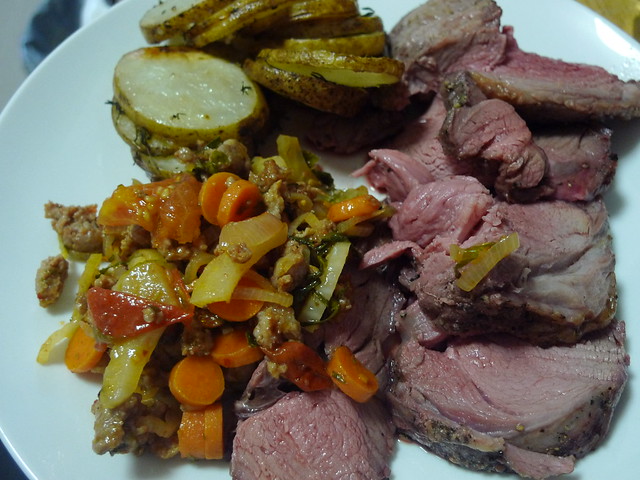
  • Jenny and Steve from Los Angeles were flying in at midnight and I knew they were going to be hungry. I warned them to save their appetite and skip the junk food in the plane and just go straight to my apartment in Harlem for a very late dinner. I had a few hours to prepare this dish after work, so there was no mad rush to finish until I received a text message that they were on their way from the airport.

    This seems like an overload of meat because the lamb could stand out on its own, but when you already have sausages in the fridge, why wouldn’t you put them together? A mixed green salad or roasted vegetables would make good matches too, but pork would probably make your guests happier. (I added roasted thyme-potatoes here.) It did mine, and they were off to a good start in their New York City vacation.

    Ingredients:
    1 small boneless leg of lamb, trimmed, rolled and tied
    salt
    pepper
    oil
    2 Italian pork hot sausages, casing removed, crumbled
    1 shallot, thinly sliced
    1 tomato, diced
    half a fennel bulb, diced
    1 small carrot, diced
    1/2 cup sherry vinegar
    a handful of basil leaves, julienned
    a dash of red pepper flakes

    1. Preheat the oven to 375º. Season the leg of lamb liberally with salt and pepper and place on a roasting rack that fits inside a roasting pan. Transfer the lamb to the oven and cook until an instant-read thermometer registers 130º for medium rare, about 45 minutes. Remove the pan from the oven, tent with foil and allow the lamb to rest while you make the sausage crumble.
    2. Heat a large skillet with some oil. Add the sausage and cook over medium-high heat until cooked through and browned, about 10 to 12 minutes. Using a slotted spoon, transfer the sausage to a plate, leaving the fat in the pan. Add the shallot, tomato, fennel and carrot to the pan and sauté until tender. Add the sherry vinegar and scrape any browned bits from the bottom of the pan. Add the sausage back in with the basil and red pepper flakes.
    3. To serve, cut the leg of lamb into 1/2-inch slices, divide among plates and top with the sausage crumble.

    Related post/s:
    Mutton versus lamb
    Roast leg of lamb from Dickson Farmstand