This recipe was republished by The New York Times from A Good Appetite: Ripe for Autumn’s Hearth and it was one of those recipes I saved because it just sounded so deliciously savory. While I was in Raleigh, North Carolina for the weekend, I picked up a pint of figs from the farmers’ market and I immediately thought of making this even though August just began.
The weather the last two days has been bearable and I can’t stop thinking about how it’s almost autumn. I just started seeing tomatoes in the market and the peaches and nectarines are aplenty–how could there be figs already? I’m not ready for summer to be over yet!
I picked up a box of frozen puff pastry from Whole Foods and let it thaw on my way back to my apartment and while I was prepping the rest of the ingredients. I had Roquefort in the fridge, but I didn’t want to stray too much from the original recipe, so I bought a wedge of Stilton to make sure I get it right. I eliminated a pinch of sugar and forgot a splash of sherry vinegar–the former to add sweetness and the latter to caramelize the onions properly–but I think I didn’t screw it up too much because everything came together perfectly.
Ingredients:
2 tbsps unsalted butter
oil
1 large white onion, sliced thinly
2 sprigs rosemary, removed from stem
1/4 cup milk
1 egg
flour for dusting
1 box frozen puff pastry, thawed
1 pint fresh figs, cut in half
a small wedge Stilton cheese, crumbled
a handful of pine nuts
1. In a large skillet over low heat, melt butter with oil. Add onions and rosemary. Cook, tossing occasionally, until onions are limp and golden brown, about 30 to 40 minutes. (Add a splash of sherry vinegar here and scrape off the brown bits from the bottom of the pan when caramelizing.)
2. In a small bowl, whisk together the milk and egg until smooth. Stir in the onions.
3. Preheat oven to 400º. Line an 11 by 17-inch baking sheet with parchment paper. On a lightly floured surface, roll out pastry to a 9 by 12-inch rectangle. Transfer to baking sheet.
4. Use a fork to spread onion mixture evenly over pastry while letting excess egg mixture drip back into bowl and leaving a 1-inch border. Arrange figs, cut-side up, in even rows on onion mixture. Scatter cheese and pine nuts over figs. Use a pastry brush to dab edges of tart with egg mixture. Gently fold over edges of tart to form a lip and brush with more egg mixture.
5. Bake until pastry is puffed and golden, 25 to 30 minutes. Remove to rest at room temperature before serving.
Our first breakfast in Kilimanjaro consisted of omelets, hot dogs and fresh mango. I drowned myself in instant coffee because I knew my jet lag will kick back in later. Samuel and the crew waited for the three of us to pack which took about two more hours than originally planned. They let us linger then because in the next few days, waking up at 11pm to hike for eight hours will mean waking up, really, at 11pm to hike for eight hours.
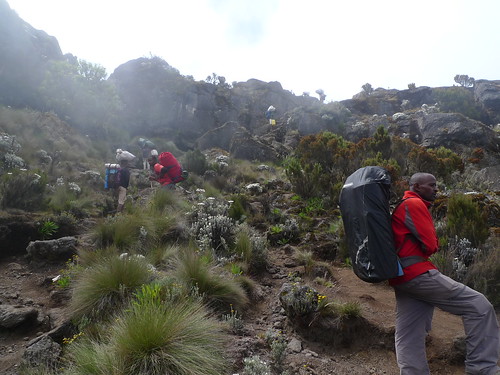
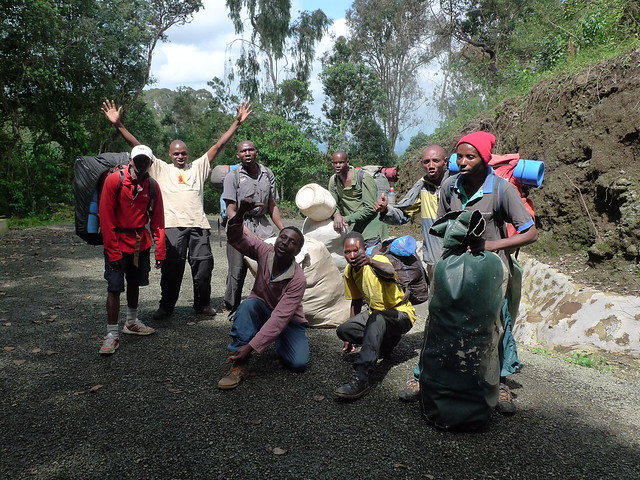
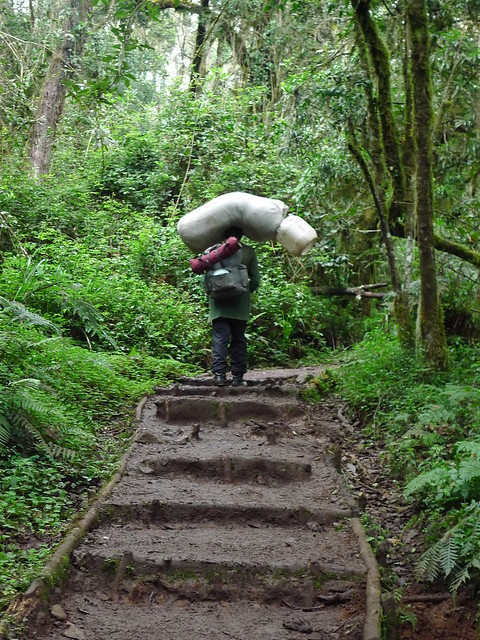
From Machame Camp, the path was up, up and up! Godibless walked in front of us to make sure we wouldn’t go any faster. The trek was narrow and filled with everyone who was at camp the night before, so it was difficult to forge ahead even if we wanted to. The porters were also on the same path and we got used to stepping aside whenever we heard Jambo!
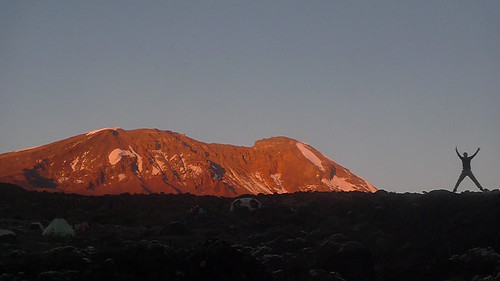
As we increased altitude–2,642 feet total–more flowers started to appear and from the top of large boulders, we saw the progress we made in just three hours. The mist let up and Kibo showed herself again with her snow-capped top. Samuel confirmed that there was definitely more snow ten years ago.
From our lunch spot, we could see Shira Plateau, the namesake of the next camp and the second peak in Kilimanjaro National Park. To her left was Meru Peak shrouded by pillowy clouds. It was a crazy view to behold while we ate Majengo’s packed lunch for us: fried chicken (God bless him!), a coleslaw sandwich, banana and mango juice.
The remaining two hours of the day’s trek were on smaller rocks but flat land. Along the way, we couldn’t help but pick up garbage other trekkers have left behind. The thought that even Kilimanjaro travelers would even think of throwing garbage on the ground appalled me. Aren’t we more educated and sophisticated travelers than this? Hikers who don’t care for their environment shouldn’t be really allowed to hike any more. For the next few days, I came to hate one particular brand of candy in yellow-blue foil wrapper.
It was cooler up in Shira Camp. It didn’t just feel like we were above the clouds–we were actually above the clouds! The camp was flat and open, and thankfully, the porters picked a spot where our tents were far away from everyone else’s. We later found out that they all know Samuel’s preference when selecting the group’s spot for the night and it’s almost always away from the riff-raff. I liked our main guide even more after I heard this.
While waiting for dinner, the three of us walked around the camp. We had heard about a cave that was used as a sleeping spot until the park rangers officially closed it. It was disappointingly small and did not look like a cave at all, but the walking at least helped us kill time until sunset.
Do people get tired of watching the sun set when they travel? I always expect that I would, but Mother Nature never ceases to amaze me. Shira Camp was blanketed in orange and some deep purples while the clouds moved fast in the valley below us. Yet again another beautiful setting before we had to eat pumpkin soup and pasta with beef tomato sauce. That night, I ended up sleeping for twelve hours, a good night’s rest before the Diamox altitude medication started to kick in.
Day 2: Machame Camp (9,842 feet) to Shira Camp (12,467 feet)
Altitude gain: 2,645 feet
Miles: 6
Time: about 5 hours from ~9:30am to 2pm
198 Orchard Street between Stanton and Houston Streets
no phone number yet
$50 for one, with one beer, with tip
wheelchair may enter; may be hard to get to the restroom
early review: ♥
I’ve never been to Taiwan, but it has always been on my list of places to go and do nothing but eat. When reports started coming in about Xiao Ye and its “Taiwanese night market” food, I knew I had to go. I have several friends who hail from Taiwan and my mouth waters whenever they talk about the food they eat back home. I love Southeast Asian food and I enjoy sweating over that flavor profile with a cold, cold bottle of beer. I walked in once last week with a friend only to be told that they were having a private event. We laughed and let ourselves out and promised to return when they officially open. The temperature hit 90-plus again this week and so I made a trip to the Lower East Side for one of their soft openings.
I really wanted to like it. When I visited, half of the published menu on BaoHaus owner Eddie Huang’s blog was not ready and none came with any descriptions except for the obvious homage to the Wu-Tang Clan. With names like Poontang Potstickers, She Bang Fish and Buddha Sex Cabbage, I had to get the bartender’s help to find out what each dish was all about. (Can you guess what Golden Taste Balls are?)
I was told by a friend of a friend that I should skip the cocktails, so I opted for Magic Hat’s Wacko summer ale as soon as I found myself at the bar. They got the Asian weather down all right; it was steamy and it was hot and all I wanted was to eat comfort food that reminded me of home. But there’s a reason why they call such nights “soft openings”, and in my case, Xiao Ye was having a very, very soft night.
I dove in the Extreme Taste Salt-Cured Pork, generous slivers of pork belly that didn’t warrant the name nor need anything else. The meat was naturally sweet and the fat was equally addicting, but they were impossible to eat with chopsticks. I requested for a knife and a fork just so I can cut through some of the chewy skin. It would have been unacceptable to most people, but unlike most people, I actually enjoy gummy pork skin. I would have preferred it crisp and crunchy, but I knew I didn’t order chicharron.
The Taiwan Most Famous Pork on Rice by name alone had so much promise. This is a Taiwanese joint, yeah? Wrapped in mustard leaves, my rice was hard and crackly as if it had been sitting out for quite some time. There may have been a trace of pork somewhere, but most of what I tasted was the pieces of scrambled egg that was mixed in. My ghetto Chinese take-out place in Harlem would have done a much better job. I tried to put up with it, but you just can’t fuck up rice like that, so I finally told the bartender that I needed a new serving.
In between bites of the Concubine Cucumber–cucumber chunks pickled in vinegar, salt, sugar and garlic–I finished the pork belly while I waited for my rice replacement. Luckily, the second time around was warm and just right, so I felt compelled to eat it with the Trade My Daughter for Fried Chicken after I got over its name. The breaded chicken fillets tasted of cilantro, crushed peanuts and chili powder but were also heavily salted. I understood the flavor they were going for and I would have liked them if the cook was a little bit less heavy-handed with his seasonings. I would have taken my leftovers home, but I thought they were beyond repair–even the single girl eating next to me agreed when I offered a taste of my food. And I love salt! she said, but that is burning my lips!
Past the silly dish names and the Fantastik spray bottle next to the drinking glasses at the bar, Xiao Ye could be something. It’s that kind of a place bloggers and wannabe-foodies tend to love because the price and location are right, but the taste and service need to be accounted for in the next several weeks if they want to be taken seriously.
Using the Pork Balchao recipe in the 500 Indian Recipes book I picked up for $5 several months ago while waiting for the Dr. to show up for our date, I satisfied a spicy curry craving I was having. Balchao is a spice mix from Goa in which spices are mixed with vinegar and sugar for a spicy-sour-sweet flavor. It’s popular for pickling fish and prawns–I assume to keep before the time of refrigerators–and was brought by those colonizing Portuguese to India’s coastal town.
Pork cubes or stew meat are good for this recipe. I had bought a shoulder thinking I was going to make tacos for the weekend, but changed my mind and ended up slicing the meat off the large bone. There was no harm in stewing the bone with the meat–it just added flavor to the sauce. Boil 2 cups of chicken broth in a separate pot and throw in 2 cups of couscous while you’re at it if you can’t get your hands on some fresh nan.
Also, starting with this post, I have re-ordered the way I list ingredients. They used to be by what I deemed as main ingredients first, down to the seasonings; now they are ordered by when in the process they are used. I realized I was always grouping ingredients in recipes I am inspired by with their coinciding steps–this way, I hope you prep the ingredients in the same order, too. I’ve also included water when needed, something I also skipped because I assumed kitchens always have a sink, but it helps with your mise en place.
Ingredients:
oil
5 cloves of garlic, minced
1 knob of ginger, peeled, crushed
4 pieces dried chiles
1 short cinnamon stick
4 cloves
2 tbsps cumin
1 tbsp black peppercorns
1 red onion, sliced thinly
half of a pork shoulder, chop in chunks
2 beefsteak tomatoes, chopped
2 tbsps turmeric
1 tsp chili powder
1 cup of warm water
4 fresh curry leaves, optional
salt
1 tbsp white sugar
a couple of splashes of cider vinegar
We said good-bye to the Karama Lodge staff in Arusha where Scott and I have been staying for two nights. Christopher came in the night before during the England-Germany World Cup game and made our hiking trio complete. It took a year to plan this. I invited about ten people, but unfortunately, they dropped off one by one as the date got closer. I couldn’t have asked for more mature travel partners than Scott and Christopher. (I didn’t say old!) For three people to meet in Tanzania and share amenities when they have never traveled together before and still get along afterwards is a stunning feat in itself. Hiking the highest free-standing mountain in Africa (and in the world! Thanks, Scott!) and making it to Kibo’s summit was just icing on the cake. The others missed an unforgettable trip.
We were in a small Tropical Trails bus to Moshi with our main guide, Samuel, and the rest of our wagumu, our porters, or “strong men” in Swahili: Majengo, Peter M, Nicodemus and our assistant guide, Godibless. A second but shorter Peter will meet us at Machame Gate with Anton, Komoyi and Puzizi, making our six-day group a total of twelve. (Every time we met up with the porters during our trek, I cheered Puzizi! I loved saying that name!)
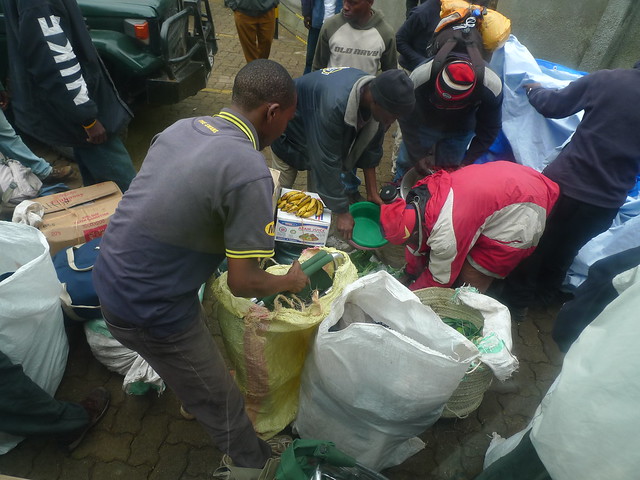
After a two-hour ride with a stop at the butcher for meat, we arrived at the starting point of our route. There were several hiking groups already there, most we’ll recognize and greet throughout our ascent. Locals waited outside the gate for last-minutes shoppers. They sold gaiters, ponchos and hats. Scott managed to get used hiking poles for $15!
We registered with our names and passport numbers and waited for our guides to weigh all our gear. Hiking in Kilimanjaro requires a licensed guide, and everything you carry and weigh in, you must carry and weigh out including garbage. Contrary to popular knowledge, Kilimanjaro is made up of three peaks: Kibo, Meru and Shira, the first being the most popular and thus referred to as the Kilimanjaro. (For the purpose of accuracy, I mention Kibo in all my posts and photo captions when referring to the summit itself and Kilimanjaro for the entire national park.)
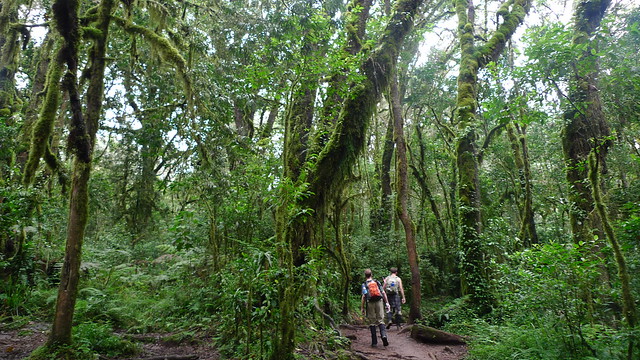
We left the gate and started our hike at 12:30pm through Machame’s lush rain forest. Godibless hiked with us while Samuel stayed behind to make sure the porters had everything in order. For the next six days, we’d either hike with Samuel or Godibless, or both would flank the three of us on the trail. I imagine it was for a case when someone has to descent–the other guide can stay with whoever still feels good about continuing to the summit. This way, if one got sick, the rest of the group may continue.
Vegetation gradually changed as we ascended and because we were exerting effort, we had peeled our layers off down to a shirt. It would get cool again whenever we stopped for a break and a long-sleeved left around my neck would go back on. We took one long stop to eat the lunch that Majengo, our cook, had packed for us. We learned our first useful Swahili word: pole-pole, pronounced poh-lay poh-lay, which means “slow down”. Every few hours, Godibless reminded us to pole-pole; to conserve our energy and take our time.
He also cheered us on and complimented us on our progress. We later learned that he was basically assessing if we will make the summit five days later. To keep our minds off the hike itself, he taught us what other guides teach their tour group: the Jambo song. We never memorized it completely and by the end of our trip, Scott and I were making up the lyrics. But it went a little something like this:
Hello, how are you?
Very fine
You’re all welcome here
You can climb Kilimanjaro
There are no worries
and I was told that “you” referred to the white people, or in today’s parlance, the foreigners.
As we gained 4,954 feet in altitude, our surroundings turned to Tim Burton-inspired trees covered in moss, hardier ferns and yellow flowers. I was out of breath during the higher hills, but I was amazed how strong my legs felt: the past year I spent swimming alone and working out with a trainer has paid off.
We checked in Machame Camp at 5pm after eleven miles of hiking just in time for Holland to score the first goal of three against Slovakia. Our tents were not yet set up because the porters got held up at the gate. It was the coldest I would feel throughout the entire trek because all my warm clothing was still inside my bigger backpack with the porters. We tried to stay warm inside the park ranger’s cabin while we entertained ourselves by checking out the log book for the youngest (13 years) to the oldest (71 years) hiker in the same camp.
We were given a small basin of hot water each to wash up. They would end up brightening my day for the rest of the week because after several hours of hiking–and then several days without showering–washing our hands and faces was a big thing to look forward to. When the mess tent was set up, we sat inside to eat our first tea and popcorn of the week. I would never think of the combination and I rarely eat popcorn, but they always warmed us up before dinner. Our first meal was cucumber soup with some spring onions, boiled potatoes and a mix of vegetables in tomato sauce, plus battered and fried tilapia. Carrots, cauliflowers and bell peppers would appear on our plates every night that I started referring to them as quasi-mirepoix just to give the repetitiveness some class. Majengo tried to be very creative and I did not look forward to anything else but his meals at lunch and at the end of each day.
I lost my sense of time while I was in Kilimanjaro. We would retreat to our tents (Scott and Christopher shared, while I had my own!) as soon as it got dark which was probably 8 or 8:30pm. For the first couple of days, because of jet lag, I would wake up in the middle of the night to relieve myself thinking it was almost dawn. (I am now an expert in peeing in the woods because it was too much effort to walk to the outhouse.) There were times when the moon was so bright that I would think it was already morning, only to step out of my tent completely dressed up for breakfast that I would realize the stars were still out. How much longer until 7am? I caught my first glimpse of Kibo’s snow-capped peak the first night. I remember thinking, I should ask which mountain that is because I couldn’t believe that it was already visible from our first camp. Those were my solitude hours when I wrote in my journal and reflected on the day that just past. It was just me, my pen and my headlamp; they were also the loneliest hours of the trip.
Day 1: Machame Gate (4,888 feet) to Machame Camp (9,842 feet)
Altitude gain: 4,954 feet
Miles: 11
Time: about 5 hours from ~12pm to 5pm
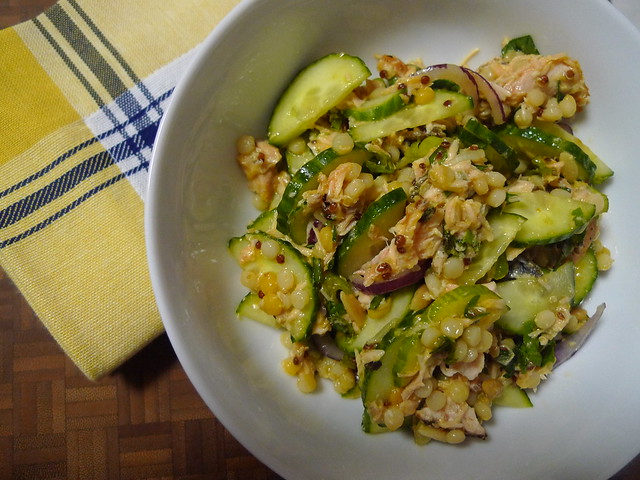
I very rarely cook with salmon because there are always more exciting fish in the market, but my goal is to not use the oven this summer and I could only think of making a salmon salad to keep the kitchen cool. Kirby cucumbers are always good for this sort of salad because they’re fresh, crispy and sturdy enough when chopped and mixed in with other ingredients.
I originally made this without any carbohydrates, but after the first taste, it needed something heftier so I could make it an entire meal in itself. I found a leftover bag of Trader Joe’s mixed grains in the pantry and added that to the salad after a couple of minutes’ boil. For this recipe, feel free to use the same or any other grain available that won’t take too much of your time to cook and fluff.
Ingredients:
1 salmon fish fillet, patted dry with a paper towel
2 cups of mixed grains like barley and/or orzo
1 Kirby cucumber, sliced thinly
1 small red onion, sliced thinly
2 sprigs scallions, chopped
2 sprigs parsley, finely chopped
juice from lemon
oil, salt, pepper
1. Using a non-stick skillet, heat some oil. Sprinkle both sides of the salmon with salt and pepper. When the pan is smoking a little bit, lower the fire and add the salmon. Cook for 6 minutes without moving it and gently turn over using a spatula. Cook the other side for 5 minutes. Remove to a plate, let cool and put in the fridge until ready to use.
2. Heat a small pot of boiling water to cook the grains. Set aside to cool down.
3. While the salmon and the grains are cooling, assemble the salad by putting all the dry ingredients in a large bowl. Toss to mix completely with lemon juice.
4. Remove the salmon from the fridge and flake the meat with a fork. If you left the skin on, it should be pretty easy to tear up in smaller pieces. Toss in with the vegetables. Little by little, toss in the barley so you have about the same portion as the salmon but not too much that the carbs overwhelm the vegetables.
If I knew braising pork belly for three hours would keep me awake to help me get over my jetlag, I would have cooked days ago! I was having this insane craving for Chinese food since I came back from Tanzania. It was very specific, too: I wanted that Dongpo’s Pork taste that’s pan-fried and then braised for several hours to thicken the sauce, but with limited use of the stove as much as possible. I think my body is still asking for all the calories I burnt while I was hiking Kilimanjaro for six days; all I can think about is rice, food, meat. I’m ravenous–nothing new–and always feeling hungry even more so now.
You can use a Dutch oven here to braise as usual, but I felt like using my clay tagine just because I haven’t used it in a while. It’s smaller than any of my Le Creusets and I felt like it kept the pork all jammed in with all that braised sauce. The quantity of liquids may deter you here, but you can always add rice wine during cooking if you think it’s too salty–nothing some pickles and white rice can’t tone down while eating.
Ingredients:
2 pounds of pork belly
1 bunch of bok choy, thoroughly washed, separated
1 large ginger, peeled, thinly sliced
1 bunch scallions, chopped
1 1/2 cups of rice wine
1/2 cup of soy sauce
6 tbsps of brown sugar
1. In a large pot, cook the pork belly with enough water to submerge them. After the water boils, time for two minutes and then turn off the heat. Remove the pork belly to a chopping block and slice in 1-inch thick pieces.
2. Layer the bottom of a medium-sized Dutch oven with the scallions and ginger. Top with the pork belly. The scallions will keep the pork from sticking to the bottom when braising. Pour in the liquids and sprinkle in the sugar.
3. Cover and simmer for at least two hours, checking every 30 minutes to move the pork around. During the last 15 minutes of cooking, layer in the bok choy–they will wilt quickly enough for every leaf to fit–and cover to cook. Turn off the heat, mix everything together and serve with rice.
91 South 6th Street off Berry in Williamsburg, Brooklyn
718/599.3090
$55 each for a group of 10, with drinks, with tip
♥ ♥
I don’t think the ten of us overdid it at Fatty ‘Cue at all.
To celebrate the Dr. finishing residency, I organized several friends to get together and eat at Fatty ‘Cue in Brooklyn. Not a lot of people at our table were big fans of Zak Pelaccio’s first endeavor, Fatty Crab, but they were willing to try Fatty ‘Cue solely because of the promises the name “cue†can offer. We spent about two hours eating and passing plates around to share family-style, and I can assure you, we all left pretty happy in food coma state.
The dishes were served as soon as they came out of the kitchen. We started with the pork loin, thinly sliced pieces of the best part of my favorite animal. They were soft and surprisingly light and were perfect with the green peppercorn aioli.
The coriander bacon was to die for. They had those perfectly burnt ends that were crispy. The crispiness prepared you for the fatty goodness that was underneath. If I only had to eat these, I’d be completely satisfied. The yellow curry custard, in my opinion, was almost unnecessary, but I ended up asking the waiter if I can keep the rest of it to dip the vegetables that were served later.
One of my favorites was the grilled mackerel. I’m already a big fan of the oily fish, but the way Fatty ‘Cue grilled it in banana leaves gave it so much more flavor. The chili-lime-garlic sauce was that Southeast Asian flavor that I was craving. I wanted to be in some tropical island, in a hut, ceiling fan quietly oscillating overhead, and patiently picking the fish bones.
Both the cucumber and celery salads were just the right side dishes for such a fatty spread. Cucumber chunks were tossed in brown rice vinegar, while the slivers of celery were dressed in yuzu and preserved cabbage.
I’m also going to have to get into my Malaysian recipes, as the Fatty ‘Cue version of nasi ulam was delightfully a high-blood pressure inducer. It was a little too salty for me, but I still couldn’t stop eating it. The anchovies and dried shrimp reminded me of my dad’s recipes from his hometown in Ilocos Sur in the Philippines.
Fatty ‘Cue offers the “whole pig” as a special only on Sundays, an $18 dish that’s a plate of different pieces of a pig, as opposed to a whole lechon. It was actually my least favorite out of everything we ate because it was on the dry side even though the pineapple curry added to the sweetness of the meat. The plate came with accoutrements perfect as beer food: chopped Chinese long beans, pickled red onions, lightly grilled garlic cloves and, oy, chili jam. I stuffed several pieces of everything in the steamed bun and went to town. The buns reminded me of what made Momofuku famous; you can basically stuff anything in those buns and people are not going to complain.
The lamb ribs didn’t come until we were all ready to take a nap, but when they did, no one hesitated to pick a rib and gnaw it down to its bone. The meat wasn’t gamey and fell off the bone with just the lightest bite.
All in all, Fatty ‘Cue is perfect for groups because you can order several things from the menu and share the dishes. Our bill included gratuity, which is to be expected when dining with a group of more than six people, but our waiter was attentive even though he didn’t really have to work for his tip. Food came in quickly and our glasses were refilled just as fast. With a few local brews while we waited for a table, standing by the bar was as difficult as it got at Fatty ‘Cue.
I had one day off between the old job and the next, so I planned a sandwich tour to make up for all those missed New York City lunches while I was in Connecticut. Three sandwich shops were recommended to me by my friend Josh; I needed his help because I’ve been out of the food scene for what I felt was too long. He told me to pick one and enjoy, but true to Cia-style, I went to all three and enlisted my friend Dex to help me put everything down.
Each sandwich shop occupied a sliver of a space, with Torrissi a tad more spacious to accommodate more than three tables. They all had short, straightforward menus, good unpretentious vibes and pretty damn good sandwiches. I give them all ♥ ♥
Rbbts
142 Sullivan Street between Prince and Houston
We ordered the jerk chicken sandwich, the most promising item on their menu. The fish tacos sounded good as well, but they didn’t have them the day we stopped by. The jerk chicken was on the salty side but it was full of flavor and they didn’t skimp on the chicken. A bowl of rice with it would have made me a very happy person, but I’ll take that fresh, crusty bread for lunch just fine.
Local Café
144 Sullivan Street between Prince and Houston
Next door at Local, we opted for the panini with fresh mozarella from Joe’s Dairy. You can’t go any more local than that: Joe’s Dairy has been a fixture of Sullivan Street for so many years even before SoHo exploded into the shopping mecca of downtown New York City. The contrast between the warm, toasty bread against the soft, giving cheese was incredible. The caprese combination is nothing new, but simplicity done well makes a good impression.
Torrisi Italian Specialties
250 Mulberry Street off Prince Street
We walked off the two sandwiches and headed east to Torrisi. Of all the shops we visited, Torrisi is the type of shop I dream of opening in my next life, complete with hanging sausages and aged meats. We kept a low profile and opted for three of their Italian antipasti: fried cauliflower, roasted rabe and roasted bell peppers.
Perhaps it was the time of day, but Torrisi was more bustling than the previous two and we had to wait fifteen minutes before we could eat. It got even busier when the clock hit 2pm and the line wrapped in front of the counter and out the door. I’ll definitely be back again for their sandwiches when I can spend more leisure time to wait.
And during my first week at the new job, I tried the following to add to this set of reviews:
Num Pang Sandwich Shop
21 East 12th Street off University Avenue
I couldn’t wait to taste Num Pang’s pulled pork sandwich after my other friend Caroline told me she thought about it days after she first tasted it. After a late night out, I stopped by to order one duroc pork sandwich with honey and added the ginger barbecued brisket to compare it with. Both smelled delicious and were very filling, but were essentially Cambodian stews in a sandwich. I could have easily eaten the filling with a bowl of white rice. It was humid outside and the sandwiches brought me back to those warm Southeast Asian nights.
Luke’s Lobster
93 East 7th Street off First Avenue
I waited in line for about ten minutes before I was able to order my lobster roll. I waited another fifteen before I actually got my order to-go. Such is the price you have to pay when you join the queue at the sandwich shop du jour and you’re competing with other customers who are also changing their status on Facebook, checking in on Four Square, reviewing on Yelp and, well, spooning on UrbanSpoon.
Luke’s lobster roll, albeit smaller than the rest of the east coast’s, was worth it because I can’t just walk around New York City and get a fresh and trustworthy lobster roll. Was it better than the other rolls I’ve had in Amagansett or Narragansett? It was comparable, but I’ll take it when the craving to spend $14 on a sandwich hits me.
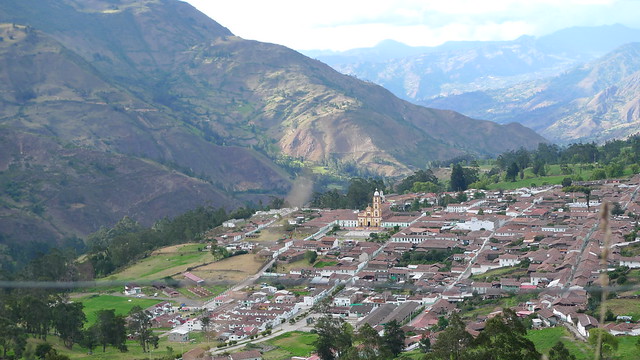
It was two days before Christmas and no one back in El Cocuy town could give us an answer, via Susima’s radio, as to whether there would be a bus back to Bogotá on Christmas Eve. We had a wedding to go to in Medellín the day after Christmas which meant we had to be back in Bogotá to catch our flight the morning of the wedding day. We decided to come down the mountain a day early. Another hike to one of the lagunas would take us a whole day and we just couldn’t muster the strength to camp elsewhere, much less hike back to Susima all in one day. We painfully accepted the fact that it was the day to go back to town to try to catch the night time bus so that we’re back in the capital the next morning.
We started off on the right foot. It was a beautiful morning–the kind of weather we would have appreciated the day before–and the trout were enjoying the running water as much as we enjoyed watching them. El Cocuy marked our third big hike, and even though the Dr. and I get along when traveling, I can’t say that everything runs perfectly smooth all the time. On our way down, a pick-up truck gave us a ride up to the fork on the road where we had started just a few days ago. The rest of the way would be the opposite of the lechero ride two days before, but because we were on foot, we knew it was probably going to take us at least four hours to get back to town.
Our adventure began when we saw the German hikers from a distance being escorted by several guys in military uniforms. The Dr. wanted to shout and wave and get their attention. Maybe they’re being shown a short cut! That was a nice thought but my thinking was that we were in Colombia, a country with ripe history of drugs and violence and that we probably shouldn’t be attracting the attention of armed men while in the mountains. Not to be defeated, the Dr. insisted to take his own short cut a few miles later. I was familiar with the road after watching it on our way up a couple of days before and I didn’t feel confident cutting corners in an unfamiliar territory. I shouted after him when he insisted on going down a different route but to no avail; I ended up on my merry way alone. We did meet at some point again, but I was livid that he insisted on going his separate way. For the remainder of the hike–about three hours–we were on our own. I was on my own.
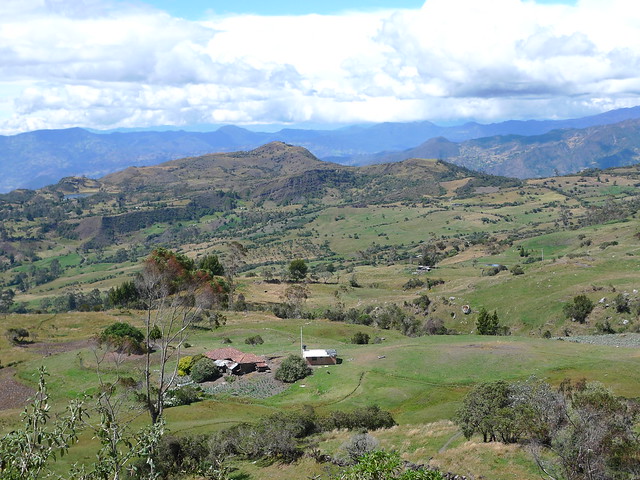
I tried to enjoy the quiet time and the experience of being on my own. I asked a group slaughtering a cow for the holidays permission to take photographs. I said hello to a few pigs, cows and horses, and even rabbits. I waved to farmers staring down from a hill while I lugged my backpack. Motorcyclists stopped and inquired if I was lost; a couple offered me a ride. I stuck to my guns and swore that I would finish the rest of the trek on foot. I would finish it on my own without the stubborn Dr.! (I do recognize the fact that I was being equally stubborn, but hey, I’m the one telling you the story here.) I stopped a few times to ask some locals in my poor Spanish if I was going the right way and it was with their confirmation that let me gather strength to keep going. When the town’s church building finally revealed itself from where I was walking, I sighed a breath of relief: a few more miles and I will be back at the bus station.
Back in the town center, I sat in the park and waited for the Dr. I was hating him then, but I also realized that he had our money and that we would need to make up if I wanted to go back to the city. (Note to self: keep some local currency to myself in case of emergencies or…stubborn situations.) A few minutes later, he rolled in the park behind some guy in a motorcycle. I found out later that he was asking locals all over the mountain if they’ve seen someone who looked like me, and because I stopped a few times to talk to them, he kept getting confirmation that I was still alive and going the right way. (I also found out later that the Germans were indeed being escorted by the military to a short cut.)
The twelve-hour bus ride was more miserable than ever because I sat next to him with a heavy heart. I was about to reach a new milestone the next day and I couldn’t believe we still had to fight after all we’ve gone through in El Cocuy. The hot shower in our Bogotá hotel at 5am after the long bus ride did more than just cleanse our bodies, it also warmed our cold, cold hearts. We started the new leg of the rest of our trip nicely after that. Sometimes, a trip like El Cocuy is necessary to sustain a relationship like ours.
We spent a weekend in Narraganssett, Rhode Island to usher in Summer 2010. After a delayed departure from New York City and a four-hour plus drive to the Ocean State, our first order of business as soon as we checked our borrowed digs by the beach was to get dinner. There were a few restaurants recommended to us in the area, but we were looking for that quintessential New England scene rather than an easy stop by the mall. The Matunuck Oyster Bar won out after looking at their menu online: no veal scaloppini and no shrimp scampi specials.
It was packed when we walked in and button-down chambray shirts with shorts were the uniform. The wait for two was about an hour, but we hadn’t been standing at the bar with our Merlots and whiskeys for too long when we were called to be seated.
We started with a bowl of white chowder–chowdah, as they say in these parts–with potatoes. The Rhode Island style of chowder is my favorite kind because it’s more watery than thick; more seafood than cream. We balanced that with an arugula salad with white beans and onions pickled in balsamic vinegar. We ordered the local pond oysters with the fresh littleneck clams and split the cod sandwich to wrap up dinner. I neglected to note the oyster varieties, only remembering one as briny (our preference) while the rest were sweet and juicy. The cod was no different from other fish sandwiches I’ve had before, leading the Dr. to describe it as “a glorified Filet-O-Fish‖to no fault of Matunuck’s owners of course; it’s just the boring nature of cod.
We asked our waitress if the weekend was the first time the restaurant has been busy this season. She told us that it’s been busy for the last few weeks, but this official start of summer will steady business. The service was surprisingly attentive even for a front of the house staff made of mostly teenagers. The best part was the price: our entire meal cost less than $45 including the much lower state tax of 7%.
Matunuck Oyster Bar is at 629 Succotash Road, South Kingston, Rhode Island. Call to check how long the wait is before you leave the beach 401/783.4202.
It’s hard to find the perfect adjective to describe the feeling you get when you see a rocky mountain view interrupted only by thin sheets of fog the first time you step out of a tent, but that’s what sticks in my mind when I recall our mornings in El Cocuy.
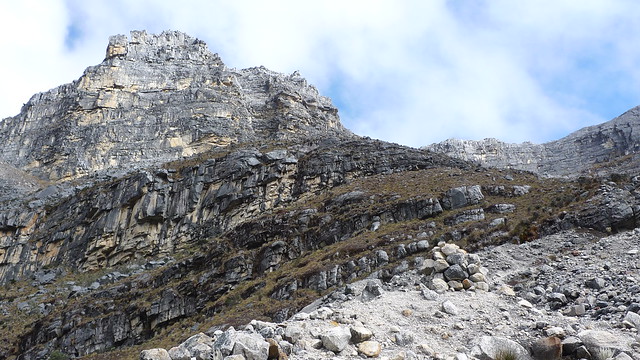
Sharp boulders lay beneath Pulpito de Diablo, or the Devil’s Pulpit, but after a day’s acclimitization we felt ready for a challenging hike. Man, it looks angry, the Dr. said, describing the ribbons swirling around the mountain ahead of us. After a fortifying breakfast of Trader Joe’s corned beef and rice, we left our stuff in our tent and packed only the necessities for our upward hike towards the Pulpit.
And we kept going up for the next three hours.
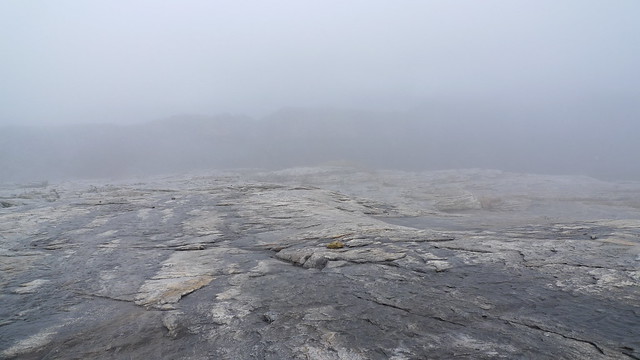
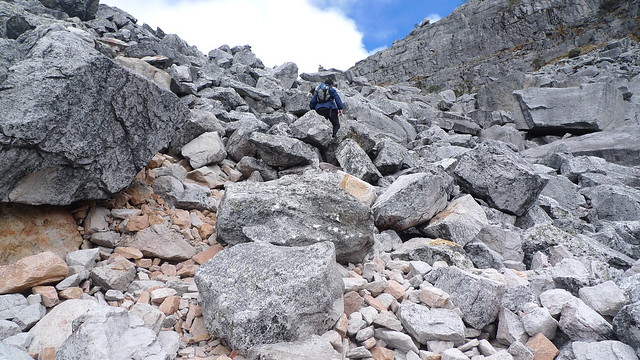
We clawed our way up through rocks and pretended there was a path ahead of us. Every time I looked back, it seemed we weren’t making any headway; the Devil was still very, very far away. He threw another challenge our way when he decided that rain would make our trek more fun. The rocks turned slippery and shiny and we had to squint to see through the sleet of water pelting our faces. We couldn’t even see where we were going anymore but we kept on convincing ourselves the finish line was right in front of us.
When we got to the top, or to where we thought was the top, and ran into a father screaming for his son’s name, we decided to rest and wait for the rain to let up. The Dr. hiked ahead of me to gauge how far the Pulpit really was from where we were, but when it still didn’t materialize behind the fog, we painfully accepted that that was the end of our trek.
We started our way back down–wishing the father luck that he will be reunited with his son–and carefully tredged on wet boulders. We also ran into the Germans staying in Susima. They looked up at us questioningly and we nodded knowingly as they also turned to head back down. For the next three hours, I kept looking back up because maybe, just maybe, the Pulpit will reveal itself again and I can convince the Dr. to turn around. We made our way past the giant tank that diverted rain water down the valley and reached our tent without the gray haze dissepating.
My left knee was weak and my feet were completely taxed. We introduced ourselves to the two Aussies setting up next to our tent which only added to injury after hearing that they have one more hike to go to complete the entire circuit. We listened to their story while looking down at their worn Nike hi-tops.
After a couple of hours sleep back in our tents, we walked up the hill behind Susima to sit among the frailejónes and watched the sky turn from gray to purple then black. Pulpito de Diablo, we will meet again someday.