• Ever since I started commuting to Connecticut for work, I started doing my grocery shopping at the Grand Central Market in Grand Central Terminal. I’m usually in and out, picking fresh produce for what I’m planning to cook for dinner, but one day I spent a leisurely time inside investigating the other specialty products the different purveyors sell. One thing that jumped at me was the number of hot sauces for sale. They caught my eye because they came in unique packaging and different shades of reds and oranges. With the help of Grand Central Market’s public relations firm, I was able to sample different hot sauces and compare them with what I already had at home.
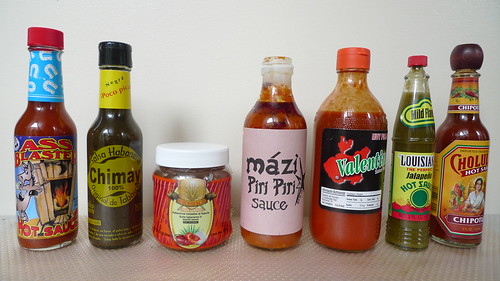
    Check these from left to right and buy your favorite just in time for the Super Bowl:

    1. Ass Blaster hot sauce from Southwest Specialty Food
    This came in the most amusing packaging. The bottle is inside a replica of the actual outhouse at the company’s Arizona headquarters. It reminded me of a coffin so tasting it actually made me nervous. The Ass Blaster is fierce on the front of your tongue and it stays there for a long time while you’re eating. I’m sure it would blast my aSs if I have plenty of it.

    2. Chimay Salsa Habañero
    I like Tabasco sauces because of their vinegary taste. This is a little smokier than the yellow kind I already have and love so even though it’s stingy, the spiciness is short-lived and very tolerable.

    3. Kaiska bulls habañero in tequila sauce
    This is very interesting because it’s chunky and comes with onions. Despite the name, it has no alcohol in it even though it comes from the agave azul plant, the base ingredient for tequila. I use Kaiska as a condiment because there’s a little bit of sweetness to it that’s great as a rice topper.

    4. Mazi Piri Piri sauce
    Most commonly known as sauce from Portugal, the chiles are actually used a lot in East African stews and is great as marinade. Piri piris, meaning “very yellow” in Gujarati (after the Portuguese colonies in India), look a lot like Thai chili peppers–small in size but very powerful in heat. It’s also very oily. I noticed that when setting up the photo below: its “legs” are longer on the plate. The packaging is quite a bitch to open because it’s sealed with wax. I had to use a bottle stopper to store it but if you use it as a marinade, you’d probably end up using all of it at once anyway.

    5. Valentina hot sauce
    I associate Valentina hot sauce with tacos especially here in East Harlem. It’s easily the condiment that’s always present on eat-in counters in taquerias. I once sent my friend Anna a bottle of this straight from Mexico City but didn’t pack it well enough that she basically received a glob of hot sauce on her doorstep. This is probably the most tolerable hot sauce for me in this batch because I’ve had enough of it.

    6. Louisiana jalapeño hot sauce
    This is also very tangy, though not as spiky as the Chimay. The heat goes in the back of your tongue which may seem nothing at first but begins to kick while you’re chewing your food. The good thing about Louisiana is that it never overpowers the food you’re eating.

    7. Cholula chipotle sauce
    Chipotle is a dried jalapeño pepper that’s also been smoked. It’s mostly used in Tex-Mex cuisines. Though that’s not at the top of my Mexican food list, I like using Cholula when I make Subanik, a Guatemalan stew I learned to make from Francis Ford Coppola’s resort, to mix with the ancho chiles.
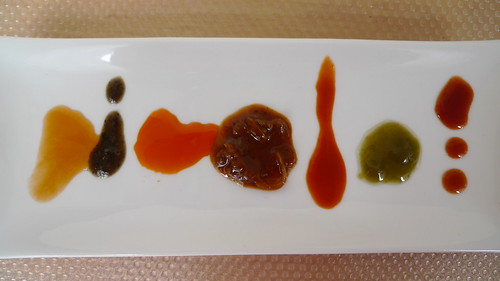
    Note that on the photo above, the third and fourth dollop have actually been switched. The chunkier and darker one is from Kaiska; the more orange is piri piri. You can buy #1, #4, #7 from Grand Central Market. My friend Corey brought back #2, #3 and #5 from his last business trip to Mexico, though #5 is available in bodegas in most neighborhoods with a large Mexican population. I bought #6 from the New Orleans School of Cooking.

    Related post/s:
    Check out the Grand Central Market in Grand Central Terminal
    Call the New Orleans School of Cooking and they can ship a box of their best hot sauces anywhere in the United States
    This Guatemalan stew brings back memories
  • 45 Tudor City Place off East 43rd Street
    212/599.5045
    $170 for two people, with drinks, without tip
    ♥ ♥ ♥

    While in Colombia, we had a few unfortunate meals that involved pasta. Sure, Italy shares a lot of history with South America–the mass emigration of Italians was between 1876 to 1976 and brought a lot of them to countries like Argentina and then to Colombia–but the “Italian” meals we had didn’t quite involve a loving grandma in the kitchen. At the beach, vegetables were brought in from the nearest big city, about six hours away, so canned sauces were easier to come by. When there were fresh tomatoes, they were used with pasta that came in a box and because most of our meals weren’t cooked individually but in a big batch for the day’s guests, the concept of al dente was nonexistent.

    Back in New York, I searched for that pasta lovingly massaged by big hands covered in flour and I found it at Convivio. We had no business spending any more money after our two-week trip, but I couldn’t resist Convivio’s $62 Sunday night prix fixe menu. Unlike most prix fixes in the city, their 4-course menu included a pasta and a dessert without skipping a separate main course. I opted to start with the yellow fin carpaccio drizzled in olive oil and sprinkled with finely chopped scallions and pistachios. I wanted to start light before my preferred pasta dish: saffron gnocchetti with crab and uni.

    Did you just read that? Saffron gnocchetti with crab and sea urchin! I am not exaggerating here when I tell you that the combination made me roll my eyes back in ecstasy several times. Sea and earth have never smelled and tasted this heavenly together. The pasta was soft; full, yet springy at each bite. It was pasta at its best. At first, I thought the half portion would not be enough, but it was actually the right amount for such a rich dish. It left me wanting some more and yet I was completely satisfied. I think if I had a whole serving, I wouldn’t have cherished each spoonful as much as I did.

    I could not say no to the duck breast. Duck is my new lamb. Done perfectly with Swiss chard alla Romana and spaghetti squash, it was the most beautiful wintery dish without being too heavy. Thankfully I was with someone who picked the lamb chops that tasted so carnivorously good with escarole and white beans. The last time I had lamb that tasted like it was just running an hour ago was at Per Se–that’s saying a lot for a most generous option on a prix fixe menu.

    For dessert, it was a battle between the vanilla panna cotta with huckleberries and lemon sorbet or a trio of “freshly-spun” gelato (peach, mango, lemon the night of our visit). I am wont to order only one dessert and split it between me and my companions, if I order at all, but both were so irresistible that we shared them during our last few minutes in the restaurant.

    If every homecoming meal was Convivio style, I would gladly suffer through a bad meal or two abroad just to remind me that sometimes you don’t have to go too far to enjoy a meal that’s full of heart–grandma or no grandma.

    Related post/s:
    I forgot to use my camera at Convivio, so just take a look at my Per Se photos

  • Our connecting flight in Fort Lauderdale was delayed a couple of hours because of a snowstorm in the northeast, but we managed to get in Bogotá, Colombia before sunset. Señor Samuel was holding up a piece of paper with our names on it as soon as we exited the El Dorado Airport Customs. He was hired by my friend Evelyn’s aunt to pick us up from the airport and drive us around because we had a few errands to run before catching the 6:30pm bus to El Cocuy. He had planned our routes accordingly to put us back on schedule. Minus the part when he locked us all out of the car by leaving his keys in the ignition, he was a really good driver and guide. [Insert nervous laugh here.]

    Our first stop was the bus terminal where Evelyn’s aunt arranged for our bus tickets to El Cocuy. Señor Samuel knew we still had errands to run but because we were pressed for time, he talked to the bus conductor to see where the next stop would be so we could meet the bus there instead of boarding from the main terminal. We tried to ignore that the conductor was holding a bottle of rum and only had one working eye; we wanted him to allow us to be picked up from another stop so we were in our best behavior when the two men reached an agreement and exchanged phone numbers.

    Our next stop was at 104 Art Suites Hotel in Bogotá. We weren’t scheduled to check-in until four days later, but I had arranged to drop off our non-hiking luggage in the hotel for safekeeping until we were done with our trek. Then we stopped by the hiking store in the neighborhood. Because gas tanks are not allowed on any flights, I found the closest camping store to make sure they had the tank that would match our stoves. Everything seemed like a match online when I was researching in New York, but unfortunately, the thing that had to connect to the other thing wouldn’t, so we had to leave the store without any camping gas.

    We didn’t have the time to try another store or buy a whole new expensive stove system we may never use again, so we decided to just go for it and try to survive with cold food for the next three days. The Dr. had no idea that he was participating in a very Filipino attitude of Bahala Na at the time. We just didn’t have the time to sulk about one mishap.

    For the next thirty minutes, Señor Samuel zig-zagged through traffic to meet our bus at the next stop. He dropped us off at a mall so we can buy food to eat in the bus–Go Frisby!–and then walked us to the street where the bus was to stop. As soon as the clock hit 7:30pm, the bus pulled up with two empty seats in front. You’re the guys from the terminal? the driver asked us in Spanish. We said yes and he loaded our backpacks under the bus and led us to our seats. We paid Señor Samuel his fee and thanked him profusely for helping us with everything we had to do in the span of three hours before we boarded the bus, so we were a little touched when he suddenly showed up standing in our aisle: he quickly got on the bus just to make sure we were comfortable in our seats. He wanted to say good-bye one more time and he wanted to let us know that the driver will let us off in El Cocuy twelve hours later.

    We left our New York City apartment at 2am that day and almost eighteen hours later, we were on our way to El Cocuy, Colombia, our home away from home for the next three days. The bus ride was uneventful but much more comfortable than our economy seats on the plane from the United States. It made a few stops for the driver to take a break and for the passengers to pee, and only one of them involved gun-toting camouflaged soldiers ordering all the men to get off for inspection. It was only when a rooster that had been sitting in a box on the seat in front of us crowed that we knew we had made it. The sun was starting to rise and it was time to get off.

    We were disoriented when we got off the bus. We slept some, but no sleep on a bus can beat sleep on your firm mattress at home. There was some action in the center of town and it was obvious that people had just started their mornings. I opened my Lonely Planet Guide and picked out the editor’s favorite hostel in town. We walked about three blocks uphill and knocked at La Posada Del Molino. A guy let us in after we inquired for vacancy. He pointed to the stage and sound system set up outside the hostel and warned us that it gets loud at night because of the holiday festivities, but we were in no mood to find another hostel. We just wanted to put down our backpacks and catch up on real sleep.

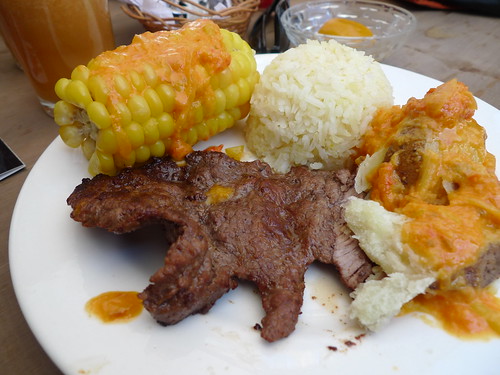
    Six hours later, we changed and sat in the courtyard to order some lunch. We were quite disappointed that there was no hot water in the shower as advertised, but we were in no position to complain as we would have to live without showering for the next three days anyway. We were famished and we easily devoured the vegetable soup and the beef plate that came with salad, corn and rice that was served to us by the kitchen staff. It was about sixty degrees, warmer than the temperature in New York City, but there was still a chill in the air. We have been in Colombia for less than 24 hours and we were already up 9,000 feet.

    After lunch, we decided to walk around town and take care of the remaining logistics for our hike. We stopped by the Parque Nacional Natural (PNN) El Cocuy Headquarters on Calle 8 No 4-74 to check-in, finalize our route and pick-up a map. We also went to the offices of the two bus companies that run the Bogotá-El Cocuy route, Libertador and Concorde, to check if their buses were running on Christmas Eve and Christmas Day. The clerks in both offices couldn’t answer our question, so we put a deposit for a temporarily scheduled December 24th departure and planned to hike down the morning of.

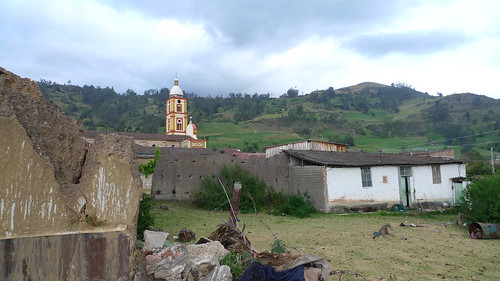
    With most of our tasks taken care off–there were no camping stores in El Cocuy so we were still sans stove–we walked around town to check out the scene. We visualized our hiking route using the diorama in the park. We paid our respects and visited the town church and we spent a few quiet minutes in the cemetery. We bought a kebab and an arepa-like patty filled with ham and cheese from two street vendors and we drank our first Colombian beer. Most of the locals were wearing the ubiquitous wool shawl; the men completed their looks with fedoras. Time was slower in El Cocuy and we were still trying to pace ourselves down and absorb our new surroundings.

    Related post/s:
    El Cocuy town photos on Flickr
    El Cocuy, Colombia hiking map

  • Imagine my delight when I saw a big box on my chair after being out of the office for two weeks. My co-workers gathered around to watch me unpack the Tassimo Home Brewing System from Kraft Foods. I had the public relations agency specifically send me a sample to test at work where coffee connoisseur wannabes can help me evaluate the cute little machine made by Bosch. We already have a Keurig machine set up in the kitchen, so we set the Tassimo up in one of the designers’ cubicle to schedule coffee breaks and tea times during our regular work hours.

    The Tassimo was easy to set up. After following the instructions to clean, we started to make our coffees and teas. Throughout the first day of testing, co-workers came up to make their own cups. The following are the pros from several testers:

    1. I like that it has a sensor to stop brewing if you move the cup.
    2. Convenient. I don’t have to drive to get my coffee in the middle of the day. (We are, after all, testing in a Connecticut office.)
    3. Easy clean-up.
    4. Making coffee is quicker than going downstairs to the cafeteria!

    But for such a compact machine, the Tassimo is pretty loud. It did help with advertising it to the rest of the office because a few of them stopped by to check out the whirring noise that was coming out of the cubicle. The button that starts the quick brewing process looks like a dial, so all the testers kept trying to turn it to skip a step ahead, i.e., to add more water. The designers asked why the buttons couldn’t be separated and labeled clearly.

    We were also sent several samples of the beverages: Starbucks, Espresso, milk for latte and cappuccino and Chai. Each came in small pods with a barcode. The Tassimo reads the barcode and magically knows what to do with it. We all loved that when you put the milk pod, it knows to make it frothy for cappuccino, but some worried if they have to waste and throw a pod if the machine deems it unreadable for one reason or another.

    For the Starbucks fans in the office, they thought the coffee brewed up nice and strong. For deli coffee fans, they had to re-brew just to add more water to it because it was too black. A couple of people didn’t like the idea that the milk came in the pods. Although convenient, they didn’t like that they could be sitting on a shelf for a long time. For those who like their coffee with only a little milk, they wanted a button to stop the machine from processing the entire milk pod. But what to do with the leftover milk? They deemed a pod a waste if only one user can process the milk at a time.

    On Amazon.com, a box of twelve pods is retailing for $21 which means a cup of coffee is less than $2, but there was a also big concern about the waste of plastic that the pods use even if you use your own mug to brew your coffee.

    Overall, the Tassimo Home Brewing System is affordable, compact and convenient, but it could use some design tweaks to make it easier for people to operate without having to pour over the manual. You, as the coffee drinker, should just decide whether you like the taste of the coffee and tea it brews.

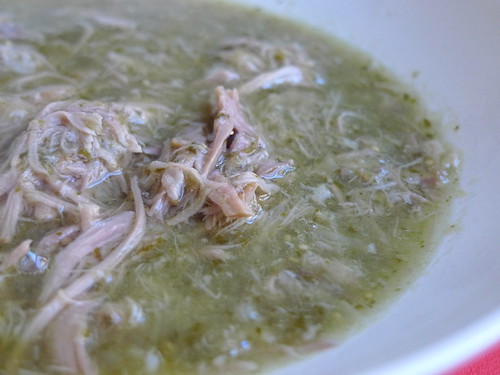
  • As much as I would like to take credit for this very satisfying soup, I’m unable to because I recreated it from memory after the Dr. made it this winter. I remember walking in his apartment and saying that his place smelled like Taco Mix, the taco stand in his neighborhood. Apparently, it was the best compliment I could have given because he was trying to make a Mexican soup he saw in Anthony Bourdain’s latest Mexico City episode. He replayed the show for me and all he could figure out was that the soup they were served for breakfast was green. The Dr. imagined a whole pork carnitas taco in soup form, so he went to work and boiled down pork with tomatillos, cilantro and lime juice. The finished product was so good, I could not help but ask for a third serving. When we came back from Colombia and I was lamenting about the cold weather, I made it myself. Funny how sometimes a snapshot from a TV show is enough to inspire you to cook.

    Ingredients:
    1 medium-sized pork picnic
    12 tomatillos, peeled from husks and quartered
    2 bunches cilantro, thoroughly washed
    2 Scotch bonnet peppers, halved, seeds removed
    1 red onion, quartered
    3 cloves of garlic, minced
    juice from 4 limes
    salt

    1. In a large stockpot, boil the pork picnic in enough water to keep it submerged. Add a generous amount of salt. When impurities float to the top, remove and discard. Lower the heat down to medium-low.
    2. Add the rest of the ingredients to the pot and simmer, covered, for about 2 hours. Using a ladle strainer, try to get as much of the solids and transfer to a food processor. Purée and transfer back to the pot.
    3. Cook for another hour or until pork is falling apart. Season with salt and lime juice to taste. It should be a good balance of saltiness and sourness. Serve with rice.

    Related post/s:
    Taco Mix in East Harlem
    Tomatillo salsa recipe

  • Cochon is French for my favorite animal in the world and its menu–and decor–had my name all over it, but sadly, I too have my limits when it comes to fatty foods.

    We had a couple of martinis at the bar while we waited to be seated. It’s a huge space but uncomfortably humid. By the time we started eating, we had stripped down to the T-shirts we wore under our light sweaters. The service is very brisk, and a few times, our waitress spilled water on our table and on the floor while refilling our glasses and of those around us. Busboys served the dishes without a word and no one ever came back to remind us of what we ordered. The entire time we were there, we chuckled at how the service is up to par with a trendy New York City restaurant on death watch.

    The Louisiana cochon is a large chunk of pulled pork stewed with turnips and cabbage. I wish the taste of the stewed vegetables penetrated the meat a little bit more inside. A piece of crackling sat on top and was fought over and eventually split between the Dr. and I. The gumbo was absolute perfection with a little bit of tang and spice. It was made the way I like it: watery and a little light on the rice and heavy-handed on the okra stubs. I could not say the same about the boring alligator meat that, not surprisingly, tasted like chicken. It was a little gamier than regular white meat, but without the chili garlic aioli, it would have been just a chewy and bland beer food.

    I made a huge mistake by booking our table at Cochon during our last night together in New Orleans. I was up to here with rich and buttery stews so I feel like I didn’t appreciate Cochon as much as I normally would. If there is a reason to return to New Orleans, mine would be to eat again at Cochon to do it some justice.

    Cochon is at 930 Tchoupitoulas Street. Call 504/588.2123 for reservations and get ready to be engulfed by smoke and heat from the kitchen.

    Related post/s:
    Cochon photos on Flickr

  • MiLa was a breathe of fresh air after inhaling smog all weekend. MiLa was like a clean bath after being submerged in lard and butter. I know those comparisons are preposterous, but I can’t stress enough how clean my palate was after our lunch at MiLa. For several days in New Orleans, I’ve been treated to a barrage of heavy foods and MiLa was actually the first restaurant among the nine–count them: nine–I visited during my four-day stay that had a fresh, and uncooked, salad on the menu. Needless to say, I devoured those greens like a hungry goat on green pasture. It barely had anything in it but a light lemon vinaigrette dressing with sunflower seeds and I ate it like I was Popeye deprived of Spinach.

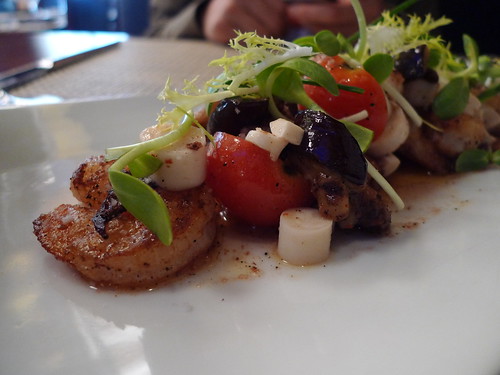
    The dishes that were cooked equally stood on their own feet. The curried squash soup was thin and light topped with chopped scallops and chives. The shrimp were served with micro greens, frisée, cherry tomatoes and thinly-sliced eggplants tossed in red wine dressing–the best dish among our five dishes. The monkfish was tasty and perfectly seared and was served with a potato purée and sauteed leeks. I wasn’t crazy about the persimmon ice cream, but I allowed myself something creamy and rich after that cathartic meal.

    MiLa has one of the best deals in the city. The three-course lunch prix fixe costs $20 without drinks and a la carte entrees do not surpass the $19 mark unless you order a steak for $22. I rewarded myself for such a good find by ordering a bottle of sparkling water for a couple more dollars extra.

    MiLa Restaurant is at 817 Common Street. It wasn’t crowded when I went for the three-course lunch prix fixe, but call 504/412.2580 for a reservation anyway to beat the power lunchers.

    Related post/s:
    MiLa Restaurant photos on Flickr

  • 32 West 32nd Street, 3rd floor, between Fifth and Sixth Avenues
    212/967.5088
    $10 for a large bowl of soup
    ♥ ♥

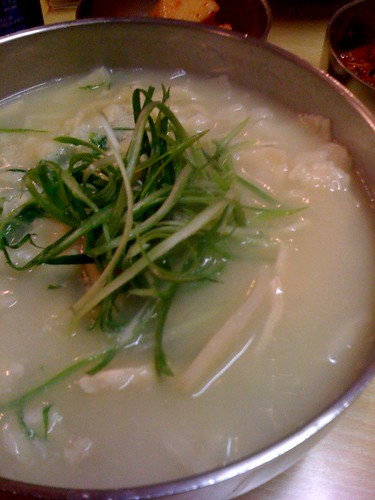
    The key is the “home-made” part in the restaurant’s name. Don’t let the office space turn you off. I know it looks like a fire hazard in there but an hour of your life in danger is worth it for the kalguksu, or “knife noodles”, the wheat-flour noodles that are cut instead of extruded or spun. They’re soft and plump and they easily give without falling apart when swished in the hot broth.

    Don’t miss out on any of Arirang’s kar-jeabe, a combination of kalguksu and sujebi, dumpling skin look-alikes that have been torn to smaller pieces. They simmer all the ingredients together for a very long time resulting into the most complicated broth you’ll ever taste. The gingery taste in the chicken broth is good if you’re feeling down this winter. They come in large bowls that could easily be split between two people unless you’re eating with a hungry Korean doctor.

    Related post/s:
    Dduk-Bokee at home
    Make your own dumplings for dduk mandu gook

  • One of the Dr.’s colleagues who is also a Tulane graduate wanted to show me the best po-boy in New Orleans. I couldn’t refuse his offer; the Dr. was going to be occupied with work anyway. The colleague considers himself a local, but we got lost a couple of times and ended walking up and down Magazine Street to try and find it. Not surprisingly, people we asked in cabs and on the streets had no idea which place we were talking about. When we finally got the correct directions, we had to take the sad public bus to the other end of town because there were no cabs picking up passengers. I had just eaten lunch but the shenanigans we had to go through to get po-boys made me hungry again.

    The most common story I’ve read about po-boys is that the term comes from the term “poor boys” because the traditional sandwich was meatless and only dipped in meat juices to remain affordable for the blue-collar working men of the 20s and 30s. Ask any Southerner and they will tell you that the secret to a good po-boy is the bread: flaky and crusty outside but light and airy inside. The more crumbs you leave after eating a po-boy, the better.

    Domilise’s is one of those hole-in-the-walls left by time to rot. The thin wooden walls are covered with old-school photographs and outdated signs. The stained ceilings hover above the bar that looks like it could be found in someone’s dank basement. Except for the young hipster guy behind the counter, Domilise’s looks and smells like what I imagined the old days looked and smelled like.

    Domilise’s is at 5240 Annunciation Street. The area is a sleeper town so call 504/899.9126 before you drag yourself over there to make sure it’s even open.

    Related post/s:
    Domilise’s and po-boy photos on Flickr

  • Delmonico changed my erroneously-informed impression of Emeril Lagasse and of New Orleans cooking in general. I’ve never been a fan of the man but I realized later, while attending a cooking demonstration at the New Orleans School of Cooking, how much he has contributed to the food and culture of the city. Throughout our stay in New Orleans, we had a lot of rich and fatty foods. It was at Delmonico’s where we had the right balance of good food, drinks and ambiance.

    I was in the city crashing the Dr.’s appointed time at the annual anesthesiology conference. Wherever we went, we would run across some of his colleagues. At Delmonico, there was a big table of them, so even though we had reserved seats, we opted to stay at the bar for dinner because it was more casual sitting by the piano man in the middle of the room than being surrounded by other doctors. (Can you blame me? I can only take a few of them at a time!)

    After a round of sparkling wine and cocktails, we started with the sausage served with shiitake mushrooms. Delmonico has a whole menu of house-made charcuterie and artisanal cheeses but we controlled ourselves to leave room for the rabbit, the crab and the pork cheeks. The rabbit itself was pretty bland like chicken, but the broth surrounding it was well-seasoned. I couldn’t stop myself from clearing everything off with the freshly baked bread that kept coming in from the kitchen. The soft-shell crab was great with our drinks. The tartar sauce was thick, but light in taste and did not overwhelm the crispiness of the fried crab.

    Dirty rice has never tasted this good. True to its Creole roots, the rice was cooked in the juices of the meat it was served with and it shared the rich brown color of the crispy pork cheeks. The golden beets salad was awesome in data molasses, pine nuts and homemade yogurt underneath, but we still needed a side of green beans tossed in garlic and some lemon juice to cut through the richness of our entire meal. Now if only they weren’t cooked in butter…

    The dessert choices were not afterthoughts. We ended up going for the earl grey panna cotta with poached Seckel pear sprinkled with pine nut streusel. For my first visit at an Emeril Lagasse restaurant, I have to say that Bam!, I’m now a fan.

    Emeril’s Delmonico Restaurant and Bar is at 1300 St. Charles Avenue. Reservations are essential, but walk-ins are accommodated. Call 504/525.4937 anyway so you know how long the wait is. Drink and eat at the bar–it’s perfect.

    Related post/s:
    Emeril’s Delmonico Restaurant and Bar photos on Flickr

  • 161-29 Crocheron Avenue, Flushing, Queens
    718/321.7770
    $40 per person for a group of 11, with drinks, with tip
    ♥ ♥

    For one of the Dr.’s birthday celebrations this year, I gathered his favorite people together to share a table at Sik Gaek Restaurant in Flushing, Queens. Everyone had just seen the Anthony Bourdain NYC Outer Borough episode and the cut with Momofuku’s David Chang was the talk of the food world. Because of the hype, I didn’t need to convince our friends to make the trek and even rent a couple of Zip Cars to get there.

    I had called a few weeks earlier to save us one of the tables in the corner nook. The restaurant had its loyal following even before the No Reservations episode aired, but seats are even more in demand now. The guy on the phone warned me that if my party was late, they will give up our table–we all came 10 minutes early and they immediately seated us and got us fried eggs for appetizers with cold beers.

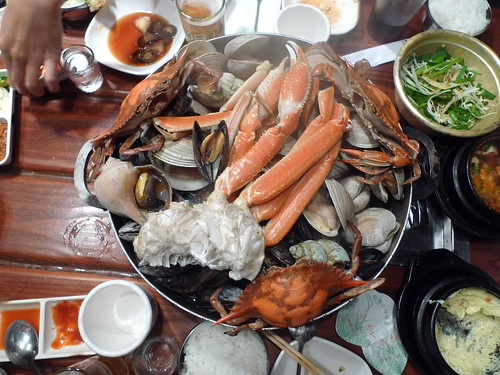
    If you’ve seen the episode, you know that the main attraction is the live octopus. As much as I liked the cephalopod’s texture in my mouth and the sticky tentacles on my tongue, the hit for me was the seafood pot that was filled with mussels and clams. The broth in the end after every shellfish was consumed and discarded was superb. I just wanted a bowl of it while curled under my warm down comforter.

    We also ordered the usual fare of Korean barbecue and kimchi chigae and shared several kinds of panjans, or side dishes. The beer and soju did not stop coming, and soon enough, the Dr. was wearing the restaurant’s house ‘fro while they played the Happy Birthday song in both Korean and English. It was a good family meal with good company.

    Related post/s:
    Sik Gaek food photos and live octopus food videos on Flickr

  • The Dr. and I both woke up with a hangover. We have been in New Orleans for less than two days and we’re already learning what it’s like to legally walk the streets with drinks in hand at all times of the day. Hangovers like this one call for a hot bowl of pho to calm our stomachs down and stop the pounding in our heads. Enter the town of Gretna, one of the largest enclaves of Vietnamese agricultural workers southeast of the city, on the other side of the Mississippi River.

    It was the day of the Giants-Saints football game and none of the cabs we stopped were willing to cross the bridge for less than $40 round-trip. Eli Manning, who plays for the New York Giants, is a New Orleans hometown boy, so whatever the outcome was, the locals were meant to celebrate. (The Saints later destroyed the Giants.) It’s more difficult to get a return fare from small town Gretna so our grouchy cab driver tacked on a few extra dollars to our fare for disrupting his football time.

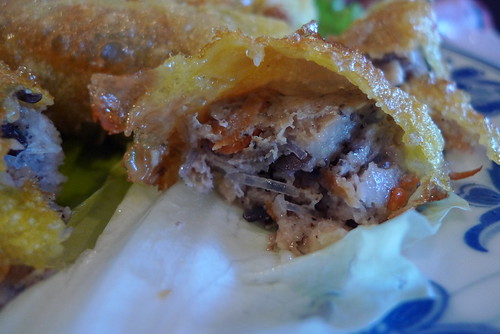
    The cha gio here, or crispy spring rolls, were unlike what we usually eat in Vietnamese restaurants in New York City. They use a different kind of rice wrap that’s more thin and they bubbled up after frying. They weren’t cheap on the filling either. They were excellent wrapped in lettuce leaves and then dipped in nuoc mam, or the sweet and sour fish sauce that’s always on the table. My mouth is watering just thinking about them.

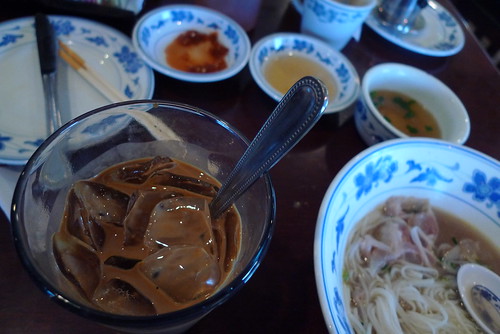
    We ordered two kinds of pho to compare, one with a clear broth, and another–the Dr.’s preference–with a thick and stewy soup. Both hit the spot for sure because we nearly had to roll ourselves back to the city after eating. Of course, my eyes were hungrier than my stomach, so I ordered a plate of pork chops with rice that I ended up packing to go and eating in our hotel room later that night. The $40 ended up being worth the trip because we had the best Vietnamese food we’ve ever had outside of the island of Palawan, a Vietnamese refugee enclave in the Philippines.

    Tan Dinh is at 1705 Lafayette Street right off the Belle Chasse Highway in Gretna, Louisiana. Call 504/361.8008 before you spend a hefty fare from New Orleans just to make sure they’re open.

    Related post/s:
    Tan Dinh Restaurant photos on Flickr