• Look what you did, Jase said as he pointed to the window. It was snowing even though the weather channel reported rain for the day. It wasn’t taco-eating weather but we had work to do: we will find a good taco in Sunset Park, Brooklyn.

    Sunset Park, Brooklyn experienced its heyday during World War II when the Brooklyn Army Terminal employed more than 10,000 people to help ship to American troops. Like any other neighborhood, it reach its peak and lost its allure to families who wanted to move to the suburbs. All of a sudden, the rowhouses that would remind you of San Francisco were no longer valuable. By 1990, 50% of Sunset Park’s population consisted of Puerto Ricans and Dominicans. Today, Brooklyn Chinatown is along Eighth Avenue, while Seventh is favored by Indians from Gujarat and Fifth Avenue by Mexicans. It was this detail that made me drag Jase to the main drag to search for a good taco.

    I had a small list and I gave the Jase my usual rules: a chorizo taco is a good start, but we’ll order the weirdest thing they have available. Jase had his, too: No head, no tripe, no eyes, no ears. I nodded to say, Yeah, yeah, yeah, because I know I’ll try my best to convince him to eat them anyway. Luckily for him, the trucks were nowhere to be found because it was the middle of the day and most of the hole-in-the-walls were covered with plywood. We ended up walking from 44th Street to 55th and ducking in each place that didn’t look too fancy.

    1. Tacos Nuevos Mexico III, 44-10 Fifth Avenue, 718/686.8151

    Where was I and II? This was the first place we spotted as soon as we turned the corner on Fifth Avenue. It was past noon and we were famished. Upon confirmation that they were open for business–no one was inside and the kitchen looked sparkly clean–we sat down and ordered one carnitas taco and one chorizo. Two of each came and all four were slathered with wet guacamole. I like avocados; I just don’t like them in my tacos because they end up hiding the flavor of the meat. I realized I hadn’t done this taco search in a while that I forgot to let the waitress know that guacamole and sour cream were no-nos. In any case, the carnitas were very soft and fatty, while the chorizo was salty and spicy. We devoured them with Diet Cokes and we were very satisfied with everything, guac and all.

    2. Tacos Xochimilco, 45-01 Fifth Avenue, 718/435.7600
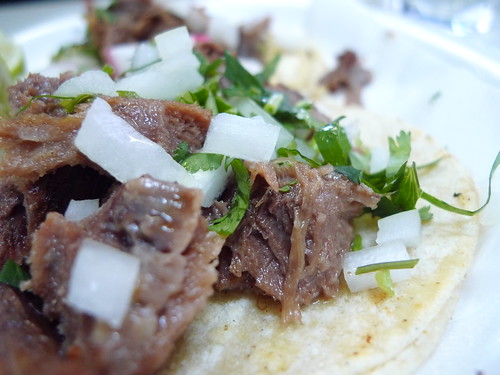
    The lengua, or beef tongue, at Xochimilco tasted like it had been cooking for hours. It was sweet and it fell apart at each prod of a plastic fork. The tripe was surprisingly delicious. I am used to having them a little chewy with its natural offal taste included, but this one was just right. Jase ended up liking the tongue, too: Like Mom’s Sunday pot roast.

    3. La Guera, 46-03 Fifth Avenue, 718/437.0232
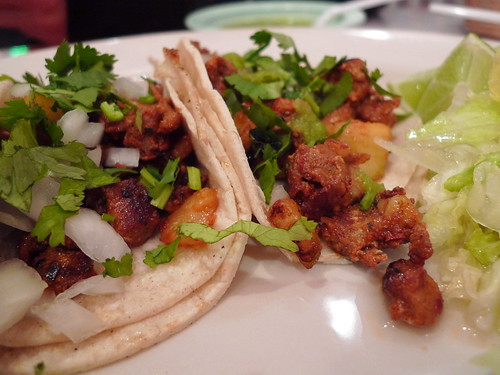
    La Guera had the cheapest of all the tacos we tasted. A small one cost us $1.25 when we thought the $1.50 at Xochimilco was already a good deal. But you get what you pay for: the pastor taco tasted too earthy here; a little bit dry, with only a small chunk of pineapple and a spritz of lime juice to save it. The buche, one of my favorite types of taco, or the stomach, was just a load of flavorless fat.

    4. Tacos California, 46-16 Fifth Avenue, 718/439.1661

    I usually avoid restaurants that bill itself as “authentic” but we were getting full and the snow had turned to steady rain. We needed to stay dry and warm, so we went in here to take a break while a Mexican soap opera blasted overhead. We ordered a taco that was called an enchilada with “spicy pork” in parentheses. From my understanding of fast foods, enchilada is a bigger tortilla stuffed with anything as long as tomato sauce is involved. I was right, but it was awkward to eat because it was half the expected size. Notes of paprika and cumin were included, two of my favorites spices, but the tomato definitely tasted like it came from a can. Jase refused to try the cabeza, or the head, which was too bad because it was the restaurant’s saving grace. It was fatty and gelatinous and full of flavor–my lips were coated in natural fat soon after.
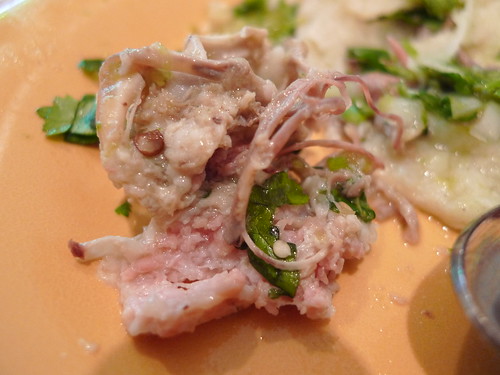
    5. Tulcingo, 55-20, Fifth Avenue, 718/439.2896
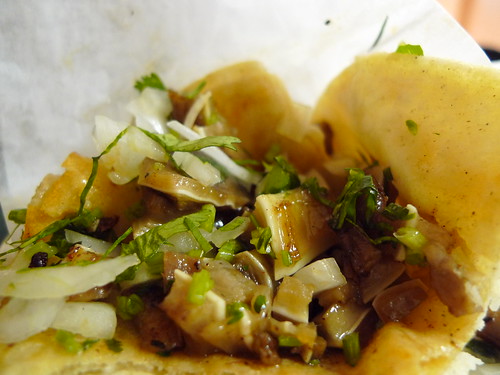
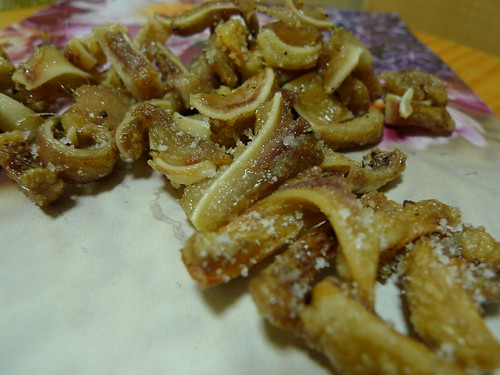
    By the time we entered Tulcingo, Jase and I were giving up. I felt defeated after just six tacos, but alas, good things must come to an end. Every place we went to had orejas, or ears, on the menu, but only Tulcingo actually had them. The last time Jase and I had pigs’ ears, they were fried, and he wished these were, too, instead of just boiled to death. But I did like the crunchy cartilage even if the skin felt more like Jell-O in my mouth. The chorizo here was mediocre, though I liked how it was spicier than the first one we had.

    All in all, we had some good tacos but nothing that blew me away. We split one Negro Modelo to end our late lunch date and toasted to our rainy Mexican day in Sunset Park, Brooklyn. Looks like it’s time to take a trip out west to satisfy my taco craving this year.

    Related post/s:
    More Sunset Park Brooklyn taco photos on Flickr
    Background on finding the best taco in New York City project
    El Barrio in East Harlem had some good tacos without the guacamole

  • Tinola, or Filipino chicken ginger soup, is one dish that I don’t make often. When I was growing up in Manila in the, ahem, 80s, my father brought the farm from his hometown of Ilocos Sur with him. We had a backyard with a small fish pond and a chicken coop. Each week, we would either have paksiw, or fish soup with ginger, or tinola. Every Sunday, our family lunch consisted of a freshly-slaughtered chicken, all innards included, in a big pot of steaming soup.

    Traditionally, tinola uses green papaya and the leaves from a Thai chili plant. For the sake of making it easier here in New York, I use chayote, which is readily available in Harlem, and watercress, which is plentiful in Chinatown. I’ve given you a recipe that calls for fish sauce, but salt will do just fine especially if your mother is allergic to fish. You can also use spinach salad leaves instead of watercress.

    We still stay in that house whenever we go back to the motherland, but it has changed so much I can’t imagine that it used to have a guava tree and a large mango trunk out back, too. Twenty or so years later, the spirit that comes with eating tinola with the family is still there, no matter what vegetable I substitute.

    Ingredients:
    4 pieces of chicken back, some with skin on
    2 finger-size gingers, peeled, sliced
    3 chayotes, peeled, seeded, cubed
    2 bunches watercress
    1 small onion, sliced
    2 garlic cloves, minced
    fish sauce
    oil

    1. In a large Dutch oven, heat some oil. Brown chicken pieces, about 4 minutes per side. Remove from pot and set aside.
    2. In the same pot, add a little more oil. Sauté garlic until light brown, ginger until fragrant and onions until soft. Add the chicken pieces back and add a few jiggers of fish sauce. Cook for 3 minutes or enough for the chicken to absorb the fish sauce essence.
    3. Add 3 cups of water with the chayote and simmer, covered, for 25 minutes, or until chicken is cooked and chayotes are tender. Season with a few more jiggers of fish sauce. The broth should be gingery with a little bit of saltiness to it. Turn off the heat when done and submerge the watercress. The remaining heat should be enough to cook the watercress.

    Related post/s:
    Sinigang, Filipino sour soup recipe
    Paksiw, Filipino vinegar soup recipe

  • 116 East 16th Street between Irving Place and Union Square East
    212/254.1600‎
    $129 for three, with beers, with tip

    Wow, they made a big deal about the burgers here. Don’t get me wrong: they were satisfying, but nothing more incredible than what other places in the city has to offer. It also didn’t make up for the confused service we received from our waiter who seemed out of it.

    We ordered a few appetizers with our burgers to split between the three of us: salt and pepper pork ribs, crispy pigs’ ears salad with radicchio topped with creme fraiche and arugula-shiitake mushroom salad. We also ordered a side of kale to eat with our burgers. It was perplexing when our waiter brought all the vegetables for appetizers, leaving my friend eating the kale while two of us ate our salads. When we brought this to our waiter’s attention, he seemed to forget that the kale is offered as a side on the menu.

    For shiitake, mine looked very much like button mushrooms. I couldn’t pin-point if it was the lack of dressing or tossing of ingredients together in a bowl, but they didn’t meld with the greens. What I expected to be a hearty salad was really dry and boring. I’ve had better salad from delis than this one. The salt and pepper pork ribs brought the same unexciting feeling. How can anything be well-seasoned and at the same time taste bland? When the busboy took away my plate, he spilled the leftover rib juice on our table and we watched as it remained on our table until we had to leave.

    I ordered my burger medium-rare but it was pretty rare inside. I didn’t mind it, but I know that that would be unacceptable to many. The fries on the side were limp and soggy. At this point, our waiter disappeared and never returned. We had two different guys bring us coffee and our bill.

    The saving grace of the night was the crispy pigs’ ears salad. They were truly crispy and mouth-watering but I would have been more satisfied without the creme fraiche on it. If the service was more pleasant, we would have stayed and ordered extra drinks to try and salvage our night, but we couldn’t wait to get out of there and just give our waiter a break.

    Related post/s:
    SoHo Park has better burgers
    Crispy Pigs’ Ears Salad recipe

  • Thankfully, it’s not all steaks in Buenos Aires. With some perseverance–as in, walking from San Telmo down Microcentro on the way to Recoleta–you can find a small restaurant tucked away from the busy streets. I wanted to experience the action of the city during the day but this proved sort of eh especially when you come from New York City. My companions were already starting to whine because we had been walking for at least two hours. I insisted on Restó for lunch after reading about its use of fresh ingredients in my trusty Knopf map guide and I kept telling them that all the walking will be worth it. My reputation was at stake. Restó better be better than good.

    We finally found it behind the Central Society of Architects storefront an hour and a half before they were about to close for the rest of the afternoon. We felt like we’ve been in the jungle as soon as we walked in. The restaurant was a haven of cool air and quietness; we were sweaty and hungry. But all of us lit up as soon as we perused the menu: Rabbit! Quail! Fresh basil! Watermelon! We’ve been in Buenos Aires for two days and we’ve never seen watermelon on the street. And a menu without steak? Que horor! But a most welcomed change for our stomachs.

    I found out later that chef-owner Maria Barrutia trained under Ferran Adriá. I swear that tidbit wasn’t mentioned in my guide book. Restó and I were meant to be! The menu changes almost daily, depending on what’s fresh in the market, and everything is cooked with so much skill and care that we couldn’t help but elicit an mmmm after every bite. The tomatoes were plump and bursting with flavor. The onions were sweet so they weren’t just a side; they were part of a whole dish. At Restó, I was thankful for the rock salt, freshly-ground pepper and the chive blossoms on my butter–attention to such detail make me appreciate those who work in the kitchen. (Note that most Buenos Aires tables leave their steaks unsalted and you’re left with table salt and pepper.)

    You’ve just gotta trust me on this one.

    Rabbit terrine:

    Stuffed quail:

    Restó is on Montevideo 938 in the El Centro neighborhood. Lunch is a very good deal. Dinner requires reservations, so call them at 11/4816-6711.

    Related post/s:
    Restó restaurant photos on Flickr
    Knopf Map Guides are the most reliable travel books. Evar.

  • 11 Division Street between Catherine and Market
    212/941.6888‎
    $35 for two, without drinks, with tip
    ♥ ♥

    We were in Chinatown, in our usual nursing home mood, craving soup and vegetables when I upped the ante: Should we try something new? I don’t know, man. As far as I’m concerned, everything past Bowery is cat territory. We cracked up but we crossed the street anyway. We walked by Fuleen and it was packed. With Chinese people! It must be good right? Chinese people eating Chinese food? So we walked in.

    We skipped the menu and asked our elderly waiter about the pot the Chinese family next to us was devouring. Fish head stew with leeks and ginger, he said. Fish head! We’ll get that!
    Trying something new, even for us, is difficult because we already know what we like in a Chinese restaurant and we never want to end up with sweet and spicy chicken with broccoli. Unless we’re with someone who speaks Chinese, we count on our usual fare: xiao long bao and fish steamed with chives from Joe’s Shanghai or dan dan noodles and smoked tofu with celery from Grand Sichuan.

    The fish head was a lot of work but the flavor was all there. Every bit of meat we managed to suck and prod out was our reward for persevering. The leeks gave the dish balance and kept the ginger from being too overpowering. With a little bit of white rice and pea shoot leaves on the side, we were full and satisfied. Our waiter recognized our efforts by serving us complementary winter melon soup and a sweet jelly dessert at the end of our meal.

    Crossing Bowery paid off after all. Now we wonder what else is up on the horizon.

    Related post/s:
    Fuleen Seafood Restaurant photos on Flickr
    I love me some Wu Liang Ye for Sichuan
    But Spicy & Tasty will make you happier

  • M & I International Foods is the place to go to for Russian imports and other Eastern European produce here in New York City. “Brighton Beach” came from a naming contest that reminded the developers of a beach resort in Brighton, England. In the 1950s, the neighborhood welcomed its first settlers of second-generation Americans from Holocaust survivors. Twenty years later, refugees from the former Soviet Union started calling it their own Little Odessa.

    After the long subway ride from the upper west side, we finally reached the Brighton Beach stop on the Q. The weather was damp and gray, but I couldn’t imagine a more perfect setting to stay in one place and eat. And then I realized I didn’t bring my camera! Ack! Good thing Cameron brought hers and it saved the day.

    Pickles and Slaws:

    I love a good slaw. Take away the mayonnaise and I’ll eat crunchy cabbage with bite. I also couldn’t get enough of their cucumber pickles. I ended up taking home two pints and they were all gone three days later.

    Fish:

    I love me some herring, but for the sake of pacing ourselves and trying something new(ish), I opted for the trout, the sturgeon and the sardines instead. The trout was smoked and naturally sweet; the sturgeon salted and dried; the sardines icky and fishy. We pulled the guts out and I just couldn’t finish eating it. Somehow, it was very different from a refined slice atop sticky rice and some nori.

    Fat and Meats:

    I’ve looked forward to the Russian lardo ever since I watched the Andrew Zimmern episode about New York City. Because everyone behind the counter at M & I only speaks English when prodded, I found it painful to ask the surly old lady to slice it for me like prosciutto. Our plastic utensils didn’t help slice through the large chunk of fat when we tried to consume it at the store, but it was so lovely when I got home! One swipe of my Global knife and the Dr. and I were picking at it and drinking it with a bold red wine. It’s still in the fridge, but we’ve been doing damage ever since.

    The smoked belly was one of the prettiest things I saw at the store. I mean, just check out the mustard seeds on it! As expected, each small bite was soft and fatty, but very succulent and sweet.

    Probably the best thing we ate all day was the pressed beef tongue. You’ll devour it as fast as we did if you could just get past the gristly look of it. Don’t let the appearance fool you, though. The texture is smooth and jelly-like and each slice goes down like a well-cooked piece of beef.

    Warm Food:

    Upstairs in the small café, we pointed at a few pieces to try: baba ghanoush, bell peppers and eggplants, cabbage leaves stuffed with pork, potato lattkes stuffed with chicken and mushrooms.

    There were plenty of freshly-baked breads, phyllo-wrapped everything and interesting-looking pastries made of honey, almonds and apricots. I even drank a coriander soda that tasted like a watered-down Robitussin. (No, that wasn’t good.) Four hours later, we’ve gone up and down the three-level grocery and deli store and have sampled all kinds of familiar and not-so-familiar delicacies from very far away places. All we had to do was take the subway.

    M & I International Foods is at 249 Brighton Beach Avenue in Brighton Beach, Brooklyn.

    Related post/s:
    M & I International Foods photos on Flickr
    Where to buy international produce and groceries in New York City

  • 240 Ninth Avenue between 24th and 25th Streets
    212/242.4730
    $230 for four, with a bottle of wine, with tip
    ♥ ♥ ♥

    I will always be impressed when someone can make something out of almost nothing. When that something is different than usual, I’m even more in awe of the skill that comes with that thought in the first place. At Txikito, there are some skillful people in the kitchen. Take my silverfish salad. Silverfish is easy to find in Chinatown; and cheap, too. At Txikito, they toss them in a light batter, fry to make them crunchy and serve them atop a bowl of wild arugula leaves. Then there are the leeks; poached and then drizzled in vinaigrette and sprinkled with chopped boiled egg. The dish is similar to one of Blue Ribbon’s signature dishes and it worked just fine on our table full of pork. My ultimate favorite “cheap” dish was the beef tongue, made crispy and served with mustard and cornichons. I relished the fact that the other two people at our table ate them–and liked them–because they had no idea what they were eating.

    And then there are the dishes that take a lot of preparation and warrant the price on the menu. I’ve eaten octopus carpaccio a few times before, but the Txikito version is one of the best ones. Perhaps tenderized by slapping each piece against a chopping board (a la Jewel Bako) and then drizzled with oil, lemon juice, marjoram and some chili, it was tender and crunchy at the same time: a texture that might be weird to some, but really good to me. The suckling pig special was the most expensive on our bill at $30, but it was succulent and tasty; the meat melting off the bones and all the fat dripping down the crispy skin–pure heaven.

    The blistered serrano peppers were hotter in the end than I would have liked; the Catalan version I savored in Barcelona was much sweeter. The crab meat gratin was tasty but unexciting. The blood sausage was wrapped in crispy egg-roll skin; it killed me to pay $8 for them. The small sandwiches of unsmoked bacon seemed out of place with the dinner items, but I liked the finger-food presentation.

    Our waitress was very patient and brought out everything in perfect timing and order. One of us never experienced Spanish pintxos before, so I watched the waitress patiently explain the food choices to him. We selected a lot of meat, but she made sure the seafood and vegetables came in between. On a busy Saturday night, they let us stay until 11:30pm even though we were one of the last tables around. As we exited the restaurant, our inexperienced friend said, That has got to be one of the best dinners I’ve had in a long time. Txikito is good for that, but also excellent for someone like me.

    Related post/s:
    El Quinto Pino has smaller bites
    Compare Basque food to the Catalan version

  • I’ve made pigs’ ears salad at home before, but this version is crispier, saltier and more perfect with beer. This is for my friend, Hafeez, who liked the Irving Mill version a lot when we ate there. At home, I fried the ears in really hot oil while standing on a short step-ladder. I wanted to be as far away from the skillet as much as possible, but I also wanted to see how the ears were cooking. It must have been a sight because my father stayed to watch me avoid getting splattered by very hot oil.

    After you’ve fried the first batch of pigs’ ears, you want them to stay crispy while you finish the rest. Don’t cover the skillet when frying because that will trap moisture in. I used a slotted spoon to remove the fried ears and I transferred them to a stainless steel colander to drain the excess oil. You don’t want to use paper towels like usual because the ears will end up sitting on moist paper while you finish cooking.

    You can use almost any bitter greens for this salad to stand up to the salty fried pigs’ ears. I used spinach, but spicy arugula, endive or radicchio are great substitutes.

    Ingredients:
    4 pigs’ ears, thoroughly washed
    1 bunch of spinach
    1 red onion, thinly sliced
    half a bunch of parsley, finely chopped
    oil, salt, pepper

    1. In a large stock pot, cook pigs’ ears in enough boiling water to submerge them for an hour and a half. When cooked, remove and slice in strips.
    2. Heat enough frying oil in a large skillet to deep-fry sliced ears. In small batches, add pigs’ ears and fry for 6 minutes. Do not cover skillet. When fried, use a slotted spoon to remove ears from hot oil and into a colander to drain excess oil. Sprinkle with salt and pepper while fried ears are hot. Set aside to cool.
    3. Assemble salad when ears are almost cool enough to eat. Toss ears with remaining ingredients in a large salad bowl. Season with pepper.

    Related post/s:
    Try a less crispy pigs’ ears salad with red wine dressing and chives
    Try a pigs’ feet salad recipe

  • The mostly American crowd waiting outside made me question the reviews I read before coming, but it was our last night together with G. and he really wanted to share our last meal at La Cabrera. Not that there’s anything wrong with that; I was just wondering where the locals were. It was a warm but cool night. Even when some people in the crowd got demanding–we witnessed someone hand a AR$20 bill–the maitre d’ kept her cool and distributed cold glasses of champagne and small bites of hot sausages to everyone waiting outside. We jumped off our seats when, an hour and a half later, she called the Dr.’s name. We were still seated before the $20-guy and his pouting girlfriend.

    Fellow German tourists said it best when we talked about the food we’ve been eating in Argentina: There are two flavors in this country: dulce de leche and unsalted beef. Because the country is considered to have the best beef in the world, no seasoning is ever added to all the cuts you order. This is, of course, okay if the beef is not overcooked; but the problem in a country of parillas, or grills, is that the meat hangs and cooks by the fire for hours at a time, resulting in the driest and blandest meat I’ve also tasted in my life. When the meat comes out this way, I need all the salt I can get.

    At La Cabrera, they’re smart enough to cater to the particular tourist who might like their meat medium-rare even if it’s not the traditional way of cooking in Argentina. We ordered a medium-rare cut of rib-eye steak and it came out, well, perfectly. We knew not to order two steaks for the three of us, but we did order the sausage to complete our meal. An array of gravy and sauces came with our order and our waiter was nice enough to let us know we wouldn’t be needing any more food.

    The service is brisk because they are very busy, but our waiter was attentive enough to take group photos for the table behind us and entertain my request to get a copy of the pig diagram hanging on the wall. (His answer? No, it’s not for sale.)

    Anyone who has researched places to eat in Buenos Aires has surely come across La Cabrera. It’s highly reputed and it is indeed the place where I got the perfect steak in Argentina–and that was after two weeks of eating a lot of beef.

    La Cabrera is on Cabrera 5099 in the Palermo Viejo neighborhood. There is another one across the big street next to Casa Blanca. Look for the crowd waiting outside at both places.

    Related post/s:
    La Cabrera restaurant photos on Flickr
    Things to do and hiking in El Chalten, Patagonia, Argentina

  • 54 Carmine Street on the corner of Bedford
    212/255.2100
    $90 each for a group of three, with a bottle of wine, with tip
    ♥ ♥ ♥

    Is it too early to name my favorite restaurant of 2009? Last year, I ate at Dovetail the day after Christmas (and a week after its official opening) and it set the bar for my 2008 dining. If Market Table set the tone for the year last Friday, then the bar is pretty high for me right now.

    Four of us giggling girls were ten minutes late for our round table at Market Table. I got a call from the maitre d’ while we were turning the corner on Bedford. I hate being late most of all, so I ran ahead of my friends to apologize to the front of the restaurant. It’s in the old Shopsin’s space with large glass windows facing the corners of Carmine and Bedford, but it’s warm and welcoming as you step inside. The maitre d’ shrugged off our tardiness while our waiter treated us as if we’ve been coming to the restaurant for the last few months.

    Market Table opened first with a store, but the demand for more tables was high so they went full force with just the restaurant. Former Mermaid Inn chef Mikey Price joined forces with Little Owl’s Joey Campanaro and Gabriel Stulman to open a larger space in the West Village with a menu that’s hearty and, to be honest, hard to fuck up. At Market Table, the kitchen showed how simple food can be so good if you just execute well.

    The beef carpaccio was served with an egg salad, shaved Parmesan cheese, capers and croutons. The thin slices of beef were so fresh, they melted in our mouths. If one of us didn’t like the idea of raw beef, I didn’t have to convince her to try them. The seared scallops were sweet and succulent and lightly charred to perfectly meld with the slices of bitter blood orange and tangy hearts of palm. The hamachi sashimi with the limey vinaigrette was the first one to go; the hazelnuts gave it texture and the apple some crunch.

    I can’t give the grilled lamb T-bones justice here. You should just go and order them medium-rare and taste for yourself. Why can’t every lamb I order be as good as this? They were the most expensive item on the menu at $32, but each serving comes with two large chunks good to share between two. Of course, the three of us got our own. The watercress and sunchoke salad that came with it made it extra special, drizzled with red wine reduction and melted Gouda cheese. The pork tenderloin was so moist and naturally sweet with pancetta wrapped around it. The small roasted tomatoes and banana fingerlings made it more exciting than just plain potatoes.

    The desserts were the weakest during our visit. The brownie wasn’t the moist type we all were panning for while the butterscotch pudding wasn’t the favorite. I think we were all looking for something more dense and cake-y. (I can only imagine how heavenly it would be if the Dovetail pastry chef swooped in at Market Table.) But if a casual get-together ends with a high-end dining experience, give me a cup of mint tea and I’ll call it a very good night.

    Related post/s:
    Dovetail
    Little Owl

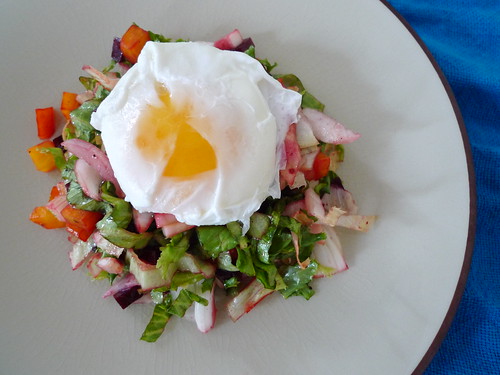
  • I miss my routine of going to work, heading to the gym after and then meeting up with friends for food and drinks before the night ends, but I can’t say it has been all bad while I’ve been unemployed. Sure my savings account is dwindling, but I’ve also started to cherish the days when I can catch up with reruns of Bizaare Food, The Real Housewives of Orange County and The Bachelor. The best days have been those quiet afternoons where I can make myself a meal and then head over to a museum and enjoy the space without the crowd. This is one of the meals I made myself last week.

    You can roast the beets a day or two ahead. After peeling, transfer the whole beets in a bowl, cover with plastic wrap and store in the fridge until ready to use. Poaching the egg is the most challenging but really easy. Once you try it, I swear you’ll add a poached egg to every salad you make.

    Ingredients:
    2 red beets and 2 golden beets, tops cut off
    1 endive, sliced
    2 ribs celery, chopped
    4 leaves of green lettuce, chiffonade
    1 egg
    1/4 cup of vinegar
    oil, salt, pepper

    1. Wrap beets in aluminum foil and roast in the oven for about 1 hour or until you can prick each beet with a fork without too much effort. Remove from the oven and set aside. When cool enough to handle, peel using a paring knife or a peeler and then chop in small wedges.
    2. Poach the egg when ready to assemble the salad. Fill a deep skillet with 2 cups of water. Add vinegar and a pinch of salt and place over high heat. Crack egg into small shallow bowl. When water boils, reduce heat to a rolling boil and gently pour in the egg. Cook until whites are firmly set. Remove egg with a slotted spoon and set aside on a plate. Keep it on the slotted spoon until ready to serve.
    3. Assemble the salad. In a large bowl, combine all vegetables with roasted beets. Season with salt and pepper. Drizzle with olive oil and toss until well-combined. Serve salad on a plate with poached egg by carefully placing it on top.

    Related post/s:
    I’ve come a long way since I poached my first egg

  • How to get rid of one of the most awful wines I’ve received as a gift? Okay, to be fair, it was from one of those exchange gift things last Christmas when no one really knew who’s getting which. But two bottles of wine seemed like a good deal to me, so I picked them up and never let go until everyone had claimed one of their own. Unfortunately, it was like drinking liquid jam. One sip later, I knew the rest was going to be used for cooking.

    At Fairway, I found a large turkey leg for $3.50. I never really deal with turkey unless it’s November, but I couldn’t really spend any more than what the bad wine was worth. I picked up one package and had the butcher chop it in three smaller pieces. I threw in a pound of green beans, also on sale for $1.99, and the remaining bacon from the fridge. Talk about cooking for less, but good. Top this with a fried egg and you’re good to go.

    Ingredients:
    1 turkey leg, chopped in thirds
    1 pound green beans, stringed, chopped in half
    2 cups of wine
    2 slices of bacon, chopped
    3 cloves of garlic, minced
    1 red onion, chopped
    2 tbsps hot paprika
    half a bunch of parsley, roughly chopped
    oil, salt, pepper

    1. In a large Dutch oven, cook bacon to render some fat. Remove browned bacon and set aside. Using the rendered fat, brown turkey legs, about 5 minutes each side. Remove from pot and set aside.
    2. In the same pot, add some extra oil. Sauté garlic until light brown and onions until soft. Add green beans with paprika and toss to cook for about 5 minutes. Add back bacon and turkey leg pieces. Season with salt and pepper. Add wine and simmer, uncovered, for 5 minutes.
    3. Add 2 cups of water to the pot and continue to simmer, covered, for 45 minutes. Toss in parsley, mix to combine well, and turn off the heat and serve.

    Related post/s:
    I cook more duck than turkey
    I really do