• It’s probably not the right time to be posting recipes about ice cream, but I’m going to do it anyway because it’s so easy if you have an ice cream maker. Now, to me an ice cream maker is one of those things you register for when you get married. I’m not on that path so I had to borrow one from someone who recently tied the knot. I must say that it will be my next purchase as soon as I have my own kitchen space. (Of course that’s what I said before I got the three Le Creusets, the tagine and the bamboo steamer.)

    Sage came up as a possible pairing for our pumpkin-squash Supper theme last month. The herb itself is so fragrant that in ice cream form, it overpowered the cake and chips I wanted to match it with. In the end, we served a more subtle pumpkin ice cream to complete a last course we called Trio of Pumpkin, and now I have a whole tub of sage ice cream sitting in the freezer reserved for those quiet nights indoors.

    Ingredients:
    2 cups heavy cream
    2 cups half-and-half
    1/3 cup fresh sage, coarsely chopped
    4 large strips of lemon zest, peeled using a peeler
    9 egg yolks
    3/4 cup white sugar
    1/4 tsp salt

    1. In a heavy saucepan, bring cream, half-and-half, sage and zest to a boil over moderate heat. Remove from heat and cover the pot for 10 minutes.
    2. Meanwhile, whisk together yolks, granulated sugar and salt in a large bowl. Pour in half of the hot cream and whisk to combine. Transfer to the saucepan to combine with the remaining hot cream. This is your custard.
    3. Cook custard over moderate heat while stirring constantly with a wooden spoon. Do not let it boil. After about 5 minutes, the custard should be thick enough to cover the back of your spoon.
    4. Pour custard through a fine sieve into a bowl and let cool in room temperature, stirring occasionally. Cover with Saran wrap and store in the refrigerator until cold, at least 1 hour.
    5. Using an ice cream maker, pour in chilled custard and churn, following manufacturer’s instructions. Mine took about 20 minutes. Scoop out of ice cream maker and transfer to a resealable plastic container and put in freezer to harden.

    Related post/s:
    October Supper with Strangers photos on Flickr
    Use up your leftover sage with chicken

  • 701 West 135th Street and Twelfth Avenue
    212/491.8303
    $104 for two, with 3 drinks, without tip
    ♥ ♥

    If anyone in the restaurant industry deserves a break, it’s King Phojanakong, owner and chef of Kuma Inn in the lower east side. I don’t know if it’s the Filipino-Thai upbringing that keeps him humble but I’m sure he’s worked hard enough to keep Kuma Inn as unpretentious as possible. I believe that it’s his time to shine with Talay, his new Asian-Latin restaurant in West Harlem with co-chef Phet Schwader.

    They couldn’t have picked a better neighborhood, too. Harlem is going through some major changes and Talay joins the new Body Club next door and old favorites Dinosaur Bar-B-Que and Fairway Supermarket. Ignore the irritating name the real estate agents are trying to christen the area–ViVa for Viaduct Valley–and check out this micro-neighborhood as it transforms warehouses to nightclubs.

    We visited during a more sane Sunday night and sat at the bar in front of the kitchen to watch all the action. The green papaya beef salad was delicious and only made me salivate for more food. We loved the pork sausage spring rolls as well. We also ordered the octopus salad, a dish that I think caters to the few uptowners who want to be more adventurous. Talay does it pretty well. The summer roll had more vermicelli noodles than vegetables, but they cleansed the palate just in time for our blackened ahi tuna dish. With all the flavorful tastes in our mouths, the ahi tuna came out bland in comparison–we should have skipped it or at least ordered it first. There are some Latin-influenced dishes so as not to alienate the targeted crowd–arroz Valencia, ropa vieja, bistek churrasco–but the Asian dishes stick out and are among the tastiest.

    After dinner, I asked the maitre ‘d to walk me upstairs to check out the party space. Talay is making up for what Kuma Inn lacked in space. There is bottle service and curtains can be drawn to keep a room more private–just the way the uptown and New Jersey crowd coming from across the bridge like it. While I don’t think the downtown crowd will make the trek past 42nd Street, Talay is a good reason for the uptown crowd to stay uptown.

    Related post/s:
    I interviewed King back in the day for generationrice
    Dinosaur Bar-B-Que is a couple of blocks away from Talay, but not for long
    If you go east, El Barrio has some delicious tacos

  • I wanted to accomplish two things with this version of the Shanghainese xiao long bao, or soup dumplings: make my own dumpling wrap from scratch and put a spin to it by using butternut squash soup for October’s Supper with Strangers instead of the traditional stock made from pork skin and chicken broth. Although I was proud at making my first edibles ones without trying too hard, the soup didn’t burst as much as I would have liked. But now that I know that I’m capable of making them, I’ll take some other time to make the traditional version and make my Chinese friends proud.

    Allow yourself some extra time to make the butternut squash soup and the ham hock filling first and save the dumpling-making a couple of hours before serving. (I made a whole batch of soup and only used 2 cups for the xiao long bao.) For my first try, I kneaded the dough by hand, but for our Supper, I found a pasta maker extremely helpful in making the dough as thin and pliable as I needed it to be. A small 2-layer bamboo steamer in Chinatown is $10 and it can fit about ten xiao long baos.

    Ingredients:
    For the roasted butternut squash soup:
    1 butternut squash, peeled, seeds removed, sliced in half
    1 carrot, chopped
    2 ribs of celery, chopped
    1 yellow onion, chopped
    fresh thyme
    1 tbsp powdered gelatin
    oil, salt, pepper

    1. Make the butternut squash soup. Drizzle some oil on squash and season with thyme, salt and pepper. Roast squash in oven until tender, about 30 minutes. Remove from heat and let cool. When cool enough to handle, scoop out the squash meat to a bowl.
    2. Combine carrot, celery and onion in a large stockpot with enough water to cover. Bring to a boil. Simmer until carrot is soft. Add the squash meat. Season with thyme, salt and pepper. Cook and stir occasionally while mashing some of the vegetables with the back of a wooden spoon. Remove from heat and let cool.
    3. Start with a small batch of the squash mixture and purée in food processor. Return each batch to another stockpot and simmer again. Add more water to make a soup consistency. Season to taste.
    4. Transfer 2 cups of the soup to a small saucepan for the xiao long bao. Add powdered gelatin and let sit for 2 minutes. Stir bring to a simmer. Remove from heat and let cool. Pour into a small ice cube tray and refrigerate until ready to make the xiao long baos. Serve the rest as a soup starter another day.

    For the ham hock:
    3 smoked ham hocks, soaked in water overnight, then drained when ready to use
    1 carrot, chopped
    2 ribs of celery, chopped
    1 red onion, chopped
    3 bay leaves
    1 small knob of ginger, peeled, thinly sliced
    1 tsp soy sauce
    1 tsp sesame oil

    1. Make the ham hock filling. Combine ham hocks, carrot, celery, onion and bay leaves in a large stockpot with enough water to cover. Bring to a boil. Remove the impurities that rise to the top using a slotted spoon. Simmer for 2 to 3 hours or until the ham hocks are tender. When cooked, set the ham hocks aside and let cool. Discard the rest.
    2. When cool enough to handle, remove the ham hock meat from the bones and roughly chop. In a small bowl, combine meat with ginger, soy sauce and sesame oil. Refrigerate until ready to make the xiao long baos.

    For the xiao long bao wrappers:
    2 cups of flour, and more for your work surface
    1/3 cup of hot water
    2/3 cup of room temperature water
    5 leaves of napa cabbage

    1. Make the xiao long baos wrappers. Sift the flour into a large mixing bowl. Add the hot water and incorporate with your hands. Add the other 2/3 cup of water and mix to make dough. On a floured surface, use your hands to knead the dough for 10 minutes or until it becomes soft, smooth and bounces back slowly when you poke with your finger. Cover with plastic wrap and let it sit for 30 minutes.
    2. Divide dough into 3 portions. Using one portion at a time while rest of the dough is covered in plastic wrap, roll into a snake. Chop the snaked dough in 1-inch pieces. Feed each inch into a pasta maker and roll out, using thickest setting first and moving on to the 2nd and then the 3rd, until the dough is thin but pliable enough. I made one wrapper and assembled a xiao long bao one at a time to keep the dough from drying up.
    3. Assemble the xiao long baos. Fill each wrapper with 1 tbsp of ham hock filling and a cube of butternut squash soup gelatin. Pinch and pleat the edges of the wrapper and twist to seal. Set assembled ones in a large bowl covered with a wet paper towel to keep moist until ready to steam.
    4. Boil a large pot of water. Line each layer of the bamboo steamer with napa cabbage leaves. Place a few xiao long baos on each layer, cover and put on top of the pot of boiling water to steam for 10 to 15 minutes. They are cooked when translucent and moist.

    Related post/s:
    October Supper with Strangers photos on Flickr
    The process of making xiao long bao photos on Flickr

  • 4th floor of the Time Warner Center, 10 Columbus Circle at 60th Street
    212/823.9335
    $900 for two, with drinks, with extra tip apart from the included service fee
    ♥ ♥ ♥ ♥

    As soon as our waiter brought out a footstool for my purse so that I didn’t have to put it down on the floor, I knew we were in for an experience. Small gestures like that from the staff make Per Se, and any of Thomas Keller’s restaurants, stand out. Everyone around us was older or part of a group that discussed important business, but we were treated like we belonged there. We never felt awkward–except when we tried to push those gorgeous blue doors open–nor rushed. Our waiters and servers weren’t snotty and our sommelier was helpful in suggesting wines to match our dishes without necessarily pushing for the bottles that were out of our budget.

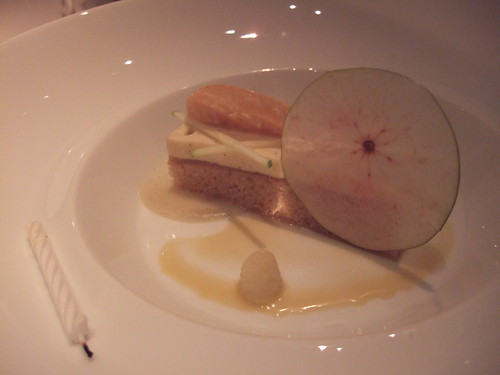
    I was treating the Dr. for his birthday and when I made the reservation exactly two months ago, they had asked me if there was an occasion. That night, they included a “Happy Birthday [Dr.]” right below the date on our menus. It was a simple gesture, but it made the celebrant very appreciative. When desserts were brought out, a lit candle was placed on his and they joked about singing a capella. (For a few seconds, I really thought they would.) Upon our leaving, another staff member was waiting for us at the door with our coats, our mignardises packed in a silver box and a folder with copies of our menu. After almost five hours of being treated like royalty, we stepped out of Per Se’s luxurious setting and back into the concrete jungle that is New York City. I’m grateful for those few hours.

    My Tasting of Vegetables:

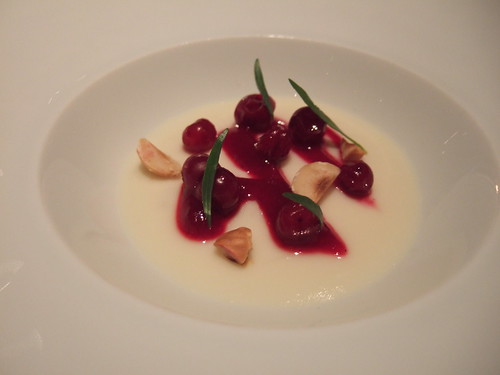
    “Mousse de Topinambours” – Toasted Hazelnuts, Lingonberries and Garden Tarragon

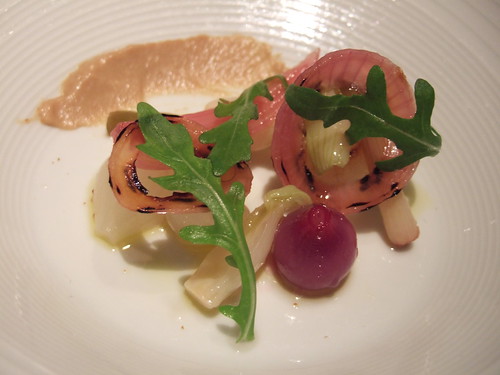
    “Dégustation de Petits Oignons” – Arugula and Smoked Onion Purée

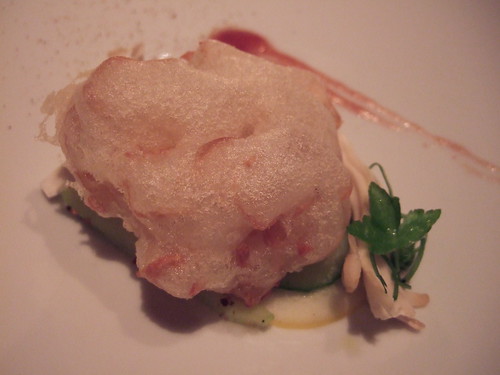
    Tempura of White Maitake Mushroom – Persian Cucumbers, Confit of Meyer Lemons and Mitsuba with Umeboshi Dressing

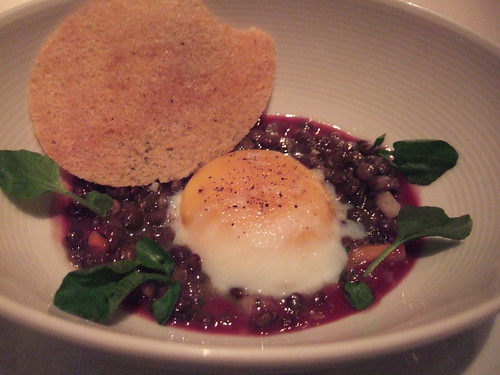
    Slow Poached Squire Hill Farm’s Ameraucana Hen Egg – Brioche Croûton, “Lentilles du Puy”, Root Vegetable “Matignon” and Watercress Laves with “Beurre Rouge”

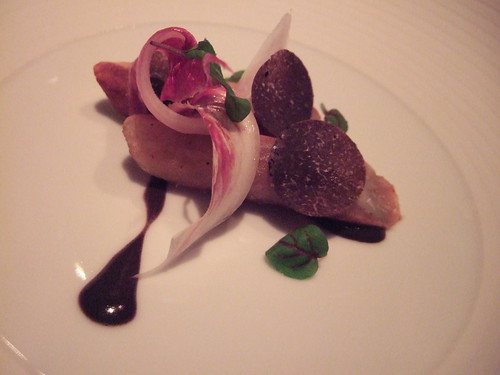
    Belgian Endive “En Fuille de Pomme de Terre” – Shaved Burgundy Truffles, Red Endive and Red Ribbon Sorrel with Black Winter Truffle Coulis

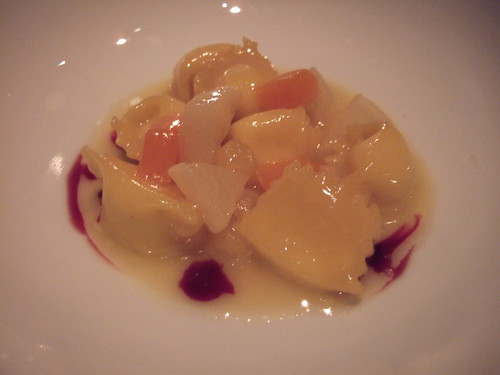
    “Salvatore Brooklyn Ricotta” Agnolotti – Flowering Quince, Caramelized Fall Squash and Pumpkin Seed Oil with Brown Butter Emulsion

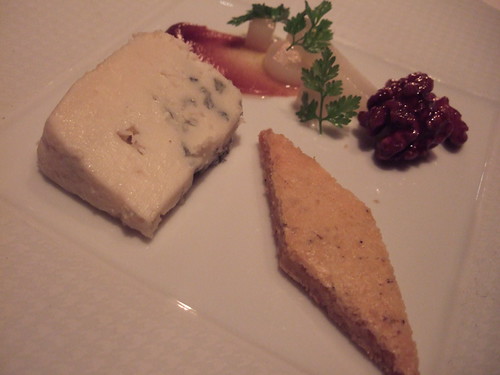
    “Roquefort Le Vieux Berger” – Tellicherry Pepper “Sablé”, Marinated Purple Top Turnips, Candied Walnuts and Garden Chervil with Medjool Date Vinaigrette

    Pink Champagne Granité – Passion Fruit Pudding

    Black Currant Cobbler – Butter “Croustillant”, Black Currant Compote and Diane St. Clair’s Buttermilk Sherbet

    The Dr.’s Tasting Menu:

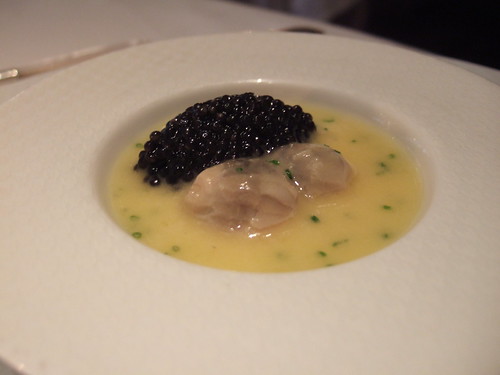
    “Oysters and Pearls” – “Sabayon” of Pearl Tapioca with Island Creek Oysters and Sterling White Sturgeon Caviar

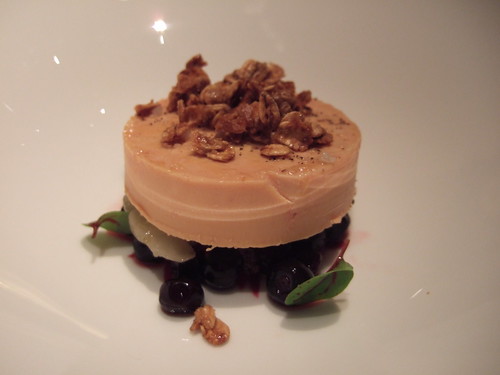
    “Torchon” of Élevages Périgord Moulard Duck Foie Gras – Oatmeal Crumble, Oregon Huckleberries, Crosnes, Red Ribbon Sorrel and Blis Maple Gelée with Toasted Brioche

    Crispy Skin Fillet of Red Snapper – “Ratatouille”, Globe Artichokes and Parsley Chips with Niçoise Vinaigrette

    Pan Roasted Maine Sea Scallop – Garnet Yam Purée, Glazed Chestnuts and Arugula Leaves with Pomegranate Syrup

    “Boudin Blanc Grillé” – Smoked Squire Hill Farm’s Ameraucana Hen Egg Emulsion, Haricots Verts and Frisée with Veal Sauce

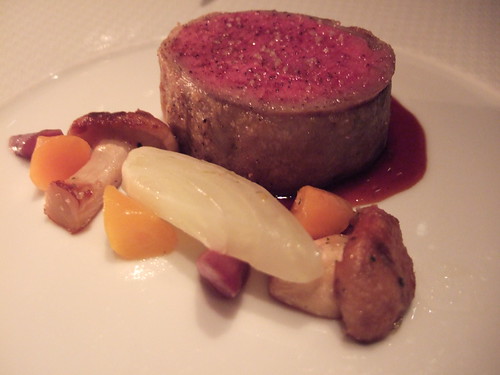
    Elysian Fields Farm’s “Selle D’agneau Rôtie Entière” – Matsutake Mushrooms, Fennel Bulb and Greenmarket Carrots with Lamb Jus

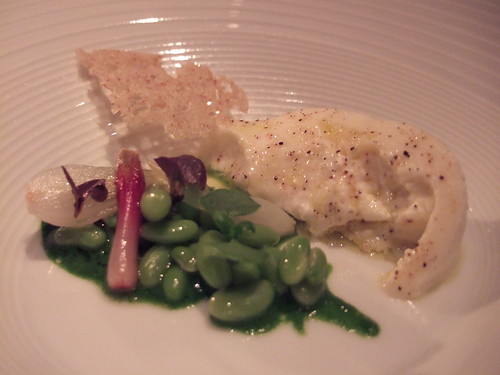
    Di Bruno Brothers’ “Burrata” – “Croûton de Pain de Campagne”, Flageolet Beans and Petit Basil with Pickled Onions

    “Banoffee” – Devil’s Food Cake, Chocolate “Marquise” and Malt Mousse with Banana-Crème Fraîche Sherbet

    “Pomme-Beurre Noisette” – “Confiture” of Granny Smith Apple, “Financier” and Tahitian “Bavarois” with “Glace au Beurre Noisette”

    Related post/s:
    Thomas Keller’s Per Se photos on Flickr
    The only experience that comes close to Per Se? The French Laundry
    And oh, I have to say Alinea. Chef Grant Achatz is, of course, a Thomas Keller protégé

  • A drive up to Massachusetts to visit old friends and see the foliage was canceled at the last minute after the Dr. was called in to work. He made up for it by changing the car reservations and driving us closer from the city and letting me drag him to Stuart’s Farm’s apple orchard and pumpkin patch. The apples were still out, but there was no picking that needed to be done to the pumpkins–you can just “pick” one from the batch the farmers had already selected.

    The drive was beautiful though. We both gasped when we saw the colors of the leaves while driving over Croton Point Park. The water was as still along the reservoir. It was definitely fall and the night called for us to test the squashes we brought home with us. Use wild rice instead of orzo if you want this dish to be heftier.

    Ingredients:
    a small acorn squash, halved, seeded and cut into small chunks
    1 apple, cored, halved, sliced
    1 small sweet potato, peeled, cut into small chunks
    a handful of shallots, peeled
    1 cup of orzo
    a handful of cilantro, finely chopped
    a dollop of honey
    lime juice
    oil, salt, pepper

    1. Toss the squash, potato and shallots in a large bowl with a splash of oil, salt and pepper. Turn out onto a large baking pan. Roast for about 30 minutes. Then remove from oven and add the apples. Using tongs, slip the squash and potatoes to make sure the other sides are browning, too. Roast for another 10. The squash and potatoes should be tender and the onions caramelized.
    2. In the meantime, cook the orzo. Boil some water and cook the orzo for about 10 minutes. Drain and fluff with a fork to avoid sticking. Set aside until ready to assemble the dish.
    3. In the meantime, make the dressing. In a small bowl, combine some olive oil, cilantro, honey and some lime juice. You might need to drop in a splash of warm water or two to dilute the honey. Season with salt and pepper.
    4. To assemble everything, use a large bowl and toss roasted vegetables together with the orzo and the cilantro-lime dressing. I use my hands to make sure that the vegetables are evenly distributed.

    Related post/s:
    Part of my Mother Hen project: omakase bento #22
    For warmer months, orzo is great with citrus

  • Most vegetable soups are thin and clean. I wanted to add some texture to this so I added rice to the carrot-ginger batch before puréeing it in the blender. The final result felt like oatmeal in my mouth and a flavorful soup that was heartier than usual.

    Ingredients:
    2 large carrots, peeled, chopped in large chunks
    1 small- to medium-sized ginger, peeled, chopped
    1/4 cup of rice
    3 cloves of garlic, minced
    1 red onion, roughly chopped
    6 sprigs of thyme
    a handful of parsley, roughly chopped
    3 bay leaves
    oil, salt, pepper

    1. In a stockpot, heat some olive oil over medium heat. Sauté garlic until slightly brown. Add onions and cook until soft, but do not brown. Add ginger, parsley, thyme and bay leaves and cook until fragrant, about 2-3 minutes.
    2. Add carrots, rice and 3 cups of water. Bring to a boil, then reduce heat and simmer until carrots are exceedingly tender, about 30 minutes. Stir occasionally to help cook the rice. Turn off heat and set aside to cool.
    3. When cool, remove bay and discard bay leaves. Purée soup in blender in batches. Season with salt and pepper.

    Related post/s:
    The ginger-garlic paste I made and stored is proving to be very useful
    Asparagus soup recipe

  • Second floor, Whole Foods Market
    95 East Houston Street corner of Bowery
    $20 all you can eat sushi, without tip

    I didn’t expect high quality sushi when I saw the sign for all you can eat sushi for $20 at Whole Foods on Bowery, but I was curious enough to pull two co-workers with me to try out Sushiya’s latest promotion. We dodged the long lines at street level and propped ourselves up the bar stools in front of the conveyor belt sushi bar. At Sushiya, what you see is what you get, and we got a lot of rice.

    There were some tuna, eel and salmon; some roe and a torn piece of arugula on a maki; crab and shrimp on spiced onigiris; seaweed salad, edamame and the out-of-place Vietnamese summer rolls. The makis came more often than the sushis, though the servers behind the bar quickly made them whenever we requested. We had the bar to ourselves when we visited and yet they always replaced the plates at the other end of the belt–perhaps to try and slow us down from eating all their inventory. In the end, we counted about thirty empty plates which is about 20 pieces per person for a total of $60. Oh, I think I just threw up a little in my mouth.

    All in all, $20 is pricey for lunch even around the East Village and SoHo, but it’s quite fun to wait for the colorful plates to come your way and pick sushi, makis and onigiris from the magnetic conveyor belt.

    Related post/s:
    All you can eat sushi at Sushiya photos on Flickr
    Save your money and go to Sushiden

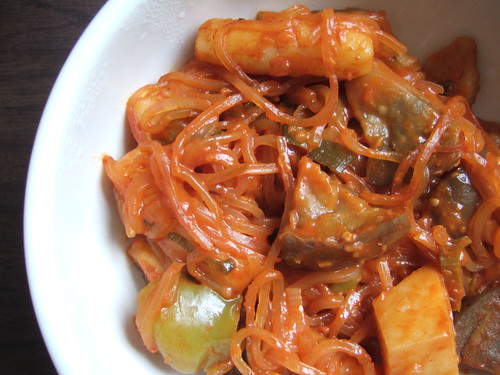
  • Have you seen that Anthony Bourdain episode shot in Seoul? I caught a rerun over the weekend and I salivated during the part when they ate a hot spicy soup with noodles after arriving in the country all jet-lagged and grouchy. He said it immediately made him feel better.

    After two weeks of drinking almost everyday, I needed to recuperate, too. The Dr. said I made a chigae, or a soup, but because of all the vegetables I happily tossed in, I made a chungol or a hotpot with noodles. I’m sure his mother won’t approve that I bastardize a soup she can make with her eyes closed, but I liked how my hearty version turned out. It immediately made me feel better.

    When reheating leftovers–oh, there will be plenty–add a small amount of water and another tablespoon of kochujang sauce.

    Ingredients:
    a handful of Korean dduk
    a fistful of glass noodles
    1 green bell pepper, seeded, chopped
    2 eggplants, chopped in thick rounds only before adding to the pot
    2 small potatoes, peeled, chopped
    1 bunch of scallions, chopped in 1/2-inch pieces
    4 tbsps kochujang, or Korean red pepper paste
    ginger-garlic paste
    1 tbsp peanut oil
    salt

    1. In a large Dutch oven, heat the peanut oil. Add the ginger-garlic paste and scallions. Sauté and avoid burning the paste. Add the chopped eggplants and bell pepper. Toss and cook until they are half-cooked.
    2. In the meantime, bowl some water in a small pot and cook the dduk for 7 minutes. Drain and set aside.
    3. Back to the large pot of vegetables, add 3 cups of water and stir in the kochujang. Add the dduk and the potatoes. Lower the heat and simmer for 10 minutes. Season with salt.
    4. Remove pot from heat and stir in the noodles. The noodles will cook in the soup’s remaining heat. Serve immediately with rice.

    Related post/s:
    Make your own ginger-garlic paste and store in freezer
    Korean Dduk but without the soup or the noodles

  • Oh my goodness, I thought, as I caught a whiff of the lamb stew that had been simmering for almost three hours. I’ve been copying the Dr. in the kitchen lately and it was no different last night. After spending a nice weekend hiking outside and walking around the city, I was ready to sit in front of Mad Men and sulk with a warm bowl of stew on my lap. After he told me he was making lamb stew for dinner, I knew I had to do the same. It would have been better if I just watched him cook for us, but I wanted to do my own version and compete. The idea of adding corn came from a Mexican tripe stew we bought last week in east Harlem after a late night out.

    I think mine had a good chance of winning.

    Ingredients:
    1 1/2 pounds of lamb chuck chops
    1 corn on the cob, chopped in 4 pieces
    2 cups of red wine
    2 cups of vegetable broth
    a handful of parsley, chopped
    2 sprigs of thyme
    2 sprigs of mint
    2 cloves of garlic, minced
    1 red onion, chopped
    2 tbsps paprika
    2 bay leaves
    oil, salt, pepper

    1. Season lamb chuck chops with salt and pepper. In a large Dutch oven, add some oil and brown all sides of the lamb. Remove from the pot and set aside.
    2. Remove all but 2 tablespoons of the used oil. Try to get the darkest bits out from the oil. In the remaining oil, sauté the garlic until light brown and the onions until soft. Add the paprika, thyme, parsley and bay leaves.
    3. Return the browned lamb in the pot and add the red wine. Let boil and then lower the heat to simmer for 20 minutes or until the red wine has reduced. Stir in broth, cover the pot and simmer for up to 3 hours.
    4. After 1 hour, add the corn. After the next hour, turn the corn just to make sure the other ends get some brown sauce in them, too. The meat should be falling off the bone by the third hour. Remove pot from heat, uncover and stir in mint leaves.

    Related post/s:
    Part of my Mother Hen project: omakase bento #21
    My lamb ragu version came with video

  • We’re in a recession, right? Even the Swai fish price in Harlem is up a few dollars. For last week’s bento lunch, I used pork because buying for ten people was still under budget compared to buying enough fish that would feed the entire group. This week, I used chicken–and you know something’s off when I start buying chicken. I rarely order chicken from a restaurant menu (except for a good fried chicken, of course), but I do like cooking with it. I’m a sucker for the Dr.’s roast chicken anytime.

    So with six chicken breasts and almost two pounds of peppers from my last few farmer’s shares, I turned to the Filipino cookbook I bought in Manila last August called Fiesta! Fiesta! Festival Foods of the Philippines for a tomato and bell pepper-based stew. The recipe’s most important step called for a store-bought Afritada mix (wenk, wenk) which I obviously altered in my version. Why go for a short cut when the real way is already easy?

    Ingredients:
    6 boneless chicken breasts
    4 large red bell peppers, seeded, chopped
    2 tomatoes, chopped
    1 tbsp tomato paste
    2 bay leaves
    1 onion, chopped
    2 garlic cloves, minced
    oil, salt, pepper

    1. In a large Dutch oven, heat some oil and brown chicken on both sides. Remove from pot and set aside.
    2. Using the same pot and oil, sauté garlic until brown and onions until soft. Add the bay leaves and stir in tomato paste. Add tomatoes and bell peppers and cook until peppers are tender.
    3. Add the chicken pieces back and add 4 cups of water. Lower the heat and simmer for 1 hour or until chicken is cooked and water is reduced to a thicker consistency.

    Related post/s:
    Part of my Mother Hen project: omakase bento #20
    For something with a little sweet taste

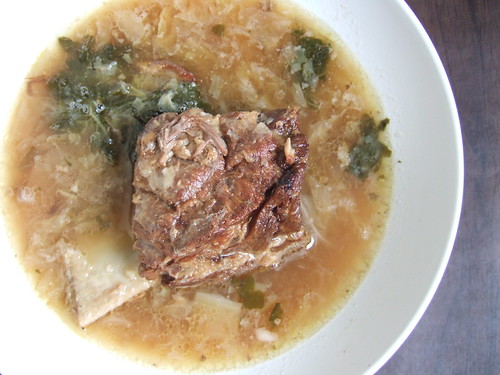
  • I hurried home on Sunday afternoon because I was in the mood to spend the rest of my weekend cooking. The Dr. bought fresh perilla leaves from Koreatown before we left for Montauk in preparation for all the sashimi that we were going to eat after a planned fishing trip for striped bass. We didn’t catch any fish that weekend (neither did anyone on the entire boat), so he saved the leaves to use it for something else. His kalbi tang, or Korean beef rib soup, last Tuesday was so comforting that I badly wanted to recreate it at home.

    It reminded me of the Filipino bulalo, or bone marrow soup, only less fatty. Browning the short ribs made the stock beefier and toastier. The perilla leaves added an interesting kick to it–I don’t know how else to describe the taste but medicinal. And really, after a pot of this soup with some warm white rice and kimchi, you’d feel a hundred per cent better already.

    Ingredients:
    6 pieces of beef short ribs
    1 napa cabbage, chopped
    10 pieces perilla leaves
    2 tbsps soy bean paste
    1 red onion, chopped
    2 cloves of garlic, minced
    oil

    1. In a large Dutch oven, add some oil and brown all sides of the beef ribs. Remove from the pot and set aside.
    2. Remove all but 2 tablespoons of the used oil. Try to get the darkest bits out from the oil. In the remaining oil, sauté the garlic until light brown and the onions until soft. Add the soy bean paste and stir.
    3. Return the browned beef ribs in the pot and add 5 to 6 cups of water. Cover and simmer for about 2 to 3 hours. Check after 20 minutes to remove the impurities that float to the top. It’s okay if you discard some of the onions.
    4. When the meat is almost falling off the bone, add cabbage and perilla leaves. Cook for another 10 minutes or until cabbage is tender. Season with some more soy bean paste if it needs extra salt.

    Related post/s:
    I get my Korean ingredients at Han Ah Reum in midtown
    I made a cleaner Korean soup with dumplings before

  • I can tell that the cold weather is here to stay with the most recent bounty from my CSA farmer share. Solid and heavy produce like apples, carrots, turnips and broccoli dominated the weight of my two carry-ons. I still have a jar of homemade kimchi in the fridge so I wanted to do something different yet familiar with the turnips. I turned to my copy of Monisha Bharadwaj’s India’s Vegetarian Cooking to try her spiced turnips recipe after I remembered doing a similar take on kohlrabi.

    Ingredients:
    4 medium turnips, peeled, chopped
    1 large tomato, chopped
    1 small onion, sliced
    2 tbsps ginger-garlic paste
    1 tsp cumin
    1 tsp fennel seeds
    1/2 tsp turmeric
    1/2 tsp red chili flakes
    a small handful of cilantro leaves, finely chopped
    oil, salt

    1. Heat some oil in a pot and sauté the onions until soft. Add the ginger-garlic paste and the chili flakes. Add the tomatoes and all the spices. Season with a little salt. Stir until well blended.
    2. Mix in the turnips and add about 3/4 cup of water. Stir to combine everything. Cover and bring to a boil and then reduce heat to simmer for about 15 minutes or until turnips are tender.
    3. Remove from heat and add in the cilantro leaves.

    Related post/s:
    I use a similar recipe using kohlrabi