• I started my Saturday famished. The last of my wisdom teeth was extracted and the only thing I could eat was soup for my last two meals. The Vicodin didn’t quite affect me the way I wanted it to so I was left to fend for myself when I woke up. There were only a couple of eggplants in the fridge and one large tomato, but there were plenty of fresh herbs on the counter. When I have to create a quick meal without using too many ingredients, I usually turn to pasta–there’s always a box of some kind of pasta in the cupboard. I had some leftover pesto in a jar so I decided to add a dollop of that, too, to add some basil-y taste to the dish. I recreated one of my favorite sandwiches, pressed pesto and Gruyere-Parmesan, to match.

    Ingredients:
    2 cups of penne
    2 eggplants, cut lengthwise then halved
    1 tomato, quartered then halved
    1 sprig of rosemary, roughly chopped
    1 sprig of sage, roughly chopped
    1 tbsp of pesto
    1/4 cup of red wine vinegar
    1 dried Thai chile, crushed
    lemon juice
    oil, salt, pepper

    1. In a large mixing bowl, toss eggplants and tomatoes with vinegar, olive oil, salt and pepper. Transfer vegetables onto a baking sheet, flesh side up. Roast in the oven for about 15 minutes or until tomatoes are soft and a little burnt on the outside. Remove from oven and set aside to cool a little bit.
    2. Meanwhile, cook penne al dente. Drain and transfer to a serving bowl.
    3. When ready to serve, add the vegetables with the pasta. Toss with rosemary, sage and pesto. Squirt some lemon juice and sprinkle with chile to taste.

    Related post/s:
    Served with Pressed Pesto and Gruyere-Parmesan Sandwich
    Make your own pesto

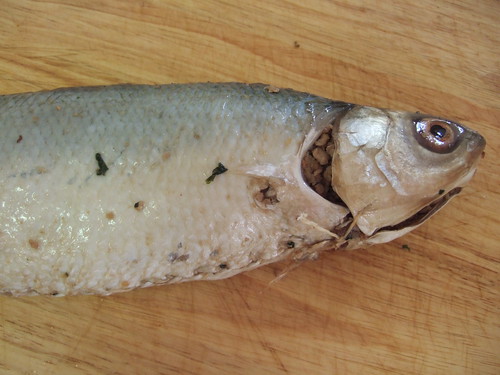
  • Relleno in Spanish food generally means stuffing, usually a meat mixture that’s been breaded and then fried. It’s applied in Filipino food using the same concept but in this recipe, the meat of my country’s national fish, milkfish or bangus, is removed from the cavity, tossed and stir-fried with other ingredients, stuffed back in the fish and then sealed before roasting to a golden brown color.

    I grew up eating this stuffed fish at family birthday parties. The kids always enjoyed the fried red hot dogs and marshmallows in skewers while the adults ate the “real” food like rellenong bangus. Milkfish is extremely bony and one needs a lot of patience to remove the very fine threads of bones but I’ve always thought the reward was much greater than the work. I gently pounded the fish using the smooth end of a tenderizer mallet to loosen the meat from its skin and then I sliced off the meat from its skin using a very sharp boning knife. A little maneuvering near the tail helped break off the larger bone in the middle. I knew that knife had its purpose!

    The entire process took 45 minutes–not bad for an amateur. I left the sewing of the fish shut to my mother who is lighter handed with a giant needle and butcher’s twine than I am. The result, a cleanly sutured stuffed milkfish.

    Ingredients:
    1 milkfish, thawed if previously frozen, scaled, cleaned, sliced open along the stomach
    3 tbsps ground pork
    1 small carrot, finely chopped
    a handful of raisins
    1/4 cup bread crumbs
    1 stalk scallion, finely chopped
    3 stalks of parsley, finely chopped
    1 clove of garlic, minced
    oil, salt, pepper

    1. Using the smooth end of a meat tenderizer mallet, gently pound the milkfish on a chopping block. Be careful not to pierce the skin. With a sharp boning knife, begin to separate the meat from the fish’s skin. Remove fish bones as you see them.
    2. In a large skillet, heat some oil. Sauté garlic and scallions until scallions are soft. Add ground pork and fry. Add carrots and parsley and continue to toss until the ground pork is brown.
    3. Add the fish meat with the raisins and toss to continue cooking. Mix in the bread crumbs. Season with salt and pepper. Remove to a bowl and let cool to room temperature.
    4. Stuff the milkfish by spreading the meat and fish mixture evenly inside the fish cavity. Hold the seams together and sew close using butcher’s twine and needle. Brush the outside of the fish with some oil and put on a roasting pan.
    5. Roast one side of the fish for about 10 minutes. Carefully turn the fish and roast the other side for another 7. Remove from the oven and let the fish slightly cool before slicing to reveal the stuffing inside.

    Related post/s:
    Stuffing fish fillet is easier
    Stuffed portobello mushrooms is a very good alternative

  • 462 Broadway corner of Grand Street
    212/219.3300
    about $120 for two, with four drinks, with tip

    L’Ecole’s five-course dinner is probably the city’s lowest-priced prix fixe at $40, but at that unbelievable price, how does the food taste? Well, like $8 apiece. The restaurant prides itself in using sustainable seafood but I missed any information about their meat and vegetable sources. I assume they buy everything from the farmers’ market, but I wonder how they afford to charge less than $10 a plate if that was the case.

    An appetizer of asparagus with crumbled chorizo sounded great but came out tasteless. I understood that the pan tomate with Manchego cheese was included to round up a Spanish-inspired dish, but they were disconnected here and the triangle of a sandwich needed to spend a little more time on the grill press.

    The scallops were presented well in a row of shells topped with roe. They would have made great amuse bouches as they were actually lighter than the ones we received made of pancake batter.

    I looked forward to my trout served in a curried mussel broth on a bed of baby bok choy, but the fish was under-seasoned and no amount of curry rescued it from blandness. The fluke was immemorable with braised cabbage and mushrooms. My Cornish hen needed some sauce to make the white meat taste like something. I thought the rhubarb that came with the duck would have been a perfect accompaniment because I’ve always cooked and eaten Cornish hens with tarty flavors like pomegranate. The duck triumphed as the best dish of the night. The duck breast was perfectly seared while the leg was braised with rhubarb presented, oddly, like Lincoln Logs. However, the bottom half of a side of rice was dipped in the leftover duck sauce and was an unnecessary addition.

    We were pretty much satiated with mediocrity by the time we had to order our desserts, so we opted to share the cake with blueberry compote because it came with olive oil ice cream. We just didn’t want to waste any more food.

    At L’Ecole, the ingredients used were not a problem. I’m sure there are talented students at the International Culinary Center, but they need to tighten their execution and add some finesse in their cooking to translate what they want to convey on their diners’ plates. I half-expected a professor in the kitchen tasting everything before going out, but it seemed like the students were pretty much on their own. Our waiter was really accommodating, but his every move was ruined by the too-lazy busboy who haphazardly stacked up all our utensils on our plates before briskly taking them way after each course–he just couldn’t wait to get out of there. We couldn’t either.

    Related post/s:
    SoHo needs better restaurants. Spend your $40 at Bar Bossa instead. At least, they’re consistent.
    Savoy for local ingredients

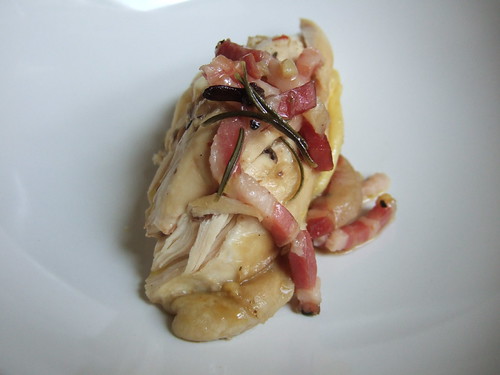
  • I was attracted to this 1969 recipe Amanda Hesser featured in The New York Times a couple of weeks ago. There is no browning involved and I immediately thought that chicken can’t be pretty without a golden brown crust. But then I remembered Hainanese chicken, a dish from the Hainan Island of China but perfected by those who immigrated to Singapore.

    This style is Canzanese–Canzano is in the Abruzzo region in Italy–but it’s poached with wine instead of its juice alone. The pancetta gives the chicken some soul (Anthony Bourdain once said, All roads lead to pork), while the fresh herbs give it a fragrant smell as soon as you take the lid off and let out some steam.

    Ingredients:
    3 chicken pieces
    1 thick round of pancetta, cut into strips
    1/2 cup dry white wine
    2 sprigs rosemary
    2 sage leaves
    2 bay leaves
    3 cloves
    1 clove garlic, sliced lengthwise
    2 peppercorns, crushed
    1 dried red chili, crushed
    salt

    1. Place the chicken pieces in a mixing bowl; cover with cold water and add 1 tsp of salt. Let stand 1 hour. Drain and pat dry.
    2. Arrange the chicken pieces in one layer in a frying pan fitted with a lid and add the rest of the ingredients over the chicken. Add 1/4 cup water. Cover and simmer until the chicken is nearly done, about 40 minutes. Uncover and cook briefly over high heat until the sauce is reduced slightly.

    Related post/s:
    Ginger-mint chicken is perfect for warmer months
    Country-style chicken

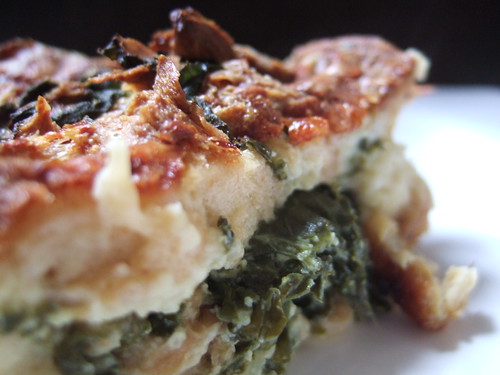
  • Continuing my current love affair with kale, I followed another recipe Stacie of chowbaby.com recommended. I’m a bigger fan of savory rather than sweet and this pudding was just right up my alley. The bakery uptown didn’t have brioche in stock when I stopped by, so I picked up a loaf of challah instead. Before tearing them into smaller pieces, I just tried to remove as many of the poppy seeds as I could. I also topped it with grated Gruyere cheese when I realized I still had some leftover in the fridge.

    The pudding cooked while I leisurely read The Sunday Times. It was such a low-maintenance pudding with a large yield. And even with the milk and cream, it tasted pretty healthy.

    Ingredients:
    1 bunch kale, leaves torn from stalks, washed thoroughly
    half a loaf of challah bread, torn into smaller pieces
    2 medium leeks, thoroughly washed, chopped
    a sliver of Gruyere cheese, grated
    3 cups whole milk
    1 cup heavy cream
    4 eggs
    3 cloves garlic, minced
    2 sprigs of thyme
    salt, pepper, oil

    1. Preheat oven to 450º. Toss kale leaves with a little olive oil. Spread out on baking sheets and roast for about 10 minutes. The kale will wilt and become slightly crispy. Transfer the kale to a bowl and set aside. Lower the oven temp to 400º.
    2. In the meantime, sauté the garlic and leeks in butter until leeks are soft but not browned. Remove from heat and set aside.
    3. In a large mixing bowl, beat eggs, milk and cream together with the thyme and the bread with some salt and pepper. Fold in the kale and the leek mixture.
    4. Pour the pudding mixture into a rectangular baking dish. Place the baking dish into a larger roasting pan filled halfway with water. Put the pans carefully into the oven. Cover the baking dish loosely with foil. Bake for 20 minutes.
    5. Carefully take the pans out of the oven. Continue baking the pudding for another 20 minutes without the pan filled with water. Check to see if the pudding is cooked by inserting a toothpick in the middle. If the toothpick comes out clean, your pudding is done. Remove from oven, let cool slightly and serve.

    Related post/s:
    A sweeter kind of pudding with caramel sauce
    ChikaLicious Puddin’
    Part of my Mother Hen project: omakase bento #7

  • 225 Park Avenue South at 18th Street
    212/533.2500
    about $40 each for four, with a pitcher of beer, with tip
    ♥ ♥

    Sorry, we’re out of the pork spare ribs.

    A long pause from our table and then, what do you mean you’re out of the pork spare ribs? Well, you can try the Memphis-style baby back ribs instead. What time is it? Almost 7:30pm. And you’re out of the ribs already? Seriously?

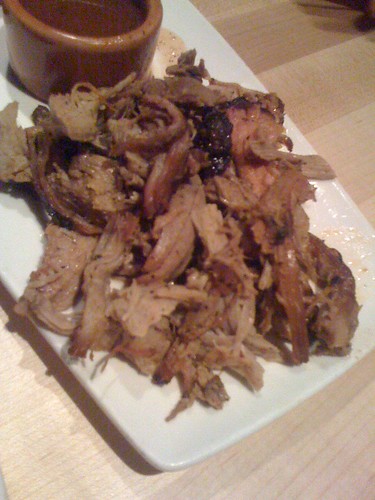
    I wanted to try Wildwood Barbeque because “Big Lou” Elrose of Hill Country was going to be handling the meat. You can say I was very disappointed when the dry-dusted pork spare ribs with Lou’s sugar and spice rub were already out by 7:30pm. Between the four of us, we ended up sharing everything else in the pit barbeque menu. The Texas-smoked brisket, cooked “low and slow”, was pretty good but it was even better with the house sauce. The Carolina pulled pork made my night because of the vinegar sauce that came with it. Both weren’t as moist as I would have liked but delicious enough to enjoy with a side of smoked sausages and a pitcher of local beer. I tried not to eat too much of the corn bread to make room for the meat but I couldn’t help but pick from the cast iron skillet it came in. The mac and cheese was indeed cheesy and it was definitely favored over the baked beans.

    The portions looked small though I felt like I had enough by the time the three smores came for dessert. Maybe it was good that I didn’t have a tray of meat in front of me ala Fette Sau or Hill Country because I know I would have stuffed myself silly if that was the case. But not even a month old and they already can’t keep up with the demand? I would have liked the option of saying no instead of being said no to.

    Related post/s:
    They ran out of beef ribs at Hill Country during my first visit
    Dinosaur Bar-B-Que is still up on my list

  • When did sardine get a bad rep? When I mentioned that sardines were in the lunch menu, I got a mixed reception. From the wrinkle-of-the-nose kind of expression to the straight forward Ewww, I wondered what it was about sardines that turned some people off. It was different for me growing up. Sardines were affordable in the Philippines and if they weren’t bought fresh from the market and then fried, they came in a can with spicy tomato sauce, eaten straight up or sautéed with onions.

    Fresh Portuguese sardines are pricey here in New York so to stay under budget and still cook for fifteen people at work, I stayed with Trader Joe’s canned sardines in spring water. There was no salt added so the dressing here was quite perfect. Whatever seasoning the two mustards added, the celery’s bite balanced off. This will remind you of a simple tuna salad, only a tad more sophisticated especially if served with rye crackers or warm flat bread.

    Ingredients:
    2 cans of sardines in spring water, preferably unsalted, drained
    1 bunch of celery hearts, finely chopped
    a handful of parsley leaves, finely chopped
    1 tbsp grainy mustard
    1 tbsp Dijon mustard
    1 small red onion, finely chopped
    juice from half a lemon, plus some of its zest
    oil, salt, pepper

    1. In a large salad bowl, mix the parsley with the olive oil, the grainy and Dijon mustards, red onion, lemon juice and zest. Add in the sardines, crushing a bit, and toss in the celery. Season with salt and pepper, adding a little bit more oil as necessary.

    Related post/s:
    If you think sardines are adventurous, try some eel
    One of my favorite fish dishes come with endives
    Part of my Mother Hen project: omakase bento #6

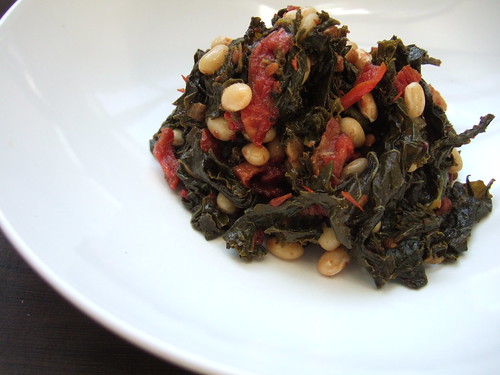
  • I had sushi with Stacie of chowbaby the other week and she told me about this quick yet nutritious dish she makes for her baby, Isaac. You gotta pay attention to a one-year old who eats kale; he’s sure to go places. Today, kids just don’t eat the bland slush we grew up with. Companies like chowbaby offer flavorful and exciting dishes made of organic ingredients frozen in convenient pouches which you can just heat up when needed. Can you imagine eating Moroccan couscous with raisins when you were a year old? Thank the stars for innovative and creative moms who think of solutions such as chowbaby to create future foodies everywhere. Anything good for baby Isaac is good enough for me.

    Ingredients:
    2 bunches of kale, leaves picked from the stalks, thoroughly washed
    1 cup white beans, soaked overnight
    2 cups sundried tomatoes, chopped
    3 cloves of garlic, minced
    1/4 cup of balsamic vinegar
    oil, salt, pepper

    1. Heat some oil in a large Dutch oven. Sauté garlic until light brown. Add kale in batches and toss until wilted. Add white beans and tomatoes with 1 cup of water. Season with salt and pepper. Cover and let it simmer for 15 minutes to cook the beans and reduce the liquid.
    2. When beans are soft, add balsamic vinegar and turn up the heat. Toss until the vegetables are covered with the vinegar.

    Related post/s:
    I like my kale with kielbasa sausage
    Part of my Mother Hen project: omakase bento #6
    chowbaby: big nutrition for little people

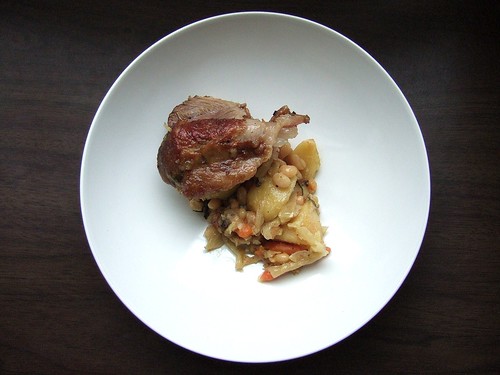
  • I woke up early to stop by the farmers’ market before work on Wednesday. I wanted some fresh bacon so I said hello to Mike from Tamarack Hollow Farm. He still remembers me as the girl who ordered half a suckling pig and a whole goose almost two years ago, and for that I remain loyal. With my nice slab of bacon, he also introduced me to a healthy-sized ham hock and rattled a recipe. I didn’t write it down but four days later, I made up a recipe using the three words I still remembered: fennel, tarragon and braise.

    Braising is something I love to do during the colder months. Even though I used potatoes and beans in this recipe, the fennel and the tarragon made it more spring than winter. Instead of red wine, I splashed half a cup of the Austrian Gruner Veltliner I picked up from the store because of its beer cap and chubby bottle. The combination made a warm yet bright dish perfect for spring.

    Ingredients:
    1 fresh ham hock
    1 bulb fennel, sliced thinly
    3 sprigs of tarragon, stemmed
    1 1/2 cup of white beans, soaked overnight
    1 leek, chopped
    a handful of baby carrots
    4 white potatoes, peeled, quartered
    1/2 cup of white wine
    salt, pepper

    1. Preheat oven to 350º. Meanwhile, in a heated large Dutch oven, brown all sides of the ham hock until it has a nice golden color. Remove to a plate.
    2. You should have some oil rendered from the ham hock. If there’s not a lot, add some oil and heat it up. Sauté the leeks until soft. Add the potatoes and cook until slightly brown. Add the tarragon, fennel and baby carrots and cook for 5 minutes. Season with salt and pepper.
    3. Add the wine and the beans. Let simmer until the liquid evaporates a little. Add the ham hock in the middle of the vegetables. Cover and braise in the oven for 1 hour. After an hour, turn the ham hock, cover again and braised for another 30 minutes. Remove from the oven and let the pot rest, half-covered. When ready to serve, slice off the meat from the bone and serve with the vegetables.

    Related post/s:
    Suckling pig from Tamarack Hollow Farm
    Goose from Tamarack Hollow Farm

  • 354 Metropolitan Avenue near Havemeyer Street, Williamsburg, Brooklyn
    718/963.3404
    about $60 for four, with a gallon of beer, without tip
    ♥ ♥

    In case it hasn’t been obvious, I love pork. I was having a bad day and all I wanted was to get a couple of drinks where I can sit outside and enjoy the warm weather. I wanted to forget, even for just a few hours, that a family member was in the hospital. I wanted good food so that I can feel happy in my stomach and then stronger in my heart to accept whatever bad news that may come next. I was even willing to take the L to Brooklyn to find that kind of comfort, as far away from Bellevue Hospital as I could.

    I was with great company including Scott Gold, the author of The Shameless Carnivore: A Manifesto for Meat Lovers, and we talked about the experiences he wrote in his book during his quest to eat 31 kinds of meat. (I don’t want to ruin the book for you but among my favorites are the hunting for squirrels, salivating for the caribou and spitting out the bull’s penis.)

    He shared his stories as we picked on the oh-so-moist and fatty brisket, spicy and snappy pork sausages and the perfectly cooked pulled pork. We couldn’t deal without some veggies so we also ordered the broccoli and the potato salad–both helped cut the fattiness on our palates. The baked beans were barely touched but I saw through the empty glass gallon of beer by the time we wiped our hands clean with Wet-Naps.

    German for “greasy sow”, Fette Sau not only provided a great place to enjoy the warm night air, it also gave me a chance to appreciate and enjoy what was around and in front of me: enjoyable company and a happiness-inducing plate of pork.

    Related post/s:
    Scott Gold’s The Shameless Carnivore is a good read for meat lovers
    What’s in your tote bag? Oh, an 8-pound pork shoulder

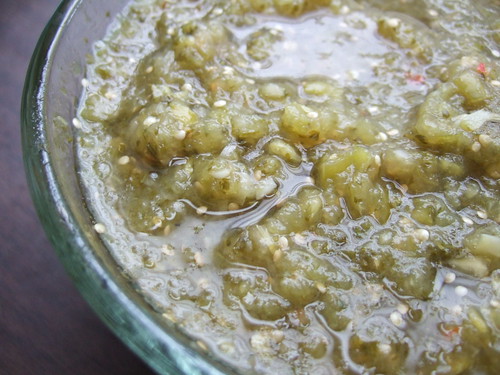
  • I’ve made salsa verde before using different kinds of greens: parsley, mint, basil and capers. This version fits its Spanish name more because it uses tomatillos, those green tomatoes you see in your grocery store covered in an onion-skin husk.

    Ingredients:
    8 tomatillos, thoroughly washed, halved
    1 medium red onion, chopped
    1 bunch cilantro, chopped
    2 Jalapeño peppers, stemmed, seeded, chopped
    1/4 tsp sugar
    juice from half a lemon
    salt

    1. Place tomatillos cut side down on a baking sheet. Place in broiler for about 8 minutes to lightly blacken the skin.
    2. When done, pulse together all ingredients in a food processor. Season to taste with lemon juice and salt. Transfer to a large container with a seal. Let cool to room temperature before storing in refrigerator.

    Related post/s:
    A really green salsa verde
    Part of my Mother Hen project: omakase bento #5

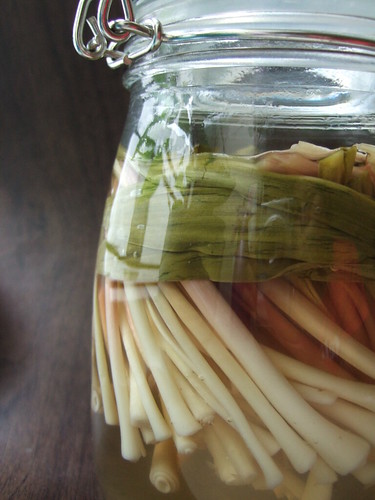
  • In a week’s time, New York City has gone from spring to summer. Temperature was up 76 last week and I wore shorts to work. Good thing the produce at the farmers’ market was still in spring mode because I couldn’t have celebrated the warm weather without having my first ramps of the season. I got my early batch from Whole Foods for $19.99 a pound. F that! A bigger bunch in Union Square was $2.50 each when I stopped by the next morning. Because I was able to afford a few bunches, I decided to pickle them.

    Make sure you wash and clean the ramps thoroughly. From the farmers’ market, the roots were intact. I cut them off and washed them with the water running; the onion skin from the stalks easily came off. I cut off and only left about an inch of the greens. I set the leaves aside for another recipe. Shichimi togarashi is a Japanese spice mix used to flavor soups and noodle dishes. You can buy a small bottle from Sunrise Mart if you’re in Manhattan, or else make your own.

    Ingredients:
    4 bunches of ramps
    2 cups rice-wine vinegar
    1 cup white sugar
    salt

    For the shichimi togarashi:
    1 tsp red chili flakes
    1 tsp sesame seeds
    3 curls of orange peel
    a very small knob of ginger, peeled, crushed
    1 sheet of nori

    1. Bring all the ingredients, except the ramps, to a full boil in 3 cups of water until sugar dissolves.
    2. In a pickling jar, place cleaned ramps and pour in the pickling juice. Using a small tea cup as weight, make sure that the ramps are completely submerged. Let cool to room temperature.
    3. Seal jar and store in the refrigerator for about 5 days.

    Related post/s:
    Ramps with pancetta or bacon is the way to go if you’re not into pickling