• Ah, fall. There were those weird couple of days when the weather turned muggy and humid, but it now feels like Mother Nature is catching up. The leaves are starting to turn and I’m beginning to feel too lazy to get up from my warm and cozy bed. All I want is to drink a full-bodied red wine and eat some lamb. After I start my day, that is.

    This was an easy recipe from Nigel Slater’s The Kitchen Diaries. I’m not at all familiar with him, but the book design was so tempting that I couldn’t leave Strand bookstore without it. I initially wanted to use lamb chops instead of the suggested neck, but when I went to the halal store next door, they only had the neck left. I also picked up three chungus, the African eggplants they always have in stock.

    Ingredients:
    2 pounds neck of lamb, chopped
    3 plum tomatoes, halved
    2 baking potatoes, peeled, chopped
    1 large eggplant, chopped
    1 large red onion, quartered
    6 cloves of garlic, peeled
    5 sprigs of rosemary
    olive oil, salt, pepper

    1. Preheat oven to 400º. Season lamb with salt and pepper. Set aside.
    2. In a shallow roasting pan, toss all the ingredients together, except the lamb, with some oil, salt and pepper. Bake, uncovered, for thirty minutes.
    3. Remove roasting vegetable from the oven, toss gently and add the lamb. Turn the oven heat up to 425º and roast for another twenty minutes, or until the lamb is golden brown and slightly pink inside.

    Related post/s:
    Mke this recipe more interesting by using a different type of eggplant

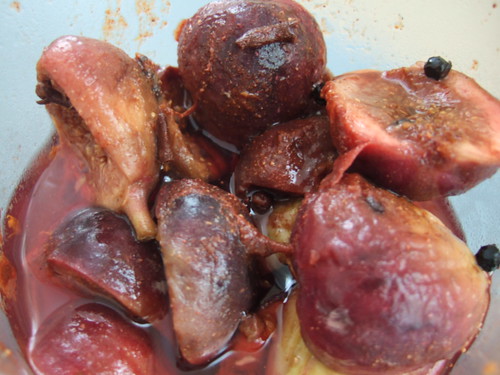
  • I can always count on Cameron to introduce me to something simple, yet presentable, in the kitchen. I’ve had figs before, of course, but their taste never jumped off my plate. At least until she served a mixed salad with them one night when I came over for dinner. It was a bright appetizer that started off an equally delicious meat dinner. After a recipe search, I bought my own fresh figs and preserved my own.

    Ingredients:
    12 pieces of fresh figs, washed, halved
    1 cup sugar
    1 cup red wine vinegar
    1 tsp whole cloves
    1 tsp nutmeg
    1 tsp cardamom, grounded
    1 tsp black peppercorns
    1 tsp powdered ginger
    1 tbsp cinnamon powder

    For the salad:
    1 head of frisée, torn in smaller pieces
    a handful of walnuts, crushed
    a large chunk of Gorgonzola cheese, crumbled
    olive oil

    1. In a bowl, combine all the spices with the sugar. Add the vinegar and stir until completely mixed. Add more sugar if it’s too sour to your taste, but it should be a perfect balance of tart, spice and sweetness.
    2. Put the figs in a sealable glass jar. Pour in spice mixture. Cover and refrigerate for a week. To make sure that the figs get equal treatment from the spice mixture, invert the sealed jar every day or so. They should be ready, and preferably consumed, after a week in the fridge.

    Related post/s:
    I love pickling and preserving

  • I walked in Sur La Table to pick up some kind of exotic dark chocolate to satiate my craving last week and I ended up leaving with something heavier: a cast iron grill press. I don’t know what came over me, but as soon as I saw it in the store, I had to have it. I imagined using my Le Creuset grill pan more and pressing the beef steaks and the lamb chops I expect to cook this autumn and winter, but then The Times published an article devoted to grilled cheese with a recipe from Los Angeles.

    I first discovered taleggio at Otto on their mushroom pizza. I remember that after tasting it, I went to Di Palo the next day to buy some. I baked it with mushrooms, too, but using a tart shell. Taleggio has a very strong and tangy smell that I find appetizing, so my mouth watered as soon as thought of it melted in between pressed bread. And who doesn’t like paninis, right? You can use a heavy pot lid–cast iron if possible–if you don’t have a press.

    I used cinnamon raisin bread instead of just raisin, and I picked up the apricots from the dry goods aisle. I love the arugula here, so if you can get the spicy kind, the better. As a last touch, I sprinkled some of Terra de Sal’s flor de sal from Portugal. The sandwiches made a very sophisticated brunch on Sunday morning.

    Ingredients:
    half a pound taleggio cheese, rind removed, at room temperature
    8 slices cinnamon raisin bread
    15 dried apricots
    1 tbsp capers
    1 tbsp Dijon mustard
    half a stick unsalted butter, softened in microwave for 15 seconds
    arugula, throughly washed and dried with a paper towel
    olive oil, salt

    1. Place apricots in small saucepan and add enough water just to cover. Bring to full boil and immediately remove from heat. Mix in capers, mustard and teaspoon of olive oil. Pulse in blender to chunky consistency. Set aside.
    2. Spread one side of each bread slice evenly with some butter. With buttered sides down, top four slices with a spoonful of the apricot mixture, a handful of arugula and equal portions of cheese. Top with remaining slices, buttered side up.
    3. Place large skillet over high heat and melt a small knob of butter. Reduce heat to low and add sandwiches. Using an iron grill press, put on top of the sandwiches and press. Cook until browned and crisp on both sides, about 2 minutes a side. Transfer to a platter lined with paper towels, and sprinkle each with a pinch of salt. Cut in half and serve.

    Related post/s:
    Taleggio and mushrooms make a good combination
    Even Otto thinks so
    Buy your salt from Terras de Sal
    I got the Lodge Logic cast iron grill press

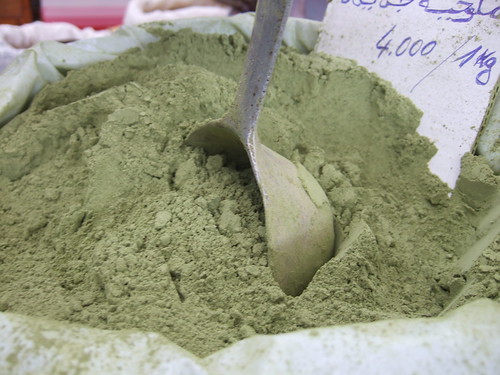
  • My new thing lately is buying cookbooks when I travel. My latest is a Tunisian cookbook with all of its recipes written in French. The Internet was very helpful when it came to figuring out what I needed to do to make it edible. It wasn’t just the pretty food photographs that made me buy it, but this mloukhiya recipe. When the Dr. and I were traveling in Tunisia and scouring the food markets, one of the least familiar spice we saw for sale was that of the corète of Japan. Whenever we asked the seller, they told us it was powdered spinach because of its color. A trip to the grocery store in Carthage solved the mystery. I went to the spice aisle and picked a packet up with an English translation of its contents.

    I later found out–happily, too–that the mloukhiya plant is what we Filipinos call saluyot because the English name of the plant translated to corchorus. This recipe is a beef stew using the powdered leaves simmered for a long time until it is thick and almost black. You know it’s done when it has the consistency of stewed okra. My father is Ilocano, but I don’t remember ever eating, or liking, saluyot. I may have to revisit those childhood memories.

    Mloukhiya is generally prepared to celebrate Eid al-Fitr, the Festival of Fast-Breaking, or the end of Ramadan. Because I’ve inundated you with Tunisian stories for the past two weeks, I just thought it was appropriate to publish this recipe today. I still have to check out the African store in my neighborhood to see if they sell the spice.

    Ingredients:
    1 1/2 pounds of beef chunks
    1 large onion, quartered
    1 packet of powdered mloukhiya
    3 cloves of garlic, minced
    3 bay leaves
    3 sprigs of mint leaves, leave some for garnish
    chili flakes
    salt, pepper, oil

    1. Season the beef chunks with salt and pepper. Cover and refrigerate until ready to use.
    2. In the meantime, in a large Dutch oven, add the mloukhiya in 8 cups of water and some olive oil. Slowly stir with a heat-resistant spatula until the powder is fully-mixed in. Use the spatula to keep the mloukhiya from sticking to the sides of the pot.
    3. When the mixture takes the consistency of a thick cream, bring to a boil, uncovered, and then lower the heat and simmer, covered. Stir occasionally and pour in a little water from time to time in order to maintain its initial volume.
    4. Add the beef chunks with the rest of the ingredients and continue to simmer for about 2 hours, or until beef is cooked through. Season with salt, pepper and chili flakes.

    Related post/s:
    Tunisian spices and produce photos on Flickr
    All Tunisian posts are in one place

  • To wrap up our two-week vacation in Tunisia, we just had to drive around the Cap Bon and end up in La Marsa so we could drop off our rental car and catch our flight out of Tunis. From Kairouian, our scenery changed from small town to suburbia. Nabeul is the country’s ceramic center and is increasingly the place tourists go to to escape the beach resort town of neighboring Hammamet.

    We drove to the souq and checked in our cheapest accommodation to date, Pension Les Roses, at 15 dinars a night. At that price, or about US$12, there were no extra amenities. In fact, I had to ask for the owner and pay an extra dinar to unlock the bathroom door for me when I wanted to use the shower. I’d like to think that I’m an excellent packer–I finally got to use the just-in-case bed sheet on our bed. We had a balcony that looked out to the souq and the roof of the building next door. The marble columns and tall blue shutters in our room reminded us of the places we stayed in Cuba: family houses frozen in time. But as the tourists left town, the stores closed and it was difficult to look for a place to eat. We tried three recommendations from our guide book before we lucked out at L’Olivier, a German-friendly restaurant. Surprisingly, the mussels and squid were not overcooked, plus the fish stew with couscous was delicious. We ended up splurging for about 40 dinars including a few beers.

    We left Nabeul the next day and made a few stops around the peninsula. It was a sunny and gorgeous day and driving the winding roads reminded us of wine country and the Pacific Coast. Kerkouane’s main tourist attraction is its Punic settlement ruins. Because the town was set on the coast, forts and towers were built to protect it from attacks. Excavations of kilns have also revealed it as a town of craftsmen and merchants. From the color of the water next to the ancient site, we imagined it was a very pleasant place to live.

    The coastal caves of El-Haouaria were off-limits when we arrived. There was a small sign warning visitors of falling rocks, so all of us who tried to get a closer look of the yellow sandstones ended up walking around La Daurade Restaurant’s backyard instead.

    When we thought nothing could be more beautiful than the view of the Mediterranean from El-Haouaria, we discovered the hot spring town of Korbous. The road was hugged by steep cliffs and narrow ravines and the sea stretched as far as our eyes could see. We wanted to stay here for the night as soon as we saw the small houses atop the coastal cliff-face and asked a guy at the Thermales et Touristiques to show us a room. It was a ghost town, but apparently, Tunis’ locals vacation here because of its hot springs and water treatments. The room we saw looked out to the blue, blue sea, but alas, it was unkempt and dirty because it wasn’t the high season. We were sad not to stay.

    Carthage, the home of military hero Hannibal, was the setting of Dido and Aeneas’ romance in Virgil’s Aeneid. It was considered one of the greatest cities of the ancient world, and thus, also World-Heritage listed. Although its remains and sites are scattered about–you can’t tell its history right off the bat with the BMWs and the 250-euro nightly rate at Villa-Didon–its epic past is still impressive. What gave me the chills, however, was not the amphitheater ruins, nor the Carthage Museum on Byrsa Hill, but the manicured lawn of the American WWII cemetery on rue Roosevelt. There are 2,840 graves honoring the soldiers who died during the war and a Wall of Remembrance is devoted to the 3,724 others who were never found. It was so peaceful in there that we felt like we were trespassing. It was a humbling experience to be reminded of the horrors of war.

    We ended up in La Marsa for the night at the American-owned Hotel Plaza Corniche. We met the older man who owned the place. We ended up chatting with him and his business partner after we found out we were all New Yorkers. The restaurant was next to the hotel pool and dinnertime was obviously its busiest. We were surrounded by big groups dining loudly and by young female locals out on a date with older male foreigners. Plaza Corniche was definitely the place to be in these parts. Kitschy as their decoration may be–there is a neon palm tree, Chinese lanterns and statues of butlers–we enjoyed our stay there because it allowed us to wind down and get ready for our flight back to the States. It was only too bad that they didn’t allow us to eat the wine and cheese we bought from the grocery store in the town center. We wanted to sit and eat by the pool before dinner time our last night, but the receptionist told us that we had to go back to our room if we wanted to eat something we didn’t buy from their restaurant. Because of that, we stepped out for dinner and refused to spend another dime there. I suppose it was just like being in New York City.

    It was time to fly home. Bi-salama, Tunisia, and bari kelorfik.

    Related post/s:
    Day 12 & 13 in Tunisia: Cap Bon Peninsula photos on Flickr
    Day 13 & 14 in Tunisia: Carthage and La Marsa photos on Flickr
    Day 11 & 12: El Jem to Monastir to Kairouian, Tunisia

  • From Mahdia, English John, the Dr. and I jumped in the car to catch the sunset at El Jem, Tunisia’s most impressive Roman monument. It would have been more impressive, of course, if we actually made it inside. We arrived in El Jem just a little before 6pm after a 45-minute drive. When we walked to the gate, the guard told us El Jem closed earlier because of Ramadan. The sign said closing time is at 7pm. We begged and pleaded for him to let us in, even for just fifteen minutes, so we can take photographs from inside, but he shook his head and pretended he didn’t understand French. Funnily enough, he spoke enough French to ask us for 10 dinars each.

    We refused to give him a bribe to let us in. We walked away from the gate, cursed him so that he doesn’t get to enjoy the forty virgins in paradise and just walked around what was once the crowning glory of ancient Thysdrus, a town that enjoyed prosperity in the first few centuries.

    El Jem is amazingly intact. It is is also a World Heritage-listed monument and is considered the third largest colosseum in the Roman world. Emperor Gordian reportedly committed suicide inside when a rebellion against Maximus was becoming obviously doomed. It was a bummer not to watch the sun set from inside, but like the Dr. said, C’est la vie.

    The next day, we left English John and Mahdia and started our drive back to Tunis. We made a quick stop at Monastir to pay our respects to Habib Bourguiba, the man responsible for Tunisia’s independence from France. In 1934, Sorbonne-educated Bourguiba led a movement to break away from the ruling Destour Party. On April 9, 1938, the French killed a lot of its supporters demonstrating in Tunis. Bourguiba was arrested and sent to exile to France. Years later, he was able to bring international attention to Tunisia. By 1954, the French announced negotiations for Tunisian autonomy, and when an agreement was reached a year later, Bourguiba returned home a hero. The country was granted independence on March 20, 1956 with Bourguiba as prime minister. When it became a republic, he was declared its first president until President Ben Ali toppled his government in November 7, 1987. Today, every Tunisian town has an Avenue Bourguiba and an Avenue 7 Novembre. The mausoleum itself is reached via a long, paved walkway with green and gold arches and a marble courtyard.

    Monastir’s star attraction, though, is its ribat, or defensive fortress. It’s Tunisia’s finest example of Islamic architecture, with its labyrinthine passageways and staircases. Unfortunately, it is also promoted by the tourism board as the film set for Monty Python’s Life of Brian, including the scene where Tunisian extras laugh at Biggus Dickus.

    From Monastir, we went back inland to visit the fourth holiest city of Islam, Kairouian. We were told that seven visits to Kairouan equals one visit to Mecca. Since it’s an important pilgrimage destination and North Africa’s holiest Islamic site, it’s also World Heritage-listed. Non-Muslims are only allowed through one of the nine gates of the Great Mosque. We arrived there at 2pm and missed the opening hours, so we followed a young kid who took us to the roof of the carpet shop a few doors down to see the view of the domes. This privilege required us to browse through the store’s carpets and uncomfortably say no to all of them.

    We also followed the boy to Bir Barouta, a well whose waters is supposedly connected to the well of Zem-Zem in Mecca. Drinking the water from its well is an important moment for those who believe that. The water didn’t make me sick, even though we’ve read that you have to drink at your own risk. The scene inside, though, is a little bit more staged–a camel with colorful scarves hanging on its side, walks around the well to turn the wheel that draws the water. We left a couple of dinars for the man who ordered the camel to start moving in Arabic.

    Feeling like we’ve given enough dinars to Kairouian’s locals, we returned to our car and left for the Tunisian north cape.

    Related post/s:
    Day 11 in Tunisia: El Jem photos on Flickr
    Day 12 in Tunisia: Monastir photos on Flickr
    Day 12 in Tunisia: Kairouian photos on Flickr
    Day 9, 10 & 11: Sfax to Mahdia, Tunisia

  • We said good-bye to Houmt Souq, Jerba, and drove a long way up the east coast to Sfax. On our map, Sfax and Sousse were the two locations besides Tunis that looked like busy cities because of several roads connecting them with surrounding towns. We vowed to skip the tourist traps when we first looked at our road map, but since there was no way back up to the capital without avoiding at least one of them, we chose Sfax. In our guide book, it described Sfax as bypassed by packaged tours and the place to see what most people say is the best medina in the country.

    We parked our car and walked through Bab Jebli, one of the original Aghlabid gates, an Arab Muslim dynasty. We bought some fruits to eat since no restaurant inside the medina was to open until sundown. We went inside the fish market where the action was in full swing even in the middle of the afternoon. We also walked through Souq des Etoffes where the Cairo market scenes from The English Patient were filmed. We shot one of our best videos while in there, but it was hard for me to point and shoot with my digital camera without being stared at by the locals.

    The medina was a chaotic mess. Even so, we knew that they are laid out according to strict Islamic principles. We appreciated that the narrow streets kept the sun’s rays at bay, and that the stones cooled the afternoon air. We seemed to have walked for almost an hour before we found Hotel Enasser right smack in the middle of the busy market. No one we asked wanted to help us out. Some of them didn’t speak French and they waved us away or just turned their backs on us whenever we asked. By the time we checked in and paid for our 25-dinar room, we were exhausted.

    When we made it back to our car, I asked the Dr. sheepishly, Can you keep driving or do you think we should stay? He agreed that we should leave for a more quiet town before it gets dark. We went back to the hotel and painfully tried to get our money back from the receptionist. I watched as he argued with the Dr. in French about how we just broke his heart by changing our minds about the town he grew up in. Yada, yada. We probably didn’t give Sfax a chance, but our first impression was that it was like Manila: polluted, crowded and noisy. We just weren’t in the mood for too many sensations at once.

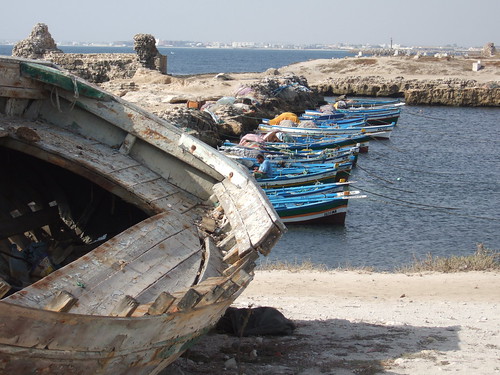
    So we left and kept driving up to the next town of Mahdia. It is situated along the Mediterranean and described as a small fishing village, “the sort of place to spend a few days resting from the rigours of life on the road.” That sounded good enough to us after our Sfax experience. In Mahdia, we drove on a narrow street along the water–we knew we’ve come to the right place. We parked and hauled our packs through Place du Caire and checked in a rooftop room in Hotel Medina for 15 dinars.

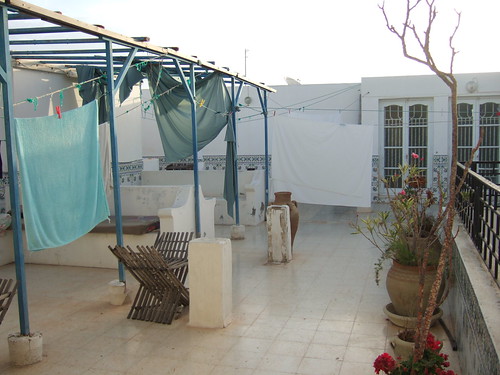
    Sitting in the rooftop terrace as the afternoon breeze gave movement to the drying blankets was like arriving in a quiet beach after an assaulting day of getting there. We met our roof-mate, English John, who was traveling sans girlfriend. The three of us ended up having dinner together by the fishing port at Restaurant de la Medina and hunting for beer at Le Lido right after. It was weird to be talking to someone in English–I certainly felt like it was the first time I had a real conversation with anyone besides the Dr.! All this time, it had been the Dr. doing the talking in French, so English John’s company was definitely comforting.

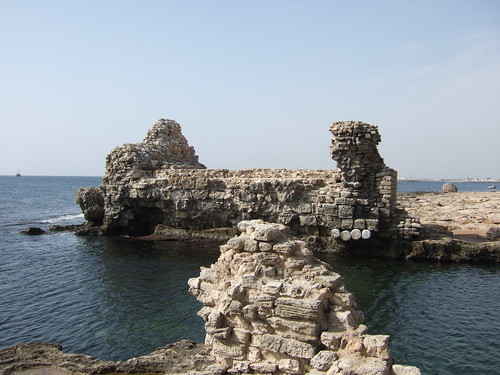
    The next day, the Dr. and I explored the coast. We walked to the fragments of the original Fatimid walls along the shoreline, through the Muslim cemetery and the Punic necropolis. We didn’t go inside Borj el-Kebir, a large fortress situated on the highest point of the peninsula, but we did end up all the way to Cap D’Afrique where the local kids jumped off sharp rocks to swim.

    After spending some time on the beach and before we set off snorkeling with Subway, one of the only two water activity companies in Mahdia, we visited the markets. We were inspired enough with the excellent produce we saw that we actually planned a home-cooked meal. The spices were much cheaper than in the souqs we’ve visited, the vegetables more colorful and the meats–the meats!–were more alive! I was like a kid on Christmas day.

    That night with English John, the Dr.’s four-spiced medium-rare lamb chops with fried mullets were on the menu with my watermelon tomato salad and pickled cucumber appetizer. English John walked to the same bar from the night before and provided the booze as his contribution to our night’s elaborate meal. We used our hands to eat and finished every morsel. Hands down, it was the best meal we had in Tunisia in what became our favorite place in the country.

    Related post/s:
    Day 9 in Tunisia: Sfax photos on Flickr
    Day 9, 10 & 11 in Tunisia: Mahdia photos on Flickr
    Day 6, 7 & 8: Matmata to Jerba Island, Tunisia

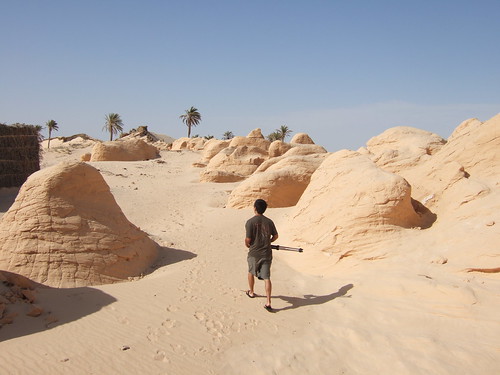
  • We slept some more as Taha and Emin drove us the next morning to Matmata. The roads started to disappear and this is why only 4x4s are allowed in the desert. More camels and rosemary bushes dotted the side of the road. From the top of Matmata, we saw how Mother Nature carved stones and created sand mountains. Matmata is known for its troglodyte homes built underground to provide respite from hot summers and random invasions. Hotel Sidi Driss, five pit courtyards connected by underground tunnels, was where–surprise–Star Wars was shot. Tourists go in and out of the hotel to take photographs and have pushed the locals to the Nouvelle Matmata on the other side of town.
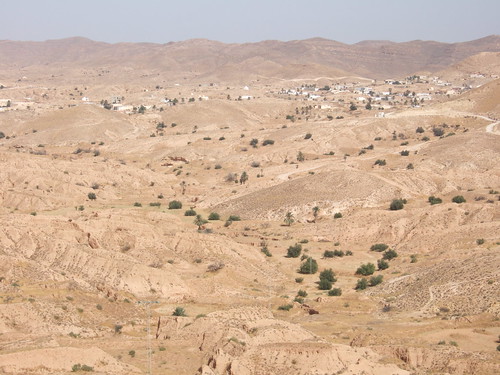
    As we were leaving Matmata, we asked Taha about Gabes. He said there is absolutely nothing to see there. (What? He didn’t mention that it was Obi-Wan’s home!) We checked our map and wondered about the island of Jerba jutting out of Gabes. According to legend, Ulysses stopped there in the course of the Odyssey to persuade his crew to get back on board after the natives, or the “lotus-eaters”, gave his men flowering food that made them forget about going back home. How awesome is that tidbit? It is now one of the last places in Tunisia where Muslims and Jews peacefully live side by side. We were definitely intrigued.

    Taha turned our SUV around and stopped another car he happened to know was going to Jerba. A young Japanese couple was inside and we introduced ourselves as our drivers talked. Luckily, the Japanese agreed to give us a ride to Jerba. They really had no chance to say no as their driver started loading our backpacks in the back of their car. The ride was quiet, but it became less awkward as soon as the Japanese started talking to us. We found out that they have been with their driver for the last four days and were also fasting with him. Like their driver, they were on their fourth day of Ramadan. It was a noble gesture, something we couldn’t even imagine doing during a vacation, and it surely broke the ice. The driver said, Filipinos? Thumbs down. Japanese? They do Ramadan with me! and gave them a thumbs-up.
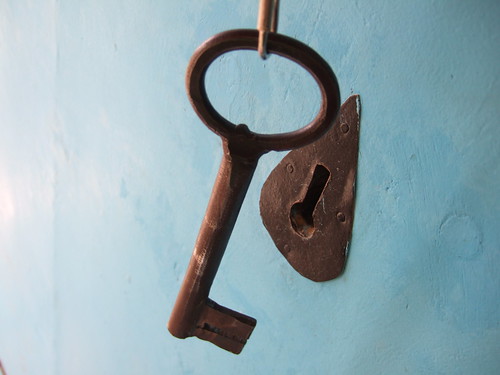
    About an hour and a half later, we boarded the ferry to Jerba. From Jerba, we entered the town of Ajim and were dropped off at Houmt Souq, the city center. (Note to Jase: Ajim was also Mos Eisley.) In the heat, we carried our packs to Hotel Arischa, an old funduq with a 56-dinar nightly rate. A funduq was an inn where traveling merchants stopped by to rest during the Ottoman period. The gate was big enough to accommodate camels and their load. The first floor was usually a warehouse where the animals’ needs were stocked and the second floors were the sleeping quarters. Each door came with giant locks and barrel bolts. We decided to spend two days to enjoy the town’s souqs, or markets, and the island’s beaches. Hotel Arischa became our favorite accommodation.

    Now without a car, we had to hire a cab to take us to the public beach. The beach was disappointingly full of litter, so we ended up walking to the beachfront of the Radisson Hotel where several Europeans were already red from too much sun. It was like entering a music video, with shady tents, a large turquoise pool and staff clad in all white serving cocktails on trays. We paid 30 dinars for a mojito and a caipirinha. Alas, we had to pay New York prices for a little bit of sin in a Muslim country.
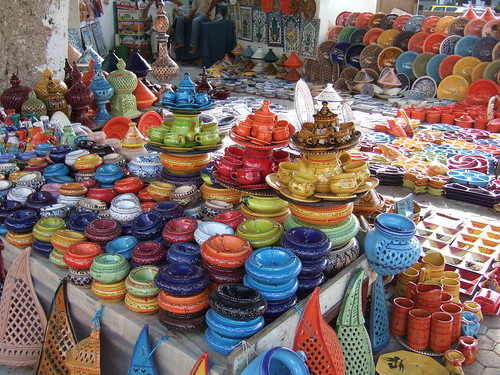
    Back in town, we walked in and out of the covered souqs to see the potential souvenirs we may be able to take home. Each town has its specialty, but most of the time, sellers offer the same products: clay pots, tagines, shisha pipes and leather poofs. From all the towns we’ve visited so far, we’ve enjoyed the produce markets more than the shops. In Houmt Souq, we watched the fish auction. Men who sat on elevated chairs displayed strings of fish provided to them by their fishermen. Bidders, which include restaurant owners to housewives, shouted out a price to buy the freshest of the fresh. We noticed that one of the auctioneers had a jasmine flower behind his right ear. I later read that if a Tunisian man has a jasmine flower behind his right ear, he is single and is looking for a wife. (Guess where the Dr. put his jasmine?) A man who puts a flower behind his left ear is proud to be taken and married.

    We craved seafood after visiting the fish market. Dinner was at Restaurant D’Ille, a recommendation from one of the funduq employees. The sea bass we ordered for 10 dinars was so small, it didn’t look like the sea bass we were familiar with. We just figured that they had a different translation for the real sea bass. We ordered two beers and a half bottle of a very strong rose wine. Together with another plate of lamb and couscous, our meal was a splurge for 56 dinars.
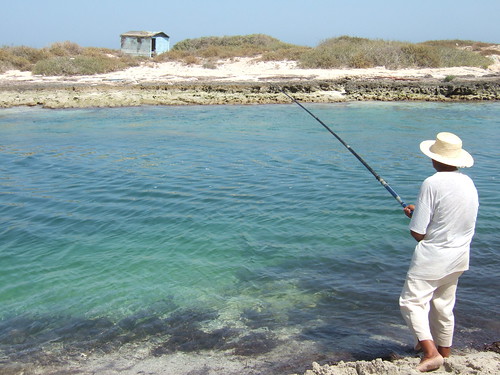
    It was hard to explore the rest of the island without a car. It didn’t take us a long time to succumb to the idea of renting another car that we can drive all the way back to Tunis. The next morning after breakfast, we picked up a new rental from Europcar. We drove to the La Seguia beach where we sat by the channel and watched an old man fish all morning. Stupid jet skiers disturbed the peacefulness. We swam for a bit and read and sunbathed.
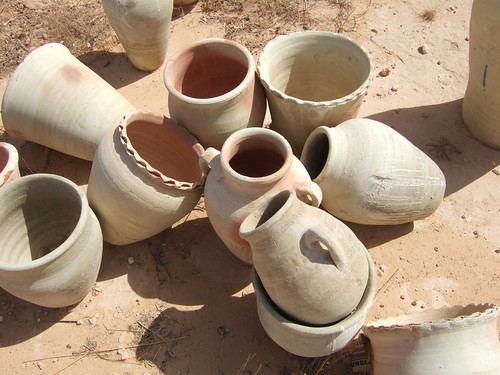
    Then we drove to the south, with a stop at the Cave d’Ali Berber where a guide showed us a typical Berber home, and an underground tunnel where he gets clay for his pottery. I was a tourist, so I was forced to feed a baby camel. We bargained for a cooking tagine for 25 dinars. Later, we found out the same tagine cooker started at 35 in the souqs, but if you start to walk away, the desperate sellers can go as low as 10 dinars. I’m usually good at bargaining, but it was difficult to haggle when you’ve been cornered inside their store and when they block your way out.
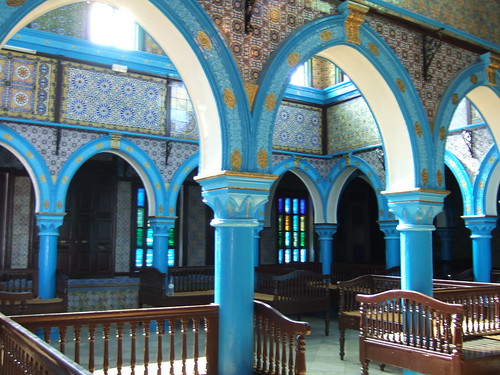
    We also drove near the water to see the unkept Guellala Mosque. Our next stop was the Jewish synagogue of El-Ghriba, an important place of pilgrimage during Passover. It was bombed in 2002, so visitors now have to go through the X-Ray machines before entering. We took off our shoes and wore head coverings before we walked in to listen to the old men read aloud from the holy book. We also checked out the metal hangings left by devout pilgrims. The sanctuary reportedly has one of the oldest Torrahs.

    For the rest of our last day in Jerba, we planned our final week in Tunisia. Dinner was at Restaurant Les Palmiers. For 17 dinars, we ate the usual salade Tunisienne, rice with lamb stew and a grilled dorade. It was a warm, breezy night. We sat outside and joined the men for the night’s mint tea while the mosque next door announced that Allah is great.

    Related post/s:
    Day 6 in Tunisia: Matmata photos on Flickr
    Day 6, 7 & 8 in Tunisia: Jerba Island photos on Flickr
    Day 5: Chott el-Jerid to Douz to Ksar Ghilane, Tunisia

  • After pricing three companies while in Tozeur, we settled with Au Coeur du Desert which charged us 350 dinars for a two-day tour. Our English-speaking guide, Taha, and his brother, Emin, picked us up as soon as we returned our car to Europcar, the rental agency. Taha drove like a maniac, but he was very charismatic. His heavily-accented English was easy enough to understand, but we couldn’t help but think of “sexy-time” every time he talked. He also looked like the restaurateur in The Sopranos, only happier and less desperate. He knew our itinerary well and he talked whenever he had something to show us along the way. The rest of the time, he and Emin spoke and laughed to each other in Arabic while we listened to how animated their conversations were.

    Our first stop was Chott el-Jerid, the salt lake where Luke Skywalker contemplated the two moons in the first Star Wars movie. (I am probably the least knowledgeable person concerning Star Wars, but I feel I must add that point so that my friends will be able to relate. When I started telling them that I was going to Tunisia, their response always had something to do with the movie.) We stopped at where the locals have left a boat, a fake camel and a “4-star hotel” straw tent. The lake measures at least 5,000 square kilometers. It stretches to emptiness as the salt shimmers in the heat. Around us were pools of saltwater in red and yellow colors.

    About two hours later, and after a brief stop to take photos of some sandstone pyramids along the way, we arrived in Douz. There were restaurants opened for tourists who weren’t participating in Ramadan, but we didn’t want to eat fried chicken nor spaghetti. We separated from Taha and Emin to hide and eat our usual bread-and-canned-fish lunch. Our throats were parched, so we could only imagine how thirsty they were. Even without water for hours, though, they still entertained us until we reached Ksar Ghilane.

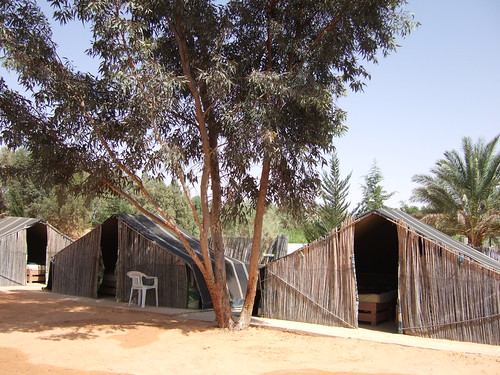
    We arrived at Campement el Biben in the middle of a very hot afternoon. We were shown where we were to sleep for the night: Bedouin tents. Bedouins are tribes who travel the desert, but today the term is used to refer even to non-Arabs who live simple, nomadic lives. Their tents are made of thick canvas, which almost feels like wool, and are meant to withstand all sorts of weather when used in the desert. Although we had the tent set-up, we were still spoiled by the beds inside and the bathroom with running water at the other side of the camp.

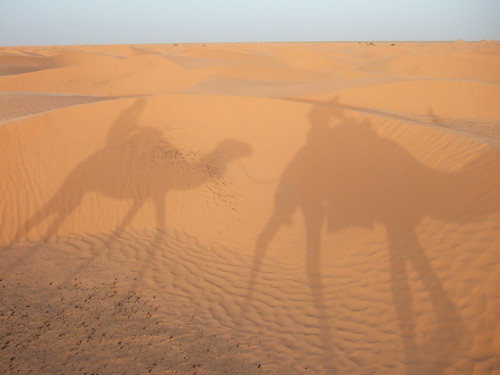
    We spent the rest of the day lazing like dogs and swatting off flies, as we tried to sleep or read. It was hotter than being inside an oven. When it was almost sunset, we were rescued by Taha to introduce us to our camels. We knew that the guides had to be home by sundown to finish the day’s fast, so we only signed up for an hour ride around the dunes. Ksar Ghilane is surrounded by the dunes of the Great Eastern Erg, the most alluring desert scenery in Tunisia.

    It was our first time on camels. It was a thrill to get on one and hold on while the camel took three steps to stand up. At first, the camel will make you lean back to get its footing on the sand, and then all of a sudden, it will lean forward to position itself to get up. And then, when you think you’re already set, it will lunge forward to actually stand up. I later learned that all camels in Tunisia have only one hump, or the Dromedary type, and that two-humped camels, also known as Bactrians, only exist in the deserts of China and Mongolia.

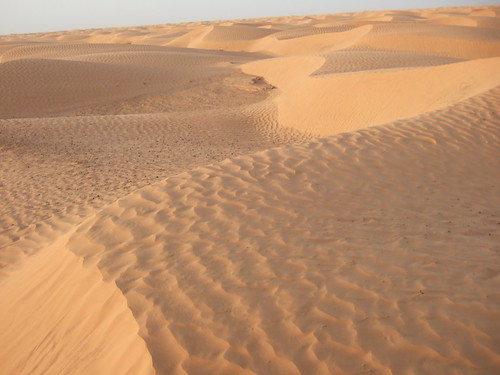
    The novelty of riding a camel actually runs its course after about fifteen minutes. I can’t imagine how those who choose to ride it for days feel. But the scenery of the dunes was exhilarating. The sand is seriously a red-orange color, marked with waves and swirls left by the soft desert breeze. We let our guide and his camels go home and we finished watching the sun set behind the dunes. There was nothing to do, really, but enjoy the moment.

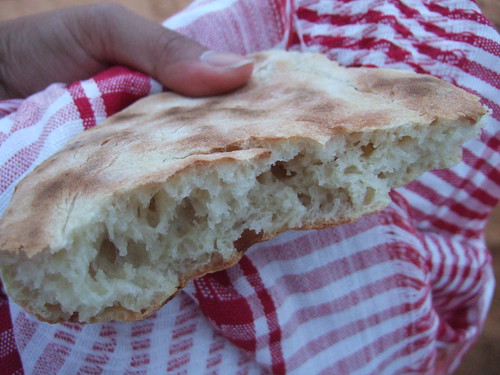
    As the clock hit 7:32pm, Taha and Emin reached for their bottles and guzzled water. We all laughed out loud as Taha pointed to the clock and told us he was now free to eat and drink. But, of course, being Tunisian, they still offered us half of the freshly-baked damper bread they received from one of the locals when they ended the day’s fast. This kind of bread is cooked in the ashes of a camp fire in the desert. It’s more dense than the typical bread we’ve been buying in town bakeries, and also taste so much better.

    For dinner, the camp’s staff served a plateful of spaghetti and fried chicken under the stars. For extra 4 dinars, we also had our first drink of the local beer. (We had been craving any type of liquor for the past five days, but they were very difficult to come by unless we walked in the nicer hotels and restaurants.) We were thankful that even a Muslim country like Tunisia makes its own beer. After eating, we sat outside our tents and watched the stars. Before the lights were turned off, we entered our tent and looked forward to sleeping a very peaceful nomad-style sleep.

    Related post/s:
    Day 5 in Tunisia: Chott el-Jerid photos on Flickr
    Day 5 in Tunisia: Ksar Ghilane photos on Flickr
    Day 4: Le Kef to Tozeur via Gafsa, Tunisia

  • We had a long way to go to Tozeur via Gafsa, so we woke up early to start our drive to Kasserine. The rolling hills switched to empty lots of cacti. As our surroundings started to become flat, more and more locals started to hitch a ride to the nearby towns. We saw an older man in a long purple tunic on the side of the road, trying to wave down cars. I joked to the Dr. that we should pick him up to buy some good karma. To my surprise, he stopped the car on the side of the road. I was squealing before he rolled down the windows on my side! The old man didn’t speak French, but we all understood “Kasserine” and he got on the back seat. It was a quiet and awkward ride for the next fifteen miles because he only spoke Arabic, but he managed a faint “Monsieur” to let us know he wanted to get out as soon as we drove by the city center.

    During Ramadan, some stores remain open for business. We found out fresh bread was easy to come by during the day, as well as fruits and drinks. In Gafsa, we stopped by the only open patisserie and ordered four pieces of small, triangle pastries. They were wrapped in phyllo and filled with almonds and pine nuts. They were not serving tea, so the lady refused our payment when we finished. We were simply tourists passing by her town, but we were shown such great hospitality. Picking up the old man wasn’t so bad after all. (When the Dr. bought water from another store, the man tending the place asked him what a guy “like him” was doing in the middle of Gafsa.)

    We were on our way toward the desert. The roads started to become drier and dustier. We started to see road signs warning us of camels crossing. We initially thought that they were just a ploy to entertain tourists, but we laughed as soon as we caught our first glimpse of camels far away, just chilling on the side of the highway.

    In Tozeur, we drove in circles before we found Residence el-Arich. We checked in our airy and tiled room that looked out to a courtyard filled with palm trees. We missed the sunset from the Belvedere Rocks because we also couldn’t the right turn. The cop stationed outside the zone touristique recognized our car by the time we circled a third time. We made it to Belvedere Rocks as soon as the sun disappeared behind the horizon. The rocks were ugly anyway as the most recent landscaping included a golf course and a playground. The face of Tunisia’s most revered poet, Abdulkacem Chebbi, was cut into the rocks. (My first reaction? “That better not be John Fucking Kennedy!” I have nothing against him, of course, but I didn’t come all the way to Tunisia to see an American’s face etched in sandstone.)

    Right outside the souq, or market, of Tozeur, we found Restaurant Paradis where we had a nice dinner of couscous with lamb, a cucumber salad and ragout of green peas, all for 13 dinars. An old man ran the place and he offered to move the table and chairs outside so we can enjoy the nighttime breeze. We ate heartily as we watched the men go in and out of the mosque next door.

    On our way home, our favorite cop flagged us to stop. When driving in Tunisia, there are several roundabouts and police inspections on the road. As driving tourists, we have enjoyed the privilege of simply driving slowly past the cop, waving and continuing on without having to go through the inconvenient inspections all locals treat as routine. When we were signaled to stop our car, we got a little bit nervous. The cop walked over to the Dr.’s side and handed us a date. He stopped us to give us a date! He also kept us for the next twenty minutes, excitedly chatting about Tozeur’s palmeraie–where the date came from–and the Dr.’s ability to speak perfect French even though he is “clearly” Japanese.

    Inspired by the date, we visited the palmeraie the next morning, Tunisia’s second largest with at least 200,000 trees. It was an amazing sight to see clumps of trees in the middle of the desert. It’s a great example of tiered oasis agriculture where the system is watered by more than two hundred springs that produce more than 60 million liters of water a day. The best way to explore it is on foot, so that one can go through the narrow paths along the irrigation canals, but we had to be packed up by 9am. We were off to the Sahara, where we would be needing all the water we could get.

    Related post/s:
    Day 4 in Tunisia: Kasserine and Gafsa photos on Flickr
    Day 4 in Tunisia: Tozeur photos on Flickr
    Day 3: Tabarka to Bulla Regia to Le Kef, Tunisia

  • We were awaken by the first call to prayer of the day. A man’s voice echoed through the loud speakers but we still got up later than expected. The staff at Les Mimosas still served us the free breakfast of hard-boiled egg, bread, butter, coffee and orange juice. We checked out, sad that we didn’t get to take advantage of the pool with a view of the city, and visited Les Aiguilles, or the Needles. They are spiny pinnacles of rock that jut out of the Old Harbour Bay, but they were less impressive than we originally thought. We drove towards the zone touristique and chose Malibu Beach to set our beach blanket and enjoy the early afternoon. There were a lot of Czech people there, most of them sunbathing topless while young Tunisians gaped from the beach. The Mediterranean was warm enough to swim for more than an hour straight but cool enough to keep us on our toes. We weren’t keen on staying, though, because the beach was littered with cigarette butts.

    Back in town, the first day of Ramadan was pretty obvious. All the restaurants and cafes were closed. Grills all around the port looked lonely and unused. We went to one store that was open and bought what would be our usual Ramadan lunch for the rest of our stay: a loaf of fresh bread, canned fish and Coke. This time, we added some pickled olives and vegetables from the market. We parked our car under a big tree back at Les Mimosas because we knew we can’t just eat in front of those who were more pious than us. Our small homemade lunch was pretty good, and we ate knowing that from sunrise to sundown, the Muslims will refrain from eating or drinking for the next forty days.

    We drove past Ain Draham, by the Kroumirie Mountains and rolling hills covered in cork trees. We made a detour to Bulla Regia, a Roman site with underground villas intact. We paid the small fee to enter, plus the extra dinar to carry my camera, and a guide followed us to the site to show us around. The Neolithic tombs around the site proved that the area was inhabited before the Romans arrived. “Regia” was added to the town of Bulla after the Byzantines took over. We felt the sun burning our shoulders, but the temperature dropped as soon as we walked underground. (It was difficult to drink from our water bottles in front of a man who hasn’t had a drop since sunrise.) We walked through the House of Treasure, the House of the Peacock, the House of the Hunt and the House of the Amphitrite, where a mosaic of Venus flanked by two centaurs came alive as soon as our guide doused water over the tiles. The baths, the forum and the amphitheater were all equally amazing.

    We left and continued our drive to Le Kef, also called El Kef. It didn’t take too long, but the Dr. was tired. We checked in Hotel-Residence Venus. For 40 dinars, we had our own bathroom again in our room. Our blue shutters opened to the mountains behind the medina. No one seemed to be in the hotel except us, even though our guidebook touted September as the beginning of the high season.

    As the first day of Ramadan was wrapping up, we noticed the groups of men hanging outside the cafes. Le Kef was absolutely great for people watching. Hundreds of men sit on plastic chairs lined along the streets with nothing to do but talk and hang out. Not one woman can be found outside. As the afternoon call to prayer signaled the end of the day’s fasting, just like that, the streets emptied out and turned into a ghost town. It was eerie to see no one all of a sudden.

    We were thankful for a stranger’s recommendation to eat at Ramzi, the only restaurant lit on rue Hedi Chaker. Without any prompting, we joined the staff in breaking the first day’s fast. We were first served shorba, or hot spicy soup. And then a plate of briq was put on the table. This one was the regular kind with chunky potatoes, but still with the ubiquitous runny egg. Traditionally during Ramadan, a meat or pasta course follows the two kemias, or appetizers. We chose the kamounia, a meat and offal stew seasoned with lots of cumin.

    But as fast as they all went inside to eat for the first time in twelve hours, the men all stepped back out to resume to their original positions–this time with hot, green mint tea on hand. Still no women around, so it took balls for us to enter one of the cafes and order the same tea that the men were having. To my surprise and delight, a couple of the older men gave up their seats for me. Fresh mint leaves are stewed in hot water for several hours until they turn the water black. The tea is poured in a small glass from high to create a froth and a lot of sugar is added to make it syrupy. It’s strong and painfully sweet at times, but we found ourselves joining the men after dinner throughout our stay in Tunisia.

    Related post/s:
    Day 3 in Tunisia: Tabarka photos on Flickr
    Day 3 in Tunisia: Bulla Regia photos on Flickr
    Day 3 in Tunisia: Le Kef photos on Flickr
    Day 2: Bizerte to Lake Ichkeul to Tabarka, Tunisia

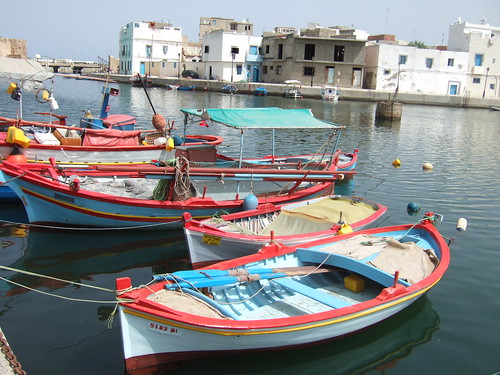
  • As soon as we drove away from the city, the landscaped changed. Olive trees lined the highway and dry, earthy dust covered the air. We arrived in Bizerte after an hour, parked our car in front of the municipal building and walked to the Old Port.

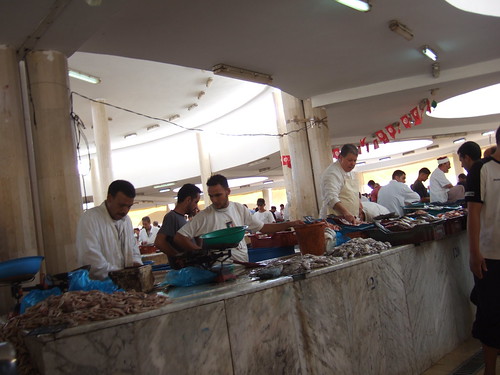
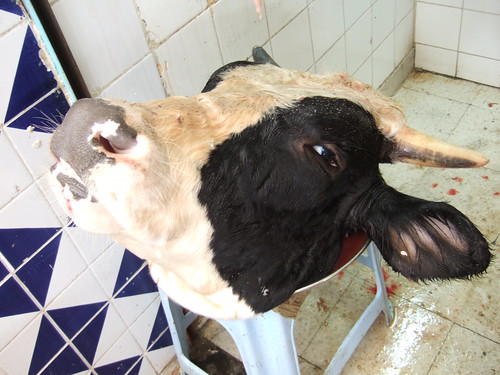
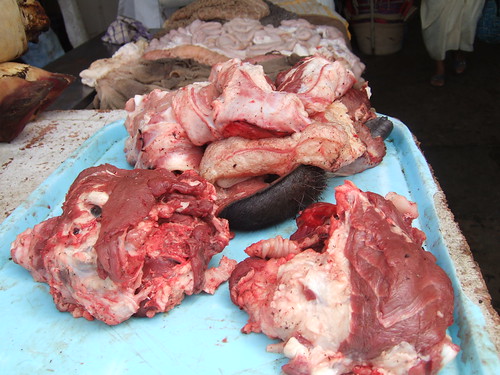
    Bizerte sits on a canal that links the lake to the Mediterranean Sea. Small wooden boats were docked at the port, while the tall fortifications of the kasbah (fort, or citadel) flanked the fishing town. We went inside the market to check out the local goods. There were the usual bananas and grapes, but there were also prickly pears and doughnut peaches. The fish market had only the freshest produce, from the small sardines to the extra large swordfish. The meat market was far more interesting. A cow’s head, with its eyes opened, was hanging; all its innards displayed on the tables. I asked a vendor for permission and he let me take a photo of the head, but wagged his finger at me when I started to take a photo of the stomach lining and the bloody mess on the counter.

    Inside the medina (or the old and traditional section of a city), a maze of stone walls guided us from narrow street to narrow street. It was dirty and rundown. We had to step over a few piles of shit. We even saw two dead kittens.

    We walked by a restaurant called Marco Polo right outside the medina and noticed an old man grilling fish. It was busy with lunching Tunisian men, and so we immediately knew it was a good place to rest and eat. We sat inside to stay away from the blistering sun. The Dr. was ordered by the owner to buy fresh fish back in the market if we wanted to eat fish. He bought a kilo’s worth of what he thought were sardines. When the owner shook his head, he walked with him back to the market to exchange the fish with the correct type. We waited only a few minutes before we were served two platefuls of the grilled sardines with salad meshouia, a cold plate of roasted vegetables swimming in olive oil. For dessert, we crossed the street and bought mint tea which every Tunisian-Muslim man seemed to drink in lieu of alcohol.

    Fortified, we walked back to the municipal building after lunch to find an empty street. Our car was towed! Panicked, we went inside to ask a stranger where and how we can get our car back. We took a cab to the parking lot, paid 30 dinars, and drove away with our rental. It wasn’t as much of a hassle as losing our luggage, but it still freaked us out. Why do we always have to be taught a lesson when we’re traveling? (See speeding ticket in Iceland post.)

    It was time to head to our destination for the night, Tabarka. But first, we took a detour to Lake Ichkeul, a World Heritage-listed national park where different species of birds fly by from the Sahara en route across Europe. Apparently, a water buffalo was imported, too. We saw a flock of swallows and heard geese honking, but the only water buffalo we saw was the statue at the park’s entrance, where there was no admission fee, but the guard asked us for a “donation.” (He took out a blank piece of paper when we handed him a couple of dinars and wrote our names down to make us believe that our contribution was going elsewhere besides his lunch allowance.) We did a quick hike around the mountain where the view was so different from the city’s. The marsh was dry and the shallow lake was surrounded by cacti and swarmed with mosquitoes, but it was breezy at the top. We felt immediately better.

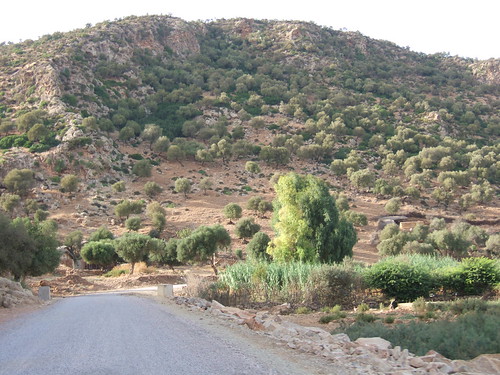
    The sun started to set, so we left in a hurry and started our drive to Tabarka. The drive from the small town of Sejnane to Tabarka was like being in California. More olive trees surrounded the hills, but figs and eucalyptus also wrapped the valleys with lush greens. It was almost 9pm when we checked in Les Mimosas Hotel. Our bedroom with private bath and a terrace looked down the town center and out to Genoese Castle. It cost us 64 dinars.

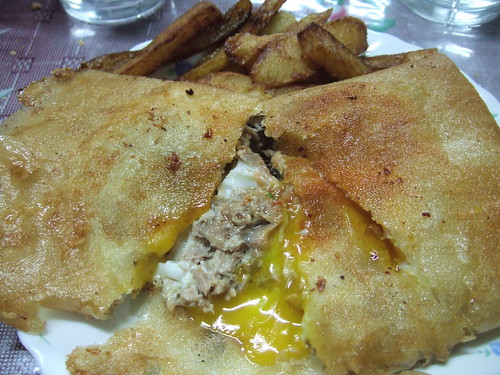
    After moving our stuff up, we walked to the main street to look for dinner. We found a restaurant with only an Arabic sign. We ate a spicy version of meshouia salad (thank you, hidden Serrano peppers with seeds intact), an overflowing ojja, a stew of tomatoes, chilies and merguez, or sausage, with an egg stirred in before serving, and my first Tunisian briq, a flaky, deep-fried crepe of runny eggs and, curiously, tuna. We also encountered our first harissa, a red chili paste seasoned with garlic and caraway seeds. Harissa is what kimchi is to Koreans–we ended up looking for it every time we sat down for a meal. We also ordered a bowl of hsou, or spicy soup with semolina and capers, but the owner sensed that we were already full and canceled our order.
    We went back to our hotel room and enjoyed the night view from our terrace. Tabarka was waiting for us the next day.

    Related post/s:
    Day 2 in Tunisia: Bizerte photos on Flickr
    Day 2 in Tunisia: Lake Ichkeul photos on Flickr
    Day 1: Sidi Bou Said, Tunisia