• Jetblue had a nice sale to the west coast, so we took advantage of the promotion and paid $250 each for round-trip tickets to Oregon. Portland was on my list of places to visit this year and the Dr. really wanted to go snowboarding, so we spent a long weekend with friends even though the state’s been in the news lately, lost hikers and all. Late Thursday night, we arrived in Portland and stayed at Sam and Jenny’s house near the Japanese Garden. Sam was still at work but Jenny had a pot of chigae waiting with Fat Tire beers, so we stayed up a bit and talked. It’s hard to say no to Korean food especially when it’s pouring outside.

    We slept very well and woke up the next day to catch up with Sam and meet their new baby, Ella, who babbled and smiled the entire morning. After a bit of catching up, we loaded our boards and drove their Hybrid SUV up to Mt. Hood. We stopped by a small town to get gas where we also picked up some greasy taquitos for lunch. It was raining when we were driving up, but it turned into fluffy, white snow when we reached the forest. It was absolutely Christmas-like. The pine trees were all covered in white and the snow didn’t show any signs of stopping.

    It was almost two when we bought our half-day tickets ($49 each!) but we were able to board until it started to get dark. Visibility was low when we were on the lifts, but on top of the mountain, there was no wind. Past the fog, our runs were clear. I was still rusty but it only took one run for my adrenaline to start pumping. I forgot how much fun snowboarding could be. I’ve never experienced snow like that before in the east coast. Even though I fell on my ass a couple of times, the powder made falling down fun. I was more comfortable turning because I knew ice wasn’t going to scrape me and I wasn’t freezing my teeth off with every try. We were sore after the first day but it made for a good night of cocktails, Oregon Pinot Noir and lamb chops at Celilo.

    On Saturday, we woke up from a deep slumber with the sun out. The mountain was already crowded by the time we started at 11am. The faster kids were speeding by us in their short-sleeved T-shirts. Meanwhile, I was sweating like a pig and trying to get out of a deep ditch of fresh snow. The easy run that the Dr. wanted us to try felt like a marathon. We lasted about four hours before we finally called it a day and drove back to Portland to meet up with Sam and Jenny, plus Dave and Carmie, who drove in from Seattle to join us.

    This is hard to admit, but the west coast is starting to become more appealing.

    Where we stayed in Hood River, an hour drive up Mt. Hood: Oak Street Hotel
    Where we stayed in Portland, Oregon: Ace Hotel

    Related post/s:
    Where to eat in Hood River
    Where to eat in Portland, Oregon

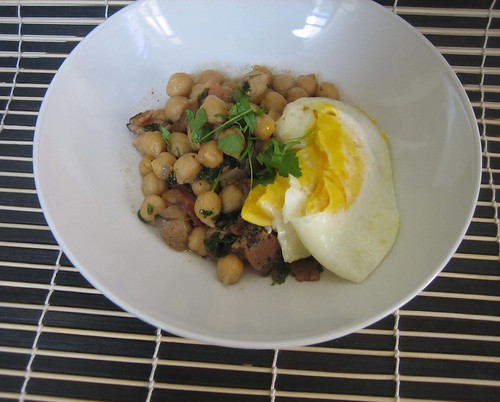
  • I was doing my grocery shopping in Chinatown when I came across a pack of extra small chicken drumsticks. About a dozen pieces were tightly packed for about $1.50. At home, I opened them up and realized they weren’t chicken thighs but the other half of chicken wings–the arms, I call them. I had two packs, 24 pieces in all, and I immediately thought I’d just deep-fry and snack on them. But the temperature outside dropped and the weather called for a thick stew. This recipe requires a lot of ingredients, but fortunately, I already had them in my pantry. If you don’t have chicken and spinach, chickpeas alone make a satisfying meal, as long as it’s cooked in bacon. Just skip the step with the chicken and spinach and top with a fried egg.

    Ingredients:
    12 pieces chicken wings, halved, rinsed and pat dry with a paper towel
    4 strips of bacon
    half a bag of chickpeas, soaked overnight
    1 bag of baby spinach, rinsed
    2 cups chicken broth
    juice from half a lemon
    zest from half a lemon
    1 garlic clove, minced
    1 tsp red pepper flakes
    1 small onion, thinly sliced
    1 tbsp cumin, grounded
    1 tsp paprika
    1 tsp cinnamon powder
    1 tbsp all-purpose flour
    1 tbsp honey
    a knob of butter
    a handful of cilantro, roughly chopped
    salt and pepper

    1. Sprinkle chicken wings with salt and pepper. In a large Dutch oven, render fat from bacon until golden brown. Add butter. Brown chicken wings on both sides. Remove chicken from pot and set aside.
    2. In the same pot, sauté garlic and onions. Add the chick peas and the chicken broth. Bring to a boil and then lower the heat. Cover and simmer for 25 minutes to cook chickpeas.
    3. When broth is slightly reduced and chickpeas are tender, add the rest of the ingredients. Add back the chicken wings. Cook for an extra 5 minutes or until spinach is wilted. Mix well and season to taste.

    Related post/s:
    I love my chickpeas
    Inspired by The Food of Spain and Portugal at Amazon.com

  • At the New York Times Travel Show, I watched Chef Prudhomme make gumbo. I’ve never been to New Orleans, but I’ve always been curious about homemade Louisiana cooking. We recently got a fresh dump of snow in New York City and gumbo was just the right dish to eat for dinner. The secret here is the roux, a mixture of wheat flour and fat. Roux is the basis of French sauces and most Louisiana cooking; burn it and you have to start over. I added bacon to this recipe to use the last installment of bacon I received as a birthday present. I made enough to give back to the lovely people who thought about giving it to me in the first place.

    Ingredients:
    6 pieces chicken drumsticks
    3 pieces of andouille sausage, cut into 1/4-inch-thick slices
    5 slices of bacon, chopped in small pieces
    1 cup all-purpose flour
    1 medium onion, chopped
    1 red bell pepper, chopped
    4 celery ribs, chopped
    a handful of okra, cut into smaller pieces
    1 small can of diced tomatoes
    5 cloves of garlic
    chicken broth
    3 tbsps Creole seasoning
    2 sprigs of fresh thyme
    4 bay leaves
    hot sauce
    vegetable oil
    salt, pepper

    1. Make roux. In a large skillet, heat vegetable oil in medium heat until somewhat smoking. Pour flour and mix with a whisk. Keep mixing for about 15 minutes or until flour is red-orange. This roux is your base. If black spots start to appear in the flour, it means you’ve burnt it. You have to start over. Remove from heat and add all the vegetables and the spices. Keep mixing with the whisk to help cool down the roux. Set aside.
    2. In a large Dutch oven, render the fat from the bacon. Remove the bacon to a plate. Using the fat, brown the chicken drumsticks. Remove chicken to a plate.
    3. Using the same fat and adding a little more oil as necessary, brown the sausages. Add the broth and the tomatoes and add back the chicken, the bacon and the roux.
    4. Simmer and cook the chicken while ocassionally mixing to make sure it doesn’t dry up. Add more stock as necessary and adjust to taste using salt, pepper and hot sauce. Add the okra and cook until tender the last 10 minutes.

  • We left Morgan’s Rock feeling a little spoiled. The manager gave us a ride to San Juan which helped us save $60. From San Juan, we got on a cab to the Rivas bus station. Along the way, we were stopped by some cops doing routine inspection. All six of us showed our IDs and passports. (The car fit four comfortably, but of course, the driver made six people fit.) When I asked the lady next to me why the inspection was necessary, she mentioned that drugs from Costa Rica are smuggled through San Juan. Her nail polish was peeling and her denim skirt was two sizes too small for her. I wished the cops would check her ID more carefully. In Rivas, we had an hour to kill before the bus to Managua was scheduled to depart. Kids were constantly asking us to buy food and drinks from them. We didn’t need to buy food because the staff at Morgan’s Rock packed us a couple of sandwiches for lunch and even gave me ceviche in a Ziploc. I ended up paying one of the boys 5 cordovas to walk me inside the food market and direct me to the public bathroom, though. He also asked one of the vendors for a plastic fork so that we could eat our ceviche. The ride was, as usual, bumpy and loud, but we made it back to Managua safely.

    At Oscar Fonseca’s house, we unpacked before we walked around the neighborhood to look for dinner. If you’re planning a trip to Nicaragua, I recommend to skip this sooty city. There wasn’t really anything exciting about it. To our delight, we saw a Pollo Campero sign near one of the rotundas, a chicken fast food place we learned about while in El Salvador. We cabbed it to the main park but there was nothing there except an old church and a fountain. Before heading back home, we stopped by a fruit stand to buy a whole watermelon. That night, feeling a little disappointed with our experience with Nicaragua’s volcanoes so far, we decided to postpone our flight to the Caribbean coast and stay one more day in Managua to make a day trip to León, home of Cerro Negro, or the Black Hill.

    The next morning, we woke up very early to catch the 5:30am shuttle van to León, Nicaragua’s “intellectual” city. It only took an hour to get there because half of the country was still asleep, but it took almost two hours before we could find a restaurant open for business. I was so grouchy when we finally found breakfast at Comedor Lucia that I ordered a chicken leg with my scrambled eggs. After eating, we met up with Hector at the Va Pues Tour office inside the Cocinarte restaurant-cum-artist hangout. It was a last-minute arrangement and we couldn’t risk just asking one of the locals for a much cheaper ride to Cerro Negro, so we ended up shelling out $90 for the two of us to hike the crater.

    We got on the pickup truck and our driver negotiated the dry mud along the way while Hector told us about his life. He was young and energetic and seemed really thrilled that Chinese-looking people like us could speak Spanish. It was a long drive and we only saw one sign directing us towards the volcano. We tried to convince ourselves that we made the right decision in paying so much money to get us there.

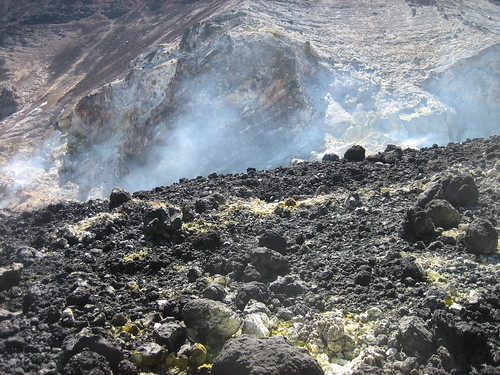
    As soon as we started our hike up Cerro Negro, I knew it was going to be a completely different experience from Mombacho or Apoyo. The small stones crunched as we stepped on them. It was like hiking on powdered snow: step up, crunch, slide down, repeat. From afar, we could see how much damage the lava from its last eruption affected the valley. There was no vegetation, only hardened asphalt. Steam was coming out from some of the rocks. I scooped up some to take home as souveneir and was amazed at how hot they were. One section of the hill was completely covered in yellow sulphur.

    It was really windy when we reached the top. But the crater was right below us and it was an amazing sight. (Okay, so the $90 was worth it.) Now, this is a crater, I thought. Weirdly enough, crickets and grasshoppers were hopping all over the place. The heat attracted them, but they would die instantly when they would land on the steaming rocks for too long. After several photographs from the top, we readied ourselves for what was to come next: sliding and surfing down the other side of Cerro Negro. If we paid a little more money, we could have rented mini-boards to suit up and ride down like snowboarders. But we just decided to slide down without any props. It was longer than I expected but it was so much fun. The stones gave easily and I couldn’t help but squeal every time I slid without interruption. I imagined our entire surrounding was how the moon would look like. Everything was black and pure. I’ve never seen anything like Cerro Negro before and I’ve definitely never slid down a volcano in my life.

    Back in León, we walked to the market to look for lunch. It was so hot, we were the only ones out on the streets. Inside the market, we saw several ladies serving up homecooked meals to the locals. It was my self-imposed rule in Nicaragua: find the fat lady who looks like she can cook as well as she can eat. We picked the largest woman in the group and sat down on one of the plastic chairs with our order. We were sweating when we came down the volcano and we were still sweating while we ate. We still have to go back to Managua at the end of the day but we definitely knew it was time for some beach time.

    Where we stayed in Managua, Nicaragua: Oscar Fonseca’s House
    Our tour guide to Cerro Negro: Va Pues Tours

    Related post/s:
    Cerro Negro photos on Flickr
    Managua, Nicaragua photos on Flickr

  • The bus ride from Granada to Rivas was about two hours. Taxi drivers swarmed as soon as we got off the bus. One of them started to take my backpack. Espera, I said, almost pissed off. Calm down and wait for us to hire one of you before you take our bags. We needed a ride to Morgan’s Rock on Bahía Majagual and we heard prices up to $40. I read beforehand that the ride to San Juan was about $18, but because Morgan’s Rock is a private hacienda, we negotiated with one of the drivers for $25. Moises followed the blue MR signs on La Chocolata Road for 30 minutes before we reached the security gate. The guard let us in after confirming our reservations and we kept driving through the private forest until we arrived at the main lodge where ice-cold cranberry juice was waiting for us. Staff members in white uniforms and khaki shorts took our bags to deliver them to our room while the manager showed us around. We laughed at ourselves because we’ve never stayed at a luxury place in Central America.

    Inspired by the Lapa Rios Ecolodge in Costa Rica, luxury became an understatement the three days we were at the hacienda because it came with impressive responsibility. Morgan’s Rock is part of a 1,000-hectare tree farming and reforestation project as well as an 800-hectare private nature reserve. More than a million hardwood and fruit trees have been planted the last five years to bring back the animals native to the Pacific Coast. Howler monkeys woke us up in the middle of the night. Magpie Blue Jays and squirrels joined us for coffee in the mornings. Turtle eggs are monitored and protected on the beach. They have a sugar cane mill where they make their own rum, plus a farm provides food to the staff and the guests.

    All the wood used to build the bungalows came from responsibly-managed logging sources and tree farming projects in the country to ensure ecological responsibility. The bungalows face west and have a view of the bay or the estuary and they were all designed to shelter guests from all kinds of weather. The designer and architect only used local materials and recycled wood while local artisans created and crafted the furnishings. The bungalows are connected to the main lodge by a 110-meter suspension bridge which was built so that trees weren’t unnecessarily cut. We had to climb 184 steps to our #15 bungalow so we made sure we packed everything we needed in the morning. There is no solar power but a bio-filter system was installed for water and the pool only uses natural salt to stay clean. They also built an on-site waste disposal plant and separation system and created a recycling project.

    Ranchitos or huts sit on the beach to provide respite from the intense sun. A pool with an infinity-style edge is right next to the restaurant and bar. We signed up for a night walk one night with Juan where we saw all kinds of animals in the dark with the help of a flashlight. There were snakes, scorpions, bats, spiders, sleeping birds and butterflies and stinky howler monkeys. (When it started to smell like cow poop, Juan howled to attract them. We ran as soon as they responded because they apparently throw their poop to scare you away.) We also hiked around the forest one morning where we saw a few white-faced monkeys across the shrimp farm. We used the body boards when the waves were strong enough. Unfortunately, the estuary was too dry to kayak and it was too windy in the season to go fishing with the staff. We didn’t do much while at Morgan’s Rock except truly relax and tune out.

    Where to stay in Bahia Majagual: Morgan’s Rock Ecolodge and Hacienda

    Related post/s:
    Morgan’s Rock photos on Flickr
    Video courtesy of Tripfilms.com

  • 47 Bond Street between Lafayette and Bowery
    212/533.1932
    $180 for four people with a bottle of wine, without tip

    We wanted to eat at Il Buco ever since we walked by one night and took a peek inside. Candles were lit that made the ambiance romantic and rustic at the same time. We just knew that it would be a nice place to sit, eat and drink wine with good company. Four of us finally booked a table one cold, winter night to do exactly just that. We could only get a 6pm table with a week’s notice, so we took it. Unfortunately, we were seated right next to the entrance of the wine cellar. Cozy it wasn’t. It looked like they were conducting a field trip down the basement. Guests kept walking in and stepping back out and I kept interrupting our table’s conversation by pushing the door closed to keep the draft from coming in. Our waitress never made a move to transfer us to an unoccupied table even though the restaurant was not completely full before 8pm. We had to ask the bus boy for more bread and olive oil because our waitress kept forgetting us. But since the bus boy only came by to take our plates away, we never had enough.

    The menu is Mediterranean, a cuisine that I can enjoy any time, with some Italian specialities. But nothing in the menu made my heart palpitate. The special of the night was braised oxtails on mashed potatoes which I make at home for less than $30. An appetizer portion of baby eels were ordered, only to be canceled when our waitress informed us that it was going to cost us $75.

    We ended up ordering the octopus with Umbrian chickpeas and parsley, the bass with fresh pomegranate, lime, red chili and cilantro, the cod with fennel, lemon and red onion with mint salsa verde, the fennel-crusted sashimi-grade tuna and the beef carpaccio. The small plates were at least $12 each. They were all delicious but a little hard on the wallet. We also decided to order full plates of the pappardelle with black trumpet mushrooms and the gnocchi. The pasta servings were so small. I can’t imagine getting them as half orders.

    Il Buco is like waking up startled in the middle of a beautiful dream.

  • As soon as we landed in Managua, we were picked up by Victor and driven about thirty minutes to Granada, the oldest city in Central America and yet the most developed destination in Nicaragua. Our home for three nights was Hospedaje La Siesta on Calle El Almendro, a modest room with private bath for $15 a night owned by a French-Nicaraguan couple awaiting their first child. It was the middle of the day when we checked in. It was hot, and since our flight out of New York was at 6am, we immediately fell asleep. We woke up just before the sun started to set and decided to walk to Parque Central to look for food.

    Granada had a Oaxacan feel to it. Old buildings repainted in vibrant colors; beat-up sedans co-exist with horse carriages on cobble stone streets. The locals congregated in the park enjoying the warm early night breeze, while street vendors packed up their wares, as if thinking, Tomorrow is another day.

    We ended up eating at Señora Olga’s for dinner. It wasn’t a restaurant but a woman grilling chicken on the corner of Avenida Bodan. We ate our plates of barbequed chicken with a mountain of tostones, fried raw plantains, and maduros, fried ripe plantains, with coleslaw (35 cordovas apiece or $2) on plastic tables and chairs. We heard the loud singing from the small church across the street. There were young boys playing football on the other side, screaming, while mangy dogs waited for our leftovers. The lights turned off–a blackout–and for a while, we ate in the dark. We ended up eating at Señora Olga’s a second time. To us, it was the best option in Granada, less we chose to eat pizza or pasta.

    The next day, we woke up early to hike Volcán Mombacho. We passed by the central market in search of breakfast. We stopped by a stall that had a sign on it, Desayuno, Breakfast, and ordered a plate of the gallo pinto: rice, red beans and huevos rancheros, or scrambled eggs with tomatoes and onions. The big lady who ran the show was a bit disappointed that we didn’t touch the Jell-O-like tamal on our plates.

    At Shell Palmira, our foreign-looking selves were guided to a souped-up school bus to Mombacho. The ride took only twenty minutes and the conductor told us when it was time for us to get off. From the highway, we walked about a mile until we reached the Biological Center. We paid our 100 cordovas ($5) to enter the Reserve. One of the uniformed rangers told us that we have to wait for two hours for the shuttle that will take us to the top of the volcano. It was only 8:30am so we decided to hike the almost-vertical concrete path ourselves. Well, the 3,000-feet hike up took us two hours. At the top, we learned that there were two craters, Sendero el Cráter and Sendero la Puma. We were so exhausted from our hike, we only had strength left for the 25-minute walk around Sendero el Cráter and not the estimated 3-hour Puma. Volcán Mombacho is now practically a forest; privately-owned coffee plantations and cattle ranchers cover the rest of the land. From the lookout points, we could see Lake Cocibolca, Nicaragua’s largest lake, and Las Isletas, the islets believed to have come from the last major eruption.

    On our way down, I convinced the Dr. to zipline. We’ve never done a canopy tour before, so we gave up $50 to belay and zip to fifteen platforms and give ourselves a thrill by doing “the Superman” and “the upside-down.” The entire course runs 1,500 meters and there was even a hanging (and shaky) rope bridge to cross from one of the platforms. We rappeled from a large ceiba tree 23 meters down to one of the farms to finish. It was beautiful up there. We could see the lake from some of the platforms. The massive trees looked so alive with orchids and ferns growing from their branches. At the end of the course, our guides radioed the base camp and had us picked up. We were given a ride all the way down to the Biological Center, so all we had to do was walk the last 30 minutes to the highway to catch the bus back to Granada.

    On our last day in Granada, we had breakfast at Nica Buffet, a Dutch-owned restaurant, where we had pancakes and, finally, good coffee. The owner recommended that we sign up with Hostal Oasis to visit Laguna de Apoyo for the day. For about $30, we joined a few other young couples and got on a van to go to Crater’s Edge, where we spent the entire day lazing by the lake. It was too hot to do anything; too hot to kayak, too hot to hike, even too hot to sunbathe. The swimming hole is 48 square-kilometers and it’s trapped inside the crater of Volcán Apoyo. It’s one of the cleanest and deepest (at about 650 feet) lagoons in the country. It got kind of boring after a few hours of sitting prettily. We finished our books under the shade and we were anxious to keep moving.

    Back in town, we paid $1 each to go up the bell tower of La Merced Church and watch the sun set. We could see everything from up there. The courtyards and the roofs even reminded me of Prague; the church domes of Barcelona. We walked to the malecon and said our goodbyes to Granada as the sun went down like a red-orange yolk.

    Where to stay in Granada, Nicaragua: Hospedaje La Siesta

    Related post/s:
    Granada, Nicaragua photos on Flickr
    Volcan Mombacho photos on Flickr
    Laguna de Apoyo photos on Flickr

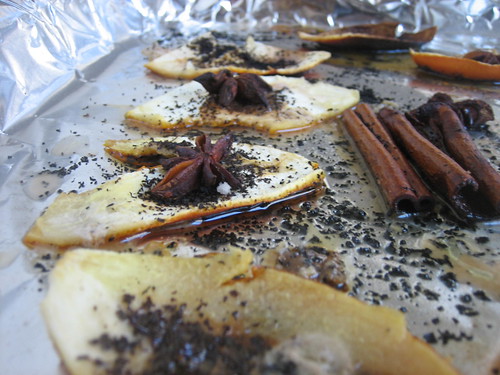
  • Now I’m on a smoking binge. The pulled pork was such a success, I decided to smoke some chicken, too. It’s from the same article by Dana Bowen in The Times. This didn’t require the hickory-wood smoking chips, only ingredients I already had in my pantry. I loved cooking this because it turned out beautifully. The glaze gave the chicken a nice golden color and smoking it made the meat inside silky and juicy. It was perfect with some yellow rice and, you guessed it, pickled scotch bonnet peppers.

    Ingredients:
    1 chicken, cut in half, or in several pieces
    2 small oranges
    2 tbsps Earl Grey tea
    2 cinnamon sticks
    5 pods of star anise
    1/4 cup hoisin sauce
    2 tbsps pomegranate molasses
    Sriracha chili sauce, to taste
    salt, pepper, oil

    1. Zest one orange and peel the other. Squeeze out juice and save for sauce. Scatter the orange peels on a roasting pan with the tea, cinnamon sticks and anise. Put the rack on top and place the chicken pieces on the rack. Sprinkle chicken with salt and pepper.
    2. Place the pan on the stove over medium heat. When it starts to smoke a little, cover with aluminum foil by forming a tent. Smoke for about 25 minutes. Turn off heat and let it rest for 5 minutes, covered.
    3. While chicken is smoking, make glaze. In a bowl, combine zest, hoisin, pomegranate molasses and Sriracha. Add some of the orange juice to make sure it’s not too thick. Set aside.
    4. In a large skillet with some hot oil, cook the chicken until golden brown, about 3 minutes per side. Reduce the heat to low and brush chicken with the glaze using a pastry brush. Cook for a few more minutes until the glaze has browned a little.

    Related post/s:
    Crazy for smoking!
    Match with pickled scotch bonnet peppers

  • The Dr. called it dedication to my meat. When a friend asked me if I was interested in going out on Saturday, I had to decline. I said I was going to be busy smoking and roasting an eight-pound pork shoulder. I don’t know why that sounds funny, but it does, because I think I’ve come a long way from cooking small dishes. Now I’m roasting a part of a pig with a bone as large as my arm. What’s even funnier is that my friend reacted nonchalantly because I know she’s heard something similar from me before. I don’t think I can say anything anymore that would surprise the people who know me so well.

    The recipe looked easy enough. It’s from an article written by Dana Bowen in The Times. All I had to do was buy a tin can of hickory-wood smoking chips from Zabar’s uptown and a large piece of pork from Bayard Meat Market that fit in my tote bag. I love my barbeque, I really do, and if I can produce a good version at home, I’ll be happy. Almost six hours later, I was; the entire family was. Serve with toasted rolls and of course, pickled scotch bonnet peppers.

    Ingredients:
    1 8-pound pork shoulder, bone-in
    3 tbsps of hickory-wood smoking chips
    2 cups of cider vinegar
    1 tbsp red pepper flakes
    1 tbsp white sugar
    1/4 cup brown sugar
    1/2 cup ketchup
    salt and pepper

    1. Massage pork with salt and pepper. Scatter the smoking chips at the bottom of the roasting pan. Place the pork on a rack and then on the roasting pan. Cover with two long pieces of aluminum foil, folding them together tightly and forming a closed tent. Make sure there is room for the smoke to circulate between the pork and the foil. Place on stovetop and turn on the heat to medium and smoke pork for 45 minutes. Turn off the heat and rest, covered, for 5 minutes.
    2. While pork is smoking, preheat oven to 300º. Whisk the rest of the ingredients in a bowl to make sauce. Season to taste, cover and refrigerate until ready to use.
    3. Uncover the roasting pan and transfer it to the oven. Cook for 40 minutes per pound, or about 4 hours, turning the pork over every hour until a meat thermometer inserted into the middle of the pork reads 190º.
    4. Remove pork from the oven and rest on a large cutting board for 20 minutes or until cool enough to handle. While still warm, pull meat away from bones and shred chunks of meat into long strands into a bowl. Chop crustier bits into smaller pieces and add to the bowl. Season with some of the sauce and mix well.

    Related post/s:
    Smoking with Chicken
    Match with pickled scotch bonnet peppers
    Where to buy hickory-wood smoking chips

  • The couple of days we had TV access while in Nicaragua, I watched a few shows that originally air in the South Pacific. Surfing the Menu features two hot boys who travel, surf and cook. I saw the episode shot in Otago and Canterbury in New Zealand where they roasted pork ribs on the bone. I scribbled on the back of my printed itinerary and promised the Dr. that I will make them for him when we return to the city.

    Back in Manhattan, I stopped by the Bayard Meat Market in Chinatown and bought two racks of pork ribs for about $10 to keep my promise. The result? Succulent pork ribs good for four people and even better with pickled scotch bonnet peppers.

    Ingredients:
    2 racks of pork ribs
    2 lemongrass stalks, smashed, 1 stalk sliced in an angle and in small pieces
    5 cloves ginger, minced
    a small knob of ginger, peeled, thinly sliced
    a small bunch of thyme
    peanut oil
    1/2 cup maple syrup
    2 tbsps hoisin sauce
    1/4 cup honey
    salt and pepper

    1. Marinate the roast. Rub the roast with salt and pepper. Make small incisions all over the roast using a small knife and insert the garlic, ginger and lemongrass slivers in them. Rub the roast in peanut oil and place it in large glass pan with leftover ginger, lemongrass, garlic and the thyme. Marinate overnight.
    2. When ready to cook, preheat the oven at 350º. Take the roast out and let sit in room temperature while making the baste. In a bowl, mix maple syrup, hoisin sauce and honey. Set aside.
    3. Place the roast, bone side down, in a large roasting tray, and roast for about 20 minutes, turning over halfway. Using the other lemongrass stalk as a brush, baste every few minutes. Cook until you can insert a knife in the roast and the liquid that comes out is clear.

    Related post/s:
    Pickled Scotch Bonnet peppers
    Two racks of pork ribs for less

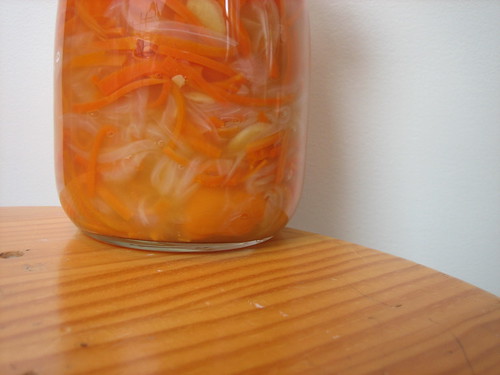
  • It always tempts us: that clear, glass jar stuffed with peppers, carrots and onions, drowned in vinegar. We know it’s going to hurt, but it’s one of those things we can’t help but eat when we’re on some island in Central America. The coasts of Belize, Costa Rica and most recently, Nicaragua, reminded us that African slaves were imported by the Spanish to fulfill their labor needs. Slave traders supplied the colonies with their human cargo, and as they intermingled, they formed ethnic groups like the Creoles. The settlers adapted to their new homes and passed on their beloved cultures and histories to the next generations.

    Scotch bonnet pepper is just one of the ingredients that make Creolan food livelier than the rest. They are related to habañeros, only they “cause dizziness, numbness of hands and cheeks, and severe heartburn” when eaten raw. When I made jerk chicken, I had to wear disposable gloves before I handled them to avoid trouble. But there is no gain without the pain, so I attempted to make my own and relive our time on the islands. A day later, I served it on the side with roasted pork ribs on the bone, and the rest of the night was, well, spent at home. Don’t say I didn’t warn you!

    Ingredients:
    2 palm-fulls of scotch bonnet peppers, some halved
    1 large white onion, thinly sliced
    1 medium carrot, cut in matchsticks
    5 cloves of garlic, minced
    1 small knob of ginger, peeled, sliced thinly
    white vinegar
    salt

    1. In a sauce pot, simmer the garlic and ginger in the vinegar with some salt. Add carrots and peppers. Keep the fire low and stir ocassionally to avoid the vinegar from boiling.
    2. When vinegar is somewhat reduced, remove the garlic and discard. Taste the liquid at your own risk. Season with some salt. Turn off the heat and let cool before transferring to a glass jar. Keep in room temperature for at least eight hours and then refrigerate to preserve. Serve a small portion when needed.

    Related post/s:
    Serve with roasted pork ribs
    Scotch Bonnet peppers in jerk chicken
    Pickling Korean-style

  • 108 West 44th Street between Sixth and Seventh Avenues
    212/302.0707
    $190 for two people with sake, without tip
    ♥ ♥ ♥

    You have a favorite spot when you’re craving something and you just know that whenever you go, it would not disappoint. This is how I feel about Sushiden, my restaurant of choice when I crave sushi after having been away from the city. When the Dr. and I return from a vacation, the first full meal we eat the next day is sushi. It’s like a cleansing ritual for us; to rid off a lot of fried foods from Central America or decadent meals eaten in Europe. When we came back from Nicaragua, Sushiden was closed, but we found Sushi Zen a few blocks away.

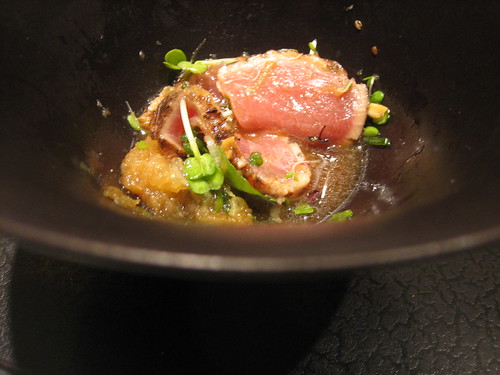
    And what a find it was. The fish of the day was a special kind of yellow snapper flown in from Japan. It tasted like Japan was only ten minutes away. It was so fresh and so buttery, I couldn’t help but order two pieces. (Which probably explains our bill at the end of the night.) The bowl of seared tuna with yuzu, sprouts and pea shoot leaves was a great indication of a great meal. The pea shoot was a little peppery and it gave a nice contrast to the citrusy flavor of the broth and highlighted the freshness of the tuna. We were impressed with the salmon tagine, which simmered only in Japanese scallion broth, some miso and hot peppers. It reminded me of Korean chigae, only more pure than any stew I’ve ever tasted. The giant clam was sliced to look like enoki mushrooms waving on my plate–tender with good texture. The jack mackerel wasn’t as oily as I expected and the kelp rolled with the fatty tuna helped me from rolling my eyes in superlative appreciation.

    And Anthony Bourdain said sushi on Mondays is a bad thing!

    Related post/s:
    My favorite sushi place, Sushiden