• 46-48 in the Chinatown Arcade between Canal and Bayard
    212/964.0284
    about $25 for two, without drinks, without tip
    ♥ ♥

    Don’t let the hard-to-pronounce items on the menu stop you from ordering food from New Malaysia. For my first visit, I ordered the more traditional nasi lemak and the roti canai just to be on the safe side. After those two dishes, I knew I had to come back with a bigger stomach. When Anna’s Malaysian friend told me that New York has the best Malaysian food, I raised an eyebrow. I don’t know many Malaysian restaurants in the city except for the so-so Jaya on Baxter and the Indo-Malay Nyonya and Penang franchises, so I was willing to try New Malaysia as soon as I could.

    I was more adventurous during my second visit and I ordered the asam laksa, a spicy and sour soup with lemongrass broth and crushed sardines. If it weren’t so salty, it would be my new anti-cold soup of choice. Too bad it doesn’t come in a smaller bowl. The kang kung belacan is stewed in shrimp and anchovy paste, much like how Filipinos cook the swamp vegetable (spelled kang kong). It seems a little steep for $8 a plate but we cleaned it off even with four other dishes.

  • The wind was howling in New York City this week. All I wanted was something warm, thick and filling for dinner. This stems from two yellow curry recipes, one with chicken and one with fish balls because who says you can’t have it all? I visited the newly-renovated Asia Market on Mulberry at the corner of Bayard and found everything I needed. Feel free to toss in any hard vegetable you have in the fridge. Just make sure you cook them first before the softer ones. Cauliflower and zucchini would be fun to add, too; perhaps even baby corn. At home, the curry paste cooking in peanut oil will release one of my favorite smells in the kitchen.

    Ingredients:
    boneless chicken thighs, cut in small pieces
    a pack of fish balls, thawed
    a pack of cuttlefish balls, thawed
    1 cup of coconut cream
    1 cup of vegetable stock
    a handful of green beans
    4 Thai eggplants, sliced in half moons
    1 Japanese eggplant, chopped
    1 red bell pepper, roughly chopped
    cilantro, roughly chopped

    For the yellow curry paste:
    2 red chilies
    1 tsp black peppercorns
    coriander root, peeled and thinly sliced
    1 tsp cumin seeds
    1 tsp fennel seeds
    1 tbsp ground turmeric
    1 small knob of ginger, peeled and thinly sliced
    3 cloves of garlic, crushed
    1 small red onion, chopped
    1 lemongrass stalk, white part only, pounded with a pestle
    1 tsp of sambal oelek
    shrimp paste, to taste
    2 tbsps peanut oil

    1. In a large wok, heat the peanut oil. Make the curry paste by sautéing all the curry ingredients and cooking them until fragrant, about 3 minutes.
    2. Add the chicken, green beans, pepper and the Thai eggplants with the coconut cream and stock. Cover in medium heat until chicken is cooked and the vegetables are tender, about 8 minutes.
    3. Add the cilantro and the softer eggplants and cook for a few more minutes. The peanut oil should be separating from the curry paste. Make sure you keep stirring to distribute the heat and add more stock to keep the sauce from drying up. Add shrimp paste to adjust the taste.

    Related post/s:
    Buy all the ingredients in Chinatown

  • 86 Mulberry Street between Canal and Bayard
    212/577.8887
    $18 for two, without drinks, without tip
    ♥ ♥ ♥

    Anthony Bourdain once said that most people know that Vietnamese food is good but they just don’t have a clue how good. In New York City, it’s hard to find a really good Vietnamese place. I used to have a few favorite spots in Chinatown, but lately, they’ve gotten lazy about making the pho. You rarely get that beefy taste in the broth anymore.

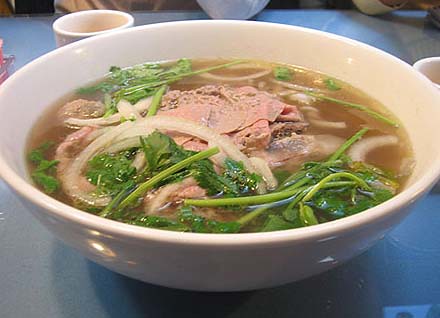
    The pho at Xe Lua not only taste beefy, they are gigantic. For less than $6, it is a good lunch deal which will surely warm the senses. Their broth oozes with flavor; it’s full, rich and tasty. The rice dishes are promising, too. The chicken served with mixed vegetables in lemongrass sauce tasted as good as it sounded. The crispy squid shared as an appetizer is indeed crispy. Even though it comes with brown sauce, you can still taste the squid.

    With its vellum business card and witty menu–sections are divided as Porky, Chicken Little, Where’s the Beef? and No Meat Allow–Xe Lua is obviously the youngest Vietnamese joint in Chinatown. The bamboo bridge connecting the front to the main dining room with cloud-painted walls and water fountain are hokey, but Xe Lua is still trying to impress the neighborhood and I’m happy to give them the chance.

  • After doing the Long Island wine trail, we immediately scheduled a trip up the Finger Lakes region in New York. We had to postpone it once because of the Dr.’s, schedule but after finally making the trip over the weekend, I was glad we waited until the leaves turned all sorts of fall colors.

    He recently got another golden weekend and I was able to convince him, with promises only a girlfriend can make, that he should drive the six hours upstate. The Yates Chamber of Commerce gave me three places with availability after I tried calling several hotels and B&Bs in vain. If I didn’t call the Robertson House, I wouldn’t have known that they had another property for rent not listed on their Web site.

    On Friday, we started our long drive early, but ended up getting stuck in traffic around Scranton, Pennsylvania, home of Dunder Mifflin, Inc. We didn’t make it to the lake house until 10:30pm. Jane and Paul Robertson left the heat on to prepare for our arrival, so when we entered the house, it was all warm and toasty. We settled in, opened and drank a bottle of red wine we brought with us and sat talking for two more hours before we fell asleep.

    When I woke up the next morning, I took a peek outside and saw what the Robertsons were talking about–peaceful Keuka Lake and red, yellow, orange, brown maple trees. It was so dark and quiet the night before that I had no clue the view was going to be incredible.

    We had breakfast back at the Robertson’s main house before we started our drive around Seneca Lake to visit some of the local wineries. Besides the local Reislings I’m familiar with, we didn’t really know much about the other wines and vineyards. We randomly chose from a big list but stuck around Seneca Lake and skipped the scattered ones around Keuka and Cayuga. Following are what we tasted with some of the notes I scribbled on my book.

    We started at Fox Run Vineyards where it was already a zoo at 11:30am. They were offering four complimentary tastings:

    1. 2005 Reserve Chardonnay — ten months in oak with vanilla notes at the end
    2. 2002 Cabernet Franc — bone-dry and not as spicy as other Cabernet Francs we’re used to
    3. 2004 Sable — fruity wine from Cabernet grapes we imagined would be good with some cheese
    4. Ruby Vixen — very peachy; the sweetest wine from their vineyard

    We also paid $2 for extra tastings of the following:

    1. 2005 Dry Reisling — apricot
    2. 2005 Reisling — semi-dry; more like candy than fruit
    3. Arctic Fox — a Reisling and Chardonnay blend; we ended up getting a case of this because it would be an outstanding table wine with almost anything

    Another separate $2 fee gave us a taste of the 2005 Reserve Reisling which smelled better than the dry Reisling and with a cleaner finish. For $30 a bottle though, we skipped it.

    Our next stop was at Hermann J. Wiemer Vineyard. Their 2005 dry Reisling was recently voted New York’s best wine. (I had my first taste last year and I ended up buying half a case of that winner.) We tasted a lot of their wines, but nothing really overwhelmed us so we only bought several bottles for friends:

    1. Dry Rose Pinot Noir/Chardonnay — strong at the end for a rose
    2. Pinot Noir — very light yet complicated; we would have bought several of these if a bottle wasn’t $35 each
    3. Late Harvest Reisling — like juice; yummy and sweet
    4. Cabernet Franc — a lot of alcohol (which could be a good thing, I suppose)
    5. Estate Red — a blend of Cabernet Franc, Pinot Noir and Lemberger; very tart
    6. Select Late Harvest Reisling — like candy but yummier than the late harvest

    We stopped by Lakewood Vineyards where it was even more of a party room than a tasting room. Everyone was part of a tour so there were plenty of screaming and shouting, both from the staff trying to do their spiel about the wines and the tasters who drink the wines as if they were shots of Tequila. Their 2004 Chardonnay was pretty anemic although the vanilla at the end was quite nice. The 2005 Long Stem Red was a hybrid of four grapes but it still lacked character. The 2002 Pinot Noir had a licorice taste to it. The Borealis Ice Wine was like drinking Welch’s grape juice. We did like the 2004 Cabernet Franc because it was dry upfront and it pleasantly went on for a while.

    For lunch, we stopped by the dock to check out the menus from the different restaurants by the water but were not impressed. Before getting something to eat at Stonecat Café, we had a pretty nice experience at the Atwater Vineyard for $2 per person:

    1. 2002 Estate Selection Chardonnay — 13 months in oak; pretty complicated
    2. 2005 Gewürztraminer — didn’t smell so good
    3. 2005 Reisling — easy-drinking that would be perfect for a hot, summer afternoon but alas, it’s not hot out anymore
    4. 2005 Reserve Reisling — fruitier and gummier; almost chewable
    5. 2004 Cabernet Franc — tasted like buttered popcorn but more like currant afterward
    6. 2004 Cabernet Merlot — new release; well-balanced and tasty
    7. 2003 Meritage — almost no tannins and very easy to drink
    8. Estate White — we bought several bottles of these; crisp, light, citrus-y

    The Stonecat Café is on the same grounds as the Bloomer Creek Vineyard. We had the pizette topped with mixed greens, goat cheese and pancetta. The Dr. had the cornmeal-breaded catfish sandwich. We asked for the green pepper salsa out of curiosity because they were charging an extra dollar for it. I couldn’t stop slathering it on my pizza even though I was tearing up. It was fierce!

    I don’t know if it was because of all those peppers but we felt like we found some great wines afterwards at Lamoreaux Landing. Everything we tasted was better than everything else we’ve had:

    1. 2004 Chardonnay — very drinkable with pineapple notes
    2. 2005 Dry Reisling — a tasty wine that led to a cover on Wine Spectator last May
    3. Estate White — a blend of Reisling and Chardonnay with pear and other tropical fruits
    4. 2005 Gewürztraminer — good aroma and grapefruit taste
    5. 2000 Brut Sparkling Wine — dry but creamy
    6. 2005 Vidal Ice Wine — syrupy when pouring; overwhelmingly sweet

    We haven’t been liking the red wines, but we were also pretty pleased with the Lamoreaux selections:

    1. Estate Red — a blend of Pinot, Merlot and Cabernet Franc; strawberry and jammy
    2. 2003 Merlot — floral mouth
    3. Non Vintage Cabernet Franc — pine resin; less tarty than the other Cabernet Francs we’ve tasted earlier
    4. 2004 Pinot Noir — complicated with a clove taste

    We pretty much gave up after putting several more bottles in the trunk and went back to the lake house to unwind. Dinner was uneventful at Sarasin’s, a restaurant by Keuka Lake with a giant ship wheel outside. After almost 790 miles over the weekend and 12 hours of driving to and from the city–without any contribution from me–we have about twenty bottles of Chardonnays and Reislings. White is usually not the type you’d reach for in autumn, but we learned a great deal upstate. Reislings don’t always have to taste like dessert in a glass and that you can even cook with them and Chardonnay could be excellent with some curry dishes. The Finger Lakes might not have exciting food selections just yet, but I’m sure our wines will keep us full this season.

    Related post/s:
    Finger Lakes Map Trail
    Finger Lakes photos on Flickr

  • I misplaced a Mark Bittman recipe from The Times I saved two weeks ago. Now that I have a nice bottle of Reisling to cook with after visiting the Finger Lakes wine trail and plenty of firm apples to buy at the market, I was adamant to replicate it with some guess-timates. I still had some leftover thyme in the fridge kept fresh by the best thing in the world right now–Glad Press’n Seal–so I threw those in while the juices cooked the pork. We drank the rest of the Lamoreaux Landing Reisling with this and ate it with broiled white potatoes.

    Ingredients:
    6 pork steaks, about 1 inch thick, cut from the shoulder
    3 Gala apples, cored and sliced
    1/2 cup of Bordeaux or any other semi-heavy red
    1/2 cup of dry Reisling
    1 medium red onion, thinly sliced
    half a stick of butter
    2 sprigs of thyme
    salt and pepper

    1. Rub the steaks with salt and pepper. Heat a large skillet over medium-high heat for 3 minutes. Add the butter and brown the pork on both sides, about 4 minutes. Do this in batches to avoid overcrowding the pan.
    2. Reduce the heat to medium. Add the red wine and the onion and cook, turning the pork once or twice, until the wine is all but evaporated, about 3 minutes.
    3. Add some water if the sauce is a little too thick, turn the heat to low and cover. Cook for 10 minutes, turning them once or twice, until the pork is tender but not dry. Remove the pork to a plate.
    4. Add the apples in the remaining liquid, stirring and scraping the bottom of the pan as the apples cook. Add the Reisling and simmer in low fire until the apples absorb most of the liquid. Return the meat to the pan during the last few minutes to reheat them.

  • 155 West 51st Street between Sixth and Seventh Avenues
    212/554.1515
    about $300 for two, with matching drinks, without tip
    ♥ ♥ ♥

    After dining at Le Bernardin for the Dr.’s birthday, I realized that it shouldn’t be categorized as French. The name may be French but the menu definitely screams New American. There were a lot of Asian ingredients like lemongrass, soy and wasabi. The South American influence was also present with ceviche waving the Peruvian–or Ecuadorian, if you prefer–flag. I was surprised to see spicy chorizo, too, but I got over it as soon as the Dr. picked his meals: Peking duck and green papaya salad with black bass, langoustine with chayote and pears, kampachi with ginger-coriander emulsion. (One of his wines was a “Naiades” Verdejo from Rueda, Spain, the same wine I had at Alinea. Funny that.)

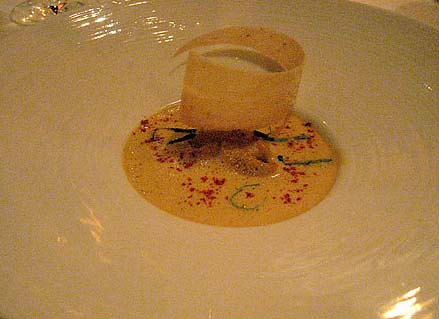
    A $100 prix fixe lets you pick one dish from the three sections of almost raw, barely touched and lightly cooked selections; the fourth course is dessert. I started with the four ways of fluke, from simple to complex combinations. Ceviche is easy to make but it’s even easier to mess up. With Le Bernardin’s take, I just wanted to slurp the sauce and soup from each bowl. A 2003 Slovakian Riesling from Chateau Bela was crisp and a good match. I couldn’t pass up the warm uni custard with julienned sisho leaves because I’ve just never had sea urchin prepared like it before. The two fresh unis on top reminded me of that ocean flavor I always crave. It was barely detectable from the custard–the right amount of uni-ness. For my main course, I went for the pan-roasted monkfish with confit peppers, patatas bravas and chorizo emulsion. I didn’t really understand why it was called a tribute to Gaudí except for its Catalan ingredients. Perhaps it was the striped garnish, the simple lines. A glass of Pessac-léognan from Château Smith Haut Lafitte was, for lack of a less pretentious word, exquisite. My dessert consisted of warm peaches topped with strawberries and drizzled with honey.

    We had a very early table and we dined with the demographic we’ve gotten used to seeing around us–we seem to travel to destinations and reserve restaurants “adults” frequent–so we were mostly treated by the staff as if we’ve been dining there for years. The service was neither short nor exceptional. What surprised me, however, was how old-fashioned Le Bernardin was. The entire room buzzed as it approached the more popular dinner time but it could use a little oomph in decor and lighting to match Chef Eric Ripert’s eclectic menu.

  • 141 East 55th Street between Third and Lexington
    212/753.3900
    $365 for eleven, with drinks, without tip
    ♥ ♥

    It was a challenge to organize the Dr.’s second birthday celebration with his married friends but they all showed up for brunch with their children at Our Place. (Part one was at Le Bernardin and tapas with wine at Jadis the night before.) Once all the Bugaboos and BabyBjörns were all set aside, we sat down and enjoyed the dishes selected for us by the kitchen staff. We all started with a mixed plate of appetizers: a vegetable and shrimp egg roll, two soupy buns and two shrimp shumais. Then they passed around the main dishes: beef, chicken, baby bok choy and mushrooms, all in semi-sweet brown sauce.

    They gave me the impression that they were extremely busy on weekends because they called twice to confirm my reservation for twelve people. We walked in at noon but we didn’t start eating until at least 1pm and we still had the space towards the back to ourselves. I appreciated that we were never given attitude even though it took us all three hours to eat and pay the bill, babies crying and all. Go to any of the restaurants in Chinatown for a more down-to-earth meal without the orchids, but stay in midtown if you want an English-speaking waitstaff with plenty of patience.

  • Anna picked us up from our hotel and drove us to Maxwell Street where a few avenues are blocked every Sunday to set up a market and food fair. It was hard to find parking but as soon as we started walking around, we couldn’t help but feel like we were in another country. I’ve always liked visiting markets whenever I’m traveling, and in Chicago, Maxwell Street is the place to be if you need duct tape, electric cords, Mexican beads, Guadalupe posters, tomatillos, peppers and of course, tacos and tamales. The sight and the different smells were intoxicating. There wasn’t a cloud in the sky. It was the perfect day to be bargaining for a Lucha Libre mask.

    I tried not to eat too many tacos from one stand lest I miss out on the other offerings down the block. From the first stand, we had chorizo tacos. They were deliciously salty with mad cilantro and lime juice. They were the beginning of a beautiful afternoon.

    Then we moved on to the next where I had lengua, or tongue. It was so soft and the green salsa kept it juicy.

    The next stand only sold beef tacos. The beef had been stewing in some thick sauce, so the meat fell apart at every bite. It was a delicious mess.

    I had the squash blossom taco next, but it was too funky to finish. I think it had been sitting in the bowl for a while so it didn’t taste fresh, but the pork barbeque taco was pretty good.

    We also picked up a glass of the crushed iced lime juice from another stand. About an hour later, we were very full and happy, but I still bought a pork tamale to take with me to the airport. For the love of tacos, we missed our scheduled flight.

  • I just returned from my third trip to Chicago and I think I’ve got the city down pat. Three years ago, the Dr. and I made it to the Art Institute, the Shedd Aquarium and the MoCA. Last December, we visited the Chicago Cultural Center and ate Persian, Colombian, Japanese, Mexican and Scandinavian. We also had some awesome hotdogs at Hot Doug’s and a really memorable meal at Charlie Trotter’s.

    This year, four of us from work went all out at Alinea, most recently named the number one restaurant by Gourmet magazine. Like for every other restaurant I’ve visited, I booked our table before my airline tickets. To simply say that the food was good is an understatement.

    Tyler used the word “delicate” and even “fragile” to describe our experience. I need a very special dictionary to define my reaction to each dish that was served–all twelve courses–but even if I had one, I would still have a hard time picking the perfect adjectives.

    They called this the hot potato-cold potato because of the two ways the potato is served. A black truffle tops the potato and cubes of parmesan decorate the stick. This was matched with H. Billot Grand Cru Brut Rosé from Ambonnay, France.

    Our server had to hold the bowl for me while I took the photograph because the fork was too heavy for the bowl to stand on its own. One small mouthful of the yellowtail brought out the taste of the radish, coriander and poppyseed combined.

    The next course was trout roe with cucumber, coconut and bonito matched with Bodegas Naia “Naiades” Verdejo from Rueda, Spain but unfortunately, I don’t have a photo of that.

    The matsutake mushroom with mango, peanut and yuzu glass came in a glass and our servers spilled its contents on our plates. It was matched with Gerovassiliou Malagousia from Epanomi, Greece.

    Next was the rabbit with cider, roasted garlic and smell of burning oak leaves–probably the coolest thing ever. I’ve had rabbit before but the Chef Grant Achatz way was served covered with a glass filled with smoke. The server lifted the glass to let the smoke escape and we were presented with a piece of rabbit with an earthy smell.

    Actually, the peach with smoked paprika and carrot might have been cooler than the rabbit. It was called an explosion. It was served in a small glass and we had to drink it like a shot. The golf ball-sized shell broke oh-so-delicately in our mouths and exploded with the contents inside.

    Short rib with ribboned beets, geléed cranberry and campari matched with Cabanon Bonarda “Boisee” from Oltrepò Pavese, Italy. Short rib with beets? Sure. But ribboned beets? Who thinks about stuff like that? The dish was just another example of the crazy kind of genius behind the food.

    There was a reason for the rosemary sprigs on our table after all besides a weird centerpiece. Before the dishes were served, they rearranged them to face toward us. When the sizzling platforms were served with the lamb searing on top, the smoke engulfed the rosemary and created that smell we’re all familiar with. The lamb came with date and mastic and matched with Prats & Symington “Chryseia” from Douro, Portugal.

    I’ve had rare squab before and once we had to return it and asked the kitchen to cook it for a few more minutes. This squab was soft, almost buttery. If it weren’t for that offal-like taste, you would have guessed it was a nice beef steak. This was squab with huckleberry, sorrel and long peppercorn. The Bilancia “Hawke’s Bay” Syrah from New Zealand was a good match. And then the desserts started to come:

    Concord grape, frozen and chewy. This was cooked in PolyScience’s AntiGriddle, a patent pending “cooking” surface that freezes almost anything because of its ability to achieve temperatures below -50ºF.

    Chestnut with Blis maple syrup eaten with a small metal matchstick.

    Crabapple with cheddar, eucalyptus and olive oil matched with Muller-Catoir Haardter Mandelring Scheurebe Spatlese from Pfalz. I love desserts like this: tart enough to cleanse the palate and not overwhelmingly sweet.

    Chocolate with bergamot, cassia and figs matched with De Bartoli “Bukkuram” Moscato Passito di Pantelleria from Italy. Alas, I’m not a big fan of chocolate overload but I appreciated this dish as much as the entire table; I just couldn’t finish it.

    Caramel with meyer lemon and tempura served in what looked like one those head massagers I found in Barcelona. A burning cinnamon stick protruding on top was lit like a birthday candle.

    The service was attentive yet more relaxed that at The French Laundry. While we waited for our table to be set up, we were served complimentary champagne downstairs past the doors which opened with a wave of your hand. Upstairs, the dark wood and warm lighting made us feel like we were in someone’s apartment–someone rich, someone with taste, someone we knew!

    The waiters and servers in their Ermenegildo Zegna suits were so comfortable telling us about the courses even though each dish got more ridiculous (in a good way, of course). They laughed with us but also answered all our questions. Are the dishes made especially for the restaurant? (Some are retail but the more sculpture-like serviceware are created by Crucial Detail.) How do you freeze grape? (AntiGriddle.) May I go to the bathroom? (It’s best to wait because the next course is coming up and it takes about twelve minutes to burn the leaves.) We didn’t know what to expect with each course. They could have told us anything and we would have followed like obedient guests. (We will now blindfold you while you eat. Sure!)

    The sommelier’s skills came through with his incredible pairings. Sure, French, Spanish and Italian wines are a given, but Greek? I would have never picked that on my own. He opened our palate to different kinds of wines which made us appreciate the style of cooking that the chef was trying to get across.

    Alinea is at 1723 North Halsted in Chicago, Illinois. Call 312/867.0110 a month ahead to make reservations.

  • 370 Columbus Avenue off 78th Street
    212/362.4816
    $130 for two, with three drinks, with tip

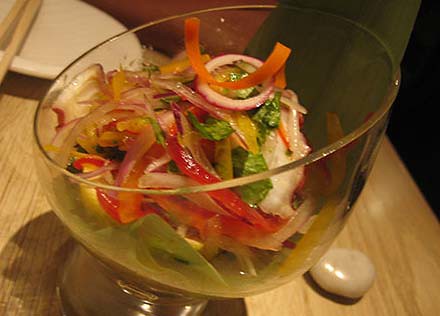
    I was craving sushi but did not want to go home too late, so I looked for a sushi place around the upper west side. I found Gari on Columbus Avenue with all its Frank Bruni and Food & Wine writeups on the window and I thought, this could be promising. Because we walked in without a reservation, we weren’t able to sit at the bar. I love ordering the omakase only if I can talk to the sushi chef so that I can watch what’s he’s doing. For ten pieces at about $65 (about $75 if you also want sashimi), I opted for the sushi-by-piece instead. This is my only problem with Gari: the price. We started with the octopus ceviche but I only counted four slivers of octopus in my glass bowl; that comes out about $3 a sliver. I ordered the shrimp and crab rolls because it included woodear mushrooms. I needed to take the rolls apart to look for the mushrooms. I know it’s du jour to be all minimalist, but I’m hungry!

    The sushi was pretty good. We ordered our usual favorites: fatty tuna, yellowtail, mackerel, smelt roe with quail egg, fluke and shad. The $14 roll of uni, though, was questionnable. It was fresh but it looked like it was whipped so they ended up looking like melted Kraft cheese. Was this a Zen presentation or was it to save on the uni? The damage with two Sapporos and a glass of Prosecco? $130 for two people. I went home and all I wanted was fried chicken. Next time, I’ll stay in midtown and go back to Sushiden.

    Related post/s:
    You’ll spend less money at Sushiden

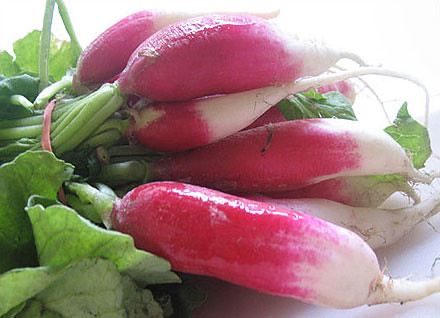
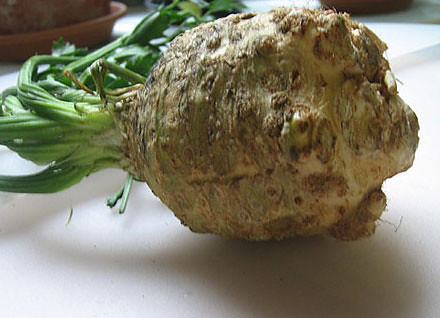
  • During a recent visit to the farmers’ market, there was an abundant choice of root vegetables. I had this conversation with Cameron before where we had to draw on the office whiteboard what we thought were radishes and turnips. Filipino radishes are long and thick like white carrots, while American ones are the size of pink golf balls. Filipino turnips are bulb-looking things with a tough light brown peel, while the American version sometimes has a pink shade to it. Then there are the parsnips that don’t even exist in Filipino vocabulary but look more like our radishes. Cameron now thinks Filipinos are just weird. It gets all convoluted. I’m sure the terminology is interchangable, but a trip to the farmers’ market sure was a nice lesson.

    These were called radishes even though they were the size of small thumbs–the shape is Filipino, the color American. They definitely tasted more like the American radishes with that sharp bite at the end. A jig of really good balsamic vinegar can balance out that kick. Chop them in small pieces and they make a good substitute for pretzels when you’re drinking beer.

    These were called Japanese turnips, with a smooth peel, and sweet, fleshy meat inside. I liked eating these raw and they matched well with some spicy arugula.

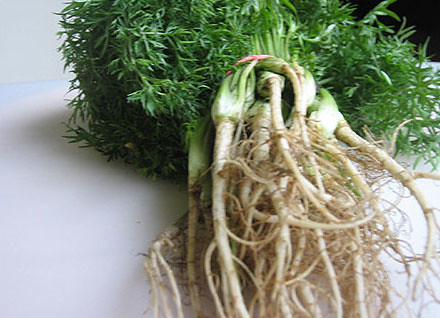
    And then I got these two things because I couldn’t stop myself from smelling them. I find it curious when people tell me they hate cilantro in their food, but then don’t mind ordering an Indian dish sprinkled with coriander seeds. Not too many people know they’re the same; I just know the cookbooks I’ve purchased in Europe always refer to them as coriander, while American markets always use cilantro on labels. The leaves of the bunch I bought looked like frisée. They’re called delfino, a more aromatic cilantro version.

  • Hungry when I woke up one Sunday afternoon with a developing cold, I searched for leftovers in the fridge to nourish myself. There was a bowl of fried ground beef. The folks love making their own tacos at home so I’m bound to find ground meat at any time during the week. And when they’re too lazy to buy salad greens from the farmers’ market, I also find iceberg lettuce from the neighborhood grocery store in some sad plastic bag in the fridge. I thought about Buddhai Bodai in Chinatown, where they have this one dish I always order called Lettuce Song. Using the leftovers, I tried to replicate that taste even though I probably came up with a whole new salad recipe. It was still a delicious dish and it put the already-cooked ground beef to good use. If you have fresh bean sprouts, they add nicely to the crunchiness of the lettuce.

    Ingredients:
    1/2 pound of ground beef
    half a small head of iceberg lettuce, cut into strips
    1 pack of vermicelli noodles
    half a bunch of cilantro, finely chopped
    1/2 cup fish sauce
    juice from 2 limes
    1 tsp brown sugar
    2 garlic cloves, finely chopped
    2 shallots, finely chopped
    2 tbsps peanut oil
    1 tsp sesame oil
    red chili flakes

    1. In a frying pan over medium heat, sauté garlic and shallots in hot peanut oil. Add ground beef and brown. Stir and scrape the bottom of the pan ocassionally to avoid from sticking and burning. Remove to a salad bowl.
    2. In a small bowl, dissolve sugar in fish sauce. Whisk in sesame oil. Add chili flakes to taste.
    3. In the meantime, boil a pot of water. Add noodles and cook for less than 5 minutes. Drain and let cool with running water. Using a fork, separate noodles to avoid from sticking and forming into clumps.
    4. When ready to serve, add the noodles to the ground beef and pour over dressing. Toss with the lettuce to combine.

    Related post/s:
    Buddhai Boddai in Chinatown
    Vermicelli with flank steak
    Where to buy vermicelli noodles