• Czech Republic is landlocked right at the heart of continental Europe. It is surrounded by Austria, Germany and Poland, which is why the traditional food consists of a lot of meat and sauces. The most common meat is vepÅ™ové, or pork, and it is always served with knedlíky, or what they call dumplings, to soak up the gravy. All dishes almost always come with zelí or sauerkraut.

    Meats are often roasted or baked. We were lucky enough to enjoy a plate of rožnÄ›né selátko, or grilled piglet. Thankfully, it came with a serving of vegetable salad. When we were hungry–which was more often than you can ever imagine–we ordered the combo plate of pork, Å¡pekové or duck, and sausages.

    For a more homey meal, meat is stewed for hours to make goulash. We tasted a delicious one in thick sauce that used dark ale.

    Game is usually served on special occasions. We had rabbit in sauce flavored with thyme and ostrich meat served with pasta. The rabbit was nice, but the ostrich just tasted like tough beef.

    We even had baby octopus carpaccio served with arugula greens and drizzled with olive oil and lemon juice. We rarely had dessert but we spoiled ourselves with strudels and other pastries for breakfast or as snacks during the day.

    Now all that food needs to go down, and if the Czechs are known for anything, it’s the way they appreciate their pivo, their beer. Pilsner, the most famous Czech beer, originated in Bohemia, a region in central Europe which occupies the western and middle thirds of Czech Republic. Pilsner was first brewed in a town called Plzeň and the same brewery that developed it still makes Plzňské or what we know as Pilsner Urquell.

    Another famous Czech beer is České Budějovice or Budweiser Budvar. Budvar and Anheuser-Busch are still engaged in numerous trademark lawsuits around the world.

    Each pub is supplied by only one brewery, or pivovar, but different types are usually available. No Czech beer lover ever drinks it canned as it is usually made for export. (Something I learned in Ireland and their Guinness.) Together with Plzňské from Plzeň comes Gambrinus.

    Prague has its own, Staropramen, and there is also Krušovice Light from Královský.

    All of the above are light and golden in color; foamy and refreshing at the end. I liked them fine, but my favorites were the dark lagers, Velkopopovický Kozel and U Fleků’s own tmavé brew.

    If you can’t make up your mind, there is a combination of light and dark called Rezane, also from Velkopopovický. If you want the more familiar, of course there’s always the Belgian Stella.

    When you enter a pub, you’re given a small piece of paper so that the waiter can tally your order. It’s a given that you’re going to drink beer, no matter what time it is. Beer will just keep coming to your table until you say something to your server otherwise.

    We drank nine different kinds of beers each in three days! Not to mention the multiple quantities we drank of each kind. Just thinking of that feat deserves another beer!

    Related post/s:
    Prague photos on Flickr
    Day 3: Astronomical Clock, Havel Market, Jewish Quarter, Charles Bridge
    Day 2: Prague Castle, Lvi Dvur, Petrin Hill, Wenceslas Square
    Day 1: Three Kinds of Beer, First Few Hours in Prague

  • The sun was out our last day in Prague. We took the tram to Old Town and walked a bit to get to the square. The tourists were already gathered in front of the astronomical clock, so we joined them and sat at one of the outdoor chairs of U Orloje for morning coffee. We just missed the 11:00 strike so we decided to walk around the neighborhood and catch the clock “show” later. We found Odkolek Bakery on Rytirska street where we bought a couple of turnover pastries to eat. The Havel market was already set up. We walked around and checked out the souvenirs and fresh produce for sale. I bought the mandatory magnet for Anna and the Pilsner Urquell bottle opener for myself.

    We hurried back to the square just in time for the clock to strike the hour. The skeleton to the right tipped the hourglass and pulled a rope. The windows above the clock then opened and the twelve apostles did their procession thing. The other figures, Greed, Vanity and a Turk, all moved after the cock crowed.

    The astronomical clock imitates the orbit of the sun and the moon about the Earth as well as show the visible parts of the sky in the summer and winter months. All that information and we still had to look at the more normal-looking clock at the top of the tower to tell time! We were glad to have seen it. We felt like it was one of those things that made a Prague visit complete.

    We deserved a beer after standing under the sun to watch the clock. Cameron wanted to go to U Dvou Koĉek, which means Two Cats, to eat in honor of the two cats she left at home. We ate brewery cheese with paprika, black pepper sausage, ghoulash with bacon dumplings and a roasted pig’s neck. Henners and Sam would have been proud. We washed all the food down with Pilsner Urquell.

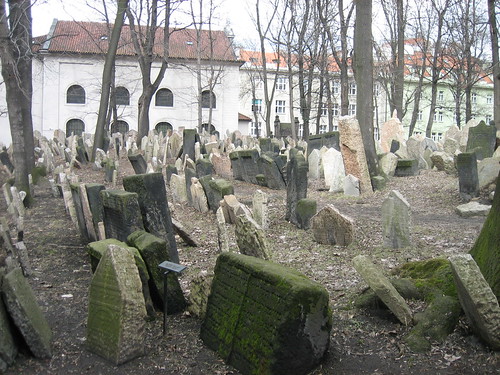
    We spent the rest of the afternoon walking around the Jewish Quarter. The neighborhood went through an Art Nouveau revival and the buildings all looked new and beautiful. We walked by several synagogues before we paid to enter the Old Jewish Cemetery. Because it was the only area permitted to Jews back in the day, people had to be buried on top of each other, up to twelve layers deep. There are apparently twelve thousand gravestones crammed in there but over one hundred thousand are actually buried! It was definitely more crowded than a New York City subway.

    Back in Old Town, it was Cameron time. We bought tickets to see Mozart’s Don Giovanni performed by marionettes. I wouldn’t have thought about watching a bunch of wooden toys move while singing arias, but the marionette shows have a long tradition throughout Czech Republic. I’ll have nightmares about moving toys now, but it was fun to watch and I would so recommend it if you’re visiting.

    Before the sun set, we walked around Old Town Square some more to buy stuff to bring back to the States. We found La Vinotheque where we bought several bottles of Czech reds. We stopped by the Franz Kafka bookstore to add to my Catcher in the Rye translations collection.

    When we finally made it to Charles Bridge, the sky was beautifully painted with orange and purple and the Vltava River was calm. We couldn’t help but take photos even though it was the most clichéd setting ever.

    Of course, that deserved a beer. We tried the Budvar at a pub off the Little Quarter, the real Budweiser before Anheuser-Busch stole the name. (The two companies have been duking it out in court for hundreds of years.) For our last dinner in Prague, we splurged at U Tří Pštrosů, or At The Three Ostriches, where we shared the game consommé, the foie gras, the coquille and the veal terrine with the ostrich steaks.

    Our last couple of hours in Prague were spent inhaling everything. We had to be at the airport at 5:30am the next day to catch our flight to Heathrow before heading back to New York City. We took in all the lights, the bricks, the buildings and the streets and said Děkuji, Praha!

    Related post/s:
    Prague photos on Flickr
    Day 2: Prague Castle, Lvi Dvur, Petrin Hill, Wenceslas Square
    Day 1: Three Kinds of Beer, First Few Hours in Prague

  • We woke up fairly early the next morning even though we’ve only had a few hours of sleep. It was our first full day in Prague and we wanted to hit a lot of the spots on our list. Our hotel was right next to a highway but we were surprised we didn’t hear the cars driving by throughout the night. We bought coffee at the Illy shop in front of the tram stop and decided that we have to head towards the Prague Castle in order to eat a decent breakfast because most of the restaurants in our area were still closed.

    Up on one of the hills towards the Castle, we stopped by Restaurant V Podhradí for ham and eggs, as well as an omelet with our second cup of coffee. It started to rain and continued to during our entire time at the Castle. We paid for ticket B to be able to get in St. Vitus’s Cathedral, the Daliborka prison tower and walk along Golden Lane. There was much pushing and shoving to get inside the church. It must have been below zero in there, colder than it was outside.

    After a couple of hours, we took the tram to Lví dvůr, a restaurant I wrote down after reading about their specialty: roasted pig. We started with the baby octopus carpaccio before we ordered the piglet. We washed everything down with Krusonice beer. It was probably our simplest and yet best meal in Prague.

    The rain let up a bit and we walked up Petrin Hill along the Hunger Wall to get a glimpse of the ugly Observation Tower, Prague’s mini version of the Eiffel. We reached the Strahov Monastery and paid the ridiculous 800 kronos fee to see the two libraries, Philosophical and Theological Halls. They asked us for an extra 50 kronos to take photographs, but I refused. They can keep their pretty libraries to themselves.

    Down the hill and in between taking photos of Czech rooftops, we stopped by the Josef Sudek photo gallery, named after a famous Czech photographer, and checked out the Pavel Hrdliĉka photographs on display. On our way home, we saw a photo of Å vejk from the book I’m reading outside a bar and decided to get off the tram for a beer. It turned out to be U Å vejků and one of the pubs the writer Jaroslav HaÅ¡ek frequented.

    We ran back to our hotel, changed to drier clothes and took the tram right back out again to make it to the State Opera. We were a few minutes late, so they sat us along the side box seats. During intermission, we were seated in our correct seats where we got a really nice view of the show. Everything was in Italian and the supertitles were in Czech, so our discussion of the opera afterwards went something like: So the sideburns guy was angry at the good looking soldier? But the purple sash dude was his friend, right? No, the purple sash guy is the sideburns guy! We got the gist of it though, because the lady killed herself after the fatty died. What’s an opera without the main characters dying in the end?

    Finding dinner was a challenge after 10:30pm. We refused to eat spaghetti in a pub or at any of the fast foods shacks around the more touristy area of Wenceslas Square. We even found a restaurant with a caveman theme–we just couldn’t get ourselves to do it. Restaurant Boheme to the rescue. There was a lonely man playing the piano in the middle of the room. He would have been delightful if only we weren’t seated next to an American tourist who looked like Michael Bolton with a fanny pack. He kept looking at us to strike up a conversation and he slurped his wine to give us an inkling that he knew how to “taste” wine. It was probably the fastest meal we’ve ever had in our lives. We scarfed down a plate of ghoulash in dark beer and roasted rabbit to avoid any more eye contact with him. At least he gave us a story to laugh about.

    Back in Smichov, we found Jet Set, a techno-theme bar in front of where they were playing the movies for the Febio Fest. We had a Stella nightcap, the only beer they had on tap. People were coming out of the theaters across the way. It was too bad that there weren’t anymore hotdog stands around. We went back to our hotel, passed out and waited for our last full day in Prague.

    Related post/s:
    Day 1: Three Kinds of Beer, First Few Hours in Prague

  • After a beer with our artichoke chicken salad from Snack at the airport bar, Cameron and I boarded our flight to Prague. We watched Pride and Prejudice on the plane instead of getting much-needed sleep (it was good but no one beats Colin Firth as Mr. Darcy) that by the time we reached Zurich to transfer, we were too tired to appreciate the fact that we were in Switzerland. A small sandwich tied us over until we landed in Prague.

    Outside the RuzynÄ› airport, we waited for the #100 bus which connected to the yellow metro near our Ibis hotel in Smichov. It felt good to get some fresh air that we didn’t mind the wait. We initially planned to catch the #119 but realized that we didn’t have to go to the city center to take the yellow. At the Andel station, we were welcomed by a crowd of Czechs milling around the shopping mall and waiting for the tram. We asked a lady inside one of the cosmetic stores to direct us to our hotel. She pointed to the sign down the block and we finally checked in.

    Our hotel was just right. It wasn’t anything special, but it was so clean that we didn’t mind the two exact towels provided for us everyday. We settled in for a few minutes and decided to start our first day in Prague by taking care of business: buy opera tickets for the next day’s show. We took the yellow line to Muztek, transfered to the green and got off at Muzeum. We jaywalked to get to the other side of the highway off Wenceslas Square and bought tickets for Verdi’s Les Vêpres Siciliennes before the box office closed. With that taken care of, our second order of business was to get our first meal and first pint. We walked down the path of the National Museum and found Café Svatého Vaclava right before it started to drizzle.

    Our first Kozel beer was priceless. We also ordered the potato soup and a big plate of pork and duck meat plus sausages served with red and white cabbage. It was already dark when we finished so we decided to walk to U Fleků and experience the traditional Czech pub feel. U Fleků is one of Prague’s oldest pubs and will remain to be one of my favorite pubs while in the country. We sat down with strangers on a long wooden table, listened to the two musicians playing the accordion and the tuba while we inhaled everyone’s smoke and tried to get any of the waiters’ attention.

    The European tourists in front of us helped us order two pints. We finally got a piece of paper which allowed us to reorder every time one of the servers walked by with a tray of dark beer. A line is marked on our paper every time we nod for a refill. Another waiter also carried a tray of Becherovka shots. Cameron wondered, What do you think those are? I didn’t know, so I signaled for the waiter to give us two. It had a cinnamon-y taste to it.

    We had another beer before we stepped out to walk around Little Quarter and to Charles Bridge, the most popular bridge in Prague. We joined throngs of people walking in the dark and crossing over to the Old Town side. We bought a hot dog from the corner store. When we reached Old Town, we noticed a small alley under the bridge. We were so tired but decided to check out the pub anyway. We ended up at U Karlova Mostu for some moucnicky or dessert. We ordered the liskooriskova minibabovka s vanilkovou zmrzlihou v cokoladove kruste, also known as hazelnut cake with ice cream in chocolate crust. What better way to wash down a dessert with a bunch of consonants than with a mix of dark and light beer: Rezane.

    We walked to the #12 tram back to Andel and walked back to our hotel. Not even twenty-four hours in Czech Republic and we’ve experienced so much already. Three kinds of beer, at least.

  • 88 Tenth Avenue between 15th and 16th Streets
    212/989.8883
    about $600 for four, with several drinks, with tip
    ♥ ♥ ♥

    My first Morimoto experience in Philadelphia was unforgettable. Chef Masaharu Morimoto joined us at our table after dinner and started talking about the World Cup which was happening at the time. Four years later, soccer fans are getting ready for Germany and I was sitting yet again inside a Morimoto restaurant. I was able to score a table for four a month after its opening and I found three people willing to spend a lot of money to eat.

    Tyler opted for the sashimi combination which came on a tall, albeit silly, display of ice. Cameron went for the raw bar combination with amazing scallops and delicious lobster and crab claws. Lisa opted for the black cod miso, a dish perfected by Morimoto while he was still in Nobu. The waitstaff congratulated me at the end after I finished my nine-course omakase.

    Some of my favorites: a patterned maki with dashi foam, perhaps the trendiest way to making sauce after Ferran Adrià of El Bulli near Barcelona put his stamp on the technique; yellowfin tuna and mackerel served with seaweed encased in gelée; a palate cleanser of sesame powder tea that came with the coolest brush stirrer.

    The service was attentive but we had a different waiter for each course. I couldn’t blame one of them when he couldn’t tell me that one of my sushi pieces was actually needlefish. (Is the east coast running out of bounty that they have to turn to needlefish?) Another missed the lychee seeds which came with one of my courses but he was nice enough to return and tell me when I expressed my curiosity.

    When we were heading out of the Tadao Ando-designed space, chef Morimoto was talking to a friend by coat check. I stood right next to him while Tyler took a photograph and I quickly told him that I’m a big fan. Typical chef-fucker, I know, but I walked away with a signed copy of the menu. After five years in Philly, Morimoto has staged a very nice comeback.

  • Adapted from Mario Batali’s Coniglio ai Peperoni

    Ingredients:
    1 pound rabbit, cut into smaller pieces
    1 cup white wine vinegar, mixed with 1 cup of water
    2 large onions, thinly sliced
    1 red and 1 green bell pepper, cored, seeded, cut into eights
    1 cup dry white wine
    salt, pepper, olive oil

    1. Marinate the rabbit pieces in vinegar-water mixture for about an hour, turning occasionally. Drain and dry with paper towels.
    2. In a large Dutch oven, heat some olive oil over medium-high heat. Brown rabbit pieces on all sides, about 8 minutes per side. Transfer to a plate and set aside.
    3. Reduce the heat to medium-low, add the onions and cook, stirring until limp and light golden. Add wine and bring to a simmer. Add back rabbit pieces and cover. Cook for about 30 minutes.
    4. While the rabbit is cooking, heat some more olive oil in a sauté pan over medium-high heat. Cook peppers for about 15 minutes. Cover and stew gently until they wilt and start to brown, about another 15 minutes. Stir in the peppers and their juices into the pan with the rabbit pieces. Add salt and pepper to taste and continue to cook the rabbit for 30 more minutes or until tender. Add more wine or water to keep it from drying and sticking.

  • Adapted from chinesefood.about.com

    Ingredients:
    winter melon, green skin, seeds and pulp removed, cut into smaller pieces
    chicken broth
    3 slices of ginger
    1 scallion greens, chopped
    handful of spinach
    rice noodles
    fish sauce
    lemon juice
    salt and pepper

    1. Place winter melon in a pot of chicken broth, bring to a boil and simmer until winter melon is tender, about 15 minutes.
    2. Add ginger and noodles. Simmer for another 15 minutes. Season with fish sauce, lemon juice, salt and pepper to taste. Add spinach and turn off heat.

  • 34 Cooper Square off 6th Street and Lafayette
    212/475.2989
    about $60 for two, with two drinks, without tip

    I’ll group Gyu-Kaku under my Korean and Japanese restaurants list because they had both Korean-style barbecues and Japanese yakitoris. They had several kinds of soups served in clay pots that tasted like Korean chigaes, but udon or ramen noodles were added. They also offered a nice-sized bowl of bibimbap but they had ahi tuna and shrimps we grilled on the tabletop stove ourselves.

    It’s a spacious restaurant off the hubbub of St. Mark’s Place. The attentive service is perfect for bigger groups, plus the happy hour price of drinks ($2.50 for Kirin beer on tap) and meat specials (50% off on filet mignon meat to grill) are hard to say no to.

  • We rented an apartment on 78 rue St-Louis-en-l’Ile via Paristay.com, so most of the stops we made were around the island of Saint-Louis. It was the perfect space for three people complete with a loft bed, a bathroom, a fully-equipped kitchen and a sofa bed in the living room. The neighborhood in itself is one of the most coveted in Paris because residents are on their own island on the Seine River, away from the hoopla of the city but right by most necessities and all kinds of luxury.

    Thank you so much for traveling with me this past week!

    Day 1

    – Le St-Regis Brasserie, bistro filled with smokers on rue St-Louis-en-l’Ile off quai de Bourbon
    – Cathédrale Notre-Dame de Paris, RER C to St-Michel Notre Dame
    – Patrick Allain Fleuriste, beautiful flowers on 53 rue St-Louis-en-l’Ile
    – La Taverne Du Sergent Recreteur, bistro with a nice prix fixe on 41 rue St-Louis-en-l’Ile

    Day 2

    – Boulangerie Saint-Louis, fresh bread every morning on 78 rue St-Louis-en-l’Ile
    – Cacao et Chocolat, hot chocolate on 63 rue St-Louis-en-l’Ile
    – Eglise St-Nicolas, rue de Pontoise
    – Le Panthéon, #10 to Maubert Mutualité, €8
    – La Paillote D’or, Vietnamese food with friendly service on 30 rue des Carmes
    – Jardins et Palais du Luxembourg, RER B to Luxembourg
    – Eglise St-Sulpice, church with Delacroix frescoes, #4 to St-Sulpice
    – Le Prestige de l’Alimentation, Moroccan-owned grocery store with everything we needed on 67 rue St-Louis-en-l’Ile
    – Aux Anysetiers du Roy, bistro with English-speaking waiters on 61 rue St-Louis-en-l’Ile

    Day 3

    – Musée du Louvre, #7 to Palais Royal-Musée du Louvre, €8.50, closed on Mondays
    – Cafe Med, good duck confit, crepes and pasta lunch options on 77 rue St-Louis-en-l’Ile
    – Le Sarrasin et Le Froment Creperie, crepes to eat-in or take-away on 80 rue St-Louis-en-l’Ile
    – Eiffel Tower, RER C to Champs de Mars-Tour Eiffel, €11 to the top
    – Le Tarbouche, Moroccan restaurant with as good tagines as their service on 81 rue St-Louis-en-l’Ile

    Day 4

    – Musée d’Orsay, RER C to Musée d’Orsay, €7.50, closed on Tuesdays
    – Jardin des Tuileries, via an underpass after crossing the Seine from Musée d’Orsay
    – Obélisque on Place de la Concorde, right outside Jardin des Tuileries
    – Champs Élysées, a tree-lined pathway all the way to the Rond Point with brand-name stores along the way
    – Arc de Triomphe, #1, #2, #6 or RER A stop there, €8 to climb the top
    – Marché Franprix, small grocery store on 135 rue Saint-Antoine, #1 to St-Paul
    – L’Epicerie, beautifully-packaged oils, jams, vinegars and mustards on 51 rue St-Louis-en-l’Ile
    – La Ferme Saint-Aubin, cheese, sausage and wine shop on 76 rue St-Louis-en-l’Ile

    Day 5

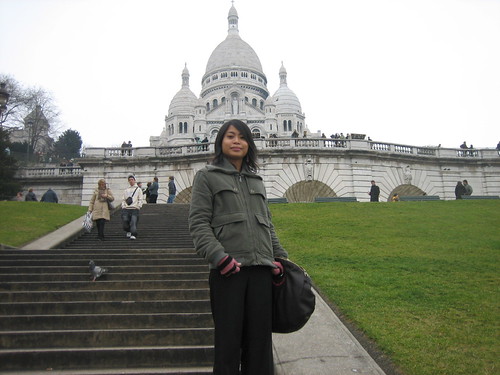
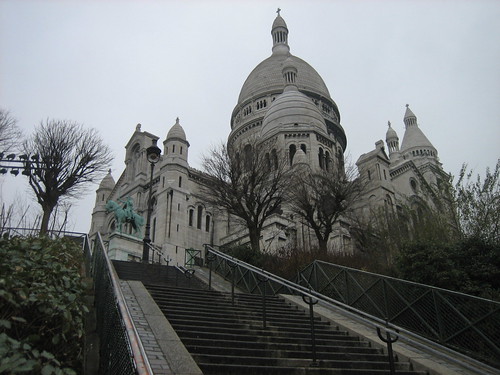
    – Sacré-Coeur Basilica, the highest point of Paris, #2 to Anvers and up the Montmartre hill
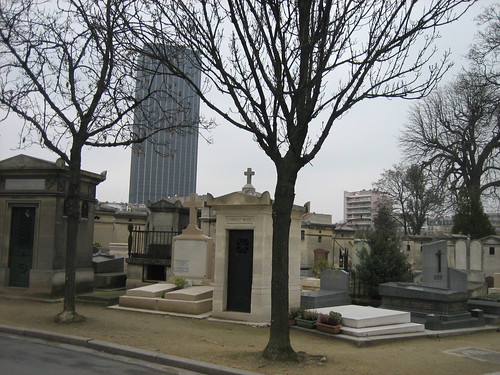
    – Montparnasse Tower and Montparnasse Cemetery, #4 to Montparnasse
    – Paris Chinatown, #7 to Porte de Choisy on avenue de Choisy and avenue d’Ivry
    – Thai-Vien, affordable Vietnamese, Laotian and Thai food on 56 avenue de Choisy
    – Place de la Bastille, #5 to Bastille
    – Les Halles, historically a food market and now an ugly shopping complex, #4 to Châtelet-Les Halles
    – Eglise St-Eustache, a church that looks abandoned inside, right by Forum des Halles
    – Glacier Berthillon, home-made ice cream shop at €2 a scoop on 31 rue St-Louis-en-l’Ile
    – La Petite Scierie, foie gras shop on 60 rue St-Louis-en-l’Ile

    Day 6

    – Château de Versailles, RER C to Versailles
    – Le Domaines qui Montent, sells wine at the same price as the producers’ on 136 Volatire Boulevard, #9 to Voltaire
    – Le Caveau de l’Ile, bistro with friendly staff on 36 rue St-Louis-en-l’Ile

    Related post/s:
    We rented via ParisStay.com
    Paris photos on Flickr
    Versailles photos on Flickr
    Day 5: Sacre-Coeur, Montmartre, Les Halles, Berthillon Ice Cream
    Day 4: Musee d’Orsay, Jardin des Tuileries, Arc de Triomphe
    Day 3: Louvre Museum, Eiffel Tower
    Day 2: The Pantheon, Jardin du Lexembourg, Saint-Sulpice
    Day 1: Arriving in Paris
    Planning a trip to Paris

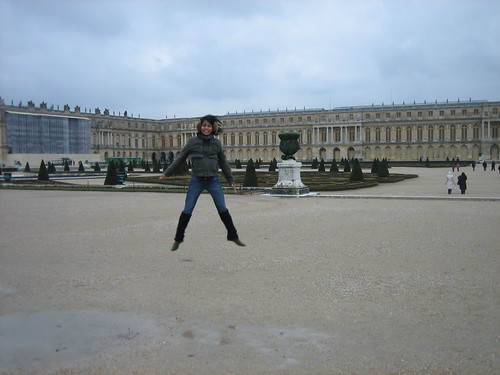
  • We woke up earlier today to catch the 10am train to Versailles. My father wasn’t feeling well so he opted to stay in and wait for us in the apartment. Not wanting to deal with drama our last full day in Paris, my mother and I left for the RER C train to Château de Versailles. The ride was less than forty minutes; the walk from the train station to the château was less than ten. We joined the queue for the “A” entrance and paid €8 each for individual passes to the Grand Apartments, the Hall of Mirrors and the Queen’s Suite.

    And grand it was! The Château de Versailles is sumptuously gaudy, yet impressive. The frescoed ceilings, the Rococo woodwork and all the marble tell you how preciously the monarchy lived. They loved themselves, too, because there are murals and statues of Louis XIV and Marie-Antoinette everywhere. Our favorite was the exhibition of Louis-Nicolas van Blarenberghe’s gouache paintings. He was a battlefield painter and he produced detailed accounts of what he saw during the wars. We used the magnifying glasses attached to the paintings to look at the details–obviously Flemish in style and skill–of his miniature soldiers, animals and weaponry.

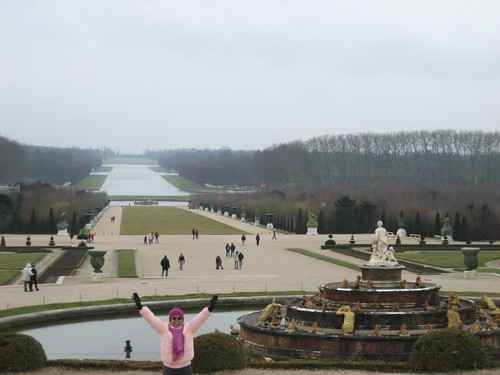
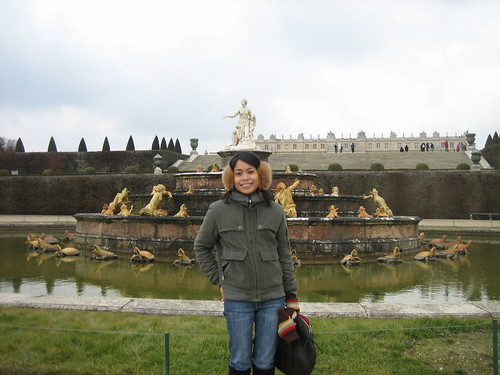
    After walking inside the château, we braved the cold and visited the gardens, over 815 hectares in total. Trees and plants were pruned to shape and there are fountains at every turn and even more statues of gods and mermaids on every corner. Apparently, they all dance to classical music in the summer.

    We went to the cafe downstairs before we took the train back to Paris and ate a quick bite of horrible pizza and instant tea and coffee. We picked up my dad from the apartment and we started off again to Voltaire Boulevard to buy some wines to take home. Les Domaines qui Montent sells bottles of wine at the same rate as their producers. I walked in and told the super-friendly bearded guy to help me pick four bottles of French wines. He gave me a Bourdeaux, a Côtes du Rhone, a Burgundy and a Cabernet-Merlot blend.

    A couple of hours later, we went to Le Caveau de l’Ile for dinner to celebrate our last night in Paris. I was surprised that my father wanted the frog’s legs (meron nyan sa Ilocos!) with the squid and my mom wanted the duck. I chose the lamb chops with the salmon tartare.

    Everything was delicious. We also ordered a bottle and a half of Côtes du Provence rosé–yes, I drank most of it–and black currants sorbet for dessert. We walked by the restaurant this afternoon and saw that the menu posted outside was in English and we figured it was “safe.” As expected, the waitress spoke English and was very accommodating to us and to the other Americans that came in after we did.

    We toasted to our week in Paris. I half-joked at how we will never go on vacation together again because my dad is so maarte. But if you put all the father drama aside, I have to admit that we all had a good time. I liked spending time with them; sharing a new city and at the same time getting lost with them. We all experienced something new and we were together as a family in a country we’ve never visited before. We wished kuya could have joined us but I think we had a good time because we wanted to show him that we’re that kind of a family–the B family.

    Au revoir, Paris!

    Related post/s:
    Versailles photos on Flickr
    Paris photos on Flickr
    Day 5: Sacre-Coeur, Montmartre, Les Halles, Berthillon Ice Cream
    Day 4: Musee d’Orsay, Jardin des Tuileries, Arc de Triomphe
    Day 3: Louvre Museum, Eiffel Tower
    Day 2: The Pantheon, Jardin du Lexembourg, Saint-Sulpice
    Day 1: Arriving in Paris
    Planning a trip to Paris

  • It didn’t rain at all today but it was nippy enough to keep us awake and active all day. On our way out, we stopped at the boulangerie near the Seine to buy some fresh croissants. The bakery downstairs was closed. We took the #7 to Châtelet, transferred to the #4 and got off on Barbès-Rochechouart to transfer again to the #2 for the Anvers stop.

    Montmartre was the home of Picasso and other artists in its heyday, but today it is as busy as 34th Street in New York, full of stores selling everything from cheap trinkets to housewares. We climbed the hill to Sacré-Coeur and saw the view of the entire city–it’s the highest point of all Paris. We realized once we got to the top that if we’re not walking, we’re climbing up steps during this vacation.

    The basilica looks like it’s from the Byzantine times, but it was actually built later in 1876 to atone for the sins of the French during the revolution. They were being killed by the Prussians so donations from all over the country poured in to build a church and strike a deal with God. It’s a pretty funny story if you think about it. It’s so French. My dad did the Filipino thing: he bought a small statue of the Sacred-Heart to atone for his own sins.

    From the north of Paris, we took the #4 all the way south, to the Montparnasse Tower. If Montmartre was the home of successful artists, Montparnasse was where the opposite end of the economic, social and political spectrum strived. Artists from all over the world came here to take advantage of the cheap rent. It was like the Brooklyn version of SoHo; well, before the hipsters moved to Brooklyn and made it expensive, too.

    We walked to the Cimetière de Montparnasse and checked out the, well, dead scene. My dad didn’t like being there and he was opposed to my taking of photographs of the graves, so as soon as we entered, we walked towards the exit. At Denfert-Rochereau, we took the #4 to Place d’Italie and transfered to the #7 towards Chinatown on Porte de Choisy.

    Paris’ Chinatown is like Vermont’s–it’s not there. There was construction on the main boulevard and the cranes were all in the way. If I didn’t see the Chinese McDonald’s, I would have walked back to the train and given up. But we ended up having lunch at Thai-Vien where we shared some Laotian sausages, grilled pork chops and tom yang kung, a shrimp hot soup that I like to eat in lieu of phở because of the lemongrass.

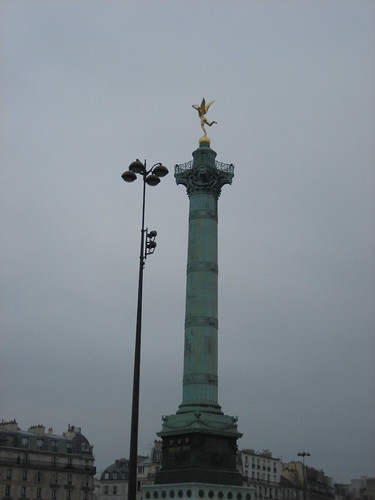
    From Chinatown, we took the #7 back up to transfer to the #5 and to Bastille just to take a photo of the tower. And here it is:

    There’s really nothing to say except for the fact that the Spirit of Liberty is on top, erected to commemorate the 1830 July revolution when “Citizen King” Louis-Philippe replaced the autocracy of Charles X.

    From there, we made one final stop at Les Halles, Paris’ main food market until it was replaced by an ugly shopping complex. (And also the namesake of the New York City bistro where Anthony Bourdain used to work.) It used to smell like produce, now it just smells like pee.

    What’s interesting is that you can still see the remains of what Émile Zola called le ventre de Paris, the stomach of Paris, even though it is now referred to as le trou des Halles or the a-hole of Les Halles. (I wanted to go to Rungis, where the market is located today but waking up before 7am has been very difficult. Perhaps when I return.)

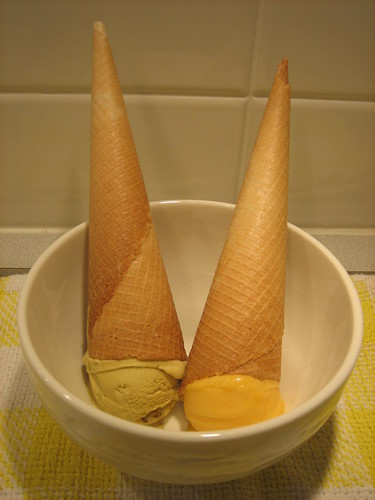
    Back on St-Louis-en-l’Ile, I finally managed to buy ice cream from the famous Berthillon shop before it closed for the day. They’re famous for their all-natural ice cream, and oh-man, I don’t think I’ve ever tasted better pistachio and apricot flavors in my life!

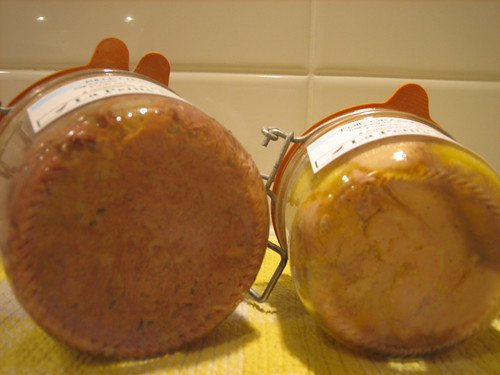
    I went up the apartment to save some for my parents who went straight to the supermarket from Les Halles. I ran back downstairs to catch the prettiest store on St-Louis-en-l’Ile, La Petite Scierie, before it closed and spent a fortune on foie gras and duck meat.

    If you’re in Paris but you don’t like foie gras, visit the store anyway and check out the good looking Frenchie at the counter who gave me a taste of the Loire wine they carry with the foie gras I bought.

    Mr. and Mrs. B made it back without my help and we spent the rest of the night chillin’ with red wine, ice cream and foie gras on fresh baguette. Life is so good in Paris.

    Related post/s:
    Day 4: Musee d’Orsay, Jardin des Tuileries, Arc de Triomphe
    Day 3: Louvre Museum, Eiffel Tower
    Day 2: The Pantheon, Jardin du Lexembourg, Saint-Sulpice
    Day 1: Arriving in Paris
    Planning a trip to Paris

  • It was raining when we woke up this morning. While eating my fresh croissant with a glass of cold milk, I poured over our Paris map to see where we can go when it’s gloomy outside.

    The boy suggested we visit Musée d’Orsay before we left. I was willing to skip it, but he told us that we should go anyway just to see the space. It’s open on Tuesdays while the Louvre isn’t, so naturally, every tourist in the city had the same idea. We stood in line for about an hour with our new umbrellas. It felt so good to finally get in and warm our feet. Seeing this as soon as we walked in was just incredible:

    What used to be a train station until the modern trains proved that the platforms were too short, Musée d’Orsay is now the home of Van Gogh, Monet, Manet, Degas, Renoir, Cézanne and Gauguin. There’s also a nice collection of Art Nouveau furniture in several of the floors.

    After the museum, it was defeat: we ate at a Chinese deli for lunch. I wanted to walk to Boulevard Raspail to find a place to eat lunch, but Dynasty King called my father’s name on the way there. He ate like he had never eaten before, the rice making him happier than a pig in mud. Maybe it was the beef with onions or the sautéed vegetables, but I sat and ate with them; maybe it was my dad looking like he’s finally full. Or maybe I’m just a good daughter.

    From Musée d’Orsay, we crossed Pont Solferino to the Jardin des Tuileries which was bare and quiet because of the rain.

    We walked to the carousel and crossed the street to the Obélisque, a gift from the viceroy of Egypt on the Place de la Concorde. I made a stop at a creperie and bought one filled with strawberries and ordered a cup of hot chocolate with it.

    We walked and walked until we reached the Arc de Triomphe, something I’ve always wanted to see ever since I moved to New York City and saw Washington Square Park’s tinier version. I remember reading somewhere that when you finally see it, you’d feel like you’re in another place; that beyond the arc is a different world, sort of like an opening to something new.

    The walk on Champs Élysées was long, so we made a few stops along the way, specifically at Lacoste, my dad’s favorite store. It took €8 each, around 284 steps and some heavy breathing to finally get up the arc, but the view was as rewarding as I expected. It was a bit cloudy from up there but to see the city’s traffic moving away from the arc and Georges Haussmann’s twelve avenues forming like the sun’s rays were pretty cool. Talk about city planning and practical architecture.

    The arc was built as a monument to the triumph of Napoleon’s armies but today, it’s just known as a symbol of the sheer triomphe of being French. Parisians gathered here when they were liberated from German occupation and they partied here when they won the ’98 World Cup. Every year, they still use it as the point of celebrating Bastille Day, the end of the monarchy in France. From the gift shop, my mom and I bought each other tiny silver pendants of the Eiffel and the Arc as remembrance from this trip.

    We picked up a few items from a grocery store on rue Saint-Antoine on our way home. My feet were so cold I decided to cook dinner and stay in for the night. To find our way back, I remembered Arabella’s tip: stay close to the river and you’ll never get lost. I peeked from one corner and another to look for the water and then we walked to St-Louis-en-l’Ile. I stopped by La Ferme Saint-Aubin to buy a bottle of Bordeaux. I also bought several jars of jam from L’Epicerie for tomorrow’s breakfast before going upstairs.

    Dinner was fennel-flavored chicken soup with rice and spinach. I started with a can of Leffe while cooking and finished with a glass of the red wine. We ended the night by doing laundry and figuring out what the French on the washing machine meant. Thanks to Babel Fish, we learned that marche means go and arret is to stop.

    It’s not so bad when it rains in Paris.

    Related post/s:
    Day 3: Louvre Museum, Eiffel Tower
    Day 2: The Pantheon, Jardin du Lexembourg, Saint-Sulpice
    Day 1: Arriving in Paris
    Planning a trip to Paris