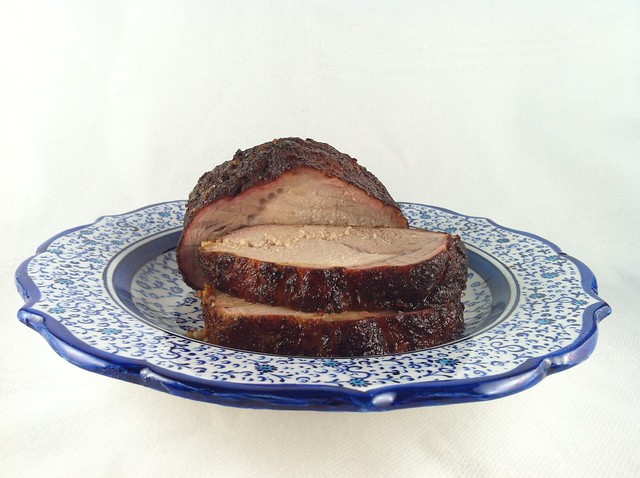
Bourbon-Glazed Pork Tenderloin Roast

After returning from a long weekend in Istanbul, Turkey, I wanted to eat some pork. While in Istanbul, I ate a lot of very good seafood and a lot of very good lamb, but at the end of the day, you may take the pork away from the girl, but you can never take the girl away from the pork.

Ingredients:
2-lb boneless pork tenderloin
1 tbsp paprika
1 tsp red chile flakes
salt
pepper
1 cup of bourbon
1/2 cup brown sugar

1. Marinate the pork tenderloin by combining the paprika, red chile flakes, salt and pepper in a shallow bowl. Rub the mixture all over the pork and set aside for 30 minutes.
2. Preheat the oven to 275º. Place the pork onto a rack-lined roasting pan and cook in the oven for 2 hours. Turn the pork over after the first hour.
3. Before the 2 hours are up, make the glaze. In a medium saucepan set over medium heat, bring the brown sugar and bourbon to a simmer, stirring occasionally, until slightly reduced, about 10 minutes.
4. Remove the pork from the oven and brush one-third of the glaze all over the pork using a heat-resistant pastry brush. Continue to roast for 30 more minutes, glazing the pork on all sides every 10 minutes. Remove from the oven and set aside to rest for 15 minutes before slicing and serving.

Related post/s:
Pork with Guinness beer recipe
Pork with whiskey and honey recipe

Vegetarian Lasagna with Eggplant

Can you believe I made something without meat? It’s not some kind of new year resolution or anything, I just really need to use the pesto sauce I made last year that’s been sitting in the fridge for what seemed like forever. I couldn’t believe it was still good! (This dish fed 5 people and no one got sick!)

I don’t have any experience with lasagna except for the fact that I have to create layers to make it look legit. (“Lasagne” refers to multiple sheets of pasta; “lasagna” refers to the dish or to individual sheets of pasta.) The steps here were pretty much common sense, but I had no idea how the besciamella sauce texture was supposed to be like. I felt like my version was too watery after I imagined it to have more of a ricotta cheese consistency. To be honest with you, I’m not even sure it’s necessary here. My pesto was so good that I barely tasted the besciamella to know that it made any difference. (Don’t tell the lasagna police!) Why don’t you try it without? The olive oil absorbed by the eggplant was enough to keep the dish rich and moist. Buy a good quality jar of pesto from your local farmer’s market and you barely have to lift a finger to make this dish.

Ingredients:
1 box of wavy lasagna pasta
salt
olive oil
1 medium eggplant, thinly sliced
cooking spray
1 cup of besciamella sauce
1 cup pesto sauce
1 cup Pecorino Cheese, grated
1/2 cup bread crumbs

For the besciamella sauce:
3 tbsps butter
2 tbsps flour
2 cups milk
salt
nutmeg

1. Bring a large pot of water to a boil and add about 2 tbsps of salt. Prepare a bowl of ice water. Cook the lasagne sheets in the boiling water 2 minutes less than the package instructions recommend. Drain, put in the ice bath and separate each sheet by hanging them off your colander rim.
2. Heat olive oil over medium fire in a large sauté pan. Add eggplant in batches and cook until golden brown and soft, about 5 minutes. Feel free to keep adding olive oil for each batch. Drain on a paper towel and set aside.
3. Make besciamella sauce. Heat butter in a medium sauce pan until melted. Add flour and stir until smooth. Cook over medium heat until light golden brown, about 7 minutes. Meanwhile, heat the milk in a separate pot until just about to boil. Add milk to butter mixture 1 cup at a time, whisking continuously until very smooth and bring to a boil. Cook 30 seconds and remove from heat. Season with salt and nutmeg. Set aside.
4. Preheat oven to 400º. While oven is preheating, prepare lasagna. Coat a 13×9 baking pan by spraying with cooking spray. Layer 4 sheets of lasagne on the bottom of the pan. They can overlap. Top with 6 slices of eggplant and 3 tablespoons of besciamella sauce. Repeat the step for another layer, but this time, add 3 tbsps of pesto sauce. Repeat these 2 layers for a total of 4 layers. End with 4 sheets of lasagne, remaining besciamella sauce and grated cheese. Sprinkle with bread crumbs. Place baking pan on a baking sheet and bake for 20 to 25 minutes, or until bubbling and golden brown on top.

Related post/s:
Homemade basil pesto recipe

Armenia: Lamb and Orzo

For 2012, I told myself that I would go back to writing. This week, when I returned from my Christmas-birthday and New Year trip in San Francisco, I immediately got back to cooking. It wasn’t just to eat; it was to start updating this Web site as soon as possible to keep up with that resolution.

While in San Francisco, I cooked beef stew for a family of five who was renting a house by the ocean in Montara, a few miles away from downtown and minutes away from beautiful Pacifica. I only had a couple of hours to feed all of us–we were all tired from our respective full day–so I felt like I didn’t deliver as much as I could have if I had more time or if I was cooking in my apartment back in New York City with all the necessary equipment. They ate the food though, and I honestly think they enjoyed it; or they were just really being polite!

To make up for that shortcoming that’s still eating me a little bit inside, I asked an Armenian co-worker for a tried and true winter stew recipe. He emailed me a rough draft of this lamb and orzo recipe and I put my own spin to it when I got home. While I was cooking, I remembered that back in 2006, I had started this mini-project to cook as many traditional family recipes from people I know who hail from different countries.Unfortunately, I stopped updating it in 2008, but now I have another excuse to go back to writing.
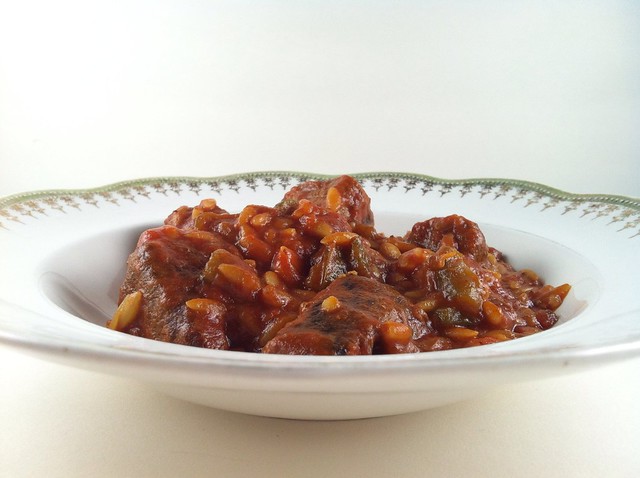
I don’t know much about Armenia. Okay, I know nothing besides what I learned from Ararat, the 2002 movie about the genocide. But even my co-worker blames his too-American father for knowing more about Chinese culture (his wife is Chinese) than his own. When he visits his family in Colorado, this dish is one to be served during their stay. They save it for special occasions–perhaps because lamb was more expensive to procure back in the day–but also because it was hearty and brought the family together.

I now wish I can get another chance to cook for that same family in Montara so I may redeem myself, impress a little bit more and bring the members back together again.

Ingredients:
1 stick of butter, cut in quarters
1 1/5 lbs of lamb stew cuts
salt
pepper
1 yellow onion, minced
beef broth
3 tomatoes, chopped
1 large green pepper, seeded, chopped
1 15-ounce can of tomato purée
2 cups of orzo pasta

1. In a large heated Dutch oven, add the butter until browned and almost melted. Add and brown the lamb pieces on all sides. Season with salt and pepper. Add the onions and mix until translucent. Cover the pot and cook for 1 hour in low heat.
2. Check after the first 25 minutes and add a splash of beef broth so that the meat doesn’t burn or stick to the pot. Gently stir with a wooden spatula. Repeat after the next 25 minutes to avoid burning. Add the tomatoes and the bell pepper after the hour is up and cook for another 30 minutes. Add another splash of broth after the first half of the 30 minutes to avoid burning the vegetables.
3. Boil some water in a separate pot and set aside. Uncover the Dutch oven and add the tomato purée to the lamb and vegetables. Slowly add some hot water splash by splash, or until you have the desired consistency. Your stew must be somewhat saucy, not too thick but not too watery either.
4. Raise the heat to medium-high. Add the orzo and cook by constantly stirring everything with your spatula, about 10 minutes or until the pasta is al dente. Feel free to add a jig or two of the hot water to make sure your sauce does not thicken too much. Season with more salt as necessary. Turn off the stove and cook the pasta for the last 2 minutes with the remaining heat by stirring some more.

Related post/s:
Cooking the World: Global Gastronomy

Homemade Pici Pasta with Tripe

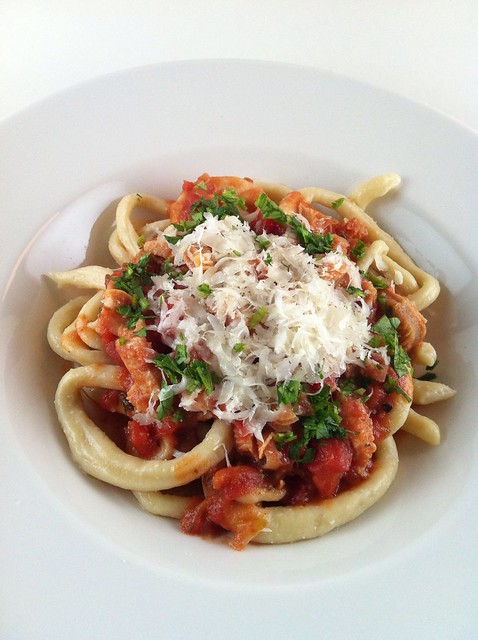
I had to waste four cups of flour before I perfected this recipe. The first recipe I found online did not require eggs nor all-purpose flour, just semolina and water. I thought that was odd, but I gave it a try anyway. I should have trusted my instinct. The “dough” refused to stick together and just ended up becoming a shredded mess. I found another recipe that required eggs but did not list semolina, so I thought I’d combine the two instructions until the dough felt right in my hands, just like I learned in my gnocchi class last year.

And what exactly is “right”? I’m not sure if I can describe, but after I mixed the flour with the eggs, I freely sprinkled the kitchen counter with semolina and started kneading. Every time the dough got a little sticky, I dusted with more semolina to allow me to continue kneading it. I stopped until the dough felt pliable enough to cut and roll into snake-like noodles. That’s the word I was looking for! Pliable!

It took an hour to make the pici and they looked like they weren’t going to feed more than two people, but as soon as I cooked the pasta and distributed them to three deep serving dishes, I had enough for two more servings the next day. The cooked pasta was plump and I really needed just one tong-heaping for each person.

Caz Hildebrand’s The Geometry of Pasta is an awesome book about pasta with really cool illustrations.

Ingredients:
2 pounds of tripe, thawed, thoroughly washed, dried with paper towels
salt
vanilla
3 cloves of garlic, minced
1 red onion, chopped
1 can tomato sauce

For the pici pasta:
3 cups of all-purpose flour
3 eggs
1 to 1 1/4 cups of lukewarm water
olive oil
semolina flour
any hard cheese, shaved
some parsley, finely chopped

1. Prepare the tripe. Cut the tripe into smaller square sheets and cook in a large pot of boiling water with the salt and vanilla for about an hour, or until the tripe is tender. It’s okay that they are still a little chewy; just make sure it’s not rubbery. Drain and slice into smaller pieces.
2. Make the pasta while the tripe is cooking. Pour out the flour on a clean kitchen counter surface and create a hole in the middle. Crack each egg in the center of the well and mix with a fork. When the egg is mixed into the flour, begin to add a tiny bit of water at a time, each time trying to mix in as much flour as possible. When all of the flour is mixed in, begin to knead the flour. You’re going to probably do this for about 8-10 minutes. When complete, make dough into a mound and pour a teaspoon of olive oil on top. Cover with a dish towel and let it rest for 10 minutes.
2. Cut the dough into smaller pieces and roll each into thin dowels and into snake-like noodles. Place the pici on a sheet tray that has been dusted with semolina flour and cover the pasta with the dish towel. Set aside until ready to use.
3. Make the sauce. In a large pot, heat some oil. Sauté some garlic until light brown. Add the onions and sauté until translucent. Add the tripe and cook by sauteéing. Lower the heat and add the tomato sauce. Mix and simmer for 10 minutes, just enough to incorporate the tomatoes.
4. Cook the pasta. Salt a large pot of water and put over high heat until boiling. Add the pici and cook for 10 minutes or until al dente. Use tongs to remove them from the water onto deep serving dishes. Top with sauce, cheese and parsley.

Related post/s:
Homemade gnocchi the Rustico Cooking way
Tripe tacos in Sunset Park, Brooklyn

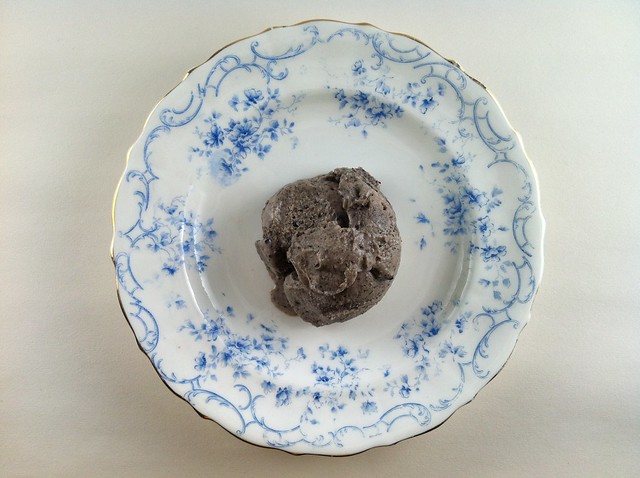
Goma, Japanese Black Sesame Ice Cream

I’m more of a savory dessert fan rather than sweet, and one of my favorites is black sesame ice cream especially after a Japanese dinner. (Green tea and earl gray flavors are included in that list.) The best black sesame I’ve had is from il laboratorio del gelato in Manhattan’s East Village, followed by whatever brand they serve at Sushiden or Sobaya.

When the time came to prepare for my Thanksgiving feast this year, I set aside a couple of hours to replicate this black sesame ice cream recipe, not as part of my menu, but as a test since I was already spending a long time in the kitchen all weekend. The original recipe noted that it was for 1.5L. I assumed that L was for liters, or about 6 cups, which was a little too much for an ice cream flavor I just wanted to test, so I cut everything in half. The problem is that I finished with an amazing ice cream that wasn’t even half a pint! So what could that L had stood for? I should have just gone for the original measurements. Listed below is the version I made–try it first, or double everything for a pint’s worth.

Ingredients:
3 tbsps black sesame seeds
1/2 cup sugar
1 egg yolk
1/4 cup, plus 2 tbsps of whole milk
1/4 cup heavy cream

1. Roast the black sesame seeds in a skillet using medium heat. Move the skillet fast and frequently to avoid burning until you can smell the roasting aroma; no more than a minute. Remove from heat. Separate a tsp’s worth for use later in the recipe if you want more texture in your ice cream. Transfer the rest to a mortar and ground with a pestle.
2. Combine the ground black sesame with half of the sugar in a bowl. Set aside. In another large bowl, whisk the remaining sugar with the egg yolk until the mixture becomes smooth and is a pale yellow color.
3. Heat the milk in a small sauce pan using medium low heat until the edges just start to bubble. Remove the milk from the heat and slowly add the milk to the sugar and yolk mixture while stirring to ensure the eggs don’t cook.
4. Make your custard base. Pour the sugar-yolk-milk mixture back into the sauce pan and heat over medium low heat. Make sure you stir constantly as the mixture thickens or else you will get lumps. Once the mixture coats the back of a wooden spoon–I spent about 20 minutes–immediately remove from the heat. Pour into another bowl using a fine mesh or strainer.
5. Prepare an ice bath. Set aside. Slowly mix the custard in with the black sesame dry mixture. Make sure you add the custard slowly and in small portions or the mixture will separate. Put this bowl in the ice bath to cool while making sure none of the water gets into the custard. When cool, add the heavy cream. If you want your ice cream to have more texture, add the remaining tsp of roasted black sesame seeds as well. Mix well with a rubber spatula.
6. Using your ice cream maker, churn the black sesame custard for about 35 minutes, or until it reaches your desired consistency. Transfer to an air tight plastic container.

Thanks to Michele for my beautiful vintage plate!

Related post/s:
Sage Ice Cream recipe
My first ever foray into baking was for rhubarb crisp