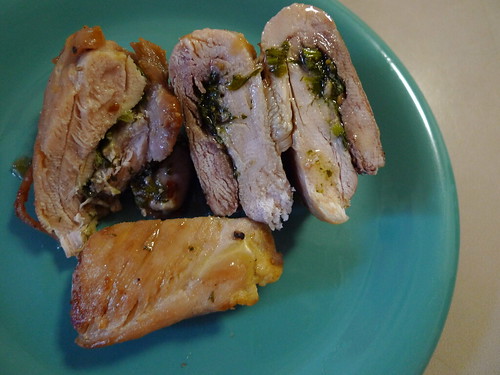
Pernil La Segunda Parte, Pork Shoulder Roast

The family skipped the tasteless turkey this year and opted for what we know best: pork. I wanted to try another friend’s mother’s pernil recipe so I texted Cassy this time around. It’s a completely different recipe from what Lily gave me last year because it does not use Worcestershire sauce or water when cooking.

This recipe brought me back to my old neighborhood of Washington Heights just to buy naranja agrias, or sour oranges. Funny how I grew up seeing them in the stores but have always thought they were just unripe oranges. In a way they are, because their skins are thicker and they definitely taste sour. Cassy’s mom swore to me that they are the secret ingredient to her pernil and that I shouldn’t skip them, but I can’t really say they made much of a difference. I feel like I could have put more lemon and just added the rind in the marinade if I wanted some pithy taste to it.

I used my new KitchenAid lightweight roaster for the first time when I cooked this. I couldn’t believe how light this roaster was, not to mention how pretty the red color is. As far as the pork shoulder was concerned, it cooked evenly especially when I put the lid back on. I felt like the dome-shaped cover distributed the heat as opposed to tenting aluminum foil over the pan like I usually do. I put the rack in place inside so that the pork shoulder was not directly touching the bottom of the roaster–I didn’t want any part of the meat to stick. After cooking, all the rendered fat was at the bottom and some bits burned off, but after a few minutes of soaking in hot soapy water, cleaning it was a snap. Be less spastic than me though, because I put a dent on mine while I was storing it back in the box and already chipped off some of the coating.

Ingredients:
1 pork shoulder, no more than 5 pounds
1 head of garlic, peeled, crushed
juice from 6 sour oranges, or naranja agria
lemon juice from 3 lemons
adobo powder
oregano

1. Marinate the pork shoulder at least 3 days before cooking. Score the pork with a sharp knife and insert garlic cloves in every nook. Using your hands, liberally rub the pork with the dry spices. Put in a large container and add in the juices. Cover with plastic wrap. Refrigerate. Once a day, make sure you turn the meat so that the other side gets soaked in the marinade.
2. Remove pork from marinade and let rest to room temperature in a colander. When ready to cook, heat oven to 400º. Roast pork for 1 hour on a rack in a roasting pan, skin side up, uncovered. Lower the temperature down to 350º and continue to roast for 1.5 hours, covered. Carefully turn the pork shoulder to cook the other side for another 1.5 hours, skin side down, covered. Check the internal temperature of the meat closest to the bone. It should register at least 170º. Switch the oven to broil. Turn the pork shoulder again, skin side up, and cook for another 30 minutes to crisp the skin up.
3. Remove pork from the oven and let rest for 30 minutes before cutting it up.

Related post/s:
My first try at Pernil, or primera parte
If you don’t want to roast, try sweet and sour pork picnic
I once carried an 8-pound pork shoulder in my tote bag
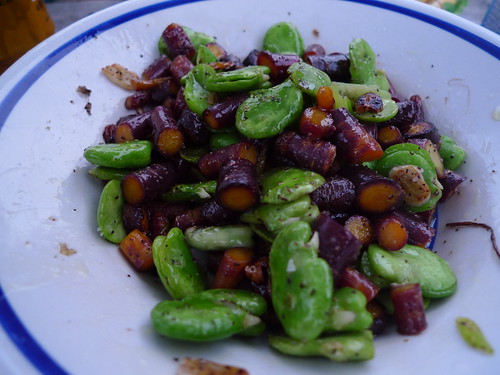
Seared Scallops with Fava Beans

I’ve shelled fava beans before and I can’t say it’s my favorite thing to do in the kitchen, but I love them so much in salads that whenever the summer season starts, I always buy a few handfuls of them from Fairway or from any farmer stand outside of the city. If shelling raw, you have to do it twice: one from the pod and two from the casing. If you have access to a grill, it’s easier to grill them first and the beans come out of their casings much easier. I realize it’s not the season for fava beans anymore, but hey, bookmark this recipe for next!

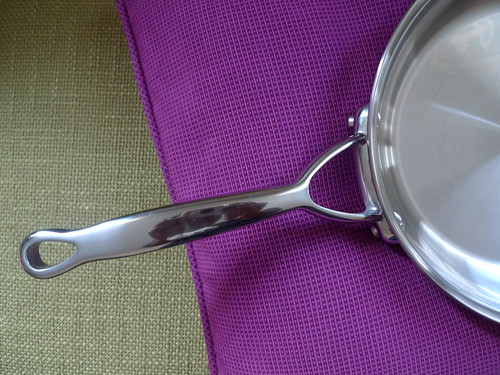
To sear the scallops, I used my new 10-inch skillet from Bonjour. I never owned a skillet without Teflon on the surface and I’ve survived this long in the kitchen, but now I know why it’s so much better for delicate food items like scallops and hardy meats like a beef steak: the skillet gets so much hotter faster and you get that satisfaction that your food is getting thoroughly cooked without overdoing it. The bonus part is that, since there is no rubberized handle or nonstick surface, you can finish cooking in the oven without having to turn the seafood or the meat.

Ingredients:
a few pieces of fresh scallops, dried with a paper towel
a handful of fava beans, shelled
1 bunch of young purple carrots, chopped
oil, salt, pepper

1. Using a large skillet, heat some oil until almost smoking. Sear scallops for no less than 5 minutes. They will not stick to the pan if your scallops are dry and if your skillet was hot enough. Gently turn them over with a spatula to cook the other side for another 3 minutes. Remove to a plate.
2. Keep the remaining oil in the skillet and add a little bit more and reheat. Toss fava beans and purple carrots. Sauté in high heat for several minutes until the fava beans are semi-soft. If you bought them from the farmers’ market, a little rawness won’t kill you.
3. Assemble to a plate and serve with seared scallops.

Related post/s:
Scallops are even better wrapped in bacon

Recommended tool/s:
Time to upgrade your skillets to Bonjour

Ham Hock and Apple Soup

Who ever said pork and apples make a good combination? Maybe it’s because the tartiness of the fruit cuts through the pork’s fat and the sweetness of a good piece of pork complements the apples. I’ve used the pairing several times before but nothing beats this soup from April Bloomfield, chef of the Spotted Pig.

Our mouths watered when we saw a short clip of this soup from the chef’s cooking class. The Dr. and I raced to see who would cook it first. I won, but only because I stayed in all Sunday afternoon to spend five hours of prep and cooking time. Time well spent, I say, as it yielded six servings for two days.

Ingredients:
For ham hock and stock:
3 pieces brined ham hocks
half a gallon apple cider
1 bay leaf
4 peppercorns

For soup:
5 medium carrots, diced
2 medium parsnips, diced
8 pieces of small potatoes, chopped
1 apple, chopped
1 onion, chopped
4 cloves garlic, minced
2 tbsps whole grain mustard
oil, salt, pepper

1. Prepare the ham hock and stock. In large stockpot, combine ham hock and stock ingredients, plus enough water to cover. Simmer for about 3 hours or until meat is falling off bone.
2. Remove ham hock and reserve the broth. Pick meat off the bones with two forks. The meat should come off easily. Set the meat aside. Discard bones.
3. When ready to make the soup, heat some oil in a large Dutch oven. Add garlic, onions, carrots and parsnips and cook under medium-low fire until golden brown and soft, about 40 minutes, to concentrate the flavor.
4. Add salt, potatoes and apples. Cook until potatoes are soft. Add ham hock meat and reserved broth and cook for 20 minutes on low until vegetables are broken down. This will help thicken the soup. Ladle in bowls and top with a dollop of mustard to serve.

Related post/s:
Ham hocks are not just for soups
You can even brine your pork in apple peels
Easy pork chop and apple recipe

Cilantro Chicken with Avocado and Tomato Salsa

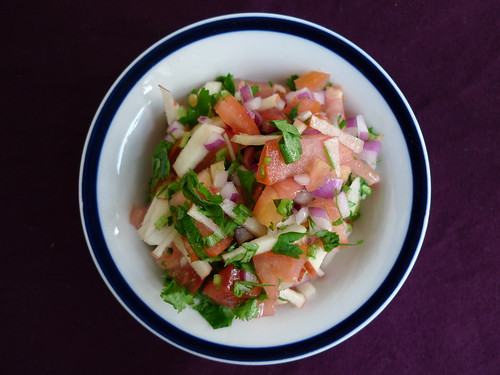
I stole this tomato salsa recipe from the Dr.’s mother after she left a jar of it in his fridge during her visit from California. I’ve never had salsa with apple before but I thought the tartiness lent to the blandness of the tomatoes and the kick of the cilantro.

But because there’s never tortilla chips at home, I prepared it as a side salad for a main dish. I made it to our neighborhood grocery store after its Sunday shopping peak when most of the produce shelves have already been ravaged. No oxtails, no short ribs, no pork chops; I was forced to buy some chicken thighs instead. I stuffed them with cilantro so that there’s an element of surprise when you bite into them–also to use the cilantro leftover from the salsa. Whether or not you have avocados, you’ll have a complete meal especially if you serve it with rice.

Ingredients:
8 boneless chicken thighs
half a bunch of cilantro, finely chopped
1 tbsp cumin, grounded
2 ripe avocados
oil, salt, pepper

For the salsa:
4 beefsteak tomatoes, chopped
1 red onion, finely chopped
the other half of the cilantro, finely chopped
1 gala apple, chopped
1 jalapeno pepper, chopped
salt

1. Prepare the salsa. Combine and mix all the ingredients in a large bowl. Season with salt. Transfer to a pickling jar and refrigerate until ready to use.
2. Preheat the oven 350º. Prepare the chicken. Combine and mix the cilantro and cumin in a small bowl. Drizzle with some olive oil and season with salt and pepper. Lay out the chicken pieces and stuff with cilantro-cumin mix. Each chicken only needs a tbsp or so of stuffing.
3. Using a large skillet, heat some oil. Brown both side of the chicken pieces. Use an iron press if you have one to keep the stuffing inside the chicken while frying. Gently turn over to brown the other side using tongs. Transfer to a baking dish and bake in the oven for about 10 minutes.
4. To serve, arrange the baked chicken over a bed of rice. Scoop some of the avocado meat on the side and top with tomato salsa.

Related post/s:
You can also stuff Cornish hens
If you’re vegetarian, how about some stuffed red pepper?

Sardines with Fennel

I started doing my grocery shopping at Grand Central Terminal Market since I’ve begun my work commute to Connecticut. Most days, I go straight down to SoHo to swim anyway and I can pick something up before I head to the gym via the 6 train. Last week, Pescatore Seafood was selling fresh Portuguese sardines. I never see them in the city so I got excited and bought four pieces for about $9. Sardines are a great source of heart-healthy omega-3 fats but they get a bad rep because most people think they stink. If you buy fresh fish—any kind of fish at all—they really shouldn’t smell fishy. The guy behind the counter cleaned and gutted them, leaving the heads on per my request. I then walked down the hall to buy a fennel bulb from Greenwich Produce.

When I got home, I found some golden raisins that I had bought a few weeks back for another recipe and my last big bulb of onion by the windowsill. Breadcrumbs were also in order because I imagined Lydia Bastianich would use them to keep the sardines intact while cooking. I couldn’t get them to stick to the fish, so I decided to stuff them instead. For those who want a heavier version of this meal, serve with bucatini pasta cooked al dente and drizzle with olive oil before serving. It was a good dinner for me with a dry bottle of Meulenhof 2008 Riesling. It raised a few eyebrows the next day during lunch, but then again, you have to like food so much to get excited by just seeing fresh Portuguese sardines at the market.

Ingredients:
4 fresh sardines, cleaned, patted dry using paper towel
1 cup bread crumbs
1 fennel bulb, thinly sliced
1 red onion, quartered
a handful of golden raisins
1 cup of vegetable broth
1 tbsp fennel seeds
oil, salt, pepper

1. In a large skillet, heat some olive oil and cook the onions until they are soft. Add the fennel, fennel seeds, raisins and a little of the broth. Stir occasionally until fennel pieces are soft. Add more broth if the skillet gets dry before the fennel is completely cooked. Season with salt and pepper.
2. Meanwhile, cook the sardines. In another skillet, heat some oil. While oil is heating, stuff the sardines with breadcrumbs. Fry the sardines by gently placing them in the skillet. Cook the other side after about 7 minutes by turning them over gently using a flat heat-resistant spatula. Serve by putting the fennel in a nice shallow dish and top with the sardines. Sprinkle with leftover breadcrumbs and raisins.

Related post/s:
Use sardines in a can with pasta and you’d be all set, too
Visit Grand Central Terminal Market in New York City