Fennel and Celery Root Salad

It’s so nice to step out of the gym at 4:30pm and squint because it’s so bright outside. We New Yorkers like our different seasons, but oh, nothing is as sweet as welcoming spring. I’m actually way ahead of the weather with this recipe because I think of fennel in a cold salad as a summer produce: bright and fresh.

If you have a mandoline, you can make a better presentation with this salad, but a sharp knife will do as long as you use extra care especially with the celeriac. A very good Parmiggiano is necessary, although Piave cheese will do okay, too. Add to the salad’s brightness by plucking a few flat parsley leaves from its stem and serving them whole.

Ingredients:
1 fennel bulb, sliced thinly
1 celery root, peeled, sliced thinly
3 sprigs of parsley, leaves plucked from stem
Parmiggiano Reggiano cheese
juice from one lemon
oil, salt, pepper

1. In a bowl, toss fennel and celery root with lemon juice and some salt. The lemon juice will keep the vegetables’ color until you’re ready to serve. Add parsley leaves and season with pepper. Drizzle a generous amount of good olive oil.
2. Before serving, slice some cheese and add to the salad.

Related post/s:
I totally copied this from Frankie’s 457 in Brooklyn
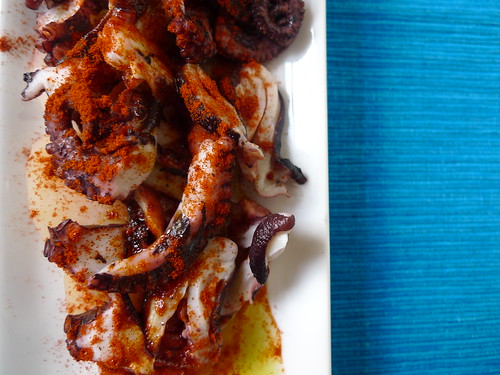
Pulpo a la Gallega, Galician Octopus

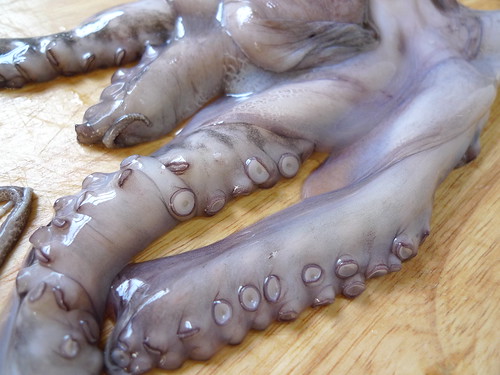
The two-or-two rule I apply for squid also applies when I cook octopus. You either tenderize it for 2 minutes or two hours; anything other than those times, your octopus will be chewy and inedible.

At the Filipino grocery store in Jersey City, I found a small frozen block of octopus for under $5. I wish I bought more because this Galician salad was so easy. It might take time to cook the octopus but once tender, it’s like tossing a simple salad together.

Ingredients:
1 octopus, about 2 pounds, thawed, beak removed if necessary
4 medium potatoes, peeled, sliced
smoked paprika
salt

1. Bring a large pot of water to a boil and add a generous helping of salt. Put octopus in water and, when it returns to boil, cover and lower the heat to simmer. Cook for no more than 2 hours, until octopus is tender. When you have 30 minutes to go, add the potatoes and cook until tender.
2. Remove octopus and potatoes from pot of water and drain. Slice the octopus into smaller pieces. Separate the potatoes on a platter and sprinkle with paprika. Distribute the octopus on top of the potatoes. Drizzle with olive oil and season with some salt.

Related post/s:
Octopus photos on Flickr
Surprise your guests with yellow eel if octopus is too easy
The OctoDog is a different kind of octopus

Sichuan Dry-Fried String Beans

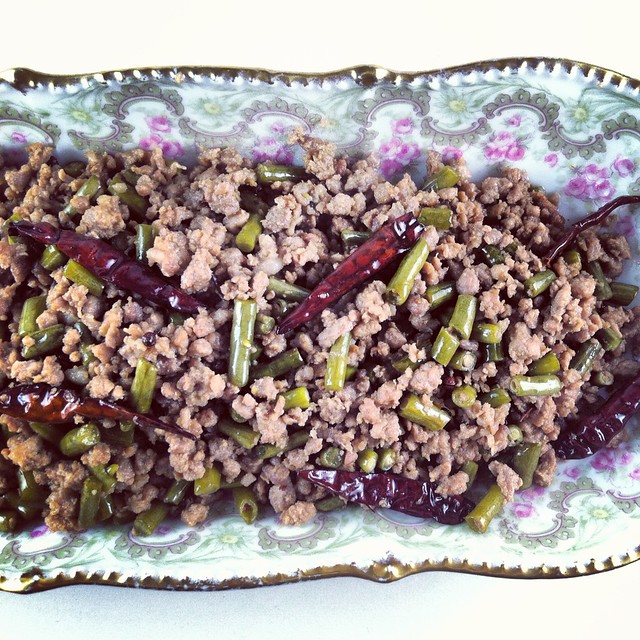
I picked up a copy of Fuchsia Dunlop’s Land of Plenty from the library last week. I skimmed through it before I checked it out because I wanted to see if the recipes were easy to do at home. I’m obsessed with this dry-fried string beans dish I always order when I’m eating at Grand Sichuan, so I made sure there was a similar string beans entry caled rou mo jiang dou. My mouth watered while reading the recipe and I knew I just had to do it pronto.

Before heading out to Chicago earlier this week, I pickled the string beans. Emptying them out when I was ready to make a Friday lunch, I couldn’t believe how fragrant it had gotten. The star anise and the ginger together gave the beans a most familiar smell: I knew I was on the right track.

Thank you to Fuschia Dunlop’s time in Chengdu! The recipes gave me an understanding of how much history came with each, but she’s deciphered them to make it easy to replicate at home.

Ingredients:
1 bunch of long green beans
1/4 lb ground pork
1/2 tsp rice wine
1/2 tsp light soy sauce
3 dried Thai chiles, snipped in half and some of the seeds discarded
1/2 tsp whole Sichuan peppercorns
salt
peanut oil for cooking

For the pickling solution:
4 dried Thai chiles
1/2 tsp whole Sichuan peppercorns
2 tsps rice wine
1 star anise
1 tbsp brown sugar
1 large finger of ginger, peeled, chopped in smaller pieces
1 cinnamon stick
salt

1. Pickle the string beans up to 3 days in advance. Wash the beans thoroughly and store in a pickling jar large enough to hold all the long beans. Meanwhile, boil about 3 cups of water with some salt until it dissolves. Add the rest of the ingredients and let simmer for 5 minutes, or until water has reduced to more or less 2 cups. Set aside and let cool. When pickling solution is cool enough, separate the solid ingredients and stuff them in the jar with the beans. Pour in pickling liquid to fill the jar; there should be enough water to submerge all of the beans. Close tightly and store in the fridge until ready to cook.
2. At time of cooking, mix ground pork with rice wine, soy sauce and salt in a large glass bowl. Set aside.
3. Remove beans from pickling solution and chop into small pieces to complement the small grains of the ground pork. You can pick the brown tips and throw those away.
4. Using a wok or a large frying pan, heat some peanut oil until almost smoking. Add the pork and stir-fry until dry and crispy. Transfer back to the same bowl.
5. Add a fresh coat of peanut oil to the pan and heat. Add chiles and peppercorns and stir-fry until fragrant. Be careful not to let them burn. Add the beans and stir-fry for 1 minute. Add the pork and stir-fry for another minute. Serve with a steaming bowl of white rice.

Related post/s:
Buy Land of Plenty from Amazon.com
Sichuan Dry-Fried String Beans photos on Flickr
Eat spicy Sichuan dishes at Wu Liang Ye

Baked Red Snapper with Salmoriglio

From the New York Times last week, I learned what salmoriglio is: an acidic and velvety sauce of Sicilian origin that’s perfect for fish. I always use it; I just never knew it had an actual name!

After running an errand for my friend Judy, I stopped by the Westside Market on Broadway and bought a whole red snapper to prepare for dinner. I’ve been watching the Bahamian fish competition on Discovery Channel and I’ve been craving grilled whole fish for days. But with snow on the ground and without a grill, I had to settle for baked fish safely cooked in the confines of the Dr.’s apartment.

Ingredients:
1 whole red snapper, scaled, cleaned, pat dry with paper towels
2 sprigs rosemary
1 lemon, sliced
1 red onion, sliced
6 bay leaves
4 garlic cloves, peeled, minced
oil, salt, pepper

For the salmoriglio:
leaves from 2 sprigs of thyme, stems reserved for fish
2 sprigs of parsley, chopped
1 tsp oregano powder
1 garlic cloves, minced
zest and juice from 1 lemon
oil, salt, pepper

1. In a bowl, mix the salmoriglio herbs and spices together. Drizzle some oil and add the lemon juice by whisking with a fork. Cover and refrigerate until ready to serve.
2. Meanwhile, preheat the oven to 450º. Line a baking sheet with aluminum foil and brush with olive oil.
3. Scatter the half of the lemon slices and half of the onion on the baking sheet and top with the thyme stems, rosemary sprigs and bay leaves. Season the fish with salt and pepper and stuff with garlic cloves and place on top of the herbs. Drizzle the fish with olive oil. Place the remaining lemon and onion slices on top of the fish. Cover with foil and bake until the fish is cooked through, about 20 minutes. Serve the fish whole, with salmoriglio sauce on the side.

Related post/s:
Poisson en papillote, or fish in paper, recipe
Buttercup fish with peashoots recipe

Chicken Tinola, Filipino Chicken Ginger Soup

Tinola, or Filipino chicken ginger soup, is one dish that I don’t make often. When I was growing up in Manila in the, ahem, 80s, my father brought the farm from his hometown of Ilocos Sur with him. We had a backyard with a small fish pond and a chicken coop. Each week, we would either have paksiw, or fish soup with ginger, or tinola. Every Sunday, our family lunch consisted of a freshly-slaughtered chicken, all innards included, in a big pot of steaming soup.

Traditionally, tinola uses green papaya and the leaves from a Thai chili plant. For the sake of making it easier here in New York, I use chayote, which is readily available in Harlem, and watercress, which is plentiful in Chinatown. I’ve given you a recipe that calls for fish sauce, but salt will do just fine especially if your mother is allergic to fish. You can also use spinach salad leaves instead of watercress.

We still stay in that house whenever we go back to the motherland, but it has changed so much I can’t imagine that it used to have a guava tree and a large mango trunk out back, too. Twenty or so years later, the spirit that comes with eating tinola with the family is still there, no matter what vegetable I substitute.

Ingredients:
4 pieces of chicken back, some with skin on
2 finger-size gingers, peeled, sliced
3 chayotes, peeled, seeded, cubed
2 bunches watercress
1 small onion, sliced
2 garlic cloves, minced
fish sauce
oil

1. In a large Dutch oven, heat some oil. Brown chicken pieces, about 4 minutes per side. Remove from pot and set aside.
2. In the same pot, add a little more oil. Sauté garlic until light brown, ginger until fragrant and onions until soft. Add the chicken pieces back and add a few jiggers of fish sauce. Cook for 3 minutes or enough for the chicken to absorb the fish sauce essence.
3. Add 3 cups of water with the chayote and simmer, covered, for 25 minutes, or until chicken is cooked and chayotes are tender. Season with a few more jiggers of fish sauce. The broth should be gingery with a little bit of saltiness to it. Turn off the heat when done and submerge the watercress. The remaining heat should be enough to cook the watercress.

Related post/s:
Sinigang, Filipino sour soup recipe
Paksiw, Filipino vinegar soup recipe