Gyoza, Homemade Dumplings

We were at Sona’s apartment earlier this year for a pot luck party to congratulate two friends who ran the marathon and we all contributed to making the gyoza, or dumplings. My Japanese friends make them frequently at home and they were sealing them as fast as I can say “dumpling”. I was slower and mine came out a little askew, but at least they didn’t fall apart when cooking.

Americans call them pot stickers because, well, they stick to the bottom of the pot when you fry them. Koreans call them mandu and include them in a soup using clear broth, or mandu gook. You can substitute the pork filling with ground chicken or shrimp, but the rest of the ingredients are non-negotiable if you want to make gyoza, Japanese-style. You can go to YouTube and search for the many how-to-make-dumpling videos available. They key is frying them on one side and cooking them thoroughly by adding a little water to the pan and steaming them. Open up a bottle of Sapporo and you’re set for the rest of the afternoon.

Ingredients:
1 package of gyoza skins
1/2 pound of ground pork
a small wedge of cabbage, roughly chopped
1 bunch of scallions, finely chopped
3 cloves of garlic, minced
a knob of ginger, peeled and finely chopped
1 tbsp soy sauce
1 tbsp sesame oil
2 tbsps peanut oil

1. Make the filling by combining all the ingredients except for the skins in a large bowl.
2. To prepare the dumplings, you’ll need a small bowl of water to seal the dumplings and a wet paper towel to cover the gyoza skins to keep them from drying out. Using a teaspoon, spoon the filling in the middle of the skin. Dab one edge of the skin with water and fold the skin over in half and pinch in the middle. To seal the sides, ruche and pinch to make pleats. (There goes my fashion education.)
3. Steam-fry the dumplings. Heat up the peanut oil in a deep frying pan. Add the dumplings one side down and fry for 3 minutes. Lower the heat and add 1/4-cup of water. Cover to steam the dumplings for about 8 minutes, or until most of the water has evaporated. Remove using a heat-resistant spatula to a plate lined with paper towel. Dip in soy sauce and vinegar mixture.

Related post/s:
Buy gyoza skins
Just like making your own meatballs
Pressed Reuben Sandwiches

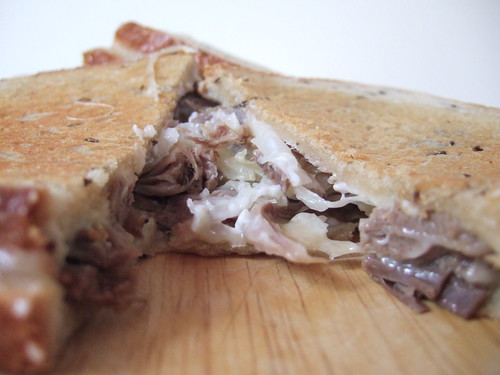
What to do with still the remaining homemade corned beef in the fridge? Reuben sandwiches, of course! They were actually the reason why I made my own corned beef in the first place because I’ve been curious about how they are made ever since I tasted a really good version from Gettin’ Hungry, themorning deli on Hudson Street with the giant wooden lion inside. The origin of the Reuben sandwich is still being disputed, but it is essentially a grilled sandwich made with corned beef, Swiss cheese, sauerkraut and Russian dressing on rye bread.

I also don’t eat a lot of sandwiches besides the Vietnamese kind, but when I make them at home, I like them to be elaborate. But there are two things I don’t stock in the kitchen: ketchup and mayonnaise. It was snowing outside, but I made the trip to the grocery store anyway to pick them up. In the same aisle, I discovered horseradish cream sauce from Kraft. It looked like mayonnaise, but I guessed correctly, a touch of dried horseradish was included in the mix. Reuben sandwiches require a Russian dressing that looks like Thousand Island, but I figure, I can get away with this ready-made type especially after already spending five hours making my own corned beef the other day.

Combine the following to make Russian dressing if you don’t want to use ready-made horseradish cream sauce:
1/3 cup mayonnaise
1 1/2 tbsp ketchup
1 1/2 tsp prepared horseradish
1/2 tsp Worcestershire sauce
salt, pepper

Ingredients:
corned beef, shredded; thinly-sliced if not homemade
Swiss cheese slices
sauerkraut, excess water squeezed off using paper towels
8 slices rye bread
horseradish cream sauce
half a stick unsalted butter, softened in microwave for 15 seconds

1. Spread one side of each bread slice evenly with some butter. With buttered sides down, spread horseradish cream on four slices and with some corned beef, sauerkraut and equal portions of cheese. Top with remaining slices, buttered side up.
2. Place large skillet over high heat and melt a small knob of butter. Reduce heat to low and add sandwiches. Using an iron grill press, put on top of the sandwiches and press. Cook until browned and crisp on both sides, about 2 minutes a side. Transfer to a platter lined with parchment paper. Cut in half and serve.

Related post/s:
Homemade corned beef is so much better
Pressed taleggio cheese sandwich
Turkey bacon avocado portobello sandwich

Homemade Corned Beef with Cabbage and Potatoes

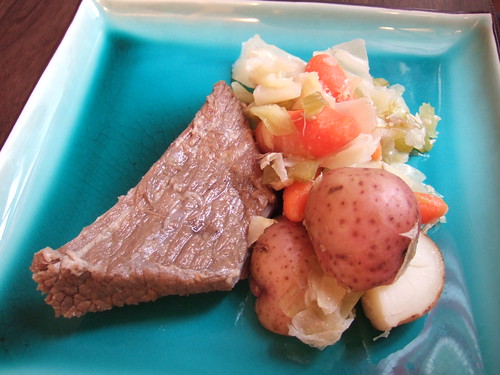
It’s feeling a lot like the holidays outside and all I’ve been drinking, besides wine, is Guinness draft. And what else matches with a full-bodied glass of Guinness? Corned beef, cabbage and potatoes! (Besides oysters, of course.) This recipe involves a lot of planning. In my case, I made sure I went straight home after work on the 10th day so that the brisket wasn’t going to sit in brine another day. But once you start cooking, it’s really a no-brainer. I set the timer of the stove an hour at a time once I started to slow-cook the brisket to remind me to check. After three hours, the vegetables took another half an hour.

If you can’t find ready-made pickling spices, you can easily combine the following and make your own:
2 cinnamon sticks, broken
1 tbsp mustard seeds
2 tsps black peppercorns
1 tsp whole cloves
1 tsp whole allspice
1 tsp powder ginger
4 dried bay leaves

Ingredients:
1 fresh beef brisket, about 4 pounds
1 small head of cabbage, cut in small wedges
6 medium red potatoes, halved
3 ribs celery, cut in 2-inch pieces
2 cups of baby carrots
2 large onions, cut in wedges
5 cloves garlic, minced
2 tbsps whole grain mustard
3 tablespoons pickling spices
1 1/2 cups kosher salt
1 cup granulated sugar

1. Using a large Dutch oven, make the corned beef brine. Combine about 10 cups of water, salt, sugar, mustard, spices, and 3 cloves minced garlic. Bring to a boil over high heat. Remove from heat and set aside to cool. When cool enough, add the brisket. If necessary, add more cold water to cover the beef. Using a heavy bowl, weigh the brisket down so it will stay submerged in the water. Cover the pan and refrigerate for up to 10 days in the refrigerator.
2. When ready to cook, discard the brine and rinse the brisket well with cold water. Return to the Dutch oven and cover with cold water. Add the celery, onions and the remaining garlic. Bring to a boil and skim off impurities. Reduce heat to medium-low, cover and simmer for 3 hours.
3. Add the potatoes, carrots and cabbage. Continue to cook in medium-low heat until vegetables are tender, about 30 minutes more.
4. To serve, remove corned beef from liquid and slice in small chunks. Add cabbage, potatoes and carrots on the side. Drizzle some of the liquid on top of the corned beef and all over vegetables.

Related post/s:
Cold weather also reminds me of oxtails and wine

Cilantro-Stuffed Red Snapper Fillet with Asian Salsa

I remember the day like it was yesterday. I was waiting for my coffee inside Starbucks on Crosby and I noticed this man next to me. He looked very familiar. I didn’t realize I was staring at him. I looked away and left with my coffee. I knew he was a chef, but my mind was drawing a blank. A few minutes later, while in the middle of starting my morning, his name came to me: Jean-Georges Vongerichten. I was staring at Jean-Georges! In Starbucks! That was almost five years ago.

I was reminded of that day when the new Jean-Georges cookbook arrived in the mail last week. Like with any new cookbooks, I saved some quiet time at home to leaf through the pages and look at the beautiful photographs of food. After perusing, I started over, this time armed with small Post-Its to mark the dishes that I would like to make someday.

Asian Flavors of Jean-Georges is a culmination of what the chef learned from the year he was sent to Bangkok to be the chef de cuisine at Louis Outhier’s restaurant in the Oriental Hotel to his own kitchen adventures in opening Vong, 66 and Spice Market in New York City. I’ve never been to Bangkok, but some of the recipes easily reminded me of summers in the Philippines with plenty of sweet and sour flavors in our food. There were green mangoes dipped in fish sauce and shrimp paste; grilled fish drizzled with ginger and chiles; pieces of deep-fried pork belly tossed in vinegar and shallots. I could go on, but my mouth is already watering with the memories of enjoying a meal while wiping the sweat off our brows. It’s the taste that David Chang and his Momofuku empire have been presenting the last year to the many New Yorkers who are now asking themselves, how come I’ve never tasted this flavor before? It’s always been around: in Chinatown and in Flushing, and at Vong back in 1997. It may have just taken a funky Japanese name for people to realize that they’ve been eating and tasting the same flavor all along.

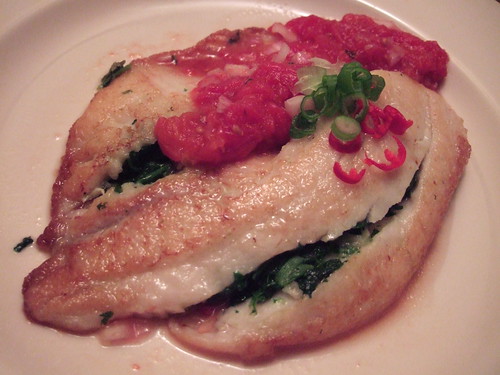
One recipe that stood out was Jean-Georges’ “Barbecued” Red Snapper, Thai Style on page 128. I wanted to eat fish after a quick trip to Asia Food Market on Mulberry. I bought the fresh herbs I needed and my pantry is already stocked with the usual Asian condiments, so this recipe was easy to re-create. All I really needed was fish fillets from the market.

The original recipe suggests using a food processor to make the cilantro mixture and the tomato salsa. I didn’t because I like chunks in my food–the texture actually made this dish less intimidating and look more homemade.

Ingredients:
3 red snapper fillets
1 bunch of cilantro, thoroughly washed
1 small can of crushed tomatoes
1 tbsp brown sugar
1 shallot, chopped
4 garlic cloves, minced
Thai fish sauce, or nam pla
fresh lime juice
1 tbsp sherry vinegar
1 stalk of scallion, chopped
1 fresh Thai chile, seeded, chopped
grape seed oil

1. Prepare a bowl with water and ice cubes. Boil some water in a pot, then add cilantro. After less than a minute, drain and transfer to the ice bath. Squeeze water off the cilantro with your hands and roughly chop. In a bowl, toss cilantro with half of the garlic and a jigger of fish sauce.
2. Stuff fish fillets with cilantro mixture by making small slits in the fish using a sharp knife. Put on a plate, cover and keep in the fridge until ready to cook.
3. In another large bowl, make tomato salsa. Combine tomatoes, sugar, shallots, lime juice, vinegar and a couple more jiggers of the fish sauce with the remaining garlic. Add more fish sauce to adjust taste. It should be sweet and sour with just the right amount of saltiness. Set aside.
4. When ready to cook the fish, heat some oil in a large skillet. Fry the cilantro-stuffed fillets on one side for about 4 minutes. Using a heat-resistant spatula, gently flip and cook the other side for another 4 minutes. Remove to a serving plate. Serve with tomato salsa and sprinkle with scallions and chile.

Related post/s:
Get your own copy of Asian Flavors of Jean-Georges
Marinated cucumber with orange zest is a good match

Marinated Cucumber with Orange Zest

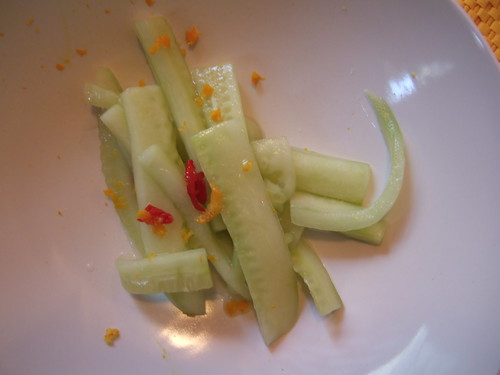
I’ve changed the name of this dish from Jean-Georges’ original recipe, Cucumber Marinated with Orange Peel, because I only used the orange zest to sprinkle on the dish before serving. What I kept was the marinating juice, Chinese-style. This was a great appetizer to another Jean-Georges recipe using fish.

Ingredients:
1 cucumber, peeled, cut into strips
1 tbsp sugar
3 tbsp rice vinegar
1 tsp sesame oil
1 fresh Thai chile
orange zest
2 tsps salt

1. In a bowl, toss cucumber, salt and sugar, and let stand for 20 minutes.
2. Toss in the vinegar, sesame oil and rice vinegar, and marinate for another 30 minutes.
3. Sprinkle with orange zest before serving.

Related post/s:
Get your own copy of Asian Flavors of Jean-Georges
This was a great match with fish, Jean-Georges style