• I live across the hall from a Pakistani family I’ve grown to know since I moved in the building 3 years ago. I know the wife stays at home because I always see some piece of furniture keeping their main door open whenever I leave or return home. It’s to keep the smell from staying in, she told me, when I peeked inside one time and called her name. I told her that I knew the purpose because I can smell the fragrant spices from the elevators.

    When she was done cooking, I heard a knock on my door. It was her with a bowl of homemade chicken biryani for me. Ever since that first time, I’ve also been sharing some of the meals I’ve cooked and the goods I’ve baked with her family. I’d be stupid to break a Pakistani home-cooking connection.

    Note that this is not her recipe. I found it online and made my own changes according to what I have in my pantry. I used to make my own ginger-garlic paste and freeze them in sheets, but ever since the Microplane Premium Classic zester came into my life, I just finely grate fresh ginger and garlic now and get the same result I would by using a food processor but without all the parts to wash afterwards. And with the spatula from GIR, or Gear That Gets It Right, I can easily scrape the paste from a bowl and spread it evenly on the chicken pieces.

    Ingredients:
    1 tbsp cumin seeds, grounded
    1 tbsp turmeric powder
    1 tbsp garam masala
    1 tbsp coriander seeds, grounded
    6 cardamom seeds, shelled
    salt
    1/2 cup tomato purée
    a large scoop plain yogurt
    a small knob of ginger, peeled, grated
    5 cloves of garlic, finely chopped or grated
    oil
    1 red onion, sliced
    2 boneless chicken breasts, chopped
    2 cups of basmati rice
    a pinch of saffron
    1/4 cup of milk
    chicken broth
    a handful of cilantro, roughly chopped

    1. On a small frying pan, toast the cumin, turmeric, garam masala, coriander, half of the cardamom seeds and salt until they start to get fragrant. Be careful not to burn. Remove from heat and set aside to cool.
    2. In a bowl, mix toasted spices with the tomato purée, yogurt, ginger and garlic with a spatula. Marinate the chicken with this mixture and keep aside for a few minutes, or up to 3 hours.
    3. When ready to cook, heat oil in a pan. Fry the onions until golden brown. Add the marinated chicken and cook for 10 minutes.
    4. In the meantime, set your rice cooker to cook the rice. Soak saffron threads in the milk while cooking the rice. When most of the water from the rice cooker has subsided, pour in the saffron-milk mixture and add the remaining cardamom seeds. Using the same spatula, mix everything when cooking is done.
    5. Scoop the cooked rice onto the frying pan with the chicken. Mix well. If your biryani gets dry and thick, add some chicken broth at different intervals of cooking. Garnish with cilantro and serve hot.

    Recommended tool/s:
    Microplane Premium Classic Zester
    The Spatula by GIR (Gear that Gets it Right)

  • To the people of Mesoamerica, corn was a very sacred plant and this pre-Columbian Mexican soup was only consumed during special occasions. Ancient Mexicans believed that the combination of corn and meat was a religious communion of their sacred plant and humans: prisoners were killed in religious sacrifices and served as meat for the whole community. Today, we thankfully settle for pork.

    To become hominy, corn kernels are dried and soaked in an alkaline solution and goes through several chemical changes that turns them into nixtamal. (The ground version is made into dough for tortillas, tamales and arepas.) The word hominy is just a Powhatan word for maize.

    I love this soup for its heartiness, and yet its lime-cilantro-flavored broth is thin enough to be considered light. Feel free to skip the potatoes here if you want the hominy to be the star of the show.

    Ingredients:
    2 pounds pork butt, cut into 1 1/2-inch cubes
    1 head of garlic, halved
    1 onion, quartered
    a few pieces of small potatoes, rinsed thoroughly
    1 28-ounce cans hominy, drained and rinsed
    2 tbsps dried oregano
    cayenne pepper
    salt, pepper
    a few handfuls of cilantro, chopped
    lime wedges

    1. In a large soup pot, bring the pork, garlic, onion and about 8 cups of water to a boil. Skim off the impurities that float to the top. Lower the fire down to a simmer. Cover and cook until the pork is very tender, about 2 hours.
    2. Discard the garlic and onion. Stir in the potatoes, hominy, oregano and cayenne and season the broth with salt and pepper. Bring to a simmer and cook until potatoes are tender.
    3. Turn off the heat and stir in some of the cilantro. Serve and ladle the pozole into bowls with the remaining cilantro and lime wedges at the table.

  • As a Harlem resident for the last 10 years, I’m all for new bars and restaurants in the area. The neighborhood has definitely changed. You see more new faces walking around, cafés and boutiques, but its growth is still slower than Brooklyn’s.

    Maison Harlem tries hard. A well-dressed gentleman–and may I say good-looking too–approached our table to ask how the food was. He told us that when he opened the place his main priority was good food, and now he’s working on improving the service. His next to-do is to refine the bar which is much needed because when we were there, they didn’t have a cocktail list and could not make me a Dark and Stormy because they didn’t have ginger beer.

    Notables:
    1. Space – The interior is beautiful and you can’t tell that from its on location on St. Nicholas Avenue. May I request for coat and purse hooks under the bar and by the booths though?
    2. Crowd – It was nice to see more Harlem adults out for dinner. It was a mixed crowd on a Saturday night. Harlem is changing indeed.

    Watch out:
    1. Food – While the food wasn’t bad–my poached egg on my frisée de lardon came out perfectly and my hanger steak was medium-rare–it lacked oomph. We weren’t extremely satisfied after eating as if something was amiss. My steak could have used some salt and the truffled mac and cheese could have been more hearty and cheesier. Props for having Roquefort cheese as an option with the burger; I haven’t seen that cheese on any uptown menus, I swear.
    2. Bar – The drinks are on the strong side until they create and refine their signature cocktails.
    3. Service – Waiting on 5 ladies is difficult enough and I think we challenged our waiter with our decibel level and flustered him with our endless questions. But we kept him on his toes and he passed our test. I hope they keep it up when it gets more attention.

  • Vietnamese grilled pork, or thit heo nuong (insert Vietnamese characters in there), remains to be one of my favorite Vietnamese dishes. I still remember when my parents and I would eat in Chinatown’s Nha Trang restaurant every week. The dish did not cost much and it always came with a lot of rice; to my family, there was no better deal than that. Even my brother, who now lives in Singapore, makes sure that Nha Trang is still one of his stops when he visits us here in the States.

    Even though I work a few minutes’ walk from Chinatown these days, I find myself too lazy to shop and eat there unless a specific craving knocks on the door. I recently saw some beautiful pork chops at Fairway supermarket in Harlem and thought about this dish as soon as I picked up one stalk of lemongrass from their produce section. Say what you will about being uptown, but I’m grateful I can find fresh lemongrass when I need it.

    Lucky you if you have access to an open grill. I used my frying pan here but also my iron grill press to flatten the meat and cook them faster on each side. The caramelized marinade on the pan is great as dressing if you have a bunch of mixed greens to serve as a side–just wipe the bottom of the pan with the leaves!

    Ingredients:
    1 stalk lemongrass, chopped in 3 pieces
    4 cloves of garlic, minced
    3 tbsps honey
    2 tbsps fish sauce
    4 pieces bone-in pork chops
    juice from 1 lime
    pepper
    oil

    For the dipping sauce:
    fish sauce
    white vinegar
    1 small knob of carrot, finely grated

    1. Whisk lemongrass, garlic, honey and nam pla in large bowl. Add lime juice and pepper. Place pork in the bowl and turn to coat. Let stand and marinate, or refrigerate for up to 24 hours.
    2. When ready to cook, heat a frying pan with some oil. Add marinated pork chops and fry, turning over to cook the other side every 3 minutes to avoid burning the marinade. Use an iron grill press if handy to cook the meat faster. Remove to a chopping block and let rest.
    3. Make the dipping sauce. Combine a few jiggers of fish sauce and vinegar in a small bowl. Add the carrots and mix well. Serve with the pork and some white rice.

  • 61 Delancey Street between Allen and Eldrige
    $30 each for 3 people, with tip
    212/925.5220
    ♥ ♥

    The temperature dropped and all we wanted was soup. Lisa and I would have gone to one of our usual haunts, but when Christian posted a photo of his soba bowl on Instagram over the weekend, I marked Cocoron as a place to think about when I’m in the area and in the mood for hot soba.

    Best:
    1. Pork kimchi soba – Very hearty and filling
    2. Bathroom – They made a very small Tokyo-style space work!
    3. Everyone behind the counter – It’s tight in there, but they cooked and served happily

    Off:
    1. Service – Our waitress seemed like she had a long day. She asked if we were ready to order as soon as we sat down and took off our coats. Oh? Give us 5 minutes, maybe? Girl, wipe that grouch off your face!

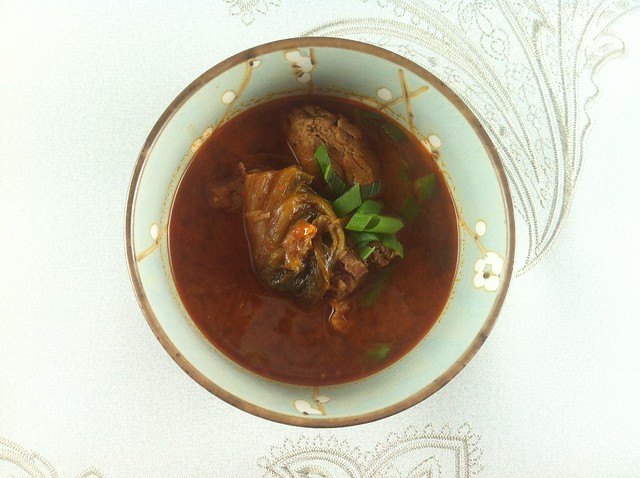
  • Chigae, or more appropriately jjigae, is a Korean stew made of a variety of vegetables and meat cooked in a broth seasoned with kochujang, or red chili paste. It’s more of a soup to me, really, but I’m not about to correct whatever the Koreans say.

    Recipes online ask for pork tenderloin, but I find that a waste of perfectly good meat when all you’re doing to it is cooking it for hours. I think pork shoulder is more economical here so long as you have that big hunk of meat cut up in manageable pieces.

    Ingredients:
    1/2 pork tenderloin, sliced crosswise into 1/4-inch thick pieces
    salt
    pepper
    sesame oil
    scallions, chopped, whites and greens separated
    3 garlic cloves, minced
    2 tbsps kochujang
    chili powder
    1/2 lb extra firm tofu, sliced into 1/2-inch cubes
    2 cups cabbage-based kimchi, with liquid
    1 tbsp rice vinegar
    1 tbsp soy sauce
    steamed white rice

    1. Season the pork with salt and the pepper and set aside. In a large pot set over medium-high heat, add the sesame oil. Once it starts to get hot, add the pork. Cook until the pork is browned on all sides. Transfer to a plate and set aside.
    2. In the same pot, add the sliced scallion whites and cook until soft. Stir in the garlic until browned and then stir in the kochujang. Add the kimchi, rice vinegar, soy sauce and enough water to make sure everything is half submerged. Season with salt and bring to a simmer for about 20 minutes.
    3. Add the tofu and return the pork to the pot along with any accumulated juices and simmer for 3 more minutes just to cook the tofu and reheat the pork. Serve the soup in bowls sprinkled with the sliced green scallions and steamed white rice.

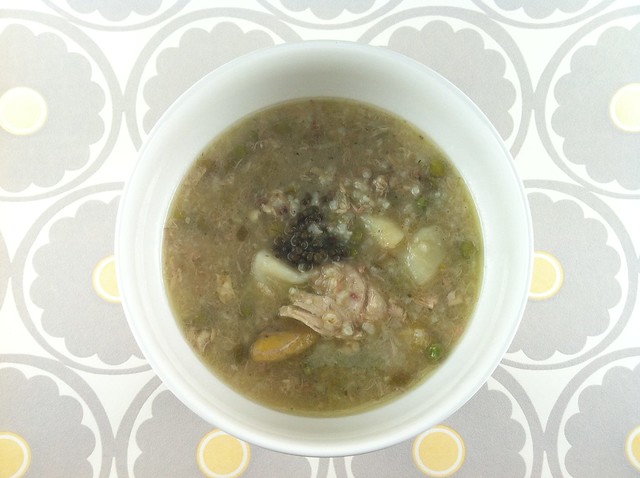
  • When I traveled to Colombia a few years ago, I learned that it was soup country. Everywhere we ate, there was always ajiaco or sancocho on the menu, the two soups that easily became my favorites. When I first made my own version of ajiaco, I mistakenly added plantains because I remembered liking them from the sancocho. My version was so comforting then that I used some again when I made it this weekend post-Hurricane Sandy.

    I added arborio rice here as well because I wanted an everything-in-it kind of soup. Feel free to skip it if you don’t want your soup too thick. When I heated up leftovers, I simply scooped a glob of it in a bowl, poured some packaged chicken broth with it and nuked it for about 3 minutes. They key is the capers–they make your second, or third, batch fresh.

    Ingredients:
    chicken carcass to make chicken broth
    salt
    1 bunch scallions, roughly chopped
    3 garlic cloves, minced
    1 bunch cilantro, tied in kitchen twine
    3 potatoes, peeled, chopped
    1 large plantain, peeled, chopped
    2 pieces boneless chicken breasts, chopped
    1/2 cup of arborio rice
    capers

    1. In a large pot, place the chicken carcass with about 12 cups of salted water to make broth. Let boil until the impurities float to the top. Skim them off and let the broth simmer for up to an hour to reduce. Strain the broth to another large container to separate and remove the disintegrated chicken carcass.
    2. Return the filtered broth to the pot. Add scallions, garlic, twined cilantro, and potatoes and simmer for another 30 minutes, or until potatoes are tender. Discard the cilantro. Add the plantains, chicken, and rice until cooked through.
    3. Ladle soup and distribute the meaty stuff in bowls to serve. Top with a teaspoon of capers.

  • I tried this four-chile chili over the weekend when almost everyone I know was either watching sports on TV or playing poker online because of the blustery weather outside. This dish was the right one to coddle and sit on the couch with under a soft throw with the TV on. My sports fan guest loved it so much, he asked to pack the leftovers for lunch the next day.

    I already had dried ancho chile at home, but feel free to use the powdered kind. If you still find bigger chunks of chiles and tomatoes during the hour that you’re simmering, take the opportunity to press them against the inside of the pot with the back of a wooden spoon to make sure that they are incorporated well. Feel free to add some more beef stock as well to make sure your chili is not clumpy and dry.

    If you double up this recipe, you can freeze them in small batches for up to 2 months and survive the winter.

    Ingredients:
    olive oil
    2 lbs sirloin or chuck, grounded
    salt, pepper
    1 white onion, coarsely chopped
    4 garlic cloves, minced
    1 large jalapeƱo chiles, seeded, minced
    1 dried ancho chile, coarsely chopped
    1 tbsp paprika
    half a small can of tomato paste
    1 28-ounce can peeled Italian tomatoes, coarsely chopped and juices reserved
    1 32-oz beef stock or broth
    1 19-ounce can kidney beans, drained and rinsed
    1 chipotle chiles in adobo sauce, seeded and minced
    1 tbsp dried oregano
    a handful cilantro, finely chopped
    sour cream

    1. Heat the olive oil in a large Dutch oven. Add the ground beef and season with salt and pepper. Stir and cook over moderately high heat until brown. Transfer to a plate and repeat with the remaining meat.
    2. Pour off all but a scant of the fat from the pot. Add the onion, garlic and jalapeños and cook over medium-low heat until softened. Add the ancho pepper and paprika and cook over low heat until fragrant. Add the tomato paste and cook, stirring, until the paste starts to brown. Stir in the tomatoes and their juices, the beef stock and the cooked beef plus any accumulated juices. Bring to a simmer over moderately high heat. Reduce the heat to low and simmer for 1 hour, stirring occasionally.
    3. Add the kidney beans, chipotles and oregano and simmer for 30 minutes more. Serve the chili in bowls, topped with a sprinkling of cilantro. Pass the sour cream at the table.

  • This recipe came from Sam Sifton in the New York Times. It’s almost the perfect recipe for such an affordable piece of lamb. Even at Whole Foods, 2 racks at about 3 pounds cost $12, probably the least expensive big-ticket item I’ve ever bought there.

    As usual, I adjusted the recipe to work for me. I roasted the lamb for 2 hours without checking its internal temperature–the racks were thin enough to gauge by eye if they were cooked. I prodded the meat off the rib bones with a fork. The meat didn’t fall apart but it was quite soft and tasty that I called it done. I left the lamb in the roasting pan with all its juice tented with the foil to let it cool overnight without making it sweat. I only put it back in the fridge when I woke up 7 hours later.

    It took another 14 hours before I seared them to serve. I sliced the ribs in half to fit a large frying pan and browned them for about 3 minutes on each side. I skipped the scallion accompaniment from the original recipe and instead served it with a simple mixed greens salad I collected from my garden, but the yogurt sauce was quite good with it.

    Ingredients:
    For the lamb:
    1 head garlic, peeled
    2 tbsps salt
    1/4 cup olive oil
    a few sprigs of fresh rosemary, finely chopped
    a handful of fresh mint, finely chopped
    black pepper
    lamb breast, about 3 lbs

    For the yogurt sauce:
    1 cup thick Greek-style yogurt
    2 tbsps olive oil
    2 tbsps lemon juice
    4 tsps lemon zest
    2 tbsps fresh mint, finely chopped
    smoked paprika
    salt, pepper

    1. Preheat oven to 350º. Using a mortar and pestle, mash the garlic and salt into a paste. Transfer to a bowl with a spatula. Gradually mix in the olive oil. Stir in the herbs and pepper.
    2. Fit the lamb into an aluminum foil-lined roasting pan big enough to contain the racks. Smear them thoroughly with the paste, and place ribs-side down in the pan. Cover tightly with foil, and roast for no more than 2.5 hours. Meat should be wobbly but not falling apart. Allow to cool uncovered, then cover again and rest in the refrigerator overnight.
    3. The next day, when ready to serve, place a large skillet over medium-high heat. Cut the racks in half to make them fit in the pan at least two at a time. Sear until crispy on both sides, approximately 4 to 6 minutes.
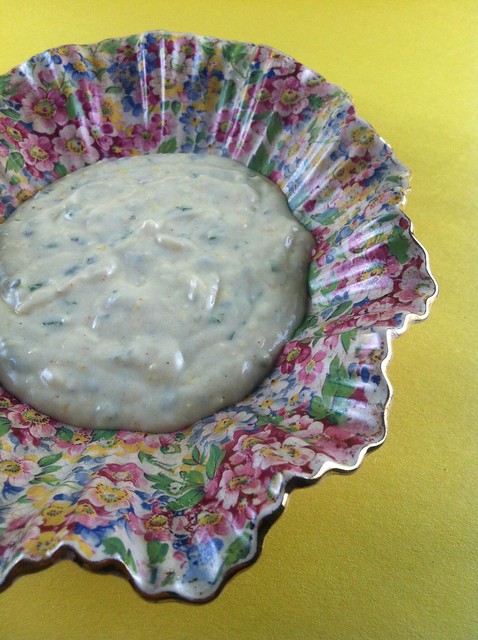
    4. In the meantime, prepare the yogurt sauce. Whisk 1 tbsp of olive oil into the yogurt. Then the lemon juice and the zest. Stir in mint and salt. Before serving, drizzle sauce with remaining tablespoon of olive oil and sprinkle with pepper and a pinch of paprika to taste. Whisk one last time before serving in a separate bowl with the lamb.

  • 451 Carroll Street, Gowanus Canal, Brooklyn
    $45 each for 3 people, with 2 beers, with tip
    718/852.7800
    ♥ ♥

    We needed to eat before the We Were Promised Jetpacks concert at the Bell House but Littleneck was closed and the first thing that came up on my phone that did not sound like a sticky-floor pub was Monte’s. Walking up to the restaurant, I recognized its outdoor garden the first time I visited Littleneck during the day. It was quite empty and I didn’t know if it was because it was a Tuesday night, September 11th, or if it was the Gowanus Canal neighborhood.

    Notable:
    1. Oysters – The Blue Point oysters were a dollar apiece on a Tuesday night
    2. Pasta – The pappardelle pasta almost made me wish it was autumn already. Almost.
    3. Backyard – I’m sure it gets busier some other days, but it was quite nice to be sitting outdoors on a quiet evening.
    4. Service – Even though the place was empty, our waiter was always around to refill our water glasses and make sure we were doing okay.

    Odd:
    1. Owner – I almost didn’t notice that we were charged $28 for a dozen of the dollar oysters. When I brought it up to our waiter, he walked up to the older gentleman sitting at the bar, who I assumed is the owner, to let him know. We overheard him say in return, Well, did they notice? I bet he wasn’t going to get off his bar stool to revise our check if we didn’t notice the overcharge.

  • 3183 Broadway between Tiemann Place and 125th Street
    $20 each for 4 people, with drinks, with tip
    646/559.2862
    ♥ ♥

    Ramen in Harlem? This is seriously the best thing that has happened in my neighborhood in the 7+ years I’ve lived there.

    Notable:
    1. Happy hour $10 Sapporo pitchers after 10pm when I visited on a Monday night

    Need I say more? I’ll be making more trips to Jin Ramen this winter for sure.

  • 41-16 Queens Boulevard, Sunnyside, Queens
    $40 each for 4 people, with drinks, with tip
    718/433.3702
    ♥ ♥

    Taking advantage of Queens while one of my favorite eating partners is in town from Chicago, we visited Salt & Fat with her brother to check out the scene in what is a very unfamiliar part of the city to me.

    Tastiest:
    1. Yellowtail tartare with yuzu gel and cassava chips – We got two orders of this because the combination of yuzu and tartare was very good.
    2. Pork belly buns – Comparable to the trendiest of them all
    3. Fried chicken – Pretty good and happily-salted fried chicken; I didn’t even need the herbed ranch that came with it. The spattering of pickled cubed daikon was a nice touch.

    Pretty good:
    1. Oxtail terrine – A little salty for me, but it didn’t seem to be a terrine
    2. Pork trotters – Crispy and perfect with the slow-cooked egg
    3. Truffled beet salad with yuzu crème fraîche – Simple

    Notable:
    1. Prices – Go now before the prices hike for visiting Brooklynites (as if they will ever leave Brooklyn!)

    Weird:
    1. Ice creams for dessert – A-plus for effort on the miso-apple, jalapeño-white peach and Thai iced tea flavors, but I felt like they lacked ooomph.
    2. Service – Though pretty fast, our waitress seemed unhappy to be there. We had to ask for our pig trotters twice and we wondered if she was distracted.
    3. The bathroom – It looked like Sanibel, Florida in there