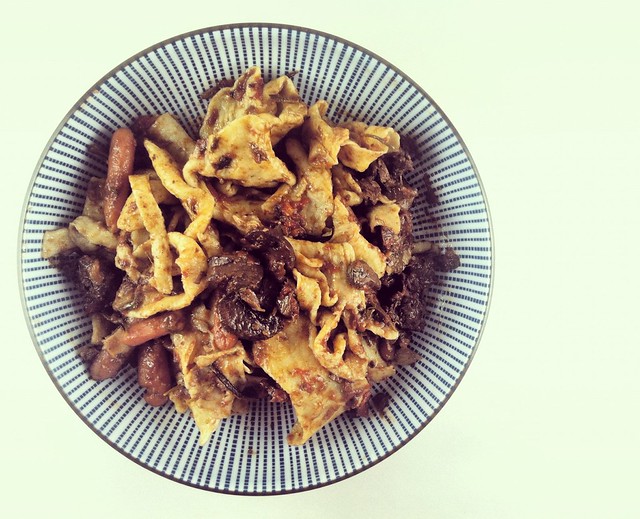
• I know a slow-cooked beef shin stew is not really the way to welcome the official start of summer, but the dish lasted me a few days and rescued me from cooking during the past rainy (and lazy) week. I publish a lot of braised recipes here, but I opted to slow-cook this dish on the stovetop. I didn’t plan to hand-roll the pasta with it, but the timing just worked out perfectly.

    When rolling out the dough, the original recipe called to divide it into 2 balls (Step #5 below). I ignored that note (rebel!) and had a gigantic piece to work with. If you have a large work space, keeping it in one large ball works quite well; I had to maneuver around me to continue rolling the dough out into a thin sheet. The thing with homemade pasta is that you need practice. This was my first time making papperdelle and they came out imperfectly, but I think their unequal shape made them more rustic. Your old-school Italian grandmother may disapprove, but my tummy was all for it.

    Ingredients:
    2 lbs of boneless beef shins, chopped into 2-inch pieces
    flour
    oil
    1 large red onion, roughly chopped
    1 small bag of mini-carrots
    3 sticks of celery, roughly chopped
    a few sprigs of fresh rosemary
    2 bay leaves
    4 cloves of garlic, unpeeled
    1 cinnamon stick
    a small handful of dried porcini
    1 can of peeled plum tomatoes
    1 bottle of red wine
    salt and pepper

    For the pappardelle pasta:
    1 3/4 cups flour, plus more for dusting
    1 cup semolina flour, plus more for dusting
    6 large eggs at room temperature
    4 teaspoons olive oil
    salt

    1. Prepare the cubed beef shins. Toss the beef pieces in a bowl with a little bit of flour and shake off excess. Set aside.
    2. In a large Dutch oven, heat a splash of olive oil and sauté the onions. Add all the vegetables and the herbs with the garlic, cinnamon sticks and the mushrooms and cook for 5 minutes.
    3. Add the floured beef and stir everything together. Add the tomatoes, the wine and season with salt and pepper. Slowly bring to a boil and then lower the heat to a simmer and cook for at least 2 hours, or until the beef falls apart with a gentle prod of a fork. Remove the cinnamon sticks, the rosemary sprigs and the bay leaves before serving.

    Making the pasta:
    4. While the beef is cooking, make the dough for the pasta. Sift both flours together on your work surface and make a well in the center. Place the eggs, olive oil and a pinch of salt in a bowl, then pour into the well. Using a fork, break up the eggs, then slowly mix the wet ingredients into the flour mixture until combined.
    5. Knead by hand. Gather the dough into 1 large ball. Flour your work surface. To knead each piece, push the dough away from you with the heel of your hand and fold the dough over itself. Continue pushing, folding and turning until the dough is smooth and elastic, 4 to 5 minutes, on all sides of the dough.
    6. Let the dough rest. Flatten slightly, wrap in Saran wrap and refrigerate for at least 30 minutes or overnight.
    7. Roll out the dough when ready. Flour your work surface again. Place the dough and dust with more flour. Starting in the middle, push away from you with a rolling pin and continue rolling the dough into a sheet until you can see your fingers through the bottom. Feel free to dust with more flour as necessary. Let dry about 10 minutes.
    8. Cut the pappardelle: Dust the top of the sheet of dough with flour and loosely roll it into a cylinder. Using a sharp knife, cut into 3/4-inch-wide slices. Dust with semolina and gently toss to separate. Place on a sheet pan and cover with a tea towel until ready to cook, or freeze in freezer bags for up to 2 months.
    9. To serve, boil some salted water in a large pot and add the freshly-made pasta. Cook for no more than 15 minutes or until al dente. Drain and put the cooked pasta in a serving dish and top with the slow-cooked beef shin stew.

  • 109 A North 3rd Street between Berry and Wythe in Williamsburg, Brooklyn
    $86 each for 3 people, with 3 drinks apiece, without tip
    718/782.2602
    ♥ ♥ ♥

    The disclaimer here is that I made a small investment on Parish Hall to finally fulfill one of my dreams of being a small part of the restaurant business. I also wanted to support George Weld, someone I’ve known since the dot-com days when we used to pretend we were actually working. But the fact of the matter is that I will still give this restaurant a good review even if I did not know George and even if I wasn’t a fan of his first venture, Egg.

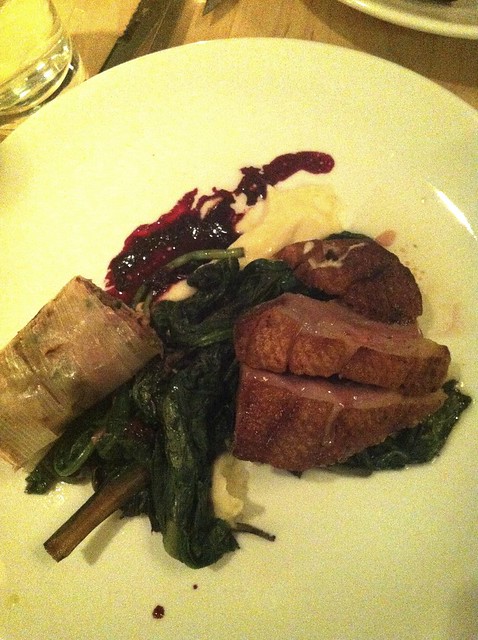
    If I can eat the duck breast everyday with a side of their “new field greens”, I’d be totally content. I’ve had the duck twice the last three times I visited (fourth if you count them hosting the Gastronauts’ 6th anniversary), and both times it was cooked impeccably. I was just bummed that I had to share it with my friends.

    The salad’s composition depends on what greens they have in the kitchen that day, taking the concept of farm-to-table to a whole new level since George actually owns Goatfell Farm which provides most of their vegetables. They’ve had dandelion, arugula, mizuna, chickweed, watercress and all sorts of lettuces, and all of them tasted fresh, earthy and healthy. During one visit, nasturtium was on my plate; it was peppery and tasted so much like a… green–there’s really no other way to describe its rawness.

    Equally delicious is the grilled rack of lamb and roasted shoulder and equally surprising to see on the plate was the flax and nettle pesto that came with it, not so much of a sauce but a dollop so you can lather as little or as much as you want. (But don’t worry, no stings included!) The homey dumpling also changes depending on what ingredients are on hand. I loved the version with asparagus, pears–and what again?–spinach cream and fennel pollen. A most recent addition was trout in a clean broth with some fiddleheads and the perfect cubes of apples. The dishes seem simple, but simple is never easy to implement in the kitchen. I think a chef’s skills are more challenged when he or she can make something so complicated look so simple to us mortals.

    If you walk past the restaurant or go to their Web site, you’ll read a variety of the produce they present: beet, maple, apple-sorrel sauces, purée of parsnips, green garlic aioli, nettle yogurt, kohlrabi and sunchokes chips. I would like to think I’ve had my share of eating in some of America’s best restaurants, but nowhere else have I been perplexed about ingredients that are so straightforwardly named. Thomas Keller’s menus always come with quotation marks to describe their food, but with Parish Hall you get the list of ingredients and still have to ask the servers about them.

    George has described their cooking as “the truth of the Northeast”–I suppose I didn’t know anything about what this part of the country can offer. Parish Hall and chef Evan Hanczor shows it can offer so much.

    Some photos from my last few visits:

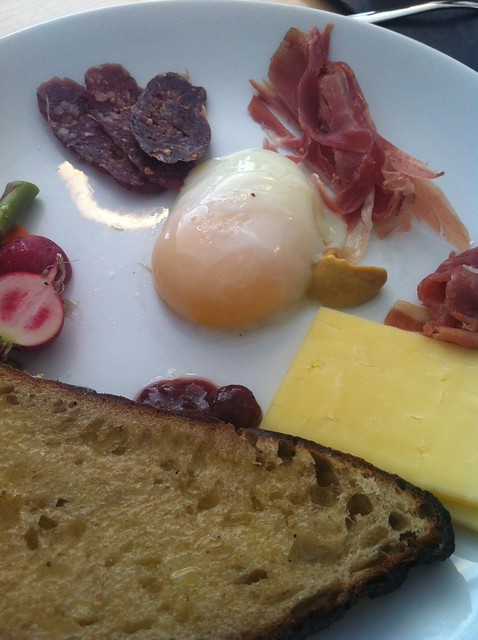
    A simple Alpine breakfast named after the highest peak in the Catskills with a slow-cooked egg, some charcuterie, mustard and jam. I like the touch of fresh radishes on the plate to cut through the richness.

    Water buffalo pastrami made especially for the Gastronauts’ 6th anniversary. You won’t see this on the regular menu though.

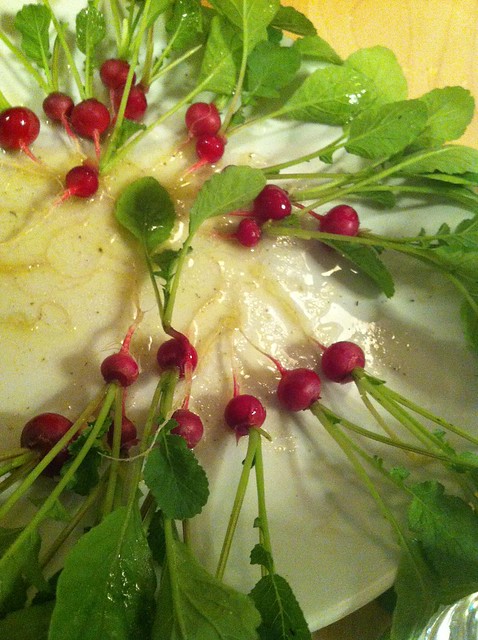
    A plate of beautiful radishes:

    Related post/s:
    Parish Hall Web site
    Goatfell Farm
    George Weld on Fast Company‘s Co.Exist

  • 346 West 52nd Street between Eighth and Ninth Avenues
    212/586.2880
    $66 for my share with 2 others, with drinks, with tip
    ♥ ♥

    Tastiest:
    1. Spicy whelk salad with buckwheat noodles – just enough saltiness and spiciness. It’s refreshing to see whelks on the menu.
    2. Poached sablefish with spicy daikon – reminded me of a wonderful dish I had at Tojo’s in Vancouver, only not as much finesse
    3. Tofu with ginger-scallion dressing – I couldn’t tell what kind of tofu it was because it was stringy. I wondered if it was the fried batter that made it so because it had the texture of mozzarella cheese.
    4. Makgeolli, or Korean rice beer – They called it rice beer, but I read that it’s mostly referred to as rice wine. It’s quite thin but milky, and the sourness and sweetness are both very subtle.

    Most boring:
    1. Kimchi-bacon-chorizo “paella” with fried egg – I think they called it paella because it was on a sizzling plate, but it reminded me of a dish you make with your leftovers topped with a fried egg. It’s good–just not worth $16.

    Overrated:
    1. Bulgogi sliders – Even Ruth Reichl wrote a poem about them, but it’s still the same bulgogi flavor you get outside of the Los Angeles area: a little too sweet and lazy

    Service:
    The maître d’ was impatient when the place was crowded from about 6:30pm until 9pm. She just had it from every customer insisting they were the next ones to be seated. We never saw her again until my friend ordered another glass of Riesling, but the entire staff was more attentive after the dinner rush was over.

  • 38 Wythe Street off South 2nd Street in Williamsburg, Brooklyn
    347/689.3594
    $70 each for 2 people, with 2 drinks, without tip
    ♥ ♥ ♥

    When Eater.com announced that Masten Lake would be closing, a small part of me hurt. I haven’t been in a restaurant that was as delicious and creative as Masten Lake since Momofuku Ssam, and even though I had to trek to Williamsburg from Harlem to eat there, I was so excited about it that I didn’t mind the L commute. Enter Isa, another restaurant in almost the same area that could very well replace my love for Masten Lake.

    Notable:
    1. Their prix-fixe menu is the best deal in town for $50 for three courses.

    Tastiest:
    1. The beet salad was so pretty. Each plate reminded me of Eleven Madison Park, which I totally did not expect in a hipster place like Isa.
    2. The mackerel was overwhelming in that same awesome way Masten Lake’s version impressed me.
    3. The grilled and shaved celeriac was a nice surprise.
    4. The grapefruit curd was so interesting that I had to compliment the cute Asian girl in the back responsible for it.

    Service:
    The dapperly-dressed man at the front of the house–ascot, natch–told us that all tables were committed until 10:30pm, but that we can sit at the bar since it’s first-come first-served basis. We returned a few minutes later and ordered some nice cocktails with bourbon and lemon dew and also a rum drink with mint. Said dapper man stopped by later to say that he was glad we made it after all.

  • They’re ginger, said the guy at the cash register next door after the lady who was ringing me up asked him what they were. No, they’re not, I said. Sunchokes, I iterated. Nah, they’re ginger, he insisted. The lady in between us was confused enough to ask the manager to come over who then gave her the product code for sunchokes and then rang me up at $3.50 a pound. That was my good deed of the day–insisting a higher price rather than accepting what ginger would have cost me at 99-cents a pound.

    Now sunchokes, or Jerusalem artichokes, do look like ginger because they’re both from the tubular family but they are actually a substitute for potatoes because of their consistency. The only difference is that it contains inulin, and not starch, to store energy, and since the human digestive system cannot break down inulin, you’ll be, well, hoping you ate ginger instead.

    You’ve most likely seen them on menus roasted or puréed in the springtime, so I wanted to find a new way to eat them. Most recipes don’t require you to peel off their brown paper-thin skin when you roast them, but I peeled them anyway since I wanted to eat them raw. They’re a little sticky to the touch when peeled–sappy even–but that wouldn’t matter as soon as you marinate them in the dressing here. I served them with some leftover glazed ham from Easter and tossed some frisée leaves in the same dressing to make a quick and easy lunch.

    Ingredients:
    juice and zest from half a lemon
    small shallot, finely chopped
    1 1/2 tsp whole-grain mustard
    canola oil
    salt and pepper
    3 small to medium-sized sunchokes, scrubbed clean, peeled, thinly sliced

    1. Make the salad dressing. In a small bowl, combine the lemon juice and zest with the shallot and mustard. Drizzle the canola oil while whisking until you have enough oil sufficient for your sunchokes. Season with salt and pepper.
    2. Add the sunchokes to marinate them in the dressing for about 30 minutes before serving at room temperature or chilled.

  • The fastest way to my heart is through my stomach; feed me while we’re in a place I’ve never been before and we’ll forever be friends. Certainly the fastest way to learn about a culture is through its food, and often that begins on its bustling streets.

    Francine, Lucy, Justin and I spent a long winter weekend in Istanbul, Turkey earlier this year to get to know the only country that sits on two continents. We had to be efficient and see as much of the most popular tourist spots within our time frame and all the walking we did allowed us to graze in different neighborhoods and try a variety of food.

    Outside the mosques and museums were the vendors that sell simit and sahlab. Simit resembles a pretzel covered in sesame seeds, but is lighter and more fluffy. It’s a bit bland without butter or jam, but it was a good bite when we were in a pinch to keep me from being grouchy. Sahlab is a hot milk tea served with cinnamon. Traditionally, it’s made out of salep, or orchid water, but the drink’s popularity had led to the decline of wild orchids, and cornstarch is now more commonly used. I loved how a thin layer forms at the top and you have to risk a burnt tongue to slurp through the rest of it. Once cool enough to drink though, it’s subtlety sweet and warms the bones.

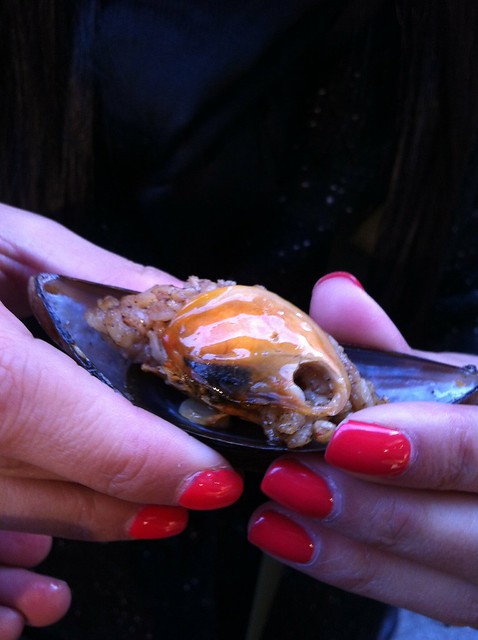
    In Balik Pazari, or the fish market, I ate mussels stuffed with rice, pine nuts and currants called midye dolmas. The vendors have the mussels arranged in several rows, and at first glance they look raw, but all you have to do is pick and open one up to pop the contents into your mouth. It was my favorite snack in Istanbul and if we didn’t have to keep moving, I would have stayed standing next to the cart and have eaten more than a dozen! The vendors also served battered mussels deep-fried in a skewer and then slathered with white garlic sauce.
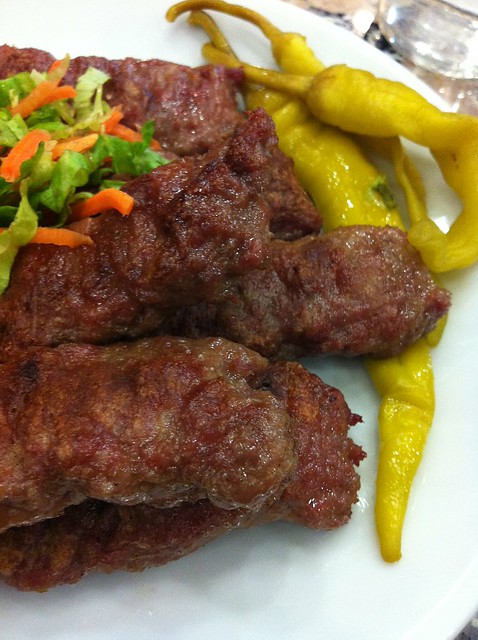
    In Taksim, to get away from the sea of people, Justin and I stepped aside to eat shawarma, or meat roasting on a vertical spit, (kebap means “roasted”) and then shaved to fill a pita with some lettuce, onions and tomato. It didn’t need any sauce because the meat was so fresh, juicy and cooked just right. Köfte, or meatballs, are not ball-shaped at all but are flat like hamburgers, and oh-so-tasty even from the small restaurant next to the tram. As nomads, the Turks were limited with what they could cook over an open fire, so it’s not a surprise that the two are the most familiar to even those who have not been to the country.
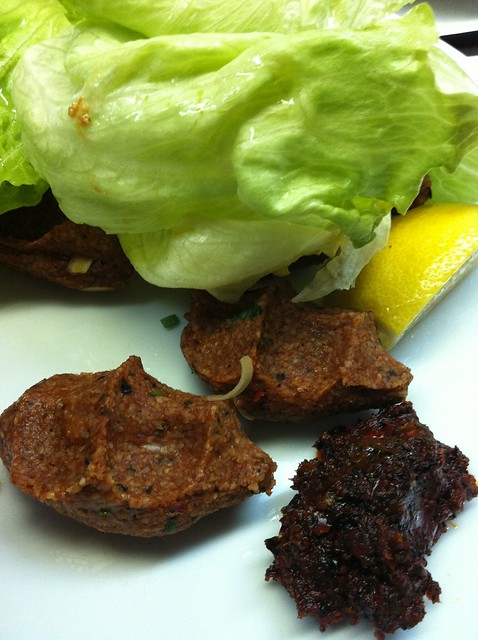
    The Turks also eat their meat raw, inspired by the same nomads who carried spiced and raw meat in their saddles. A bit of bulgur is kneaded with some spiced ground lamb and served with cilantro, supposedly to keep stomach problems away. I absolutely loved these çig köfte because they reminded me of steak tartare. Its spiciness was kept at bay with a squirt of fresh lemon juice and some lettuce leaves.
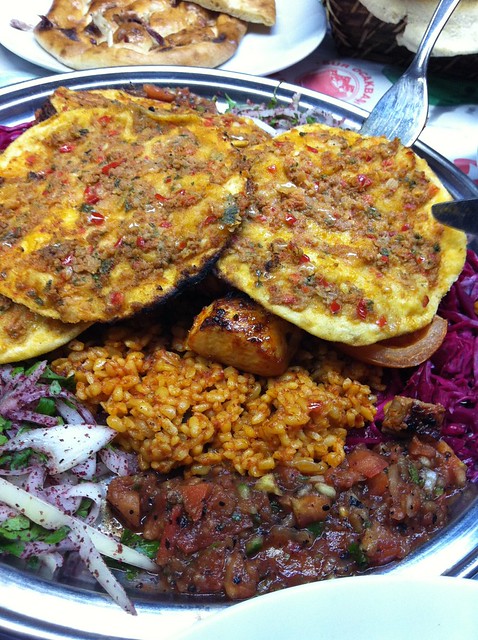
    Lahmacun is another version of the pizza, only this time the bread is as thin as a crepe and lightly covered with chopped lamb, onions, and tomatoes. From the same restaurant, Sur Ocakbasi Restaurant near Arab Street, we also had a crusted dome stuffed with rice and more pine nuts and currants. It would make any Filipino rice-happy. There was a large sizzling plate topped with roasting lamb chunks and red and green bell peppers; warm, fresh pita bread that looked more like nan because it was so big, and an assortment of mezes I just wanted to bathe in because I was excited and happy to eat.
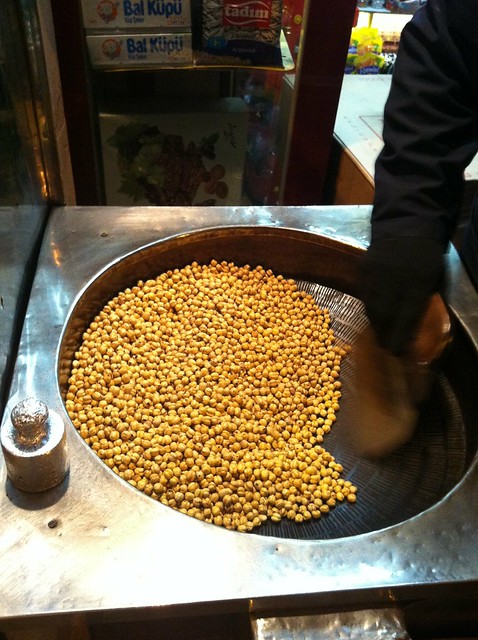
    There are these roasted corn kernels in the streets of Vefa that reminded me so much of the Filipino cornick that all I wanted was a sprinkle of paprika and lime juice to make the taste pop–pun intended–out more. They put your order in a paper bag printed with red and white stripes reminiscent of carnival popcorn.
    In the town of Kanlica on the Asian side of Turkey during a quick excursion across the Bosphorus River, we tried their special yogurdu, or yogurt, with confectionary sugar. Look at how happy I am here with the fur hat I scored from the Grand Bazaar:

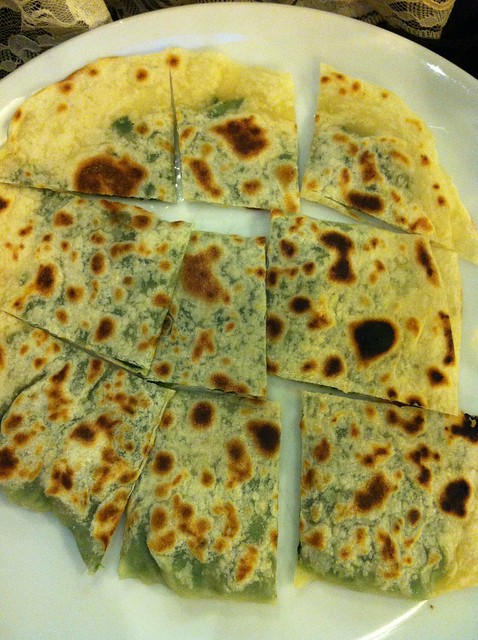
    When we weren’t eating on the streets, we were sitting down on carpets. The worst meal we had was from Han Kebab House outside the entrance of Gülhane Park by the Topkapi Palace. Later during our stay in Istanbul, we came across more than one branch and realized despite the Turkish fez that the waiters were wearing, that it probably was not the most authentic representation of Ottoman cuisine. Right by the window were three women massaging and rolling out dough for the crepes they sold inside. Their marketing tool worked because we walked in and paid double for overcooked cubed beef in tomato sauce and a sizzling beef plate that quickly fizzled. Funnily enough, the crepes were the best of the lot stuffed with cheese and spinach.
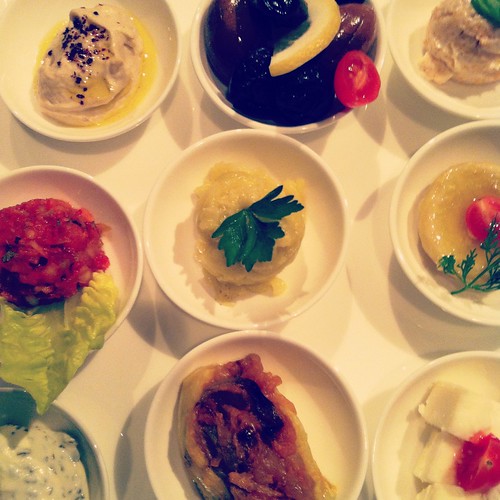
    A typical Turkish meal begins with a selection of mezes, or appetizers. I can make mezes a meal in themselves but there are so much Turkish food to try that I didn’t do any of that sort during our trip. Mezes often include several types of eggplant, called patlican; ezme, a fiery hot salad of red peppers; and dolmalar, anything from peppers or vine leaves stuffed with rice, pine nuts, cumin and mint. Sound Greek enough to you? I know; just don’t say that out loud! Though we had a lot of meat, what I loved most about Turkish food are these touches of vegetables with our meals.
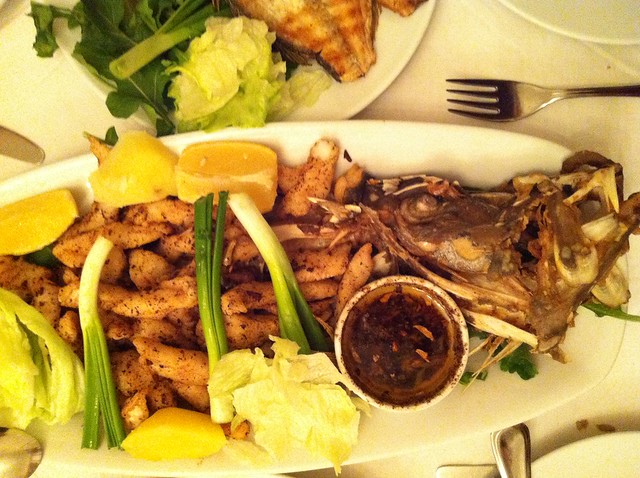
    My traveling companions may disagree with me here, but the best meal I had was at Balikçi Sabahattin Fish Restaurant in Old Town. From a menu of fish illustrations, we picked the red mullet and the red snapper to be grilled, while they suggested for us to order the John Dory fried. Everything was done simply with just the most subtle of seasonings, but because the seafood were freshly-caught, they were the best I’ve had in a very long time. We spent a couple of hours plowing through our small plates of octopus and anchovies and drinking our wine. Our servers were very pleased at how we schooled everyone else on how to eat.
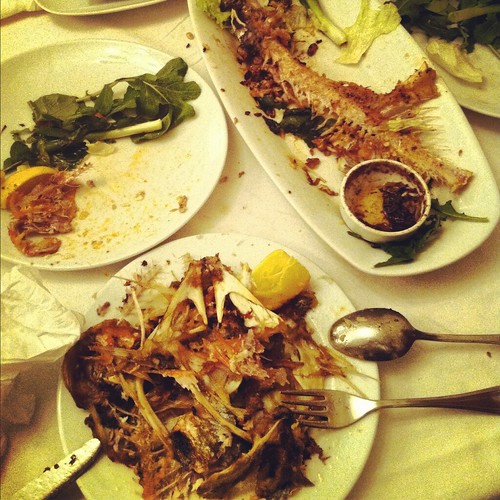
    The aftermath. Guess which plate was mine:
    All that food needed to be pushed down to make room for more. We visited a couple of ceramic shops to buy souvenirs where the ritual of accepting tea from the shop’s owner is unavoidable. Every time the owner asked us if we would like some tea, a younger runner would appear out of nowhere with hot tea in small tulip-shaped glasses on a silver tray accompanied by sugar cubes before we had a chance to answer. The size of the glass ensures that the tea gets consumed while hot, and before you slurp your final sip, a new hot glass will arrive. It became one of our running jokes during the trip that we would not even respond anymore when offered tea; we would just wait for someone to appear next to us whether we wanted tea or not.

    On a side note, the tulip is Turkey’s national symbol because of Sultan Ahmed III’s peaceful reign. This period, interestingly enough, brought the bulbs to Holland which resulted in the Dutch Tulipmania. So the next time someone insists that tulips come from The Netherlands, you now have an appropriate trivia to bring up.

    As for liquor, there are two national drinks: raki and ayran. Raki is an alcoholic drink distilled from raisins and then redistilled with anise. At the Four Seasons Hotel by the Bosphorus, they served it with a bottle of water so you can mix it and make a cloudy concoction that packs a licorice punch. It wasn’t my favorite, but it certainly cleansed my palate and made way for martinis and a lot of the national beer, Efes.

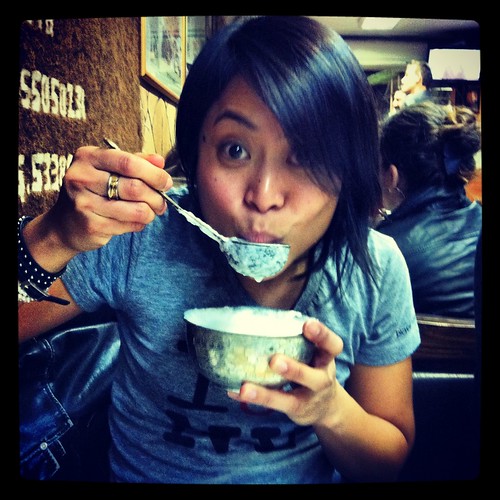
    Ayran is a refreshing beverage made by diluting yogurt with water and adding a pinch of salt. The salt was a little off-putting, but it traditionally helped the nomads during dehydrating and shadeless afternoons. Here I am slurpinp it from a beautiful hammered silver bowl:
    While we were in the district of Vefa, we walked in Vefa Bozacisi to drink the locals’ winter favorite, boza, a thick fermented drink that uses bulgur as its base. Because street sellers shout “boooza” at night to sell them, tourists have referred to them as booze. It was apparently the preferred drink of the Islamic soldiers since they were forbidden to drink alcohol, but fermented and consumed enough, it gave the same effect. I don’t know how else to describe it besides that it’s yellow and sour and comes in large vats.

    We thankfully didn’t see any Starbucks in Istanbul, but the coffee culture is steeped in Turkish tradition as well. It was difficult to get a cup of decent coffee to-go in the morning before we started our rounds, but we ended our dinners with the thick Turkish version to prolong our nights. Indeed, we saw a few people just sitting around long after eating their desserts.

    But we’re not done eating yet. At Saray, a multi-level bakery and coffee shop, Tansel, who rented us the apartment we stayed in via AirBnB, helped us order like queens to familiarize us with the Turkish sweet tooth. From the top of this photo and then clockwise: Ayva tatlisi with kaymak, Kazandibi, Kunefe with pistachio and more kaymak, and Sakizli Muhallebi, or mastic-flavored rice pudding. None of them look appetizing, I know, but if you like sweets, these are for you.

    And the ubiquitous Turkish delights? Also known as lokum, the sweet candies are made of cornstarch, nuts, syrup, and a variety of flavorings to form a chewy Jell-O-like consistency. If you know someone who has visited Turkey, I would bet that you received a box of them as a present. The hawkers in Grand Bazaar talk a lot to try and get you inside their shops. I finally relented and turned into a Brooklyn mom after hearing “organic” from the fast-talking vendor who quickly packed a few ounces of pistacchio and pomegranate-flavored powdered delights for me before I had any chance to say no.
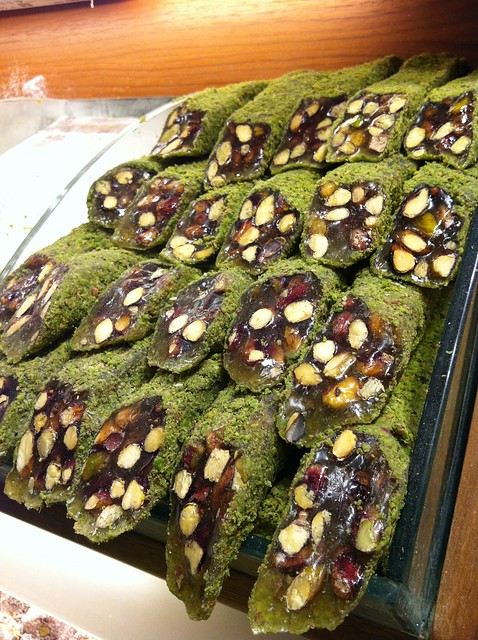
    But when someone tries to win my heart through my stomach, why would I say no?
  • There was a point in time when I “Liked” Food & Wine Magazine on Facebook; I don’t remember when, but I’ve been noticing their updates on my feed lately. A recipe for a lemon upside-down cake contributed by a certain Cal Peternell accompanied a cool-looking photo, and a stamp of approval that indicated it was tested and perfected by the publication’s staff made it even more attractive. I’m such a sucker.

    For Easter weekend, after planting the season’s seeds out in my patio and getting slapped by birch tree leaves in a Russian banya, I decided to bake it. I got home past 10pm, but I was still wired from the different temperatures of water I was subjected to at the bathhouse that I decided to play in the kitchen to wind down.

    Of course, I don’t own a cake pan; a loaf pan had to do. I just had to adjust the time of cooking and go by the toothpick trick, which I still haven’t gotten used to, by the way. (50 minutes at 350º and another 20 at 325º.) Every time I try to bake, I am tempted to slice whatever I’m baking to see if it’s cooked inside. I don’t have the touch, you see. I can press down on a piece of beef and know immediately if it’s perfectly cooked inside, but I can’t seem to get used to baked goods. It’s a matter of trial and error for me, so I’m going to keep trying. I’m also happy to report that I beat my first egg whites until they formed “stiff peaks”–I finally understood what they mean when they say that! It was very cool to see the egg whites transform from clear to white foam. The arm workout was worth it! And lastly, I think I am starting to fall in-love with my KitchenAid mixer. I’m still in awe at how easy mixing is now!

    By the way, I cut the brown and white sugar measurements here because, as you know, I don’t have the sweet tooth. You might want to keep the original 3/4 cup- and 1 cup-measurements, respectively, if you want to stay sweet and true. It is Easter weekend after all.

    Ingredients:
    1 1/2 sticks unsalted butter, softened
    1/4 cup plus 2 tablespoons light brown sugar
    1 lemon, very thinly sliced crosswise, seeded
    1 1/2 cups all-purpose flour
    2 tsps baking powder
    1/4 tsp salt
    1/2 cup sugar
    1 tsp pure vanilla extract
    2 large eggs, separated
    3/4 cup whole milk
    1/4 tsp cream of tartar

    1. Preheat the oven to 350º. Set your loaf pan over moderate heat. Add 4 tbsps of the butter to melt. Stir in the brown sugar until dissolved, about 1 minute. Remove from the heat. Arrange the lemon slices in the melted brown sugar. Set aside.
    2. In a medium bowl, whisk the flour with the baking powder and salt. Set aside.
    3. Using an electric mixer, beat the remaining 8 tbsps of butter with the sugar in the bowl until light and fluffy. Beat in the vanilla and the egg yolks, one at a time. At low speed, beat in the dry ingredients in 3 batches, alternating with the milk.
    4. In a stainless steel bowl, beat the egg whites with the cream of tartar until stiff peaks form. Fold one-third of the beaten whites into the batter, then fold in the rest. Mix well. Scrape the batter into the prepared loaf pan and bake for about 50 minutes at 350º, or until a toothpick inserted in the center of the cake comes out clean. Let cool in the pan for 15 minutes, then invert it onto a plate.

  • I had a craving for lamb after spending the last two weekends eating smoked salmon for breakfast. After all that fish, I specifically wanted a leg of lamb slowly simmering in a Dutch oven, falling apart after a few hours. I had just that with this recipe I adapted from a tagine one. I bought a beautiful 2-pound leg of lamb from Whole Foods because unfortunately, Chinatown doesn’t carry much lamb meat, so I always have to spend extra money when I want a good cut of lamb. The Halal stores in Harlem sell a lot of them, but never the good cuts, in my opinion.

    This recipe is a testament to how easy it is to make dinner for one that could be reheated for the next couple of days, or for a small group in one seating. Once you master how to brown your meat, sauté the herbs and simmer on your stovetop or braise in the oven for a few hours, you can have whatever you want as a stew; changing up the accompanying ingredients will just make your dish appropriate for the current season.

    Ingredients:
    3 slices of bacon, chopped
    1 lamb leg, about 2 lbs
    1 small onion, finely chopped
    4 cloves garlic, minced
    salt, pepper
    2 sticks of cinnamon, crushed
    1 tsp coriander, ground
    1 tsp cumin, ground
    1 pinch red pepper flakes
    1 package apricot preserves
    1/3 cup red wine vinegar
    1 20-ounce can chickpeas, drained and rinsed
    2 cups chicken stock
    1/4 cup raisins
    a handful parsley, chopped
    half a preserved lemon, chopped

    1. In a large Dutch oven, cook the bacon over low heat for about 10 minutes to render the fat. Remove the bacon and set aside. Turn up the heat and brown the leg of lamb, about 5 minutes per side. Remove and let rest on a chopping block.
    2. In the same pot with the bacon fat, add the onion, garlic, salt, pepper, cinnamon, coriander, cumin, red pepper flakes, apricot preserves and vinegar, and cook, stirring frequently, until the aroma of the spices is strong. Return the lamb to the pan with the bacon.
    3. Add chickpeas and stock, bring just to a simmer, then reduce the heat to low, cover and simmer gently until the lamb is very tender, about 1.5 hours to 2.
    4. Add the raisins and continue to cook, uncovered, until they are nicely plumped, about 10 minutes more. Remove from heat, stir in the parsley and lemon. Serve with couscous.

  • After returning from a long weekend in Istanbul, Turkey, I wanted to eat some pork. While in Istanbul, I ate a lot of very good seafood and a lot of very good lamb, but at the end of the day, you may take the pork away from the girl, but you can never take the girl away from the pork.

    Ingredients:
    2-lb boneless pork tenderloin
    1 tbsp paprika
    1 tsp red chile flakes
    salt
    pepper
    1 cup of bourbon
    1/2 cup brown sugar

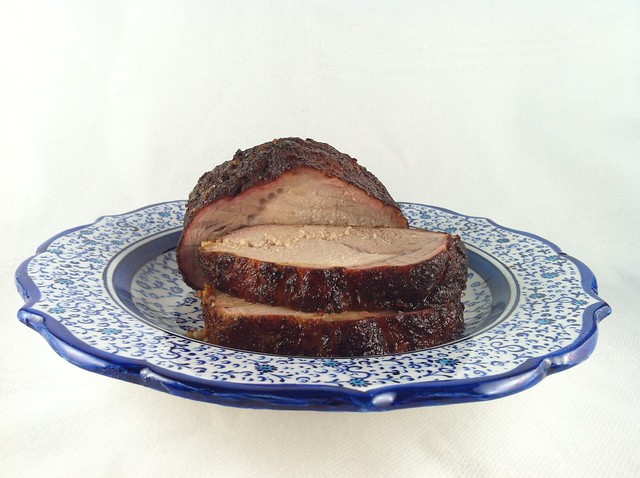
    1. Marinate the pork tenderloin by combining the paprika, red chile flakes, salt and pepper in a shallow bowl. Rub the mixture all over the pork and set aside for 30 minutes.
    2. Preheat the oven to 275º. Place the pork onto a rack-lined roasting pan and cook in the oven for 2 hours. Turn the pork over after the first hour.
    3. Before the 2 hours are up, make the glaze. In a medium saucepan set over medium heat, bring the brown sugar and bourbon to a simmer, stirring occasionally, until slightly reduced, about 10 minutes.
    4. Remove the pork from the oven and brush one-third of the glaze all over the pork using a heat-resistant pastry brush. Continue to roast for 30 more minutes, glazing the pork on all sides every 10 minutes. Remove from the oven and set aside to rest for 15 minutes before slicing and serving.

    Related post/s:
    Pork with Guinness beer recipe
    Pork with whiskey and honey recipe

  • There’s a more elaborate procedure of this recipe, but for the sake of you busy people, I’ve published the shortcut version. If you do have several hours ahead of time, you can soak fresh chickpeas in water rather than using those that come in a Goya can. You can also buy the pre-cut butternut squash and save your energy from peeling and chopping it. A jar of preserved lemon can now be bought at Whole Foods in their Mediterranean aisle, though if you read this site often, you know I’m a big fan of pickling my own. As for spices, the ingredients list is long, as most curry-based dishes are, but I can vouch that skipping the mustard seeds is the only thing that’s forgivable. Double up on the cilantro if you don’t have coriander seeds handy. (But why not, I beseech you!) Leftover coconut milk and cilantro may be poured and added to your rice to make your carbs more fragrant before the grains come to a simmer.

    Ingredients:
    2 stalks of lemongrass, tender parts minced
    1 knob of ginger, peeled, chopped
    4 cloves of garlic, minced
    peanut oil
    1 red onion, finely chopped
    a dash or two of turmeric powder
    1 tbsp coriander, grounded
    1 tsp mustard seeds, toasted
    a pinch of chiles
    1 can of chickpeas, washed, drained
    1 butternut squash, peeled, chopped in manageable pieces
    vegetable broth
    1 preserved lemon, chopped
    salt
    1 cup of coconut milk
    cilantro, roughly chopped

    1. Put lemongrass, ginger and garlic in a food processor and pulse to a paste. Set aside. Alternately, you can use your mortar and pestle for this; just make sure you keep your lemongrass large enough so you can pick them off before serving.
    2. In a large Dutch oven, heat oil and cook onions until soft and translucent. Add the lemongrass-ginger-garlic paste and fry in low to medium fire until fragrant. Avoid burning.
    3. Add the turmeric, coriander, mustard seeds and chiles. Sauté until well-mixed. Add chickpeas and squash with enough broth so that the squash are halfway submerged. Cook in a low simmer until squash is tender but not easily mashed.
    4. Add preserved lemon and season with salt. Mix in coconut milk to thicken the broth slightly. Add cilantro and simmer for another 5 minutes until everything is well incorporated. Serve with warm rice.

    Related post/s:
    Preserved Lemons recipe
    Try a similar recipe with your favorite white fish
    A Goan curry recipe using pork

  • Kara handed us two empty plastic quart yogurt containers from Trader Joe’s: If you have to go in the middle of the night and you don’t feel like getting out of the treehouse. I looked at my travel partner to quietly tell him that there was no way I’ll be squatting and peeing right next to him while he slept tonight! Even if he paid for dinner! And thus, our Santa Cruz adventure to welcome 2012 officially began.

    I didn’t grow up in the Philippines in a hut; in fact, quite the opposite surrounded by concrete and marble. But I remember climbing a lot of trees and getting in trouble with our nannies and parents for it. I also remember flat bamboo beds tucked in a nook inside my grandmother’s house in the province of Pampanga for cool afternoon naps during the summer. In the last 10 years of my travel life, I’ve stayed in all sorts of places: old castles in Ireland, yurts in Big Sur, tents in Patagonia, clay houses in Tunisia and 3-sided huts in Isla Bastimentos where you wake facing the open sea, but nothing has made me feel like a kid again more than this treehouse in Santa Cruz, California.

    Renting the treehouse was my first Airbnb experience. Working for a tech and business publishing company, I’ve read the bad press about the Web site, but I was willing to give it a shot when we were looking for a place to stay a few hours outside of San Francisco. Santa Cruz is a California beach town and it’s teeming with small hotels situated near the boardwalk and the ocean, but I wanted to share a unique experience with my new travel partner and have a different story to tell upon returning to New York City.

    I immediately started emailing with Claudine, the treehouse owner, as soon as she approved of the date I wanted to rent the treehouse for. I paid the nightly rate and a $100 deposit was put on hold in my credit card for incidentals. What makes the treehouse even more quirky is that it had been built on a homeowner’s backyard. We laughed with half giddiness and half nervousness when we drove around the downtown area of Santa Cruz and realized that we would be sleeping 30 feet up above the neighbors’ private homes. Kara was taking care of the main house during the holidays, so I only had the pleasure of making arrangements with Claudine via email and SMS, but both were so welcoming that even this New Yorker softened up a bit. We entered their hippie-centric home to use the bathroom at night and in the morning, but we pretty much stayed up in the treehouse before and after New Year’s Eve dinner.

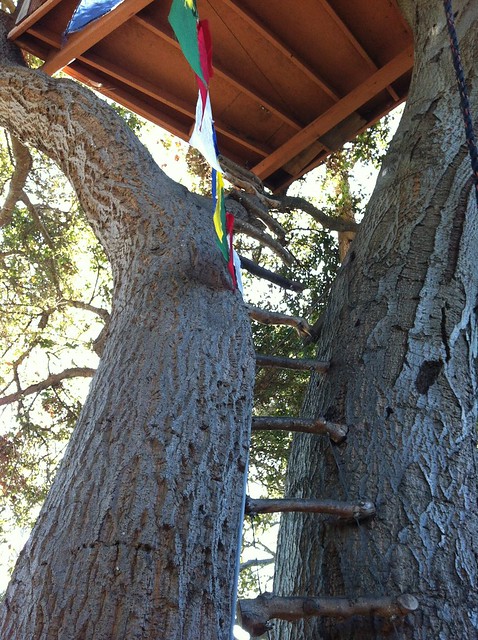
    A very sturdy cable wire was installed to make climbing up and down the treehouse stable and easy. Even in the dark, before retiring for the night, we were pretty comfortable going up with just my headlamp illuminating our way. (Kara also lent us a flashlight when she gave us our pee cups!) A trapdoor let us in and we just had to carefully hoist ourselves up to be fully inside. A twin-sized bed was on the left and a narrow side table on the right, plus a floor cushion, but not much else other than finger paintings on the wall. One side was painted with splatters of red, a Jackson Pollock attempt perhaps, but unfortunately looked like gunshot wounds. (Ah, west coast self-expression!)

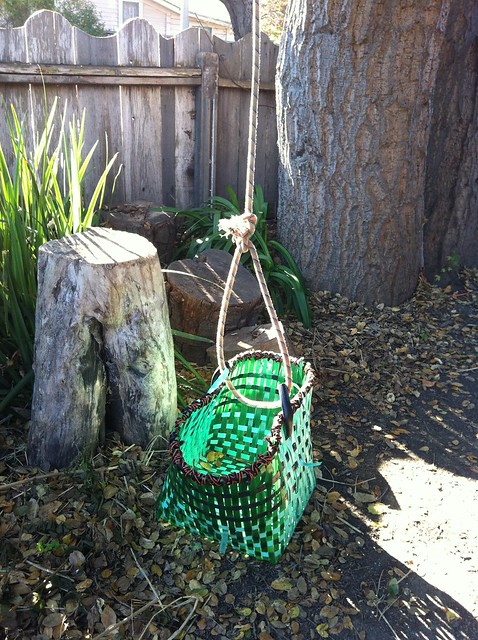
    Besides the Tibetan flags outside the treehouse, my favorite was the plastic basket that was attached to an industrial pulley to help us bring our stuff up. Being the OCD person that I am, I packed our own comforter and my much-loved bamboo flat sheets from 3,000 miles away. (Seriously.) There was no heat the night of our stay and we were much too scared to light candles inside, so we mostly kept ourselves warm throughout the night using, well, body heat. Taking into consideration how cold I felt sleeping inside a tent in Kilimanjaro just two years ago, the “cold” California temperature was harmless.

    A few hours of sleep later, we caught the first sign of sunlight from a small window right above the bed. Maybe people were slowly enjoying their mornings, but the street was very quiet. For a few minutes, we forgot that there was an entire neighborhood right below us waking up for their first breakfast of the new year.

    I only had a vague idea of my partner’s travel sensibilities because of the circumstances of how we first met, so I was quite worried of how he would react to this experience. Would he be picky? Would he be freaked out? At the end of our stay, he let me know that he also enjoyed our time in Claudine’s treehouse and appreciated the fact that I tried to find a different kind of place to wake up in for our first trip alone together. I wouldn’t mind traveling with this one again.

    Thanks, Kara and Claudine!

    Related post/s:
    San Francisco and Santa Cruz photos on Flickr
    Rent Claudine’s treehouse when you’re in Santa Cruz, California

  • Can you believe I made something without meat? It’s not some kind of new year resolution or anything, I just really need to use the pesto sauce I made last year that’s been sitting in the fridge for what seemed like forever. I couldn’t believe it was still good! (This dish fed 5 people and no one got sick!)

    I don’t have any experience with lasagna except for the fact that I have to create layers to make it look legit. (“Lasagne” refers to multiple sheets of pasta; “lasagna” refers to the dish or to individual sheets of pasta.) The steps here were pretty much common sense, but I had no idea how the besciamella sauce texture was supposed to be like. I felt like my version was too watery after I imagined it to have more of a ricotta cheese consistency. To be honest with you, I’m not even sure it’s necessary here. My pesto was so good that I barely tasted the besciamella to know that it made any difference. (Don’t tell the lasagna police!) Why don’t you try it without? The olive oil absorbed by the eggplant was enough to keep the dish rich and moist. Buy a good quality jar of pesto from your local farmer’s market and you barely have to lift a finger to make this dish.

    Ingredients:
    1 box of wavy lasagna pasta
    salt
    olive oil
    1 medium eggplant, thinly sliced
    cooking spray
    1 cup of besciamella sauce
    1 cup pesto sauce
    1 cup Pecorino Cheese, grated
    1/2 cup bread crumbs

    For the besciamella sauce:
    3 tbsps butter
    2 tbsps flour
    2 cups milk
    salt
    nutmeg

    1. Bring a large pot of water to a boil and add about 2 tbsps of salt. Prepare a bowl of ice water. Cook the lasagne sheets in the boiling water 2 minutes less than the package instructions recommend. Drain, put in the ice bath and separate each sheet by hanging them off your colander rim.
    2. Heat olive oil over medium fire in a large sauté pan. Add eggplant in batches and cook until golden brown and soft, about 5 minutes. Feel free to keep adding olive oil for each batch. Drain on a paper towel and set aside.
    3. Make besciamella sauce. Heat butter in a medium sauce pan until melted. Add flour and stir until smooth. Cook over medium heat until light golden brown, about 7 minutes. Meanwhile, heat the milk in a separate pot until just about to boil. Add milk to butter mixture 1 cup at a time, whisking continuously until very smooth and bring to a boil. Cook 30 seconds and remove from heat. Season with salt and nutmeg. Set aside.
    4. Preheat oven to 400º. While oven is preheating, prepare lasagna. Coat a 13×9 baking pan by spraying with cooking spray. Layer 4 sheets of lasagne on the bottom of the pan. They can overlap. Top with 6 slices of eggplant and 3 tablespoons of besciamella sauce. Repeat the step for another layer, but this time, add 3 tbsps of pesto sauce. Repeat these 2 layers for a total of 4 layers. End with 4 sheets of lasagne, remaining besciamella sauce and grated cheese. Sprinkle with bread crumbs. Place baking pan on a baking sheet and bake for 20 to 25 minutes, or until bubbling and golden brown on top.

    Related post/s:
    Homemade basil pesto recipe