• 241 Church Street at Leonard
    212/925.0202
    $75 for tasting menu, without drinks, without tip
    ♥ ♥

    66 was a long time ago but entering Matsugen reminded me of those long lunch hours I used to take to eat at an expensive restaurant and only pay lunch prices. I had a delicate dim sum meal back then, even before Chinatown Brasserie opened, and it cost triple what I would have paid at Jing Fong. No screaming waiters, though, and the white tablecloths remained white even after several dumplings and shumais.
    Contrary to popular belief, Jean-Georges Vongerichten is not the chef at Matsugen. Put together the Matsushita brothers wanting their first U.S. mainland restaurant and Jean-Georges needing to replace 66 and you have a high-end Japanese restaurant in a beautifully-designed Richard Meier TriBeCa space. It’s more chic than Honmura An (ahh, more memories!) and it’s more serene than EN Brasserie.

    Is it expensive? Definitely, especially if you’re used to Sobaya like me. But if you want to impress, it’s a good place to go, not just for the soba noodles made in-house, but also for sushi, sashimi and even shabu-shabu (also considerably more expensive than Shabu Tatsu’s). If you spend some time looking at the menu, you can get away with paying less than a hundred dollars for two. You won’t be achingly full, but you’ll get the idea why a big-time chef like Jean-Georges would be satisfied with only being behind the scenes on this one.

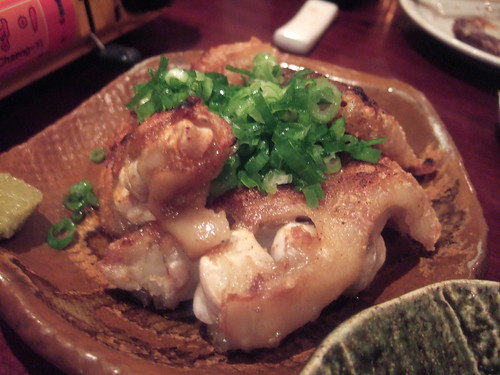
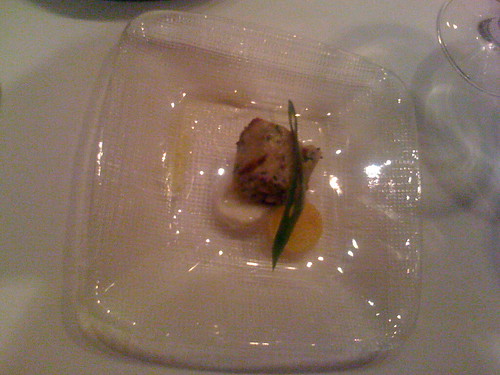
    If you don’t want to be bothered with the several pages of Japanese food with detailed descriptions, the $75 tasting menu when we visited included uni with yuzu jelly–a beautifully assembled starter that’s as creamy as the freshest sea urchin around–a sushi plate, a lobster salad, a bowl of hot soba and a dessert. I highly recommend the hot soba in duck soup and the hot soba with Japanese yam. The noodles yield freely and the broth is so clean: refined Japanese food has never been better.

    Related post/s:
    Four years ago: EN Japanese Brasserie
    One of my favorite noodle recipes to make at home
    Skip the desserts at Matsugen and cab it to ChikaLicious instead
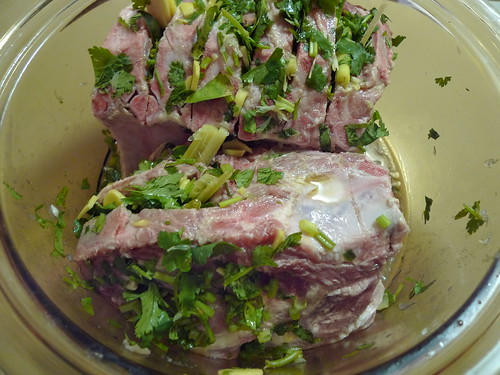
  • This Jamie Oliver lamb recipe may seem to require a lot of ingredients but once you have them, all you need to do is toss everything together to marinate the meat. I substituted the lamb with pork roast and served it to guests for my mother’s 61st birthday. I didn’t even use salt because all the herbs were enough to give the roast a delicious Thai-inspired flavor. You’ll find how amazing the lemongrass smell lingers in the meat even after several reheats of the leftovers.

    Ingredients:
    1 pork roast, bone-in, about 5 pounds

    For the marinade:
    1 stalk lemongrass, cut in short pieces, smashed
    10 kaffir lime leaves, chopped
    1 medium-sized knob of ginger, peeled, sliced
    half a head of garlic, minced
    half a bunch of cilantro, roughly chopped
    4 Thai chilies, chopped
    juice from 3 limes
    olive oil

    1. Marinate the pork roast. Pat pork roast dry with a paper towel. Transfer to a large glass container that you can use to marinate. Stir together the olive oil and lime juice in a small bowl and drizzle all over the roast. Stuff every nook with garlic and herbs. Cover with plastic wrap and store in the fridge overnight.
    2. When ready to cook, preheat oven to 425º. Remove the pork from the refrigerator and let rest at room temperature until oven is ready. Place an empty aluminum foil-lined roasting pan in the oven while the oven is pre-heating. When oven is ready, transfer the roast to the pan and cook for 45 minutes.
    3. Reduce heat to 325º and roast an additional hour, or about 10 minutes per pound. Using a meat thermometer, the thickest part of the roast must be around 130º. Remove to a chopping block and let stand for half an hour before carving.

    Related post/s:
    You can get all the herbs and spices at Asia Food Market

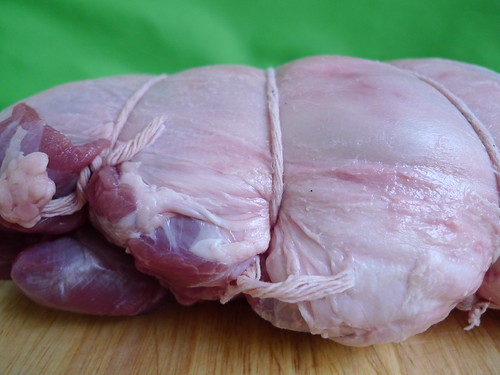
  • For the love of meat, Jake Dickson of Dickson Farmstand worked in several farms, a butcher shop and a slaughterhouse. All the effort paid off and he thought of a brilliant business plan: buy your upstate produce online and pick it up in the city from the back of his truck. I bought a boneless leg of lamb from Ehrhardt Farm in Jersey Hill, one of the highest elevations in Tompkins County, New York.

    I also ordered a package of fatty bacon and ground pork but I’ll focus on the leg of lamb so that you can replicate it for your end-of-year dinner.

    Ingredients:
    1 4-pound boneless leg of lamb, tied up with butcher’s twine
    salt, pepper

    For marinade:
    1/2 cup orange juice
    1 cup white wine
    3 cloves garlic, minced
    3 sprigs of thyme
    2 sprigs of rosemary
    oil, pepper

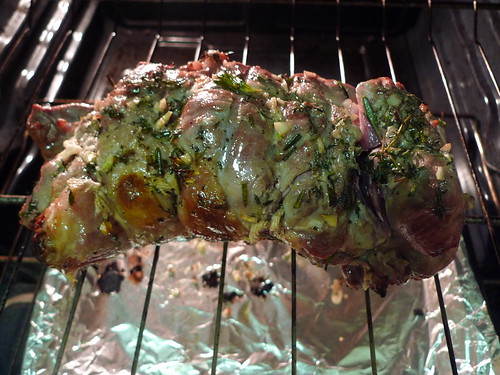
    1. Marinate lamb. Pat leg of lamb dry with a paper towel. On a chopping block as a work surface, drizzle olive oil all over the lamb and rub with pepper. Stuff every nook of leg of lamb with garlic and herbs. Transfer to a large glass container that you can use to marinate. Combine orange juice and white wine in a small bowl and pour into the container to marinate the lamb. Cover with plastic wrap and store in the fridge overnight. Make sure you turn over the lamb after several hours to soak the other side.
    2. When ready to cook, remove the lamb from the fridge and let rest at room temperature. Arrange two racks in the oven: the middle rack to hold the lamb and the lower rack to hold a roasting pan to catch the drippings. (Spread chopped carrots, parsnips and onions in the pan for some roasted veggies to go with the lamb.) Preheat oven to 425º. Place the empty aluminum foil-lined roasting pan in the oven while the oven is pre-heating.
    3. Cook the lamb. Remove the lamb from the container and pat dry with paper towels. Generously salt and pepper all sides of the lamb. Place directly on middle rack of the oven; the roasting pan below will catch the drippings. Roast for 20 minutes, then reduce the heat to 300º and roast an additional hour, or about 10 minutes per pound. Using a meat thermometer, the thickest part of the lamb must be around 135º for medium-rare. Let stand for half an hour before carving. Use just the drippingsand/or the roasted veggies to serve with the lamb.

    Related post/s:
    Order your leg of lamb from Ehrhardt Farm via Dickson’s Farmstand
    My growing list of lamb and veal recipes
    Lefover lamb can turn into a delicious salad

  • ‘Twas the night before Christmas, when all through the house / Not a creature was stirring,…
    Are you kidding me? Whoever the author was wasn’t in my parents’ house on Christmas Eve. It’s definitely not quiet in ours right now: my mother is vacuuming, my father is moving stuff around and I’m simultaneously getting the leg of lamb and pork roast ready for our noche buena, clanging around the kitchen.

    I’m not a regular churchgoer, but you can count on me to attend Christmas Eve mass even if it’s cold outside and boring inside. Because it’s also the eve of my birthday, I’ve always found mass quite comforting before I turn a year older. Wherever I am, I make it a point to attend mass for my birthday. After mass, we dive in for dinner and eat until a little after midnight–Christmas Day itself is just recovering from the night before.

    This pasta e fagioli recipe, or “pasta and beans” in Italian, is a hearty (and affordable!) filler to keep the hunger pangs away at least until after church, but not too heavy that you would want to skip the main attraction on the dining table. I used Goya pinto beans here because one package was on sale for 99 cents and substituted the Parmesan cheese for Manchego.

    Ingredients:
    1 cup pinto beans, soaked overnight in water
    2 cups mini penne pasta
    4 slices bacon, chopped
    3 large beefsteak tomatoes, chopped
    2 stalks of celery, chopped
    1 large carrot, chopped
    1 red onion, chopped
    2 cloves garlic, minced
    1 sprig of rosemary
    2 sprigs of thyme
    Manchego cheese
    salt, pepper

    1. Drain the water from the soaking beans. In a large saucepan, add 3 cups of water and bring the beans to a boil. Lower the heat and simmer for an hour, or until tender. When done, transfer beans and water to a large container and set aside.
    2. Using the same saucepan, cook the bacon until crisp. Add the garlic and sauté until light brown. Add the onions and sauté until translucent. Add the herbs, carrots, celery and tomatoes and stir to combine. Cook until carrots are tender.
    3. Return the beans and the water to the saucepan and let simmer for 30 minutes. Add more water if you want more soup. Season liberally with salt and pepper. Add the macaroni and simmer for another 10 minutes, or just enough to cook the pasta. Stir occasionally. Ladle into bowls and grate cheese on top before serving.

    Related post/s:
    The Italians know how to make peasant dishes, I tell you
    A mainstay soup in our household
    You say fa-zool, they say fa-joh-lee

  • Ah, Internet, you kill me. It sucks to be laid off for the second time in eight years especially if it’s from a job you actually like. But shit happens, yeah? The good thing is that I can wake up without scurrying out the door and I can devote some time to the art of making sandwiches for lunch. Take for example this afternoon: leftover pernil that I carved from the bone, Gorgonzola from Di Palo Selects, a lone pear from the fruit basket on the coffee table and a handful of walnuts from a can of assorted holiday nuts; I threw in three slices of bacon in there for good measure.

    This sandwich is not for the faint of heart. Substitute the pork with sweet ham and add some spicy arugula to make a sweet-salty version.

    Ingredients:
    leftover pork roast, chopped
    3 slices of bacon
    half a pear, sliced thinly
    a small chunk of Gorgonzola, sliced
    a handful of walnuts, crushed
    4 slices of whole wheat bread
    a small knob of butter, melted in microwave

    1. Cook bacon. Using a skillet, cook about 4 slices of bacon until crisp. Remove to a paper towel-lined plate. Set aside.
    2. Using the rendered bacon fat in the same skillet, heat up pear slices. Remove to same paper towel-lined plate.
    3. Assemble sandwich. On a chopping board, spread one side of each bread slice evenly with some melted butter using a pastry brush. With buttered sides down, spoon some pork roast on two slices of bread and top with Gorgonzola slices. Add bacon and pears and sprinkle with walnuts. Feel free to moisten with leftover bacon fat. Layer with remaining bread, buttered side up.
    4. Place large skillet over high heat and brush remaining butter. Reduce heat to medium-low and add sandwich. Using an iron grill press, put on top of the sandwich and press. Cook until browned and crisp on both sides, about 4 minutes a side. Transfer to a platter lined with parchment paper. Cut in half and serve.

    Related post/s:
    Di Palo Selects has some good Gorgonzola
    The cast iron grill press is one of the most used items in my kitchen
    A year ago, I made my first pressed sandwich
    Pork Shoulder Roast recipe

  • I texted Lily when I saw a $9 pork shoulder at Fairway: what do I need to make pernil? Pernil, or roasted pork shoulder, is a Latin dish served as part of a feast, usually with rice and beans. I grew up in Washington Heights with my Dominican friends and have always eaten pernil at their birthday parties. Years have passed and they’ve all moved out of their parents’ houses and I haven’t had a decent pernil since.

    Thankfully for Lily’s birthday this past summer, she decided to keep it low-key and invited us to her mother’s house. I thought I ate the best pernil there. Her mother even wrapped some leftovers for me to take home because I couldn’t stop picking from it even after dinner was over. My friends’ parents are all too familiar with the Asian friend who raves about the roasted pork.

    This is in preparation for Christmas Eve dinner. My first try didn’t come out as tender as I would have liked: Lily’s version melts in your mouth and it’s impossible to slice the meat because everything just falls off the bone. I’ve revised this recipe and made some corrections. I’ll be ready to try it again for my birthday dinner and I’ll make Lily proud.

    Ingredients:
    1 pork shoulder, no more than 5 pounds
    1 head of garlic, peeled, crushed
    4 tbsps cumin, grounded
    a few splashes of Worcestershire sauce
    salt, pepper

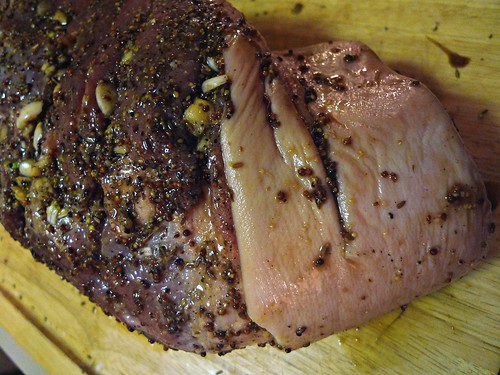
    1. Marinate the pork shoulder. Score the pork with a sharp knife and insert garlic cloves in every nook. Splash Worcestershire sauce all over the pork. Using your hands, liberally rub the pork with cumin, salt and pepper. Put in a large container and cover with plastic wrap. Refrigerate overnight.
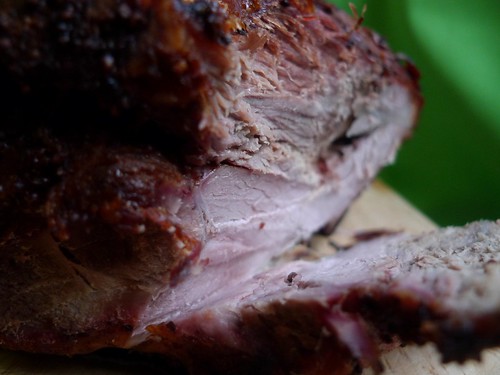
    2. When ready to cook, heat oven to 300º. Remove the pork from the refrigerator and let rest at room temperature until oven is ready. Roast pork for 3 hours on a rack in an aluminum foil-lined roasting pan filled halfway with water, turning every hour until meat is tender. Add water to the pan as necessary.
    3. Remove pork from the oven and let rest for 15 minutes before cutting it up.

    Related post/s:
    If you don’t want to roast, try sweet and sour pork picnic
    I once carried an 8-pound pork shoulder in my tote bag

  • 61 Grove Street off Seventh Avenue South
    212/242.3699
    $30 each for four, with a bottle of sake, with tip
    ♥ ♥

    I love pigs’ feet. There I said it. I’ve caramelized them before with a tart salad and I’ve grilled them to serve at a summer barbecue party. Hakata Tonton worships the tonsoku. Hakata Tonton and I were made for each other.

    The grilled version is so gelatinous, succulent and generously fatty, you can’t help but suck every part until you’re just spitting out the small bones. The hot pot comes with tofu, dumplings and pork belly, as if the trotters weren’t enough to make the broth rich and tasty.

    There were four of us, hungry after a few glasses of wine and beer, so we didn’t just stay with the pork but also ordered the chicken wings in sweet soy sauce and the beef short ribs. We threw in the yellowtail sashimi salad in there for a palate cleanser. The yuzu paste and ponzu sauce were just perfect for slathering and dipping because they provided the right amount of kick in each dish. (When I was in Vancouver, I bought a few jars of yuzu paste from the Japanese grocery store to take home with me.)

    A few beer and sake bottles later, we left full and a little tipsy. Our wallets weren’t empty and we were happy to be escorted out with free Pez candies from the waitress.

    Related post/s:
    Walk around the area for P*Ong
    Mas (farmhouse) is a more expensive option around the neighborhood

  • I missed it when The Times first reported it last week: the Maya Schaper Cheese and Antiques store in the upper west side is going to be replaced by a coffee shop because of soaring rents. Good thing then that the Dr. and I stopped by today to buy some cheese. The Dr. picked up a beautiful stinky blue cheese while I walked around gasping at the prices of the Rococo-style plates I’d very much like to afford and own. I tasted the cheese he bought and got my own sliver, and I also picked up a Manchego because I wanted to use the butternut squash that has been sitting on my window kitchen sill since the last Supper with Strangers. (It was still good.)

    I like baking gratins because they’re so easy. They’re a nice addition to a dinner setting: you get your starch and in this case, your vegetable, too. I love the hint of salt and savory in this recipe even though it’s a creamy baked dish. It went perfectly well with a pork shoulder roasted for three hours.

    Ingredients:
    1 butternut squash, peeled, chopped lengthwise, sliced thin
    2 sweet potatoes, peeled, sliced thin like coins
    2 cups Manchego cheese, shredded
    1 pint heavy cream
    2 cloves of garlic, minced
    2 tbsps fresh thyme
    a small knob of butter
    salt, pepper

    1. Preheat oven to 400º. In a saucepan, bring cream and garlic to a simmer. Remove from heat and set aside, stirring occasionally to keep the top from gelling.
    2. Butter a 9″x13″ shallow baking dish. Spread the sliced butternut squash out in a single overlapping layer. Sprinkle with some of the salt, pepper and thyme and then about a third of the grated cheese. Top with half of the sweet potatoes, building a new overlapping layer. Again sprinkle with some of the seasonings and another third of shredded cheese. Use the last of the potatoes to make one final layer and top with the remaining cheese. Pour over the garlic cream mixture, distributing evenly.
    4. Bake the gratin. Cover the dish with foil and bake on the middle rack for 30 minutes. Remove the foil, move the gratin to the top rack of the oven and bake, uncovered, for an additional 20 minutes. The top should be nicely browned and the vegetables soft. Remove from oven and let cool for 30 minutes before serving.

    Related post/s:
    A recipe for a simpler gratin
    Sign up for 2009 Supper with Strangers

  • 32 West 52nd Street between Fifth and Sixth Avenues
    212/582.6900
    $200 for two, with wine, without tip
    ♥ ♥

    By the fifth time someone asked us if everything was okay, I paused and looked into the waiter’s eyes and told him, Really. We’re okay. I like good service as much as anybody else but there’s a fine line between being attentive and annoying. Our waiter swung by a few times to see if we needed drink refills (our wine glasses were still more than a third full), a couple of busboys tried to clear our plates away while we were still working on them and two other waiters whom we’ve never seen before also came by to ask if we were okay. I looked around the restaurant to see if we were holding up our table for too long, but it was fairly empty at 8pm. Were the servers just bored?

    When we had uninterrupted minutes to ourselves, we were able to enjoy the food. The kitchen started us off with a lamb sausage amuse which my dining companion didn’t eat because she is quasi-vegetarian. I thought it was odd that no one ever bothered to ask her. I figured that they probably assumed we both eat meat because we were at a Greek restaurant.

    The smoked octopus with fennel and mushrooms in lemon confit was so fragrant while the salad of Brussels sprouts and beets was so beautifully presented. The mullet and sweetbreads combined with bitter greens were a good mix in terms of texture, although I wasn’t a fan of the bulghur wheat that came with the roasted mushrooms and hen’s egg. By the time the quail and the tuna tartare were served, I was already full. My friend, skipping the meaty dishes, had room for the cotton candy with petit fours and the rich chocolate tart with ice cream.

    We were really more than okay.

    Related post/s:
    Kefi is also from chef Michael Psilakis
    Nobu 57 is a few blocks down

  • Here’s a stocking stuffer for your discerning friends: Biscotti Di Vecchio. These traditional twice-baked Tuscan cookies get a twist from Danielle Di Vecchio, who works the dough by hand using her grandmother’s original recipe.

    From the savory, at $7.95 per dozen:

    The sun-dried tomato with basil and cheddar cheese was awesome with a glass of Malbec because of its saltiness. It was flakier and more floury because of the cheese. It smelled good, too, even though the basil taste was barely there.

    It was hard for me to tell the difference between the black pepper Asiago Parmesan from the rosemary and thyme walnut because I was eating them one after the other, but the black pepper was definitely present when I ate it separately. It remained my favorite savory flavor after everything else.

    For the sweets, at $16.95 per dozen:

    The cranberry in the cranberry orange zest added a good chewiness to the biscotti’s texture, but it was the zest that lingered and made an impression. I thought it would have been great with some peach or apricot-infused tea.

    The pistachio chocolate chocolate chunk, according to my mother, was like eating a dark chocolate bar in a biscotti. (Twice the chocolate in the name!) She had no complaints. The white chocolate macadamia had a subtle vanilla taste. I wanted a cup of hot chocolate with marshmallows with it. The simplest one, toasted almond, was the most biscotti of them all, and just comforting with a cup of hot barley tea.

    I think my favorite was the cayenne cherry chocolate chunk. The flavors came in stages: the chocolate was strong at first, followed by the faint tartness of the cherry; the spiciness gradually hit my tongue and then slowly settled in. I loved the unexpected combination and I think any recipient will be surprised.

    All in all, Biscotti di Vecchio biscottis are not tough like the ones you buy in stores. They remained pleasantly crunchy even after a weekend in their plastic packaging and I was able to keep the leftovers fresh just by putting them in a resealable container.

    I think these biscottis make classy gifts especially during these tough times. If you can’t decide which flavor to give, there is a sweet and savory gift combination for $44.50.

    Related post/s:
    Biscotti di Vecchio ship 3-5 business days after confirmation.

  • I am so sick of turkey leftovers that I’m going to gag if I think about it one more time. After the gym tonight, I stopped by Whole Foods to pick up one lamb shank from the meat department. Surprisingly, one piece came out a little under $7.50 versus the exorbitant Whole Foods price I always tsk-tsk at.

    This recipe is from Janna Gur’s beautiful cookbook, The Book of New Israeli Food. She’s well known as the editor of Israel’s leading food and wine magazine, Al Hashulchan Gastronomic Monthly, so I thought the recipes would be hard to make. I was surprised at how easy to understand they were even though I’m not familiar with Jewish customs.

    Ras-El-Hanoot, or “Top of the Store”, is a Moroccan spice mixture used to season meat. Apparently, every spice vendor has his own secret formula on how to make it. In this version, I’ve eliminated 1 tbsp of aniseed because I just didn’t have any, so I doubled the fennel seed measurement instead. You can certainly substitute aniseed with one star anise plus a pinch of allspice powder.

    This lamb dish is one leftover I wouldn’t mind having again and again.

    Ingredients:
    1 lamb shank
    1 medium carrot, chopped
    2 celery stalks, chopped
    5 sprigs of parsley, chopped
    1 quart chicken stock
    1 onion, chopped
    2 garlic cloves, minced
    1 bay leaf
    2 thyme sprigs
    salt, oil

    For Ras-El-Hanoot mixture:
    2 tbsps paprika
    2 tbsps fennel seeds
    1 tbsp turmeric
    1 tbsp coriander seeds

    1. Make Ras-El-Hanoot mixture by crushing all the ingredients together using a mortar and pestle. Set aside.
    2. In a large Dutch oven, heat some oil over medium heat. Rub salt all over the lamb. Add the lamb shank and brown on all sides. Remove from pot when done.
    3. In the same pot using the remaining oil, sauté garlic until brown and onions until soft. Add carrot, celery, parsley, bay leaf, thyme and the Ras-El-Hanoot mixture and cook for 5 minutes.
    4. Add chicken stock and bring to a boil. Return the lamb to the pot and bring to a boil again. Lower the heat, cover and cook for 1 hour. Turn over the lamb and cook for 45 minutes to an hour, or until the meat is almost falling off the bone. Uncover the pot and cook for another 15 minutes to thicken the sauce.

    Related post/s:
    Buy your own copy of The Book of New Israeli Food: A Culinary Journey from Amazon.com

  • 171 Spring Street between West Broadway and Thompson
    212/343.4255
    $70 for three, with drinks, without tip
    ♥ ♥

    I felt like I got the gist of Boqueria SoHo after I stopped by for “dessert” with my brother and sister-in-law during its second weekend. We walked in around 5:45pm to eat an early dinner but were turned away because the bar was full. The maitre d’ refused to seat us fifteen minutes before the official start of dinner service. It seemed like a ridiculous rule only a person with a clipboard would impose, so we went to Snack around the corner instead for a better dinner.

    My companions really wanted to taste some Spanish wines, so we returned after dinner to try and score seats at one of the long tables in the middle of the restaurant. We were seated immediately by the beautiful pata negro and a few spots away from a swollen-looking Bobby Flay.

    We started with beers on tap before we moved on to the full-bodied red wines. Because we were only there to pick and taste, we shared the Garrotxa goat cheese, the Valdeon blue and the Idiazabal, a smoked sheep’s milk cheese. A smattering of salchichon was thrown in the mix for a few extra dollars. The Brussels sprouts with sausage was a favorite, as well as the roasted green peppers I learned to love while I was in Barcelona.

    Two years ago, I said the food at the first Boqueria needed to be more inspired. It’s more refined here in SoHo, but the attitude need not match the neighborhood.

    Related post/s:
    The original Boqueria, uptown
    No, the real original boqueria is in Barcelona
    Boqueria in Barcelona photos on Flickr