• The Dr. dreams a lot when we’re on vacation. As I tried to enjoy my morning sleep, the best type of all sleeps, he flinched and murmured with his eyes closed. I kept waking up because of him that by the time I felt like I’ve had a complete, uninterrupted sleep, it was already 1pm. Luckily, the sun does not start setting until about 11pm so we knew we had plenty of time.

    We decided to go to Selfoss and get closer to the volcano Hekla since the road to Langjökull and Hofsjökull was closed. On our way to Selfoss, we saw a tour bus make a turn to Kerio. We followed it and parked our car. There wasn’t anything on the map but it turned out to be a beautiful crater full of water.
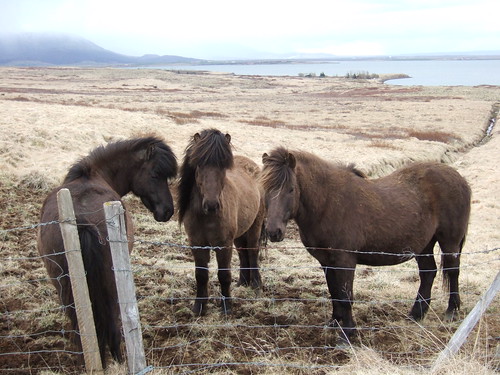
    There was nothing in the town of Selfoss except a closed bakery (what, no fresh bread after 3pm?) and a library where we paid 100 kronas to use the Internet and email back home. We continued on for what seemed like miles and miles of dark earth to Mount Hekla. In medieval Europe, it was known as one of the twin mouths of hell because of how menacing it looked, hiding behind thick clouds. It is still active and the last eruption was in 2000. We stopped a couple of times to film the vast bleak view ahead of us. I found a few horses who were willing to cooperate, but otherwise, we didn’t really do much except drive.

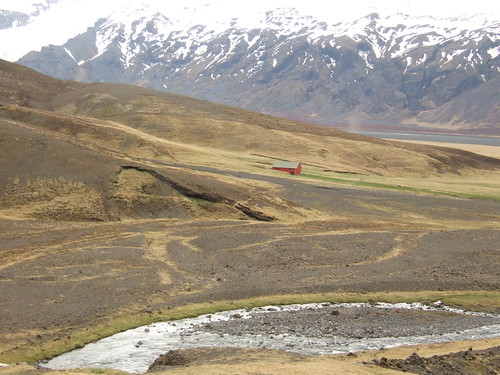
    We made up for it the next day. We felt like we were finally, truly in Iceland. We started our drive early towards Fljotsdalur. There were few houses on the road past the town of Hella but it was a very scenic route. I remember thinking, I wish we can stay in one of those small barns with grass on the roof. To my delight, the Fljotsdalur was one of them!
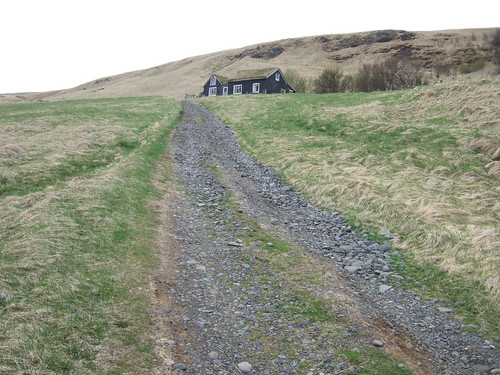
    We met Paul, one of the founders of the house with the infamous Dick Philipps of England. He’s been coming to Iceland for the summer the last 30 years. They do group hiking tours to þorsmork, or Thor’s forest. You can go there from hostel to hostel and cross the path between two icecaps, Eyjafjallajokull and Myrdalsjokull, but alas, we had to stay loyal to our tiny car which could only do so much. We only had a night so we decided to spend the rest of the day walking around the area.
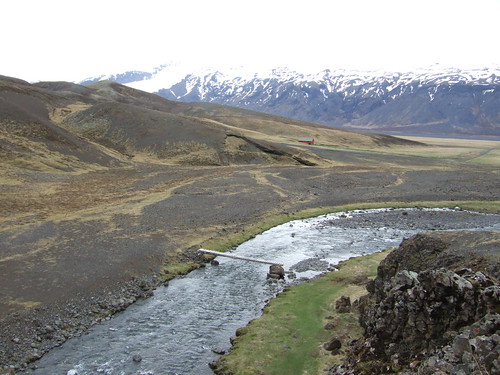
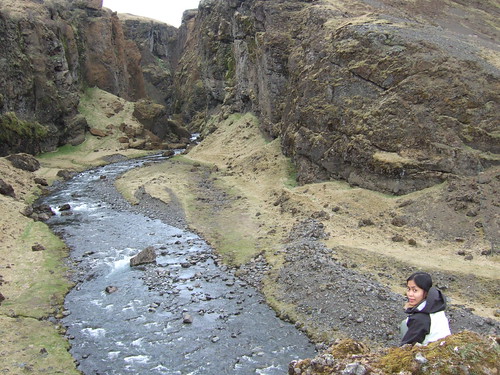
    We walked up to the gorge and crossed a sheep farm to get closer photographs of Eyjafjallajokull. We crossed a bridge to go over a raging river and get on the other side. It felt like we were the only two people in the world. We walked for about three hours, taking photographs, shooting videos. It got cold when the clouds moved in. The sheep started walking back to the farm. We knew it was time to head back.

    When we returned to the hostel, we met a Dutch couple and two Germans. It wouldn’t be a quiet night after all. The six of us all ended up chatting with Paul during dinner. The Dr. made a mean potato-cabbage salad with stewed chicken for our meal. (Everyone was amazed at how we simply could not subject ourselves to a simpler meal when hiking. They obviously don’t know us that well.) In exchange for some cooking oil, we gave Paul a glass of wine. In exchange for a Tupperware container to take leftovers with us, we served him a plate during dinner. It was a nice night of getting to know strangers in a new country.

    Related post/s:
    Day 2 and 3 in Iceland: Laugarvatn to Fljotsdalur photos on Flickr
    Day 1: Keflavik to Laugarvatn, Iceland

  • We landed in Keflavik a quarter before seven in the morning. The line was long through customs. We had to go through X-ray again without our shoes and liquids since it was the point of entry to the rest of Europe for a lot of the passengers. Our luggage were waiting at baggage claim but we had to queue again to exchange our dollars to the local currency, krona. We picked up our light blue Honda Jazz from National with the pre-paid hostel vouchers I’ve reserved beforehand for the next six nights.

    Driving outside of Reykjavik, my first impression was that the country was bleak and a little eerie. There were a lot of construction going on but the view was mostly a dry and flat valley as far as the eye can see. Our first stop was along a road marked Stardalur to take photos of the ice-capped mountains ahead of us. There would be more and better photo opportunities along the way but I was eager to start shooting.

    We continued driving until we reached a spot with a tourist sign, the þingvellir, home of the þingvellir National Park set along the north of þingvallavatn, Iceland’s largest lake at 30 square miles. There was really nothing there except squishy bog covered with dry wildflowers and a view of the blue lake, but apparently, it is the only place in Iceland declared by law as sacred because it was also the spot where the country’s first settlers formed a commonwealth in the midst of Europe’s feudal monarchies.

    The next stop was our home for the next two nights: Laugarvatn. It’s a small town with a golf course and a small spas but they were all closed because it was still off-peak season. The bonus, of course, was the Laugarvatn lake outside our room which made the water safe to drink from tap. I never thought I would ever say that water tastes so good. But it’s not a myth: Iceland has the best-tasting water. (Showering felt like I was wasting water; showering using what tasted and felt like bottled water!)

    After settling in, we heated up some of the food we packed: Korean jjajang tuna and Japanese rice with some pickled perillo leaves. We knew food was going to be expensive and if we wanted to eat well the rest of the week, we had to pack easy-open cans and microwavable packets. For the next few dinners, the Dr. cooked hot meals using ingredients we bought in gas station stores along the way. We drank all four bottles of wine I packed.

    Jet lag began to set in so we napped for a couple of hours. We woke up at 5pm local time, four hours ahead of New York, showered and made it to the town grocery store before it closed. We bought pasta and some sauce with the country’s infamous yogurt, or skyr. (I’m not a big fan of yogurt but I found myself eating a tub of it every morning because they taste so much better in Iceland.)

    We started driving again on Route 35 and 37 to the Great Geysir which, sadly, hasn’t spouted since several tourists poured gravel into its mouth to lower the water level and force an explosion. The Strokkur was more reliable and we watched it spout boiling water every five minutes or so up to 66 feet. The entire area is still geothermically active and it was hard not to try and test the hot temperatures while the cold numbing wind blew on our faces. In fact, there are reported “accidents” each year from people who forget what scalding water really means.

    We kept driving until we saw the sign for Gulfoss. Foss is “waterfall” in Icelandic and Gulfoss means “golden falls.” The road to the falls was barren and serene so it was an amazing sight to see the raging and deafening waters. Out of the calm was a welcomed chaos in a way. The river Hvita falls 105 feet into a mile-deep ravine and clouds of spray created rainbows.

    Langjökull and Hofsjökull, two large ice caps, were ahead of us. Alas, the road was closed to cars until the F-road is dry and safe. This is known as the Kjölur route and could have been done in a day. We drove back to our hostel and thought we’d try the hot springs at the Laugarvatn lake instead but it was closed. The two restaurants next door were empty, too. We went back to our room dejected but we ended up cooking and playing Scrabble until the sun partially set at midnight (!).

    Not so bad for our first day in Iceland.

    Related post/s:
    Day 1 in Iceland: Keflavik to Laugarvatn photos on Flickr

  • 28 Grand Street between Thompson and Sixth Avenue
    212/625.0362
    ♥ ♥

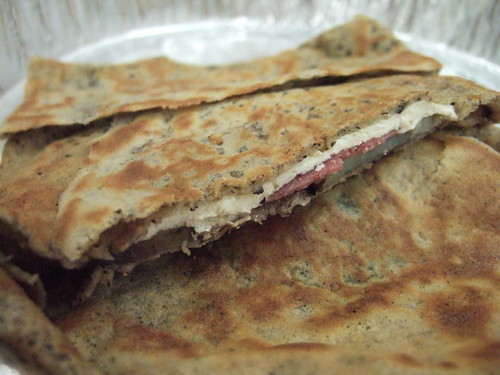
    I used to go to Palacinka way back when during the dot-com days. When my job moved offices back to the West Village, I was eager to visit again and eat one of their crepes. In Central Europe, a crepe is called palačinka and is filled with vegetables and meats. The savory kinds are reserved for desserts and are filled with fruits and cream.

    At this spot near the Holland Tunnel, I love sitting at one of the long wooden tables and sharing a couple of crepes with friends. When the weather is nice, the glass doors are open. The laid-back attitude of the staff makes you forget that you’re inhaling the soot of New Jersey commuters. The salami, potato and cheese crepe is one of my favorites. When not in the mood for a crepe, I like the ham-gruyere salad with thinly sliced potatoes drizzled with a sweet chutney dressing. The pressed sandwiches are thin and crusty and are perfect with a glass of chilled Pinot Grigio.

    Related post/s:
    Sister restaurant Bar Bossa is one of my favorites

  • 508 Greenwich Street off Spring
    212/219-2444
    ♥ ♥

    Giorgione is a jewel of a place found in the transforming neighborhood of Greenwich Street and the West Side Highway. It reminds me of the delis in Europe where locals eat and drink wine in the middle of the afternoon or leisurely enjoy coffee with a pastry. As soon as you walk in, you’re confronted with lunch boxes of greens with chicken or seared tuna. The long glass bars invite you to sit and casually enjoy your meal. It is that civilized way of living which delights me about Giorgione. When the restaurant is full during busy lunch hours, it looks like a happy communal space with beautifully-dressed New Yorkers.

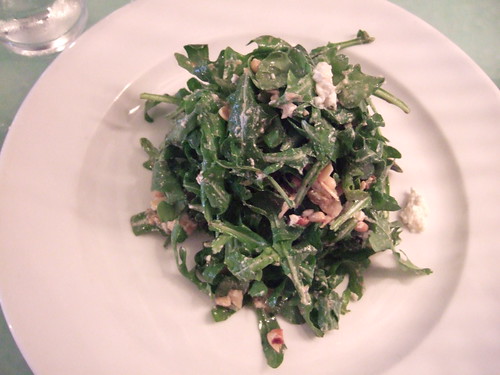
    My seared tuna looked more like sashimi but it was perfect with the bean and tomato salad. The baby arugula and endive salad with goat cheese became a more interesting dish when citrus and toasted pine nuts were added. I think a bowl of greens is easy to make, but a well-done salad is a hard feat. Giorgione does it easily and well. The hanger steak sandwich with stewed onions was large and filling, but the meatball sandwich covered in a big blob of mozarella looked unappetizing. All the lunch items are a bit pricey but this Italian joint is a nice break from the usual hangouts on Hudson Street.

  • I was too young to remember my first visit to Washington, D.C. with my parents. The Dr. has never been. So when we heard that Arcade Fire was playing in D.C. before New York, we bought tickets and decided to make a weekend out of it. It was just icing on the cake when I found out that Miriam was moving to the District from San Francisco (she’s in-love; bless hear heart).

    Michel Richard was inducted in the James Beard Foundation even before bloggers out there knew how important James Beard was to the culinary industry. His flagship Washington, D.C. restaurant, Citronelle, has been numerously named as one of the best restaurants in the country. When he decided to open an affordable bistro on Pennsylvania Avenue called Central, loyal fans and curious eaters waited eagerly.

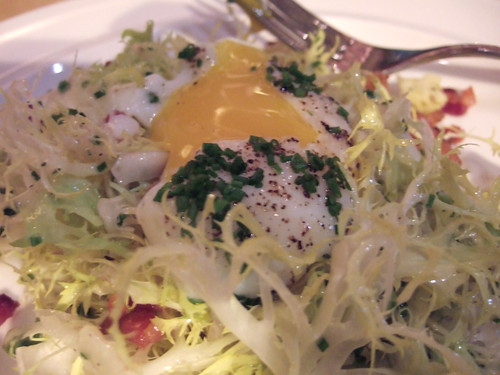
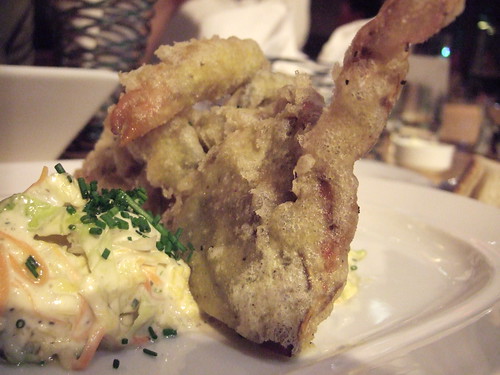
    I’ve never been to Citronelle so I have no way to compare head chef Cedric Maupiller’s signature dishes with Michel Richard’s. The French onion soup was simple; breaking into the cheese was like opening a surprise gift. The frisée salad was served with a poached egg. I appreciated the fact that after we requested it be split in two, we each got our own egg. The filet mignon tartare tasted all of mustard and pickles. I couldn’t savor the beef flavor I always look for in tartare. The crispy fries that came with it, though, were addicting. My soft-shell crabs were meaty and I could have eaten them on their own without the coleslaw. The fried chicken was buttery but surprisingly light. Even though we were never told where the dozen oysters specifically came from, we enjoyed them with our rosé sparkling wine. The small Brussels sprouts reminded me of mashed potatoes in my mouth, mushy and wet, but nothing cooked with bacon ever disappoints me. After a second bottle of wine, we ended our night with the famous Kit Kat bar which tasted like, well, a giant Kit Kat chocolate bar. It was so rich that the ice cream with it was almost unnecessary. It was definitely for someone with a sweet tooth and a lot of room after a full dinner. The mostly American fare came together at the end, but the service provided wasn’t up to par.

    Our waiter was a little bit surly. Perhaps because we asked to move to another table as soon as we sat down. Perhaps because we couldn’t make a decision on what to order. When we finally did, we chose mostly appetizers. There was a lag in service in between our oysters and our orders. When our food came, the empty oyster shells were still on our table. He made up for the surlyness by requesting the kitchen to appropriately split a couple of our dishes in two as we requested, but he made me wonder about what we or anyone else did to ruin his night. And though most people may not care, I was a bit surprised that our used plates were stacked on top of each other when the staff was cleaning the table. Surely, they do not do the same thing at Citronelle. Do regular citizens like us have to receive a lesser quality of service just because we’re dining at the bistro and paying $100 less?

    Central Michel Richard is at 1001 Pennsylvania Avenue NW, 202/626.0015
    Where to stay in Washington, D.C.: The Carlyle Hotel

    Related post/s:
    Washington, D.C. photos on Flickr

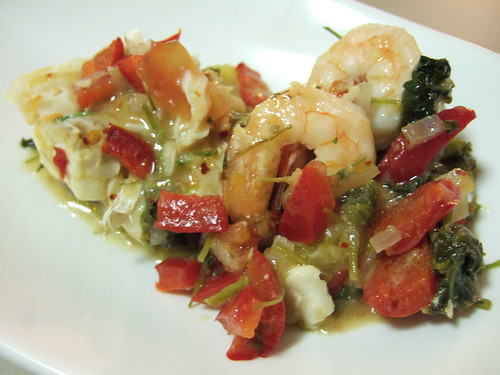
  • Gourmet Magazine published this Moqueca Capixaba Brazilian fish stew in their food and travel issue. I remember reading the recipe on my way home and my mouth started watering. I knew the cilantro and lime were going to be key here so I ended up putting double the amount for both. This became one of my favorite dishes this spring.

    Ingredients:
    2 pieces of cod fillets, pat dry with paper towel
    1/4 pound of shrimps, peeled and deveined
    juice from 2 limes
    1 bunch of cilantro, roughly chopped
    3 plum tomatoes, chopped
    1 red bell pepper, chopped
    1 large red onion, chopped
    2 yellow plantains, peeled, halved and cut into 8 pieces
    5 cloves of garlic, minced
    red pepper flakes
    salt, olive oil

    1. In a shallow bowl, stir together lime juice and red pepper flakes, garlic and salt. Pour over cod fillets and shrimps. Cover and marinate while you prepare the vegetables.
    2. Put tomatoes in a large Dutch oven. Top with the onions and bell pepper. Place plantains on top and season with some salt. Arrange the fish and the shrimps on top of the vegetables. Sprinkle cilantro over the fish and pour over lime-garlic marinade with some oil.
    3. Bring to a simmer and then cover the pot. Adjust heat to gently simmer for about 20 minutes, until vegetables are soft and fish and shrimps are cooked through.

    Related post/s:
    Fish stew, Korean version

  • 222 West 79th Street off Amsterdam Avenue
    212/873.0200
    $45 for two people, with one drink, without tip
    ♥ ♥

    I was really surprised at how Onera had changed. The navy blue and white walls remained so I was taken aback when I walked in the lower-level space of Kefi. I was even more shocked when our bill was delivered. Sure, I didn’t have any wine that night and we made a meal out of several mezes, but it’s been a long time since the Dr. and I have spent less than $50 on dinner.

    Chef Michael Psilakis’ Onera was one of my favorite places during its heyday. Gone are the long tables and nice chairs but the straightforward taverna food is still on the menu. I was recovering from being sick and when my appetite came back, I was pining for warm pita and an octopus. (I’m weird like this often.) When the spreads were served, I couldn’t stop myself from eating them. The yogurt was tart, the caviar salty, the eggplant mushy and the hummus garlicky–four sensations I wouldn’t ask less of on any given night. The sweetbreads were crispy with breaded onion rings and an addicting sauce with giant capers. I’m not the biggest fan of capers but they were excellent with the offal. (Oh, the offal tasting menu of Onera!) I would have wanted the octopus with a crispier crust but I absolutely loved the bed of chickpeas and black-eyed peas with parsley. If not for the overwhelming garlic in the mashed potatoes, the cod would have been one of the best fish dishes I’ve had as of late. Not that all the garlic stopped us. Everything tasted like they were done out of love; like a Greek grandma was in the kitchen telling us to “Eat, eat, eat!” because all our dishes were served all at once. Greek food I must say, is a cuisine I started to love as soon as I started taking photographs of my food, and it will be in New York City to stay.

    Related post/s:
    Kefi used to be Onera
    Around the neighborhood: ‘cesca
    Greek food downtown

  • 71 Spring Street between Crosby and Lafayette Streets
    212/966.5050
    $120 for two people, with four drinks at the bar, with tip
    ♥

    I haven’t been to a nice bathroom with communal sinks since my clubbing days–and I mean, like a real club, not the ridiculous Sea in Williamsburg, Brooklyn–and I’ve never been to AIX Brasserie either, chef Didier Virot’s first venture with Philip Kirsh, so it was like a new experience walking into Fr.Og with pink leather seats and silver-beaded walls. What could possibly come out from the kitchen of a place looking like this in the middle of SoHo?

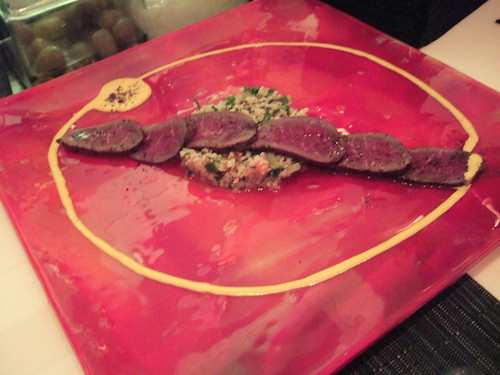
    The menu is French with Vietnamese, African and Middle Eastern influences, but really sounds less confusing on a plate. Fried spring rolls, or Vietnamese nem ran, has the traditional pork and shrimp with cucumber, lettuce and carrot on the side dressed with mint and garlic dressing. They were perfectly dainty and crunchy; the mint starting a party in my mouth. The Lebanese tabbouleh was better than the seared lamb loin served on top of it with its texture giving life to the cold, almost-limp tongue slivers of lamb. I only wished there was more of the foie gras encrusted in ginger. I didn’t even need the mango coulis and the soy-balsamic sauce with it. The drinks were even better than the appetizers. A coconut-lemongrass infused martini was beautifully done and so was a request for a citrusy and fruity cocktail after our meal. The maitre d’ and the bartender were equally nice and accommodating, quite a pleasure from a restaurant that plays dance music in the background.

    Chef Didier is known for the short-lived Virot at the Dylan Hotel (later taken over by none other than Britney Spears’s NYLA, also short-lived) but his partnership with Jean-Georges Vongerichten as executive chef at JoJo should be taken more into account. The guy can obviously cook and has a tremendous palate to be able to translate different cuisines on each dish, but at $120 for three small plates and four drinks, I don’t know if people are hurrying to flock the place. I would come back, though, to use that bathroom.

    Related post/s:
    Cheaper Vietnamese food at Xe Lua minus the pretty bathrooms

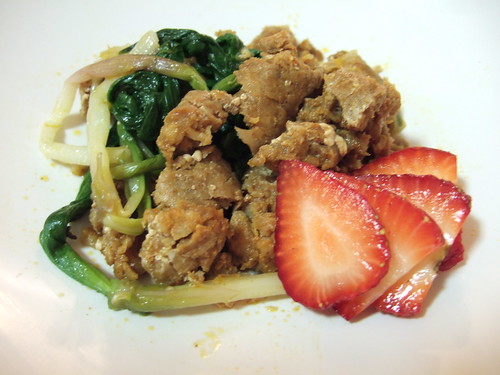
  • When I begin to see ramps for sale in the farmers’ market, I only think of one thing: it’s spring. I bought a couple of bunches last Wednesday and stopped by the High Hope Hog tent to pick up a package of their spicy chorizo. For the last few ramp seasons, I’ve sautéed them with bacon or pancetta. This time, I wanted to try something slightly different. I’m loving the fruit-in-my-salad thing lately, maybe because we East Coasters have been deprived of fruits all winter, but there have been beautiful strawberries in the market and I wanted to add a little bit of sweet and tart to this dish. The result? The ramps balanced the perfect combination of subtle fruitiness and pork saltiness.

    Ingredients:
    2 bunches of ramps
    3 pieces of spicy chorizo
    a handful of fresh strawberries, sliced thinly
    a bowl of ice water
    salt, pepper, olive oil

    1. Add thoroughly washed ramps in boiling water for four minutes. When they’re done, drain and shock them in ice water to stop its cooking.
    2. Using a large skillet, heat some oil and fry the sausages until brown on all sides. While cooking, crush the sausages in smaller pieces with a wooden spoon.
    3. Using the same skillet, add the ramps and toss them in the rendered fat with salt and pepper. Plate and serve with strawberries.

    Related post/s:
    Ramps with pancetta
    Ramps are $2.50 a bunch at the farmers’ market from late April to early May

  • 58 MacDougal Street between Prince and Houston
    212/674.4968
    $90 for two, with a bottle of red, without tip
    ♥ ♥

    I’ve walked by Salt many times and have always been curious. We stopped by on a Friday night without reservations. They were completely booked but the waitress invited us to sit down with a “We’ll figure it out when the couple with the table comes in.” As soon as we joined the other diners at one of the long tables, a whole bottle of red was in order–other couple be damned.

    The rack of lamb was well-executed. The crust was crispy and the meat perfectly medium-rare. The Dr. opted for one of their Protein + 2 options: duck breast with sautéed eggplant and braised leeks. The meat was a little overdone but the vegetables were simple and undeniably hearty. Other safe choices included a grilled dorade, roasted chicken, Newport steak and a bowl of pasta. Fennel, asparagus, artichokes and Yukon gold potatoes were available as side dishes. The menu may be unexciting but our dessert spoke volumes: a plum tart frangipane topped with a delicious rosemary ice cream.

    I’ve fallen in-love with a restaurant before because of the ambiance and upon entering Salt, my heart pitter-pattered. Wooden communal tables occupy most of its intimate space. The open kitchen behind the bar invites you to sit, eat, drink wine and enjoy a conversation. The dim, warm lights make you feel like you’re in someone’s gorgeous apartment with exposed bricks. As the night leisurely passed and the buzz around us became intoxicating, we just wanted to stay.

    Related post/s:
    Provence is only a few stores down

  • The Cornish hens were on sale at my grocery store. I bought two and thought about cooking the chicken and pomegranate stew recipe I published a couple of weeks ago. I didn’t have vegetables so I just used the spices in my cupboard. The meat fell off the bones easily so I ended up deboning the hens while the liquid reduced and thickened. For texture, I added some sesame seeds and crushed almonds before serving.

    Ingredients:
    2 Cornish hens
    2 tbsps pomegranate molasses
    1/4 cup honey
    1 red onion, chopped
    3 cloves garlic, minced
    12 threads saffron, soaked in 3 tbsps of hot water
    1 tsp ground ginger
    1 tsp ground cinnamon
    1 tsp nutmeg
    1 pinch of whole cloves, grounded
    4 parsley stems, chopped
    2 bay leaves
    1/4 cup whole blanched almonds, crushed, toasted
    1 tbsp sesame seeds, toasted
    salt, pepper, olive oil

    1. Preheat oven to 350º. In the meantime, heat olive oil in a large Dutch oven. Sauté the garlic and the onions. Add and brown the Cornish hens on all sides. Remove the hens to a plate.
    2. Add all the spices including the saffron to the pot with 2 cups of water. Simmer and reduce until somewhat thickened for 25 minutes. Then add the pomegranate and honey to the liquid and let simmer while gently scraping off the bits from the bottom of the pan. Season with salt and pepper. Add the hens back, cover the pot and put in the oven for 10 minutes.
    3. When done, carefully remove the pot from the oven. Remove and discard bay leaves. Using a pair of tongs and a fork, slowly take off the meat from the bones. The hens should be so soft and tender that the meat just slides off the bones. Discard the bones. Plate meat and top with toasted sesame seeds and almonds.

    Related post/s:
    I like my pomegranate and Cornish hens

  • Last November, The New York Times published this no-knead bread recipe from Jim Lahey of Sullivan Street Bakery and food bloggers everywhere went berserk. But it requires some time and I couldn’t squeeze in a day and a half to try it myself last year. Fast-forward five months later and I’ve adjusted the recipe according to the trials and errors posted on the Web and finally tried it at home this past weekend when the summer weather called for my own homemade bread.

    As you may or may not know, I’m scared of baking. I’m a better cook than baker because with cooking, I can adjust ingredients and steps by taste. I feel like with baking, I can never turn back. Baking makes me afraid of making mistakes while cooking allows me to make room for circumstances that may be beyond my control. So you can imagine when I tried this recipe and it came out looking like, well, bread. I was squealing with delight! I sat down with my mother, opened a bottle of Chateau de La Chaize and ate it with cheese and anchovies, pintxos style.

    Ingredients:
    3 cups all-purpose white flour, more for dusting
    1/4 tsp instant yeast
    1 1/4 tsp salt
    1 1/2 cups water

    1. In a large glass bowl, combine flour, yeast and salt. Add 1 1/2 cups water and stir with a wooden spatula until blended. Your dough will be sticky. Cover bowl with plastic wrap. Let dough rest at least 12 hours, preferably about 18, at warm room temperature, about 70 degrees.
    2. Dough is ready when its surface is dotted with bubbles. Lightly flour a work surface and place dough on it. Sprinkle it with a little more flour and fold it over on itself once or twice. Cover loosely with plastic wrap and let rest for about 15 minutes.
    3. Using just enough flour to keep dough from sticking to work surface or to your fingers, gently and quickly shape dough into a ball. Generously coat a cotton towel (not terry cloth) with flour. Put dough on the towel and dust the top of the dough with more flour. Cover with another cotton towel and let rise for another 2 hours. When it is ready, dough will be more than double in size and will not readily spring back when poked with a finger.
    4. At least 30 minutes before dough is ready, heat oven to 450º. Put a large Dutch oven in the oven as it heats. When dough is ready, carefully remove pot from oven. Gently place dough into pot. It will still be a little sticky. Shake pan once or twice if dough is unevenly distributed. It may look like a mess but it will straighten out as it bakes. Cover with lid and bake for 30 minutes, then remove lid and bake another 15 minutes, until loaf is beautifully browned. Cool on a chopping block.

    Related post/s:
    Make it or buy it from Sullivan Street Bakery
    Pintxos style, the way they do it in Barcelona