• 265 Lafayette Street, off Prince
    917/338.6207
    $50 for two, BYOB for now, with tip
    ♥ ♥

    I remember loving Falai when I visited two years ago. A panetteria has opened down the block since then, and now a cafe on the west side. Cafe Falai is BYOB and closes at 8pm while they wait for their liquor license. The waiter entertained me while I waited for my two dining companions. They were so late he lent me his cell phone so that I can play Boggle. He told me he had only been working there for three days, but as soon as my group showed up, it seemed it was his first stint as a waiter, ever.
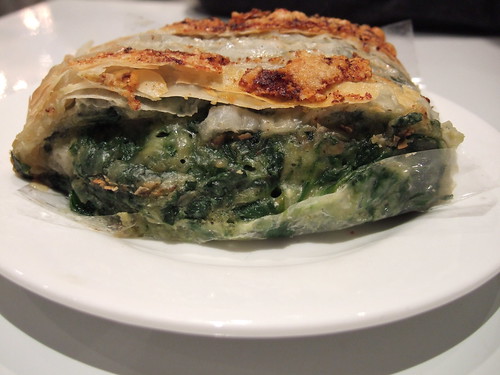
    The menu is not much different from the original Falai. Our beautiful bowl of caramelized onions came with a dot of yolk. Before we finished raving about how it looked, the waiter grabbed a spoon, stirred the yolk and scooped up the onions to distribute in our small bowls. He left and returned with a small pot of consommé and poured the broth in our bowls and then left again to take everything away. Our delicate onion soup looked abused. It looked like we were eating chunky tea, but the waiter obviously thought he was giving us extra love. Fortunately, he left us mostly to ourselves the rest of the night. (We tried to laugh with him when he burped while giving us our check.) The breaded and fried mozarella was incredibly light and the balsamic dressing over the frisé was exceptional. I was just a tad disappointed that it came with only five small golden beets. The pappardelle with mushrooms was good, served with buttered sauce and sage. The branzino was perfectly cooked. Its crisp skin gave way to the tender white meat. I loved that it soaked in soupy pesto with mini Brussel sprouts and grape tomatoes. The veal meatballs were less adventurous, however, and the octopus, I thought, was undersalted and too soft. Because chef Iacopo Falai was a pastry chef at Le Cirque 2000 back in the days, we didn’t want to skip the cafe’s dessert offerings. We ordered a citrus tart which I loved because of its gingery taste, but my companions preferred the light and flaky apple pastry. I would like to go back for their baked goods and cup of illy coffee the next time I visit. I just hope that the waiter is not there before dinner service.

    Related post/s:
    Iacopo Falai’s first restaurant

  • Here’s the video of the three volcanoes we visited in Nicaragua, courtesy of Trip Films.

    Related post/s:
    All posts about Nicaragua
    Video courtesy of Tripfilms.com

  • We’ve seen the old city. We’ve seen the new city. We’ve hiked several volcanoes. It was time to go to the beach and spend our remaining days in Nicaragua on Little Corn Island. After a quick flight from Managua to Big Corn via Bluefields, we waited for a couple of hours for the boat that took us to Little Corn. At the docks, one of the locals asked us and a Canadian couple to follow him after he heard that we all wanted to stay at Derek’s Place–this small paradise on the island with only a short description in our guide books. (We didn’t know then that you could go to the dive shop at the docks and ask for availability. They can radio almost anyone on the island to save you from trekking through the forest yourself.) With our backpacks on and the humidity like Times Square in July, the trek to Derek’s Place was tiring. When we finally got there, we found out that there was only one hut available. They only have four huts on their property and you basically have to wait and see. We introduced ourselves to the Canadian couple and shared the hut for the first night. The next day, we lucked out when another hut was vacated–we felt more at home the next two nights.

    Derek’s Place is nice; there’s no other word to describe it. Derek first came to the island when he was young and returned when he decided to leave California. He met his Catalunyan wife, Anna, a bit later and she followed him to the island. They have two young kids and they’ve since made their living by welcoming travelers from all over the world to their huts. I’ve stayed in plenty of huts the last six years, but none were as beautifully built for $25 a night. Colored bottles emit glow when the moonlight hits them at night. The shared bathroom has a giant wok for a sink and the shared shower room reminded me of Caves Branch in Belize from a trip a few years ago. Derek likes to cook so we had very good dinners for three nights. During the day, we would eat the same usual fare: fried chicken and fried fish with plantains bought from the small shacks by the docks. But for dinner, Derek served us everything from conch and shrimp salads, to pasta with shiitake mushrooms, to fish broth to curry to smoked snapper and jack. The Dr. and I also drank the coldest beers on the island because of their windmill and solar power. We even finished a bottle of wine and rum in two days just by sitting around the fire at night. During the day, when we weren’t reading our books or sleeping on the hammocks, we walked to and from the docks to look for food, rented bikes to circle the island, swam and sunbathe on different beaches. Little Corn may be little, but it had so much to offer big city dwellers like us.

    You can imagine how difficult it was to leave. On our way back to catch our flight to New York, we decided to stay on Big Corn Island instead of Managua. There was an unmistakable feeling that, once upon a time, Big Corn Island was the center of it all. Walking around the island felt eery. Somehow, I kept thinking of Gabriel Garcia Marquez’s words and imagining the ghosts of the island’s past. As we walked around and witnessed empty lobster traps strewed on the side of the road, buildings left in ruins, and a dry swamp with mangroves clinging to dear life, Big Corn Island instantly became a ghost town; a place that was once full of life. We stayed at Anastasia’s on the Sea, a sound recommendation from the dive shop on Little Corn. It was a long way, but a pretty drive especially when the road started to hug the sea. Coconut trees leaned and followed the warm wind, while anchored boats floated in the water. Our room at Anastasia’s came with two beds, satellite TV, and private bathroom for the same price as our hut at Derek’s. Our door opened up to a porch with small steps to the shallow water. Anchovies swayed with the waves like blades of grass. The view was incredible: infinite turquoise waters and a wooden bridge which connected the hotel to their bar and restaurant on stilts. But after closer inspection, Anastasia, with the rest of the island, became antiquated before our eyes and just became eery. (And I was sober.) The cheesy fish and shell decor in the hallway was a much better choice than bustling Managua, but something was amiss. It was time to go home.

    Where to stay in Little Corn Island, Nicaragua: Derek’s Place
    Where we stayed in Big Corn Island, Nicaragua: Anastasia’s on the Sea

    Related post/s:
    Little Corn Island photos on Flickr
    Big Corn Island photos on Flickr

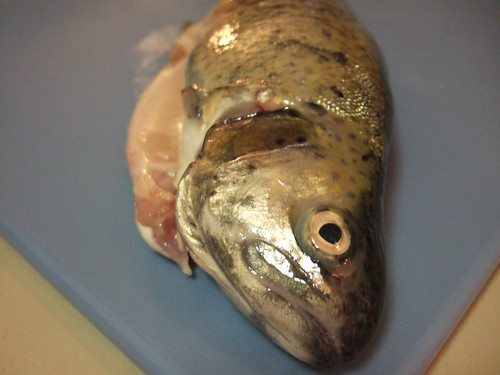
  • It felt like spring, so imagine how perplexed I was when I saw that there were only a few tents set up in the farmers’ market. I suppose if the market was crowded, I would have missed the group of men gathered around a small table. Men? Shopping? I squeezed myself in just as the last smoked trout was bought, but saw that there were still some fresh fish inside the giant coolers. Dave Harris of Max Creek Hatchery told me that his fish were still swimming until 7pm the previous night. He introduced me to the rainbow trout which had some purple tints on its scales, and to the brook trout which had some yellow polka-dots. He told me he prefers the brook trout, but both were very pretty that I ended up buying them to cook and compare during dinner.

    Ooh, pretty, was the Dr.’s reaction when I told him over the phone that I bought trout from the market. He loves to fish and he loves eating them even more, and trout was what he was pining for when we were driving past the river in Oregon. When he came over, he brought with him a bottle of a 2006 Sauvignon Blanc Semillon Australian wine. We drank while he got to work: he put a sliver of butter inside each of the fish with some garlic cloves. He lightly coated them with flour and sprinkled them with salt and pepper. He fried them in hot oil until they were both golden brown and crispy. With some of the leftover frying oil, he sautéed some mushrooms in a skillet and tossed them with arugula and rice wine vinegar dressing. I was surprised that the brook trout tasted like salmon. Its meat was orange and sweet. The rainbow trout was like any fried white fish–a little less exciting but would have been great with green mango salad.

    Ingredients:
    1 fresh brook trout, cleaned
    1 fresh rainbow trout, cleaned
    half a stick of butter, thinly sliced
    1 cup of flour
    6 garlic cloves, thinly sliced
    salt, pepper, frying oil

    1. Insert garlic and butter in trout’s cavity. Season the inside of the fish with salt and pepper. Combine flour, salt and pepper and coat trout.
    2. In a skillet, heat oil and fry trout until golden brown on one side. Use tongs to gently turn and cook the other side until golden brown, too. Do not cover. Remove each each fish to a plate lined with paper towel when cooked.

    Related post/s:
    Union Square Greenmarket

  • I like assembling my own pizza at home. I say assemble rather than bake because I buy my pizzettas from Sullivan Street Bakery. I’ve tried their ciabatta bread and their focaccia with rosemary, but my favorite would be their light pizza bianca. A pizza square good for three people costs about $2. I used some ingredients I already had in my fridge. For olive oil, I used the shiso oil I made. Instead of goat cheese, I finished the sheep’s milk cheese I picked up with my lamb earlier in the week. Of course, you can put anything and everything on your own pizzetta.

    Ingredients:
    1 square of pizza bianca or focaccia bread
    4 slivers of pancetta
    fresh arugula, rinsed, pat dry
    1 small pear, sliced thinly
    a handful of bella mushrooms, wiped clean, sliced
    1 small red onion, finely chopped
    sheep’s milk cheese or goat cheese
    2 tbsp balsamic vinegar
    olive oil

    1. Preheat oven at 350º. In the meantime, heat some oil in a skillet, sauté onions and mushrooms with the balsamic vinegar. Cook for about 10 minutes or until mushrooms are soft.
    2. Prepare pizzetta on a baking sheet wrapped in aluminum foil. On the bread, lay the arugula and top with pancetta, pears and mushrooms. Drizzle some olive oil.
    3. Bake in oven for 20 minutes, enough to cook the pancetta and toast the bread.

    Related post/s:
    A different style of pizzetta
    Where to buy good bread and pizza bianca
    Where to buy sheep’s milk cheese
    How to make your own shiso oil

  • 747 Saint Nicholas Avenue between 146th and 147th Streets
    212/491.5518
    $12 for two fish and chips, take-away

    Harlem is far away from England, but Devin’s fish and chips come close to a good snack on a lazy and gloomy weekend afternoon. For $6, you can eat or take away three pieces of lightly breaded fish, red snapper or whiting, with a handful of fries. They don’t have malt vinegar but there’s tartar and Tabasco sauce. We bought two and sat down on the stools in the narrow space inside while people stood in line to wait for their turn to order. The other customers were ordering everything from broiled whole fish to calamari to crab claws. While we waited, we discovered that the store across the street had some of the best beer selections in West Harlem. We bought two bottles of Smithwick’s and drank them wrapped in paper while we ate our fish and chips. Sometimes, the neighborhood pulls through.

  • 25 Clinton Street between Houston and Stanton
    212/253.2900
    $180 for four people with three carafes of sake and two beers, without tip
    ♥ ♥

    I didn’t expect to save money during Japanese Restaurant Week. Every restaurant week promo I’ve managed to attend always sounded better than what I actually ended up experiencing. The discounted menus during restaurant week are usually subpar, with the least expensive ingredients being offered. I’ve been content with some of the prix fixes I’ve ordered, but what to drink with them? My bill just always adds up in the end. I booked a table at Sachiko’s to take advantage of the week-long event, but not once was I reminded by the restaurant’s staff. On my way out, I saw printed menus on the bar with a 10% coupon attached to them. Even if they told me about Japanese Restaurant Week, my discount would have been, at most, $18. I doubt I ordered anything that was eligible for the discount anyway.

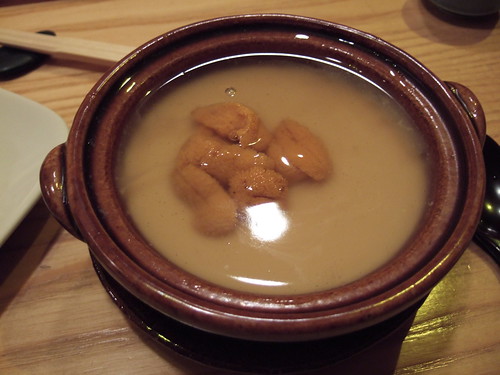
    For $20, you can get at least three slivers of seven types of fish–that’s a whole lot of fish! It was the better choice because nothing in the a la carte menu was different. The eel wrapped in rice paper was a bit boring, and the kushiage, breaded and deep-fried meat and seafood assortment, although lighter, was similar to anything I’ve eaten before that’s been breaded and deep-fried. My favorite was the soy and egg “soup” with uni, a delicate concoction of soft tofu, egg and sea urchin. Scooping up the tofu and having the uni softly collapse in my mouth were most pleasurable. At Sachiko’s, the sashimi was pretty good, the sake choices even better.

  • I was at the market already so it was pretty hard to resist the lamb chops from 3-Corner Field Farm. It’s lambing season soon and they won’t be back in the market until June. I picked up four chops that cost $30 with a big knob of sheep’s milk cheese covered in herbs de Provence. The lamb was just slaughtered and packed immediately–I could tell as soon as I unwrapped them at home. Unlike the chops I buy from my neighborhood grocery store, the meat hasn’t been in storage for a long time and it tasted like it, too.

    I cook a lot of lamb at home. I’ve cooked it with Indian spices. I’ve served it with corn pudding. I’ve tried it the Julia Child way. This time, I wanted to keep it simple. I mixed some olive oil and balsamic vinegar with minced garlic and fresh rosemary and brushed it on the chops. I broiled them for about ten minutes per side. They were done as soon as I poked them–soft, but firm. (Remember the meat of your palm right below your thumb.) I took them out of the oven and let them sit for five more minutes to finish cooking while I tossed some greens with the sheep’s milk cheese. We finished a bottle of red Loire wine with it.

    Ingredients:
    3 grass-fed lamb chops
    5 garlic cloves, minced
    3 sprigs of rosemary
    1 cup balsamic vinegar
    salt, pepper, olive oil

    1. Preheat oven to 350º. In the meantime, combine all the ingredients in a large bowl and marinate the lamb chops in it.
    2. When ready to cook, roast lamb chops for 10 minutes per side. They’re perfect when the meat feels like the palm right below your thumb. Remove from oven to a chopping block and let rest for five minutes.

    Related post/s:
    Where to get grass-fed lamb chops and sheep’s milk cheese
    More lamb recipes

  • I tip-toed on freshly-fallen snow at the farmers’ market to buy some grass-fed beef. I stopped by the New York Beef Company tent and met John to ask about what he was offering. My hands were already cold, but I looked through his frozen bags to buy the best-looking steak I can get for dinner. I know everyone’s been on the grass-fed wagon already but unfortunately, I find food items with organic or sustainable or grass-fed or free-range labels expensive. If you’re like me, then you also buy food items at least once a week. They all add up to a very expensive grocery bill each month. Plus, the only farmers’ market easily accessible to me is the one at Union Square, and even though I work downtown, I find it a hassle to stop by.

    The New York Beef sells 100% grass-fed steak, prime rib, roasts and other fine cuts of beef. I got a nice steak for about $22. The Dr. covered it with some salt, pepper and minced garlic and broiled both sides until it was tender–poke the meat of your palm below your thumb; that’s how it should feel for medium-rare–and we ate it with oyster mushrooms sautéed in goose fat served on a bed of arugula and mixed greens. A bottle of Cabernet was the perfect match. I realized later that it was John who left me a message last year when I spent $14 on a piece of sirloin steak from Dean & Deluca. If he’s reading this, I hope he’s proud. His beef not only looked beautiful, it was delicious, too.

    Ingredients:
    1 beef steak
    6 garlic cloves, minced
    salt, pepper, olive oil

    1. Massage beef steak with all the other ingredients.
    2. When ready to cook, broil beef steak in oven set to high until medium-rare. They’re perfect when the meat feels like the palm right below your thumb. Remove from oven to a chopping block and let rest for five minutes.

    Related post/s:
    Where to get grass-fed beef steak

  • I was listening to the controversies surrounding clarklewis over a round of cocktails. The owners were the stars of Portland’s food scene until they divorced which resulted in two of their restaurants closing. Some thought clarklewis was too loud and too dark when it first opened, but there are still the fanatics who remain loyal and still frequent the restaurant’s supper events even with all the new choices cropping up in the area. It remains one of Sam and Jenny’s favorites, so they booked a table for the six of us our first night in Portland. I first reacted to the space because it used to be an old warehouse along Water Avenue. It reminded me of the small galleries that moved out of Manhattan and rented open spaces for less money in DUMBO, Brooklyn. I’ve always liked that unfinished industrial look. As soon as we were seated, I turned to look around me and I immediately liked the buzz. It wasn’t too loud and it sounded like everyone else was having a good time. The menu consisted of very simple choices. There were familiar salads and pasta dishes that already sounded good on paper. We decided to get several half orders of them to share with the entire table, but by the time they were served, there was hardly any sharing going around. We all wanted to claim our own.

    The duck and parmesan salad was excellent. You can’t go wrong with fresh produce and good cheese peppered with small pieces of roasted duck. The endives were slathered with brown sugar which made them sweet, but at the same time very nutty. The fennel salad with the navel oranges and olives was by far my favorite. The bowl of clams was deliciously hearty. I was using the sausage-flavored broth as dip for the bread. If we didn’t run out of bread on the table, I would have been set for the night. The lamb chops were to die for. I had the same dish the previous night at Celilo, but my craving wasn’t fulfilled until we cleaned our plates. I found the broccoli an uninspiring accompaniment, however, but fortunately, Dave’s tagliatelle and Carmie’s beef stew in pasta filled us all up. A bottle of Italian wine was a good compliment to everything we ordered and our choices of desserts were the perfect end to a long, satisfying meal with friends.

    clarklewis is at 1001 SE Water Avenue in Portland, Oregon. Call 503/235.2294 for reservations. They are closed on Sundays and Mondays.

    Related post/s:
    Eating in Hood River, Oregon: Celilo

  • I figured as much, Ian said, after I told him I was from New York City. Each sushi on the menu was priced at $2. Two dollars! I’m used to paying $5 a piece and up to $11 for an otoro, so you can imagine the kind of gasp I let out that elicited such a comment from Ian, the sushi chef. We had three hours before our flight back to the concrete jungle, so Sam decided to take us to one of his favorite sushi places in Portland before driving us to the airport. Three of us sat at the sushi bar in the back and ordered the omakase with several kinds of sake. Ian performed the rest of the night.

    Pine nuts gave the tombo tuna tartare more texture. Lotus root chips and endives were used to scoop them up. If sports bars served snacks like this, I’d be watching more sports. Next came the tuna and salmon carpaccio with finely chopped shiso leaf and a cute toasted garlic sliver on top. I was surprised at how the garlic gave a nice kick to the big pieces of sashimi. The amberjack was folded like a fortune cookie, served with chives and chili threads. Just a touch of sweet soy gave the fish its needed moisture. The salmon sushi was just salmon sushi and the yellowtail was just yellowtail, but that may be why Ian thought about making the next dish so complicated: he spiced up some octopus, wrapped it in seaweed, wrapped that in tuna and topped everything with tobiko.

    When I thought we were done, the Dr. asked to taste the scallops. So Ian created a big roll for him while he indulged me with the most decadent shot of sake I’ve ever had–it had swimming oyster, uni and raw quail egg in it. (That was for the reader who told me to try oyster shooter the next time I get a chance.) As usual, we ended with a maki of shiso leaf to cleanse the palate, but Sam opted for the French toast with maple syrup and whipped cream. Sam thought he was also on vacation.

    There was nothing sublime about the fish at Yakuza but everything was fresh and beautifully cut. Ian gave us his complete attention during our time at the sushi bar and made us visitors feel like there’s no reason to go back home. At less than $190 for all the fish we ate and all the sake we drank, even I couldn’t complain. Did I already say that the west coast is starting to become more appealing?

    Yakuza is at 5411 NE 30th Avenue in Portland, Oregon. We walked in without reservations, but for busier nights, call 503/450.0893.

    Related post/s:
    Eating in Portland, Oregon: clarklewis

  • After a half-day of snowboarding for the first time in two years, we were famished. Next to the Oak Street Hotel was Brian’s Pourhouse. It came recommended by the front desk, but we decided to skip it after we noticed the TV at the bar. Across the street was Three Rivers Grill. We crossed to check out the menu but stopped halfway after we saw the large sign up front: “Buy one steak, get another free. Wednesday nights.” During our drive down from Mt. Hood, I remembered seeing a restaurant that looked nice, so I coerced the Dr. to walk a few more blocks to check it out. (Our legs were sore, so walking took some convincing.) As soon as we saw that there were lamb chops on the menu, we walked in Celilo.

    We knew we wanted a local Pinot Noir. We only ordered half of the Elk Cove because we wanted to start with a dirty martini–the Dr.’s latest drink–and the pear-flavored champagne, described as “pure Oregon in a glass”. We started with half a dozen of the oysters. A year ago, there was a warning not to eat oysters from the Pacific Northwest. I haven’t heard any bad news since then but they were as salty and sweet as I remember them. The pear and walnut salad was hefty, just the way I like my salads. And the lamb? Much better than I expected. The chops came with braised shoulder, which made the dish more than perfect for winter. For dessert, we stuck with our usual pick, a tart tarte (ha!), a homemade combination of huckleberry filling and vanilla ice cream.

    The service was nice. There’s just no other way to describe the attitude of food servers outside New York City. I can call them “slow”, but I know that’s unfair since New York is the only city I’ve been that’s in a perpetual hurry. Regardless of the place, when I ask for medium-rare, I expect medium-rare. Celilo fulfilled everything we asked for except the dirty in the Dr.’s martini, but at $104 for two including tip, I turn most of the Cia off. I play nice in return. The martini stayed clean.

    Celilo Restaurant and Bar is at 16 Oak Street in Hood River, Oregon. We walked in without reservations, but during busy season, call 541/386.5710.

    Related post/s:
    Eating in Portland, Oregon: Yakuza