• 135A North 5th Street off Bedford Avenue, Williamsburg, Brooklyn
    718/302.5151
    about $90 for dinner for four, without drinks, without tip
    ♥ ♥

    Updated, December 2008: We closed egg for one Friday night to celebrate my birthday where we had fried chicken, sautéed kale, collard greens, mac-n-Grafton cheese, plus some corn bread and biscuits–all deserves another ♥

    I know the owner of egg, that breakfast place in Williamsburg, Brooklyn, with the hipsters waiting outside on weekends. George Weld is a good friend and he also happens to be the chef. Forgive me if this review may seem biased, but I swear I’m not giving anything to this restaurant that’s not well-deserved: three hearts for breakfast and two for dinner.

    For years, egg shared space with Sparky’s and only served breakfast until noon. Now, egg has taken over the entire space and is serving lunch (on weekdays only) and dinner until 10pm. A liquor license is on the way. All the menus are still Southern-inspired, and they still get all the ingredients they can from small and local producers. Needless to say, I am happy and proud of the egg family–so we made the trek from Harlem to Williamsburg one weekend to congratulate them.

    After a ridiculous 40-minute wait for breakfast, we were finally seated right by the door. A few more diners came in before the waitress put up a note saying that the kitchen was closed until 6pm. People still came in to try and get food, letting in the draft behind me. I was uncomfortable and cold, but our waitress made sure that we got the next table that freed up farther from the entrance. After being transfered, we finally took our coats off and enjoyed our late breakfasts of eggs, grits, scrapple (pork scraps with cornmeal), bacon, hash browns, and pork sausage. For a place full of hipsters, the attitude of the staff makes you feel like you’re not even in New York City. They’re friendly, accommodating, and very patient with the hungry customers.
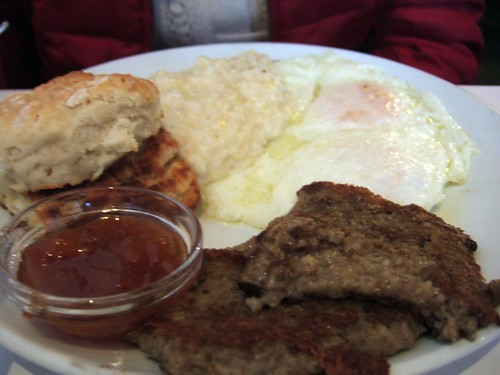
    Given the wait, we took our time to eat and only left when the restaurant was empty. My three-egg Grafton Cheddar omelet was served with broiled tomatoes and hashbrowns. The cheese was sharp, but the tomatoes balanced everything out. I wish the restaurant would offer more side vegetables in the future. I also got a side of sausage at the end. Perfectly salty and juicy, I would choose it over any kind of eggs. Cameron’s cheese grits didn’t last very long. They weren’t too mealy or too soft, and the cheesy tang was perfectly balanced with the creamy texture. And the biscuits–oh, the biscuits–transported us with their crispy edges and fluffy insides. Have I mentioned the lightly sugared donuts brought to our table before our plates arrived?

    We spent the rest of our afternoon walking around the neighborhood and checking out the stores down Bedford and Grand. After several drinks at Larry Lawrence, two more people joined us, and we all decided to walk as fast as we could back to the restaurant to eat dinner. We made it before they closed the kitchen at 10pm, but alas, there was no more fried chicken. This was upsetting to our entire party, but we made do with the pork chops and sausage with cabbage, fish and hominy, and perhaps the best dish on the menu, slow-roasted duck and dirty rice.

    The menu is straightforward, and the food is hearty. One of my friends was surprised to love the cabbage, but another wished the pork were tastier. My duck was crispy outside and tender inside. The “dirty” rice reminded me of how Filipinos would scrape off the oil and spice bits from the bottom of a pan with rice and serve it just the way it is: dirty. The fish was under-seasoned–we bet a side of fried chicken would have made it taste better! While they’ve got the breakfast down pat, dinner is very new to egg, and it definitely needs to be refined. Never running out of fried chicken would be the perfect place to start.

    Related post/s:
    Previous review of egg
    They are keeping the name egg even with the new Web site address
    Chef George Weld and I made eggs for Serious Eats
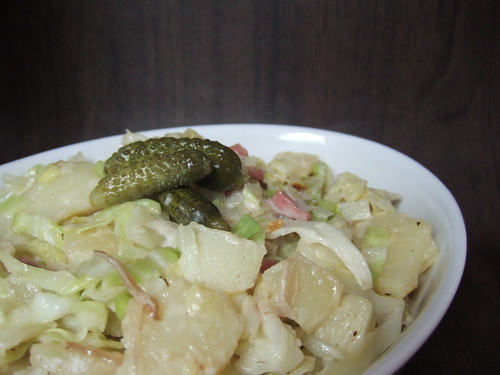
  • There was half a cabbage head in the fridge that I didn’t want to go to waste. I remembered the Dr. making us bubble and squeak throughout our stay in Iceland, making use of the expensive cabbage and potatoes available in the grocery stores we drove by. Locked up indoors because of a nasty bug, I made my version and tucked in with a bowl of it in front of The Millionaire Matchmaker. Vegetarians can make this without the pancetta, and vegans can skip the heavy cream if they roast the cabbage and the potatoes longer towards the end.

    Bubble and squeak is an English dish traditionally made with leftover vegetables from a roast dinner. I’m being traditional here because, hey, that cabbage was from the corned beef I made. Funny how cabbages last forever! I’m not quite sure where the name comes from. I think the bubble is from when the dish is bubbling hot. And the squeak? Well, we all know what a lot of cabbage does to you!

    Ingredients:
    half a head of cabbage, sliced in ribbons
    4 medium potatoes, halved
    1 medium red onion, sliced thinly
    1 chunk of pancetta, chopped
    1/2 cup of heavy cream
    2 cloves garlic, minced
    salt, pepper, oil

    1. Boil the potatoes in a pan filled with salted water until tender, about 25 minutes. Remove potatoes from the water. When cool enough to handle, slice the potatoes thinly.
    2. Preheat oven to 350º. Using an oven-safe skillet, heat some oil and render the pancetta. Sauté the garlic and onions. Add the cabbage. Season with salt and pepper. Toss and cook everything together until cabbage is soft. Spread the potatoes on top, covering the cabbage. Pour in heavy cream.
    3. Roast in the oven for about 10 minutes or until bubbling hot. Remove from the oven, toss and serve with gherkins.

    Related post/s:
    Homemade corned beef with cabbage and potatoes
    Relive my Iceland trip

  • In Michael Pollan’s latest book, In Defense of Food, he summarizes his lecture on the first page: Eat food. Not too much. Mostly greens.

    I love greens, but I also love all kinds of meat. And you know how I feel about bacon, right? But there are days when I do crave vegetable-only dishes. I run to Joe’s Shanghai for their baby bok choy flash-fried in garlic and hot oil. I go to Snack for their artichoke salad sans the chicken. Sometimes, I even go to my local deli’s make-your-own-salad counter and pick from the available ingredients just to get my fix. And when I eat my meat, there’s always a side that involves a vegetable.

    You can use almost any kind of greens here. I used Chinese spinach because that’s what I had in the fridge. Regular spinach, watercress or bok choy will do, too. They key is to simmer everything for a long time, so that the broth thickens with all the carrot and celery goodness. You’ll get more of the lentils’ earthy taste in the end. If you can deal with the extra work, use a hand blender and purée the entire batch before serving.

    When they’ve cooled down, transfer leftovers in quart containers and store in your freezer for up to two weeks. You can just thaw and heat one up when you want another serving of hearty lentil soup.

    2 1/2 cups of lentils, rinsed
    4 stalks of celery, chopped
    1 bag of baby carrots, halved
    1 bunch of greens
    vegetable broth
    1 tomato, quartered
    1 red onion, thinly sliced
    2 cloves of garlic, minced
    1 tbsp of coriander, toasted, grounded
    1 tbsp of cumin, toasted, grounded
    1 tbsp of cardamom, toasted, grounded
    salt, pepper, oil

    1. In a large Dutch oven, heat some olive oil. Sauté garlic and onions. Add the carrots and celery and cook until glistening, about 8 minutes. Add the lentils, tomato and the spices to combine. Add enough broth to cover.
    2. Bring to a boil and then reduce heat. Cover and simmer until lentils are tender, about 40 minutes to an hour. Season with salt and pepper before serving.

    Related post/s:
    Buy Michael Pollan’s latest book, In Defense of Food
    A very easy tomato bread soup

  • 603 West 45th Street off Eleventh Avenue
    212.245/0002
    about $90 each for a group of six, with drinks, with tip; dances were separate
    ♥

    When a friend of mine told me about an upcoming girls’ night out that involved going to a strip club, I immediately said yes after I confirmed that they wanted to see girls stripping, not boys. Just right up my alley because, really, naked boys are not as nice to look at. Speaking from experience, I told them that we can only go to Penthouse on the West Side highway because it’s the only club that will allow a group of man-less women to enter. It’s a ridiculous rule, but we had no choice in the matter. I was told that girls do not buy as many drinks as guys, and if they’re not that drunk, they won’t be buying as many dances. Whoever came up with that had obviously no clue who we were.

    Our table was for 7:30pm. Our party of six wasn’t completed until 8, but they let us sit and wait at our table next to a pole dancer. We all decided that an expensive bottle of red wine might just make us too sleepy, so we ordered our martinis. Drinks were $20 each even if you were just getting vodka with soda.

    At Robert’s Steakhouse, they didn’t discriminate: my friend’s first lap dance was at $40, the same price charged to the guy sitting at the next table wearing a crisp suit. The girls dancing in the corner told us they can’t come to our table because they don’t do lap dances, so we had to wait for the others to approach us. After several drinks, we were brave enough to go up to a girl we liked and pay for our own. After more drinks, they just came up to offer us a dance.

    But this is a review of the food, and I must tell you that a hundred-dollar porterhouse steak is much better with some form of entertainment. We only managed to finish one porterhouse and I felt bad when we had to leave the other one barely touched. I suppose I could have sat there and finished it for the next two hours, but my friends were eager to go downstairs and meet the ladies. (One said, You don’t want to smell like meat when the girls dance for you.) We had the steak packed to go, but after several hours of giving away Andrew Jacksons, no one knew who ended up taking the extra food home. After several hours of $20 drinks, too, no one knew what the hell was really going on. I do remember the delicious bowl of Brussels sprouts. The creamed spinach and roasted potatoes were also good matches to our meaty, charbroiled steak. Whoever was in the kitchen wasn’t distracted by the view we were getting.

    Adam Perry Lang, the restaurant’s executive chef, also co-owns Daisy May’s BBQ a block away. He ages and cooks the steaks in a broiler with two different temperatures so that the meat gets seared the right way without sacrificing the juiciness of the inside. And boy, were they juicy. I love my meat bloody and buttery, and Robert’s Steakhouse served a mean plate of it.

    Be thankful that this is only a review of the food.

    Related post/s:
    There was also some good eatin’ at Daisy May’s BBQ USA, but no dancing

  • Feeling a lit bit under the weather, I’ve asked Cameron to guest-blog about the wine tasting we attended at Union Square Wines in New York City. Thanks, Cameron! The Chateaneuf-Du-Program:

    Le Vieux Donjon 2003
    Clos des Papes 2004 from Magnum
    Domaine du Grand Tinel 2005 Cuvee Alexis Establet
    Clos Saint Jean 2005 Cuvee Vieilles Vignes
    Domaine Charvin 2005
    Domaine du Pegau 2005 Cuvee Reservee
    Chateau de Beaucastel 2005
    Domaine du Vieux Telegraphe 2005
    Domaine de Beaurenard 2005 Cuvee Boisrenard

    I arrived at Union Square Wines to meet Cia on an unexpectedly chilly January night, ready to warm up with some nice reds in their Pape Stars Part One: The Golden Age of Chateauneuf-du-Pape: The Golden Age of Chateauneuf-du-Pape tasting. I’d been willing to overlook their puzzling use of italics in the event description, as my knowledge of these wines was pretty much limited to the pronunciation of the region’s name. A small crowd had assembled in the middle of the store by the time I joined Cia, and it was only a short wait before they welcomed us into the back tasting room of the store.

    The first thing I noticed upon entering was the delicate placement of no less than 32 glasses of wine on each small round table. You know that person whose presence at a table guarantees that it’s only a matter of time before something gets knocked over, spilled, or broken? That’s me. I took my seat with trepidation, trying not to touch anything, as the tasting commenced.

    The first ten minutes were filled by Wine Director Jesse Salazar’s effusive introduction of Chateauneuf-du-Pape, the current darling of oenophiles everywhere, and even more effusive introduction of special guest host Adrian Chalk, clearly a darling of the New York wine scene. Turns out it was well-deserved; Adrian’s knowledgeable and eloquent presentation of the C-d-P region and the particulars of each of its wines made the tasting worthwhile.

    I’ve always loved Grenache (and my familiarity with it has come a long way since I first ordered a glass of “Gre-nach-ay” at The Room a few years ago), but I had no idea that Chateauneuf-du-Pape wines are characterized by the presence of its luscious, bold grape. Predictably, my favorites were the heaviest on Grenache–a pure-Grenache Domaine du Grand Tinel 2005 Cuvee Alexis Establet was the only red Cia and I ended up taking home at the end of the evening.

    As far as the actual tasting went, we had fun laughing (especially as the night bore on) at our appraisals: I would detect strawberries at the exact same moment that Cia would exclaim that the same wine tasted like leather. Our tasting companions seemed to have the lingo down, citing things like “tannic euphoria” and “fennel on the nose.” This also became increasingly hilarious as the night bore on.

    Of course, the problem with wine tastings, as anyone who has ever enjoyed a tasting menu with wine pairings can attest, is that by the time you get to the good stuff (the main courses and dessert, or in this case, the really expensive wines), you’re just drunk. The last few wines came with florid descriptions and price points to match, but all we could say was that they tasted like wine. By that point, we were also near hysterical about the absence of the promised spread of Murray’s cheeses. We did get our cheese (and meat and bread) in the end, but we were no closer to getting what was so great about these expensive bottles. All the better for spending that $50 wine voucher that came with the price of admission wisely, I suppose.

    I liked this tasting not only for Adrian Chalk’s excellent presentation, but also for the discovery that all these wines from the same region really do taste different in ways both simple and complex. I loved hearing about how the tastes were affected by things like a rocky landscape in which sunlight reflected off the stone, creating intense heat. I was intrigued to hear how these sophisticated wines are born of a hellish landscape (the conditions are so hot and inhospitable, the soil so hardened with clay and rock, that Caterpillar tests their machinery here). I was excited to taste a white Chateauneuf-du-Pape on top of all those better-known reds; it turned out to be one of my favorites.

    And all night, even after ten wines and several trips to the cheese plate, I didn’t spill a drop.

    Related purveyor/s:
    Check out Union Square Wines’ calendar of events

  • I don’t cook like this.

    But because I was testing a recipe for Cook’s Illustrated, I knew I had to follow their instructions as much as I can to get the results they were trying to achieve. When I first got this recipe in my inbox, I thought, No meat? I was ready to reject the test but decided at the last minute that maybe a meatless recipe (well, except for the pancetta chunks) will be more of a challenge for me. Besides, I still shudder when I look at mushroom pleats, so I thought this was a good attempt to overcome my so-called fear.

    America’s Test Kitchen’s goal with this stuffed portobello mushroom recipe was to get an intense mushroom flavor without the gumminess of other recipes they’ve tried. I think I achieved that when I tried it at home, but it sure did take a lot of time and ingredients to try and get everything right.

    After cooking, I answered the questions associated with the recipe and put in my two cents. I noted the adjustments and substitutions I made. I used more oil than the recipe suggested when brushing the mushrooms for roasting. I also used salted butter instead of unsalted, so I eliminated the required salt when I was rendering the pancetta. It also called for lemon juice, but I didn’t see it used in the steps. An honest mistake? Perhaps. It could have been a test to see if I was paying attention. I realize now that writing recipes that everyone will interpret correctly is a difficult job. What makes sense to me may not mean the same for other people. I wonder how many people out there try the recipes on my blog and get confused? Are you one of them?

    Below is my edited version of their recipe. Click any of the photos for the complete set.

    Ingredients:
    6 portobello mushrooms, stems removed and reserved, caps wiped clean with a paper towel
    3 slices of white bread, pulsed in food processor to make breadcrumbs
    1/4 cup of pancetta, diced
    cheddar cheese, chopped to fill 1/2 cup
    2 tbsps heavy cream
    1/4 cup sherry
    1/4 cup parsley leaves, roughly chopped
    1 tbsp thyme leaves
    2 medium onions, finely chopped
    2 garlic cloves, minced
    2 tbsp butter
    salt, pepper, oil

    1. Move the oven rack in the upper-middle position. Preheat oven to 400º with a baking sheet inside.
    2. Make a criss-cross slit on each of the 4 portobellos. Brush both sides with oil. Chop the other 2 and set aside for later. Place the 4 mushrooms on the pre-heated baking sheet, pleats side up. Roast until their edges are a bit brown, 10 minutes. Carefully flip them over and continue to roast until the liquid has evaporated, another 10 minutes. Remove the mushrooms from the oven and heat the broiler.
    3. Using a large skillet, heat some oil. Add the butter and swirl in the oil until melted. Add the breadcrumbs with a pinch of salt, stirring frequently until golden brown, 6 minutes. Transfer crumbs to a large bowl.
    4. Wipe down the skillet with a paper towel. Heat some oil and add the pancetta until some fat is rendered. Using a slotted spoon, remove the pancetta and transfer to another large bowl.
    5. Add the chopped mushrooms and cook in the rendered fat without stirring for 3 minutes. Add 1 tbsp more of oil and continue to cook the mushrooms for another 3 minutes, stirring this time. Season with some salt. Transfer to the bowl with the pancetta.
    6. Add more oil to sauté the onions and the garlic. Stir in sherry and cook until almost no liquid remains. Stir in thyme, parsley, cheddar cheese and heavy cream with the pancetta. Season with salt and pepper and toss until cheese is melted. Your filling is done.
    7. Flip portobello caps. Spoon this filling onto the mushrooms. Top with breadcrumbs. Broil mushroom until the crumbs are golden brown, about 2 minutes.

    Related post/s:
    Another very involved portobello recipe
    But some portobello recipes are easy

  • Among my purchases at the Mitsuwa Marketplace in Edgewater, New Jersey, were Japanese produce I rarely see outside of New York City’s Sunshine Mart off St. Mark’s Place. I was so excited to see yamagobo, or Japanese pickled burdock, because I have never eaten those outside of Sushiden. The pickled radish, or takuan, was more familiar, and of course, so were the shiso leaves.

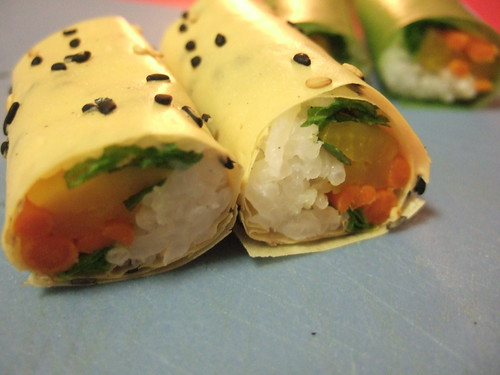
    These three ingredients inspired me to make my own makizushi at home. I learned to order them from the Dr. after every sushi and sashimi meal at Sushiden. He just asks the chef for the three ingredients, and voila, small hand rolls are served. A few months ago, I had picked up some soy skins in lieu of nori, or Japanese roasted seaweed, and I was glad to finally use them here. (Don’t worry, I’m not turning vegetarian. I bought them because they looked really pretty.) They didn’t add anything special to the rolls and I still preferred the nori over them, but they made colorful presentation when served with fried lotus root.

    I’m not going to get into the proper way to make sushi rice and all that, but you’ll need a Japanese bamboo mat to make respectable rolls. In a pinch, you can user Saran wrap, too, just don’t let your Japanese friends know.

    Ingredients:
    yamagobo, drained, chopped
    takuan, drained, julienned
    shiso leaves, chiffonade
    sushi rice, cooked
    mirin, or rice wine vinegar
    nori
    wasabi, optional

    1. Place nori on a Japanese bamboo mat. The mat should lie so it rolls away from you, not from side to side. Keeping your hands moistened with vinegar-water, put a scoop of sushi rice in the center of the nori and spread evenly on top of the seaweed. Spread a streak of wasabi across the middle if using, then add a layer of the vegetables across the center of the rice.
    2. To roll, fold the bamboo mat so the filling is enclosed in the center of the nori, then moisten the top edge of the nori and seal the roll tightly so that it won’t fall apart when sliced.
    3. Remove the mat from around the roll, seam side down. Slice the roll into one-inch rounds straight down using a sharp knife or serve as small rolls to eat with hands.

    Related post/s:
    Beautiful shiso oil from shiso leaves
    Vietnamese summer rolls are harder to make
    Splurge at Sushiden

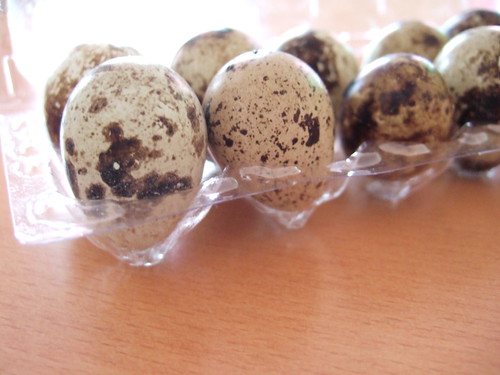
  • I was watching a rerun of an Andrew Zimmern episode shot in Barcelona where he came across some quail eggs, pointed at them and said, Quail eggs; we don’t really see that back at home. I found the comment odd because I see them every time I go to Chinatown. And as far as I can remember, we often had them stocked. In fact, I had a dozen in the fridge!

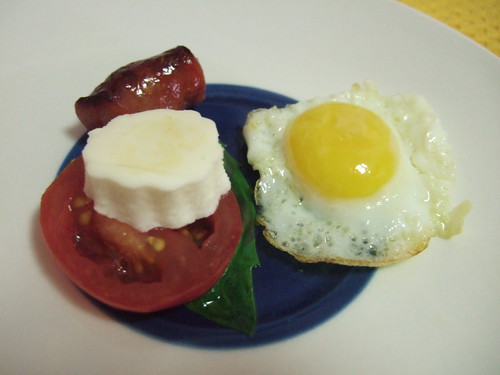
    I usually like to boil them, peel off the shell and throw them in a wok of stir-fried vegetables, but over the weekend, I was inspired to fry them for breakfast and eat them with chistorra, a semi-cured sausage from Spain I picked up from Despaña. You probably make your own breakfast already, so why not use different ingredients the next time? This is very lazy, but the presentation looks like you made an effort.

    Ingredients:
    quail eggs
    chistorra sausages, halved lengthwise
    oil

    Optional:
    mozzarella cheese
    basil leaves
    tomato
    baguette, toasted

    1. Using a small skillet, heat some oil. Fry sausages until light brown. If you have a grill press, use it to press the sausages down.
    2. In the same skillet with the rendered sausage fat, fry the quail egg like you would a regular egg, but keep watch: it’s smaller and will obviously cook faster.
    3. Assemble on serving plates any way you like. Feel free to add mozzarella cheese, basil, tomato or toasted crusty bread.

    Related post/s:
    Tapas and where to eat in Barcelona, Spain
    Despaña sells chistorra for $8 a package while Asia Food Market carries quail eggs

  • I’ve been wanting to return to Mitsuwa Marketplace in Edgewater, New Jersey, since the Dr. and I first visited after watching the Romeo and Juliet opera in HD. I’ve also hassled all my friends who have cars to drive me there ever since Anthony Bourdain featured the area in his Food Network show a few years ago. After enough whining from me, Veronica finally relented and picked me up one Saturday afternoon to eat at the Japanese food court and pick up groceries. After filling ourselves with ramen, tonkatsu and pancakes, plus an exciting trip down the aisles of the Mitsuwa grocery store, we ended up in Trader Joe’s where I picked up my favorite dried fruit snacks and at Cafe Archetype where we finished our day with green tea au laits.

    You see, New Jersey ain’t so bad.

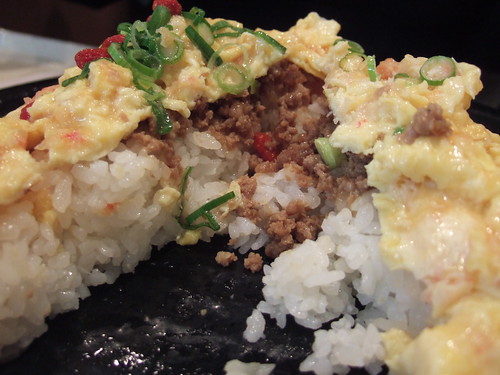
    Kanitama, or crab-egg, omelet on top of rice from China Table Tokyo Hanten was filling.

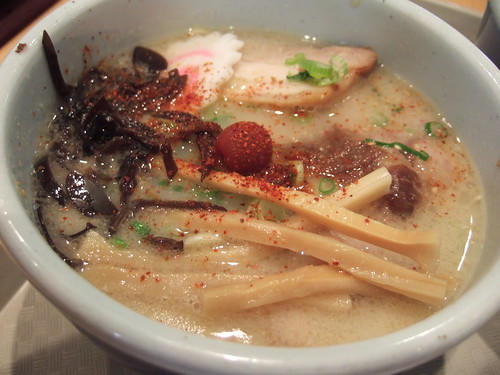
    A delicious bowl of pork salt ramen sprinkled with a red pepper powder from Santoka.

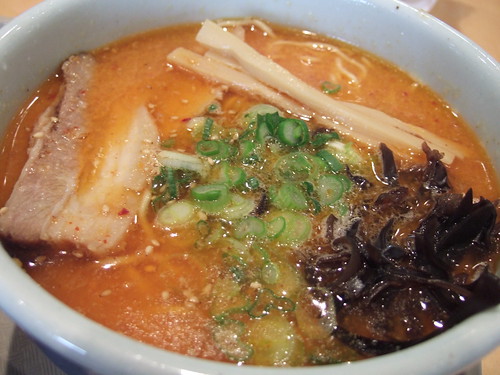
    A satisfying bowl of hot miso ramen, also from Santoka, was never finished because we were all full after several other dishes.

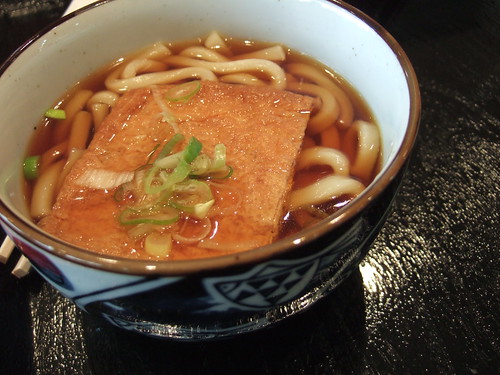
    A delicately-sized bowl of udon came with pork tonkatsu and rice from Kayaba, next to Santoka.

    Mitsuwa Marketplace is on 595 River Road, Edgewater, New Jersey, just over the George Washington Bridge. Check the Web site for shuttle bus info from Port Authority.

    Related post/s:
    You know, I’ve been to New Jersey before
    No, really.

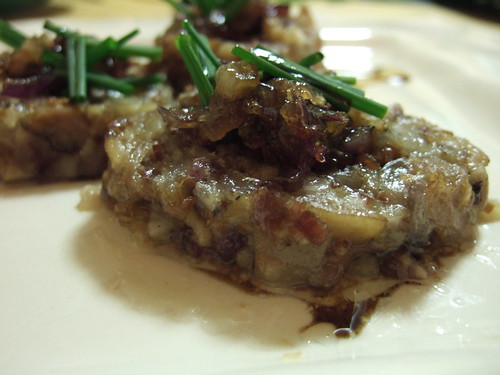
  • With all the fish I’ve been eating the past week, it was time to go back to pork. What better way to celebrate my return than to, ahem, trot back to the kitchen with pig’s feet. This is another recipe from Stéphane Reynaud’s Pork & Sons. If you can get a glimpse of the book, turn to page 190–you’ll want to make the recipe at home, too.

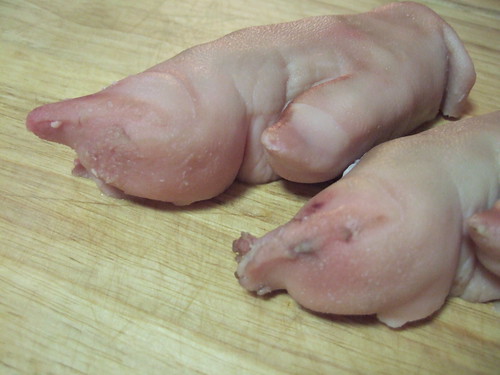
    In Chinatown’s Deluxe Food Market, pig’s trotters are less than $3 for a pair. If you can’t find them in the frozen section, get one of the Chinese men’s attention and say “feet” while pointing at your shoes; one of them will surely direct you to the right shelf. The original recipe uses walnut oil to bring out the richness of the feet. I didn’t want to spend $12 on a bottle from Dean & Deluca, so I stuck with my good olive oil at home. I think I achieved what the author was thinking of here.

    The funny thing about pig’s feet is that people forget that it’s not offal. Sure, a foot is an odd part of the pig to be eating, but you don’t eat it like you do chicken’s feet at dimsum. (I’ve never heard of pig’s foot in a stick either.) It takes a couple of hours to make the feet soft and when you take them out of the boiling water, the meat and skin fall off the bones easily. They are rich in fat content and very gelatinous, so you get the same fatty meat that you do from a very Filipino pork adobo. It’s all that fat you can be squeamish about, not which part it came from.

    Ingredients:
    2 pig’s feet, thoroughly rinsed
    4 strips bacon, chopped
    2 carrots, peeled, chopped
    1 white onion, halved
    2 red onions, thinly sliced
    1 bunch scallion, chopped
    half a bunch of parsley
    2 bay leaves
    1 tsp brown sugar
    1 tbsp balsamic vinegar
    chives, chopped
    salt, pepper, oil

    1. In a large Dutch oven, put the feet, bacon, white onion, carrots, scallions, parsley and bay leaves with enough water to cover. Cover and bring to a boil, then lower the heat and simmer for 2 hours.
    2. While waiting for the feet to soften, heat some oil in a skillet and sauté 1 red onion and cook until soft. Set aside.
    3. After 2 hours, remove the feet and bacon from the pot using a slotted spoon. Using a fork and a knife, separate the meat and the skin from the bones. This should be fairly easy. Discard the bones.
    4. Chop the bacon. Combine the sautéd onion with the feet meat and skin plus the bacon. Season with some salt and pepper. Using a Saran wrap, spoon the mixture and arrange like a sausage. Cover and roll like a tight, big blunt. (Oh, come on. You know.) Put in the freezer for 30 minutes.
    5. While waiting for the pig’s feet sausage to form, caramelize the last red onion by sautéing some hot oil in the same skillet and mixing with brown sugar. Set aside for topping.
    6. Make your dressing. Whisk together some olive oil and balsamic vinegar.
    7. After 30 minutes, preheat your broiler. Remove the feet from the freezer, unwrap and cut into 1/4-inch-thick slices and place on an ovenproof serving plate. Heat briefly in the broiler, just enough to warm the meat up, less than 5 minutes. To serve, top with caramelized onion and chives, and then drizzle with oil-balsamic dressing.

    Related post/s:
    You owe it to yourself to have a copy of Pork & Sons
    Where to buy pig’s trotters in Chinatown
    Try the pig’s ears while you’re at it

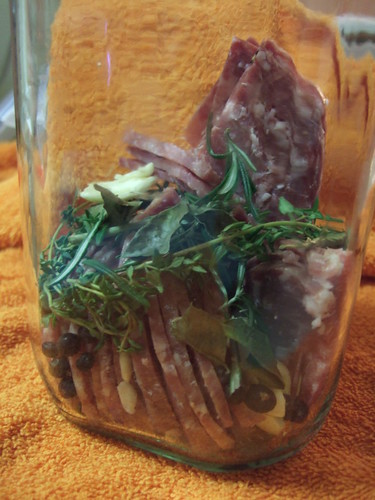
  • It really can’t get more decadent than this: one of my favorite sausages happily marinating in the finest olive oil and fresh herbs. Well, okay, add foie gras and you’re really set. But this is so easy; requires only a week of preserving and you have yourself about two weeks’ worth of appetizers.

    Ingredients:
    a chunk of good quality soppressatta, sliced thinly
    2 sprigs of thyme
    3 sprigs of rosemary
    10 juniper berries
    1 garlic clove, crushed
    1 bay leaf
    olive oil
    baguette, to serve

    1. Place and arrange the soppressatta slices in a pickling jar with herbs and spices. Pour in olive oil to cover. Seal tightly and store in the fridge for at least a week.
    2. When ready to eat, scoop out a serving or two onto a plate and microwave for 15 seconds, or enough to melt the olive oil. Serve with toasted baguette and a nice glass of red wine.

    Related post/s:
    You owe it to yourself to have a copy of Pork & Sons
    Odd cuts and guts cooking, Filipino style

  • I can’t believe 2007 passed without me cooking anything for my Global Gastronomy project. Bad, Cia! I have at least four pending recipes from acquaintances and friends, but c’est la vie, the year went by just like that. Over the weekend, it was colder in New York City than it was in Budapest, Hungary, and their city experiences what they call a Russian front. Canadian front? Meh! It gets cold over there.

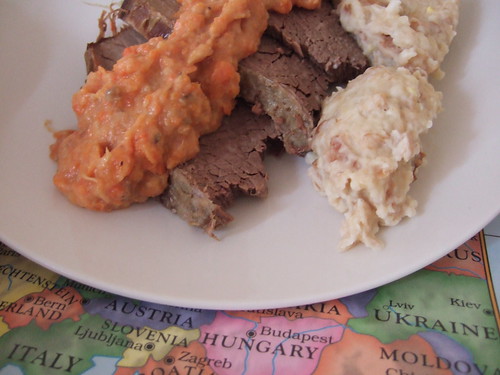
    I work with a few talented boys based in Budapest. We talk every morning over IM. If work doesn’t get in the way, I get a spatter of Hungarian words in exchange for some quirky American slang. They know about this blog and we are each other’s contact on Flickr, so when I asked one of them, Keki, to send me a family recipe, there were no questions asked. He said he had to use the dictionary a lot to translate his mother-in-law’s handwritten recipe, so I was very grateful when I received two: a vadas sauce to go with beef and the dumplings to complete the meal. Vadas comes from vad, which means “game”, and Hungarians make the base of the sauce using all kinds of gamey meat. I used beef to make it less difficult.

    My arms got tired when I tried this at home and I understood why Hungarians don’t make it often. You need at least a day to marinate the beef and a couple of hours to get the sauce and the dumplings done. Keki said that his mother-in-law makes a wicked version, and because they’re not readily available in restaurants, he looks forward to eating it. Even the kids love it, especially before they find out that the sauce has carrots in it.

    When I let Keki preview the photos I took, he gave me the biggest compliment: he said he “felt the smell of vadas” even though mine looked more orange because of the extra carrots I put and seemed a little thicker than what he was used to. I could have used a full cup of sour cream to make it less orange–apparently, a lot of sour cream is very Hungarian. I thought I did better with the dumplings because I’ve had the Czech version, knedlicky, when I visited Prague. If your vadas sauce is creamier, you can sop the dumplings while you eat the beef.

    When I finally sat down to eat, a wish to visit Budapest sooner than later floated in my head. Thanks, Keki.

    Ingredients:
    2 pounds beef tenderloin
    4 slices of bacon, chopped
    3 carrots, peeled, chopped
    2 onions, chopped
    1 parsnip, peeled, chopped
    3 bay leaves
    2 tbsps of flour
    1 cup sugar
    1 tbsp sour cream
    1 tbsp mustard
    lemon juice
    salt, pepper, oil

    For the dumplings:
    1 baguette, torn in smaller pieces, toasted
    whole milk
    2 eggs
    2 tbsps flour
    a knob of butter, melted
    salt

    1. In a nonreactive pot, render some bacon fat. Add the beef and brown on all sides. Move the beef to the side while you sauté the onions. Add the carrots and the parsnip and cook for about 5 minutes. Don’t forget to turn the beef to avoid burning. Add enough water to cover and toss in the bay leaves and some pepper. Cook in low fire for about 3 hours, covered. After 3 hours, let it cool and store in the fridge for up to 24 hours, turning the beef occasionally.
    2. When ready to cook, remove the meat from the water and set aside. Save some of the water. Using a slotted spoon, remove the vegetables and transfer to a large bowl. Mash.
    3. Make the dumplings. In a large mixing bowl, soak the toasted baguette in milk. Set aside.
    4. Make the roux, or the sauce thickener. In a large skillet, heat vegetable oil in medium heat until somewhat smoking. Pour flour and mix with a whisk. Keep mixing for about 15 minutes or until flour is red-orange. If black spots start to appear in the flour, it means you’ve burnt it. You have to start over. Remove from heat and keep mixing with the whisk to help cool down the roux. When cool, add to the mashed vegetables.
    5. Make caramelized sugar. Heat another skillet and cook the sugar with a whisk until it caramelizes. Remove from heat and set aside.
    6. Now you have a a large bowl of mashed vegetables with roux. This is your vadas base. Use the leftover water to keep a sauce consistency. Add the sour cream and mix. Add the caramelized sugar. Season with the lemon juice and the mustard until you get a somewhat sweet and sour taste. Set aside.
    7. Don’t forget the dumplings. By this time, the baguette has absorbed all the milk. Add in the eggs, flour, butter and salt. Mix until you get a soft and sticky batter.
    8. Boil some water in a large pot. When boiling, spoon some batter and make a few balls. Drop them in the boiling water and cook for about 5 minutes, or until they come up to the surface. Avoid overcrowding. Using a slotted spoon, remove them to a chopping board. Slice in thick rounds when cool enough to handle.
    9. To serve, slice the beef in thick slices. Arrange the beef on a plate with some dumplings. Pour in some sauce on the side.

    Related post/s:
    More Cooking the World recipes: Thailand
    About Cooking the World: Global Gastronomy Food Project