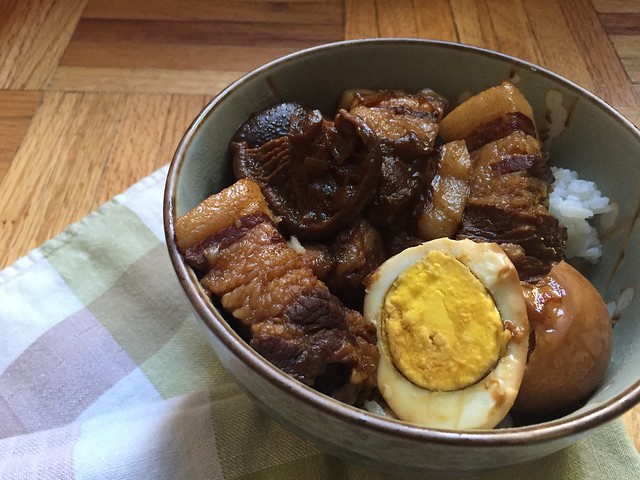
• I was craving a comforting pork belly dish over the weekend but didn’t want to do a repeat of one of my favorite Japanese dishes, Buta No Kakuni. So I turned to the Taiwanese style mostly because my friend Kevin was posting vacation photos on his Instagram account from Taipei.

    Don’t be intimidated by all the spices that you need here. They don’t cost a lot if you don’t have them already. I even used fresh tangerine peel instead of the recommended dried ones because I didn’t want to run to Chinatown just for them; besides, the tangerines were 2 for $1 at my corner fruit stand. Two pounds of pork belly may sound a lot, but really, this fed me about 6 rice bowls worth.
    Ingredients:
    2 lbs skin-on pork belly, cut into 1/2″ pieces
    oil
    2 tbsps sugar
    1 medium onion, finely chopped
    12 dried shiitake mushrooms, soaked in hot water until soft, drained, chopped
    1/2 cup Shaoxing wine
    6 tbsps light soy sauce
    4 tbsps dark soy sauce
    6 hardboiled eggs, peeled

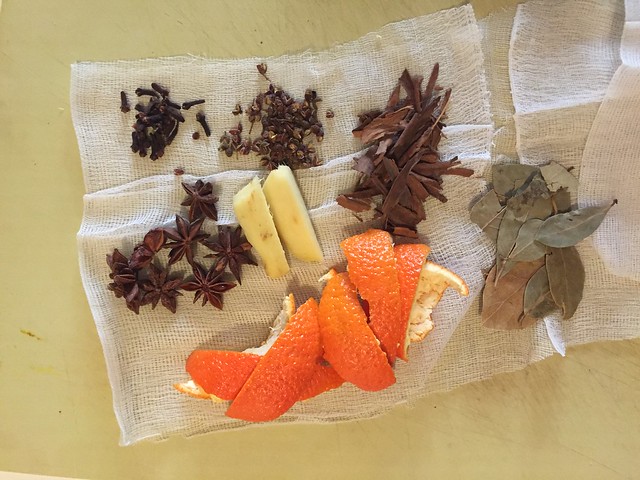
    For the spices, wrapped in cheese cloth and tied with kitchen string:
    6 star anise
    2 cinnamon stick
    12 cloves
    6 bay leaves
    4 tsps Sichuan peppercorns
    4 pieces tangerine peel
    4 slices fresh ginger

    1. Bring a large Dutch oven of water to a boil. Blanch the chopped pork belly for 2 minutes. Discard impurities. Scoop out pork to a plate and transfer the water to a large pot.
    2. Heat up the same Dutch oven before putting the oil in low heat. Add the sugar and cook until it starts to melt. Add the onions. Turn up the heat to medium high and stir-fry the onions for a minute. Add the mushrooms and stir-fry for another few. Add the blanched pork, Shaoxing wine, light soy sauce, dark soy sauce and 5 cups of the pork water.
    3. Stir and bring the mixture to a boil. Once boiling, add the spice bag with the eggs and turn the heat to the lowest setting. Simmer for 1 1/2 hours, stirring occasionally to prevent sticking, or until the meat is falling apart.
    4. When ready to serve, remove the spice bag. Turn up the heat to medium-high and thicken the sauce, stirring occasionally, for about 3 minutes. Serve over steamed white rice.
    Recommendations:
    I used this cheese cloth to wrap all the spices and didn’t even need a kitchen string to tie it close. I always have dried shiitake mushrooms for broth and fungi cooking needs–they last longer and give off more flavor and body.

    Related post/s:
    Buta No Kakuni, Japanese braised pork belly

  • Pad Thai is one of those dishes I like to make to hold me over another meal that takes more time to prepare. I thought about making this one while I was waiting for beef ribs to braise. I already had most of the ingredients in the pantry, being this an Asian kitchen and all; I just walked over to the nearest grocery store in Harlem to buy the red bell pepper, the tofu, and the bean sprouts.

    The key here is not to overcook the noodles. Soaking them in cold water after cooking is important. The cold water shocks the noodles and stops them from cooking any further. They get heated up again when you assemble the entire dish together towards the end.

    Ingredients:
    rice noodles
    vegetable oil
    1 egg, lightly beaten
    3 garlic cloves, minced
    1 red onion, sliced
    ground chicken
    1 red bell pepper, seeded, sliced
    1 package extra firm tofu, diced
    scallions, finely chopped
    2 handfuls of bean sprouts
    1/4 cup unsalted peanuts, toasted, crushed
    cilantro, finely chopped
    lime wedges

    For the sauce:
    1/4 cup soy sauce
    1/4 cup rice wine vinegar
    lime juice
    a few jiggers of fish sauce
    1 tbsp sugar
    1-2 Thai chiles, chopped

    1. Bring 4 cups of water to a boil in a medium saucepan. Remove from heat. Add rice noodles; let stand 8 to 10 minutes or until noodles are soft but firm. Rinse under cold water; drain well. Set aside.
    2. Make the sauce: combine all sauce ingredients and stir until sugar is diluted. Adjust to taste; it should be salty enough with a sour kick and not at all sweet. Add chiles for heat. Set aside.
    3. Heat a little oil in a large skillet over medium-high heat. Add egg; scramble until set. Remove from skillet. Set aside.
    4. Add more oil to skillet. Sauté garlic until brown and then the onions until translucent. Add chicken; stir-fry until cooked through. Add the bell pepper, the tofu, scallions, and bean sprouts. Stir-fry until bell pepper is soft, about 5 minutes. Pour in half of the sauce and incorporate.
    5. Drain the rice noodles and add to the skillet and keep stir-frying. Add remaining sauce to balance everything out. Remove from heat. Stir in scrambled egg and sprinkle with the peanuts. Serve with cilantro sprigs and lime wedges.

  • Aaahhh, it’s nice to be back updating this site again. It’s been a very long year, 2015, and real life kinda took over and it made me neglect this site. Something had to give, you know? Not that I wasn’t eating and cooking; I was, but I was updating Instagram more with the hashtag #ciaEatsNYC. (Plus a certain Rottweiler managed to steal my heart, so.) There’s still traffic to this site and invitations from PR firms still have not ebbed, so thank you for sticking with me.

    It’s a new year and part of my list of resolutions is to do more stuff I like and I have to admit that I still like the Internet. Instagram is still my main social media channel because it’s instant, but I’ll make more effort to publish the recipes I test here. There may be less restaurant reviews, however, because lord knows how many of those are already out there. What I’ll be more vigilant about are my recommendations using Amazon Associates, a tool I’ve never really taken advantage of. Amazon even decided to close my old account because there hasn’t been any activity on it so a new one had to be created so I can start from scratch. I know you trust my recommendations so I promise that they will be legit. If they are only related products, I will make sure that I note the difference.

    For my first recipe back, I wanted a soup that’s more like a stew because it finally started to feel like winter outside. I opted for this borscht recipe I found on several sites and made my adjustments and opted for, oops, canned beets to save time. In the end, I didn’t end up grating them so it’s more chunky which made me just call this “borscht-style stew”. Feel free to chop them more finely than I did here.

    With this recipe, you’ll see why you need to learn how to properly braise meat. Browning the beef short ribs may seem a lot of work, but you’ll be so happy when all that meat starts to fall apart with just a gentle prod of your fork. There’s a lot of fat that would form, but nothing a hearty bread or a bowl of rice can’t solve.

    Ingredients:
    canola oil
    6 bone-in beef short ribs, cut into 3-inch pieces
    1 medium yellow onion, sliced
    2 cans of red beets, drained, chopped in smaller pieces, juice reserved
    1 quart low-sodium beef stock
    2 large russet potatoes, peeled and diced into small cubes (soak in cold water until ready to use to avoid discoloration)
    a large handful of baby carrots, roughly chopped
    salt, pepper

    1. In a large Dutch oven, heat the canola oil over medium-high heat. Season the short ribs with salt and add to the pot, cooking until browned on all sides, about 15 minutes. Remove ribs from the heat and transfer to a large plate; set aside.
    2. Discard all but a scant amount of the rendered fat from the pot, enough to sauté the onions in. Cook, stirring often, until tender. Add the reserved beet juice and the beef broth and let boil.
    3. Add the browned short ribs back to the broth and cook at a high simmer, covered, until the short ribs are very tender, about 2 hours. Check a couple of times and make sure the broth has not dried up. The meat will fall off the bones.
    5. When the short ribs are ready, remove them from the pot, but leave the loose bones for extra flavor, and return to the large plate. Add the beets, potatoes, and carrots to the pot and simmer until soft, about 20 minutes.
    6. While the vegetables are cooking, pick the meat from the bones, discarding the connective tissue. The meat should shred easily. Add back to the pot and adjust the seasoning to taste with salt and pepper. Feel free to add a little hot water to get the perfect chunky stew consistency.

    Recommendations:
    One of my kitchen essentials is a large Dutch oven. I have this large one in a nice teal color. You can choose a less expensive brand, but the Le Creusets last a lifetime. This pair of tongs is so useful when you’re braising beef short ribs and they lock in place so you can control the grip.

  • My god, it’s been a while, hasn’t it? It seems so cliché to say how fast time flies but it really is true when you look at the last time an update was posted on here: October 2014!

    It’s been brutally cold here in New York City so there’s been a lot of cooking to save myself from running outside to pick up lunch during the week. For a while there, I was in no mood to cook. In fact, my new year’s resolution was to take more naps during the weekend. I’m not getting any younger and I’m trying to change the way I while away my free time. I don’t want to feel like I always have to accomplish something. It’s taking a lot for me to say to myself that it’s okay not to do anything. Instead of being unproductive, I now think of it as getting more me time.

    Part of that is honing my baking skills. I’m not there yet but I’m trying. Lisa and I were talking about Louis CK’s Cinnabon shameless bit one day and it made me want to eat cinnamon rolls the next. I found a vegan recipe that I changed up because I only have the regular kind of butter in my fridge. This turned out not to be too sweet which I liked. It was excellent with hot tea.

    Ingredients:
    1 packet instant yeast
    1 cup almond milk
    1/2 cup butter, divided
    1/4 tsp salt
    3 cups flour
    canola oil
    1/2 tbsp cinnamon
    1/4 cup + 1 tbsp sugar, divided

    1. In a large sauce pan, heat the almond milk and 3 tbsp of the butter until warm and melted, but without boiling. Remove from heat and let it sit until it’s warm. It should not be too hot or it will kill the yeast.
    2. Transfer mixture to a large mixing bowl and sprinkle on yeast. Let activate for 10 minutes, then add 1 tbsp sugar and the salt and stir.
    3. Add in flour 1/2 cup at a time, stirring as you go. The dough will be sticky. When it is too thick to stir, transfer to a lightly floured surface and knead for a minute or so until it forms a loose ball. Rinse your mixing bowl out, coat it with canola oil, and add your dough ball back in. Cover with plastic wrap and set in a warm place to rise for about 1 hour, or until doubled in size.
    4. On a lightly floured surface, roll out the dough into a thin rectangle. Brush with 3 tbsp melted butter and top with 1/4 cup sugar and the cinnamon.
    5. Starting at one end, tightly roll up the dough seam side down. Cut the dough into 1.5 to 2-inch sections and place in a well-buttered round pan. You should have about 10 rolls. Brush with remaining 2 tbsp melted butter and cover with plastic wrap. Set on top of the oven to let rise again while you preheat oven to 350º.
    6. Once the oven is hot, bake rolls for 25-30 minutes or until slightly golden brown. Let cool for a few minutes and then serve immediately.

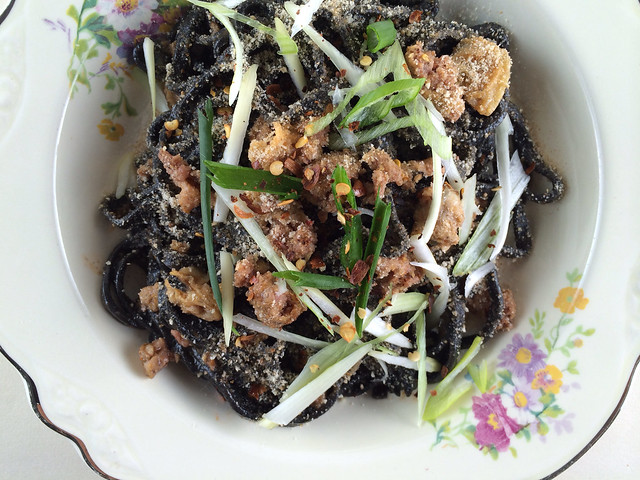
  • I wanted to take on making pasta again at home so I stopped by Buon Italia’s joint in Chelsea Market to buy cuttlefish ink to make black pasta. My heart broke when my dough refused to form so I ended up throwing everything including the 10 egg yolks required. It’s a very expensive hobby, pasta-making; I don’t know why I can’t seem to do it myself. I was fine while I was taking the class at Rustico Cooking; perhaps it’s time to retake the class just to get the feel of the dough again.

    The good thing is that I bought black tagliatelle as well for backup. I didn’t want to spend more money buying Nduja sausages so I just picked up regular hot sausages. The clam shells were heavy but were a great addition to this dish. It was very pretty at the end and I highly recommend making this when you have a night to tuck it in with a nice glass of red wine.

    Ingredients:
    olive oil
    4 cloves garlic, crushed
    1/2 sweet onion, roughly chopped
    2 bay leaves
    20 littleneck clams, rinsed and scrubbed
    1/4 cup dry white wine
    3 hot Italian sausages, removed from casing
    1 tbsp tomato paste
    black tagliatelle pasta
    fresh lemon juice
    2 tbsps butter
    a handful of parsley, finely chopped
    breadcrumbs
    2 scallions, sliced thinly

    1. Heat the oil in a large pot over medium heat. Sauté the garlic until light golden brown. Add the onions and sweat until soft and translucent, about 10 minutes. Add the bay leaves, clams and half of the wine. Cover the pot and steam for 5 to 7 minutes, removing the clams as they open. Strain the cooking liquid and set aside in a bowl. Remove and reserve the meat from the clams and roughly chop; discard shells.
    2. In a skillet, cook the sausage pieces and render the fat. Crush the sausages into smaller pieces with the back of your spatula while cooking. Deglaze the pan with the remaining wine and reduce by half by simmering in low fire. Add tomato paste and reserved clam juice and bring to a simmer.
    3. Meanwhile, cook the pasta in another pot of boiling water until al dente. Drain the pasta, reserving some of the cooking water. Add the pasta to the sausage. Add the reserved clams and butter and toss over medium-high heat until the pasta is well coated, about 2 minutes. Stir in the pasta water a little bit at a time so it has a nice consistency. To finish, toss with the lemon juice and parsley and garnish with the breadcrumbs and scallions.

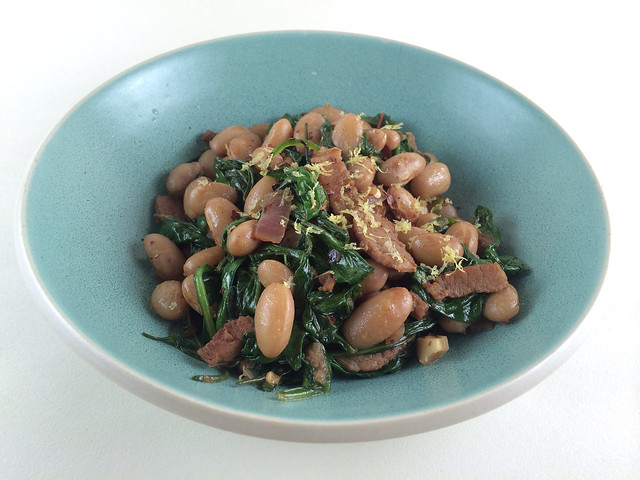
  • Miriam and I drove up to the Catskills for her bachelorette party two weekends ago. Yep, a bachelorette party with just the two of us. I’ve known her for the last 12 years and even though we’re always miles away from each other, we just always pick up where we left off the next time we’re together. She was coming from Singapore and was jet-lagged so our Phoenecia weekend was pretty chill and quiet. Besides eating and drinking around town, we stopped by Migliorelli Farm to pick up some fresh produce. I ended up taking home their fresh cranberry beans which I shelled several days later and soaked before making this dish.

    Ingredients:
    olive oil
    4 slices bacon, chopped
    2 shallots, finely chopped
    salt, pepper
    4 cloves garlic, minced
    1 cup shelled cranberry beans, soaked for 24 hours, drained
    chicken broth
    2 sprigs rosemary, roughly chopped
    2 tsps lemon zest
    2 tbsps lemon juice
    a dash chile pepper flakes
    1 tsp sambal oelek
    a handful of spinach leaves

    1. Cook and stir olive oil and bacon in a large skillet over medium heat until bacon is fully cooked and begins to crisp, 8 to 10 minutes. Stir in shallots and season with salt and pepper and cook and stir for 2 to 3 minutes over medium heat. Add garlic and cook for 1 minute.
    2. Add the beans and chicken broth. Bring to a boil, reduce heat to low, cover and simmer until the beans begin to swell, about 25 minutes.
    3. Uncover and continue cooking bean and bacon mixture until the liquid reduces and beans are tender, 5 to 10 more minutes. Add rosemary, lemon zest, lemon juice, and chile pepper flakes. Stir in sambal oelek to incorporate and to adjust the taste. Remove from heat, stir in spinach until wilted.

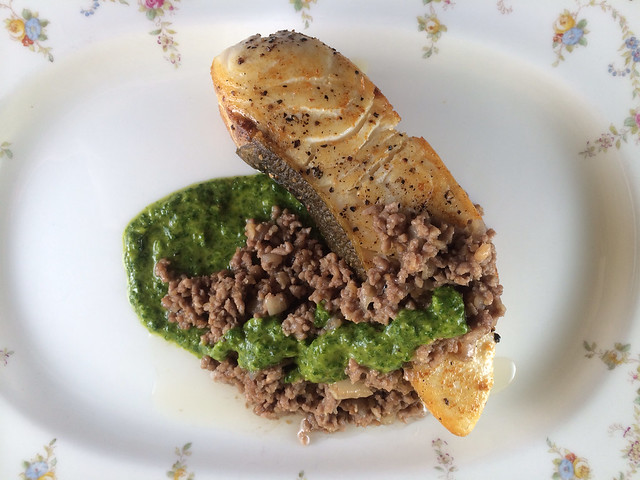
  • I was watching a Top Chefs Duel episode with Stephanie Izard and was intrigued by the halibut dish that she prepared the judges all fawned over. I’m always looking for seafood recipes outside of roasting them whole so I was glad to buy a nice halibut piece from Chelsea Market’s Lobster Place to try it.

    I found the recipe on Food & Wine but made changes when, surprisingly, my neighborhood grocery store did not have ground pork the day I stopped by. I also didn’t want to walk an avenue away to pick up tamarind from the Mexican store (I’ve seen them there before outside of Chinatown), so I ended up buying the smallest bottle of pomegranate juice I can find to substitute. I would have cooked the Pom juice down for a thicker consistency, but the recipe needed a scant amount so I just threw it in for its tartiness.

    Ingredients:
    1 bunch of cilantro, roughly chopped
    1/3 cup extra-virgin olive oil
    2 tbsps white balsamic vinegar
    2 tsps Dijon mustard
    a dollop of honey
    salt, pepper
    peanut oil
    1 medium shallot, minced
    3 garlic cloves, minced
    1/2 pound ground veal
    1 1/2 tbsps sugar
    1 tbsp white miso paste
    1 tsp pomegranate juice
    1/4 cup salted roasted peanuts, grounded
    fresh lime juice
    a nice piece of halibut fillet

    1. Make the cilantro sauce. In a food processor, purée the cilantro, olive oil, vinegar, mustard and honey. Season with salt and pepper. Set aside.
    2. Cook the veal. Heat some peanut oil in a saucepan. Add the shallot and garlic and cook until softened. Add the veal and cook over moderately high heat, breaking up the meat, until browned. Add the sugar, miso, pomegranate, peanuts and 1/2 cup of water to the pork. Simmer over moderately low heat until thickened, 2 minutes. Season with salt and pepper; stir in the lime juice and keep warm.
    3. Cook the fish. In a nonstick skillet, heat the remaining 2 tablespoons of peanut oil. Season the halibut with salt and pepper. Cook over moderately high heat until browned and just cooked through, about 4 minutes per side. Set the fish on a plate and top with the veal and cilantro sauce.

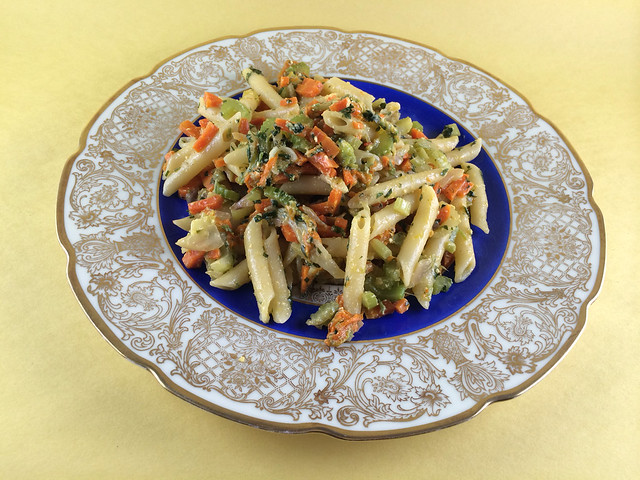
  • Summer came in late for us here in New York City. It’s already September and I’m only starting to see summer produce at the farmers’ markets. It was with some shock that I bought squash blossoms when I saw them at my Harlem’s produce stand one Tuesday morning while walking my dog Atticus.

    Ingredients:
    olive oil
    1 tbsp unsalted butter
    1 red onion, finely chopped
    3 stalks of celery, finely chopped
    1 medium carrot, finely chopped
    a handful of parsley, finely chopped
    12 zucchini blossoms, halved; stems removed if hardy
    salt
    6 saffron threads
    2 cups chicken or vegetable broth
    1 egg yolk
    penne pasta
    Pecorino Romano, shaved

    1. Put a large pot of salted water over high heat; this will be your pasta pot.
    2. In the meantime, heat a splash of olive oil and the butter in a large skillet over medium heat. Sauté the red onion, celery, carrot, and parsley, stirring occasionally, until the vegetables are translucent. Add the zucchini blossoms, a pinch or two of salt, and the saffron, and stir gently to mix.
    3. Add about 3/4 cup of broth, and stir to combine. Raise the heat to medium-high and add the rest of the broth a splash or two at a time, taking about 5 minutes to add it all. Stir frequently. Allow the sauce to simmer until most of the liquid has evaporated and only a thin film of thickened broth remains in the pan. Remove from the heat.
    4. In a small bowl, whisk the egg yolk slightly with a fork. Meanwhile, cook the pasta until tender but al dente. When the pasta is almost ready, place the zucchini blossom sauce back over medium heat. Use a small measuring cup to scoop up about 3 tbsps of pasta water and, whisking constantly with a fork, gradually add the hot water to the egg yolk: together, they should make a loose, pale yellow liquid. Pour this mixture into the sauce in the skillet, stirring well. Scoop some cooked pasta into a serving bowl, and toss with the sauce. Top with shaved cheese.

  • We skipped spring this year here in New York City and went directly to tropical summer. It’s so hot and humid right now that I can’t recommend turning your oven on, but when alas, I did, because I can’t help but eat beets. I roasted 2 bunches of beets and refrigerated them to make 3 different salads in a span of a week.

    Here’s one that I loved so much because the dressing is not your typical olive oil-vinegar dressing. The cumin stood out here as an unexpected taste because it looks like a regular salad. Goes to show that it’s not always about the main ingredients sometimes.

    Ingredients:
    4 small golden beets, peeled and cut into wedges
    olive oil
    2 tbsps red wine vinegar
    1 tsp maple syrup
    1 tsp cumin seeds, grounded
    1 tsp fennel seeds, grounded
    mache, or any mixed greens
    1 grapefruit, peeled and sliced
    1/2 bulb fennel, thinly sliced
    salt and pepper

    1. Preheat your oven to 425º. Toss the beet wedges with some olive oil and sprinkle them with salt. Spread them on a baking dish and roast until tender, about 25 minutes.
    2. In a small bowl, whisk together red wine vinegar and the maple syrup. Add the cumin and fennel seeds. When the beets come out of the oven, toss them with some of the dressing. There should be some olive oil coating the beets. If not, drizzle a little more olive oil.
    3. Assemble your salad. In a salad bowl, toss greens with the grapefruit and fennel slices, and then the dressed beets. Drizzle some more of the red wine vinegar-maple syrup dressing all over for a little sheen. Season with some pepper and serve.

  • I was looking for inspiration to make use of the last fresh burrata I bought from Arthur Avenue and the $5-a-bunch asparagus that are populating grocery stores at the moment. I saw some pretty photos on foodiecrush that caught my eye so I went to work and created my own version with the ingredients I already had.

    The original recipe calls for prosciutto but I already snacked on my half-pound bounty and only had speck left so I used that instead. I also had spicy soppressata so I tucked a few torn slices in to serve as the salt of the salad. foodiecrush also suggested some basil leaves but I skipped them, and used the mache leaves I had rather than arugula.

    It was a very good salad. The umami of the tomatoes with the cured meats was unbelievable. The softness of the burrata tamed the saltiness down and balanced the overall flavor of the salad. I highly recommend to make this salad this summer to satisfy and impress.

    Ingredients:
    1 bunch asparagus, chopped in 3 and thicker stalks discarded
    5 cherry tomatoes, halved
    oil
    salt, pepper
    chile flakes
    mache leaves
    fresh burrata cheese
    a few slices of speck
    a few slices of soppressata

    1. Place asparagus spears and tomatoes in a bowl and drizzle with olive oil and season with salt, pepper, and chile flakes. Be a little light-handed with the salt, as the cured meats will lend their saltiness to the salad as whole. Transfer them on a baking sheet and broil for about 12 minutes or until asparagus becomes soft and tomatoes begin to brown. Remove from oven and let cool.
    2. Assemble your salad. Make a bed of the mache leaves in a shallow bowl. Top with torn burrata and tuck in slices of meat here and there. Scoop in the asparagus and tomatoes. Drizzle in some more olive oil if necessary and sprinkle with pepper.

    Related post/s:
    foodiecrush has some pretty photos

  • I adapted this from a New York Times recipe after a trip to Arthur Avenue in the Bronx here in New York City. I had the long weekend to welcome the summer season so my friend Dash and I met in the old Italian neighborhood to eat some meats and cheeses.

    It had been years since my last trip there and I wanted to go back to Calandra Cheese to buy their homemade burrata cheese. Besides eating it in all its glory and with prosciutto and hot salami from Calabria Pork Store, I wanted to try it with a salad that used the season’s ingredients.

    I’ve never fried shiitake mushrooms before but doing so here added some more meatiness to this salad to break the crunchiness of the sugar snap peas. The gooeyness of the burrata softened it overall and the red chile flakes gave it a nice kick. The original recipe required a bed of greens and pine nuts, but I ended up skipping those just because I didn’t have them.

    Ingredients:
    olive oil
    fresh shiitake mushrooms, destemmed
    salt and pepper
    1 ball of burrata cheese
    sugar snap peas, destringed, roughly chopped
    lemon juice
    red chile flakes

    1. Fry the shiitake mushrooms. In a large skillet, heat the oil and add the shiitake mushrooms, pleats up. Sprinkle salt all over them. Fry until light brown and then turn to fry the other side. When done, remove to a strainer and set aside.
    2. In a serving bowl, break the burrata cheese and toss with the sugar snap peas, lemon juice and red chile flakes. Slice the mushrooms and add them in. Drizzle with some olive oil if needed.

  • Seattle has always been on my list of places to visit because I’ve heard so many good things about the fresh produce in Pike Place Market. Before starting my new job after 4 years at Fast Company, I flew to Seattle and met with my friend Lily, who flew in from San Diego. We ate for 4 days, checking most of the spots I research and culled from Facebook friends and Anthony Bourdain’s recommendations.

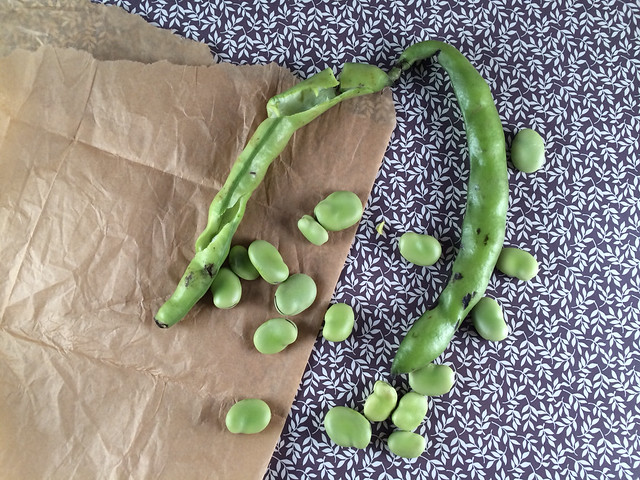
    Because spring arrived in the west coast earlier than the east, we ate a lot of fiddlehead ferns, pea shoot leaves, and fava beans. I’m pretty sure that I balanced my sushi overload with all the greens I ate.

    Starting anew in New York a week later, I wanted to eat healthier so I stopped by Fairway in the upper west side to fill my basket with a lot of fruits and vegetables. This recipe comes from a Food & Wine Magazine piece that uses some pricey ingredients like pumpkin seeds, shelled pistachios, and pine nuts. I didn’t want to spend any more than I needed to, so I ended up using the blanched almonds I already had and toasted them before crushing them with my mortar and pestle.

    Ingredients:
    olive oil
    2 garlic cloves, minced
    juice from half a lemon
    salt and pepper
    1/4 cup fava beans, shelled from about 15 pods
    1 small fennel, sliced thinly
    a handful of blanched almonds, toasted, crushed
    cayenne pepper

    1. Make the dressing. In a screw-top jar, shake some olive oil with the garlic and lemon juice, and season with salt and pepper. Set aside.
    2. Shell the fava beans. Open the pods and remove the beans. In a small pot of salted boiling water, blanch the beans for a minute and remove with a strainer to an ice water bath. Drain and shell the beans. The shells should come off easily and the bright green beans should pop out.
    3. In a salad bowl, mix the fava beans with the fennel and the crushed toasted almonds. Sprinkle with cayenne pepper and then toss with the dressing.