• The original recipe came from Bon Appétit and the dressing required a couple of jalapeños. I bought some, but the clerk didn’t ring them up so they weren’t in my grocery bag when I got home. I had to improvise and I used chili oil instead.

    Ingredients:
    2 garlic cloves, chopped
    chili oil
    zest from 1/4 grapefruit
    1 tsp honey
    1/2 bunch broccolini, tough stems removed
    2 skin-on, boneless salmon fillets, patted dry with paper towel, salted
    2 Belgian endives, outer leaves separated and hearts chopped
    juice from the same 1/4 grapefruit
    4 tsps unseasoned rice vinegar
    toasted sesame seeds
    olive oil, salt

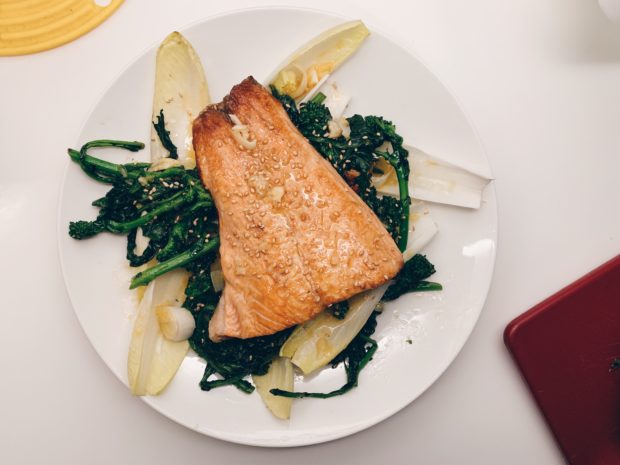
    1. Make the dressing. Using a mortar and pestle, crush the garlic into the chili oil and salt, and then mix in the grapefruit zest and honey. Stir grapefruit juice and vinegar into dressing. Set aside.
    2. In a heated skillet, heat some olive oil over medium-high heat. Add broccolini and cook, tossing occasionally, until charred in spots and tender, about 7 minutes. Transfer to a plate. Scatter endive with it.
    3. Lower the heat to medium and add some more oil in the skillet until hot. Add the salmon skin side down, and cook until skin is browned and crisp, 7 minutes. Gently turn and cook the flesh side just until cooked through, about 1 minute. Place on top of the broccolini and endive. Drizzle grapefruit dressing over salmon, then top with sesame seeds.

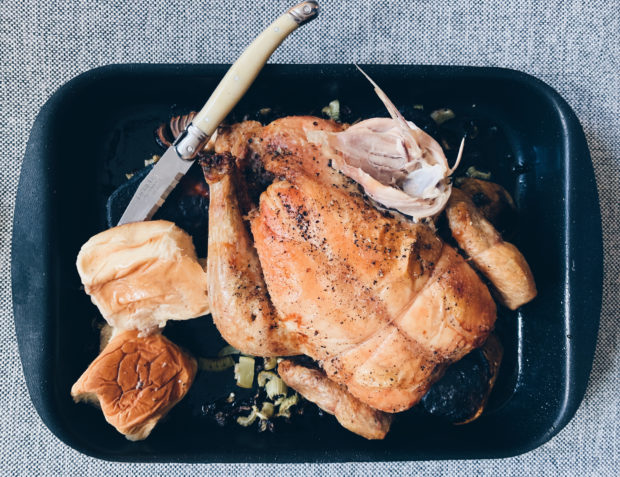
  • I was intrigued with this roast chicken recipe from Tasty because the 450°F oven temperature was pretty high. Their goal was to make the skin crispy. I’ve always preferred a slow-cook and would always baste the chicken and flavor the inside with aromatics; I suppose those steps never really gave me crispy skin, but I’ve always thought it was just the way it was.

    How can you have crispy skin and still a juicy meat? I can now tell you that this is how.

    To catch all the chicken juice, I opted for sweet potatoes. I peeled them and sliced them in large rounds. I threw in half a red onion and leftover chopped celery just because they’re all I had left in the fridge. I was skeptical about how the potatoes would get cooked without extra seasoning, but I held off on adding any extras–the chicken juice was actually enough to cook and season the potatoes!

    If you’re using other heartier root vegetables, feel free to return them to the oven if they still need a few minutes of roasting; a little olive oil and more seasoning probably won’t hurt either.

    Ingredients:
    1 whole air-chilled chicken
    salt, pepper
    some vegetables for roasting

    1. A day ahead of roasting your chicken, dry it thoroughly with paper towels, including inside the cavity. Season well and rub all over with salt and pepper, including inside the cavity. Using a toothpick, pierce the chicken all over. Place on a baking dish and put in the fridge, uncovered, for at least 8 hours.
    2. The day of roasting your chicken, take the chicken out of the fridge and let it sit in room temperature for at least an hour. Truss your chicken with butcher’s twine. Place the chicken on a rack–breast side down–where the baking pan is lined with chopped vegetables so that they can catch the chicken juice while roasting.
    3. Preheat the oven at 450°F. Roast chicken for an hour. Your chicken is done when the thickest part of the leg registers at 165°F with a food thermometer. Remove from the oven and let the chicken rest for another 20 minutes.

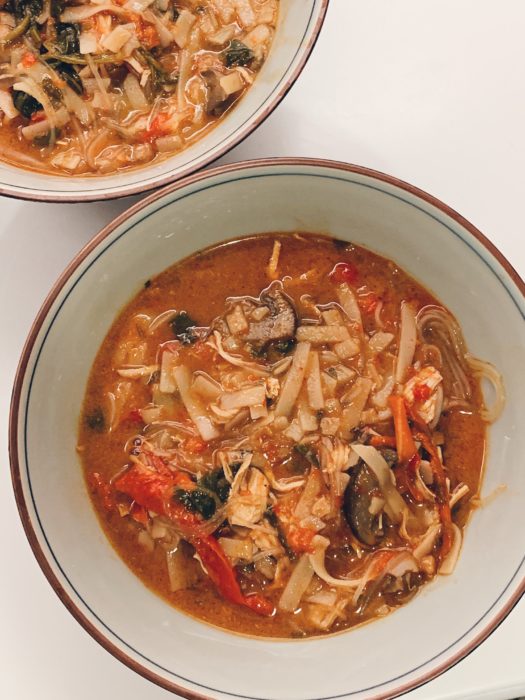
  • Feel free to add cooked noodles to this dish before serving; no earlier though because the noodles will absorb all the broth.

    Ingredients:
    4 cups chicken broth
    1 14-ounce coconut milk
    1/4 cup soy sauce
    a jigger of fish sauce
    2 tbsps honey
    1/3 cup creamy peanut butter
    1/4 cup Thai red curry paste
    2 pieces of boneless and skinless chicken breasts
    8 ounces cremini mushrooms, sliced
    2 red bell peppers, chopped
    1 inch fresh ginger, grated
    1 clove garlic, minced or grated
    juice of 1 lime
    a handful fresh baby spinach
    a handful of cilantro, roughly chopped
    chopped peanuts
    toasted sesame oil

    1. Combine the chicken broth, coconut milk, soy sauce, fish sauce, honey, peanut butter, and curry paste in the Instant Pot. Add the chicken, cremini mushrooms, red peppers, ginger, and garlic.
    2. Cover and lock the lid properly. Select the Pressure Cook function for 15 minutes. When it’s done, do a quick release after venting and letting the steam out.
    3. Remove the chicken and shred meat with a fork. Add shredded chicken back in and set the Instant Pot to sauté. Stir in the lime juice, spinach, and cilantro until warm.
    4. Ladle the soup into bowls and sprinkle with peanuts and toasted sesame oil.

  • I rarely watch food and travel shows because I dislike how I feel after—like I haven’t been anywhere at all, or eaten anything good ever. With the exceptions of the earlier Anthony Bourdain shows and David Chang’s Asian experience peppered in Ugly Delicious, most shows have the same formula and get boring after a while.

    I liked Samin Nosrat’s book Salt, Fat, Acid, and Heat and so I was at least curious as to how it would be translated by Netflix. The “Fat” episode was a good pilot for me because I immediately got her style. I love when she tastes something and her honest reaction is shown. I felt like I would react the same way if I was in her position. By the time I was done with the “Salt” episode, all I wanted was to travel back to Japan and cook this soy-braised ribs recipe.
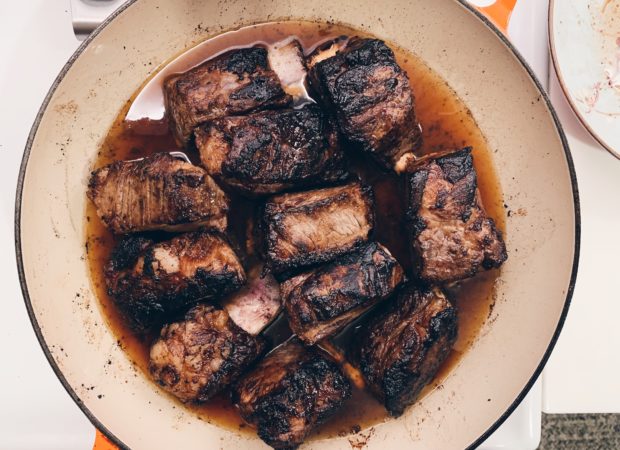
    I altered her recipe to suit my timing and didn’t add the leftover marinade as part of the braising juice that you see in her original version. I simply added more dashi halfway through so as not to burn the meat while helping them cook through with all the steam.
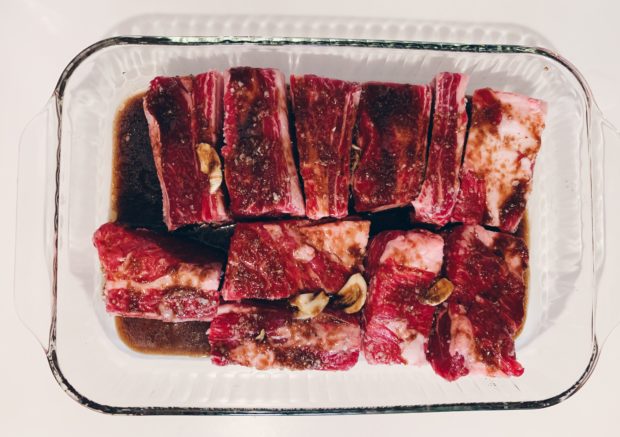
    Every time I braised meats, it almost always involves tomatoes and red wine–it’s my go-to method when the weather is colder outside. I was intrigued by this dish because it used neither of them, and the result is a much cleaner and subtler flavor, yet packed with all that umami.

    Ingredients:
    3 lbs beef short ribs on the bone, 2-3 inches thick
    salt
    canola oil
    ¼ cup soy sauce
    ¼ cup dark brown sugar
    ¼ cup mirin
    1 tsp toasted sesame oil
    1 tbsp fresh ginger, finely grated
    4 garlic cloves, finely grated
    ¼ tsp cayenne
    About 2 cups dashi broth made from
    kombu
    a handful of cilantro, finely chopped
    2 scallions, chopped

    1. The morning you want to serve the ribs, salt them and let them sit in room temperature for 30 minutes, lightly covered. Keep in mind that the marinade consists mostly of soy sauce, which is salty, so use only about half as much salt as you otherwise would.
    2. In the meantime, whisk together the soy sauce, brown sugar, mirin, sesame oil, ginger, garlic, and cayenne. Place the meat in a large bowl and pour in the marinade. I let them marinate until 4 hours before dinner time.
    3. When ready to cook, preheat oven to 400°F.
    4. Using a heated cast-iron skillet, add just enough oil to coat the bottom. Working in batches so as not to crowd pan, brown a few short ribs at a time on all three meaty sides, about 3-5 minutes per side.
    5. Transfer the ribs, bone-side down, to a large Dutch oven, snug but in one layer. Add enough dashi to go about half an inch up the sides of the ribs, then cover with lid. Slide into the oven and cook until the liquid simmers, about 30 minutes, then reduce heat to 325°F and cook until meat is very tender and falling off the bone, 3 to 4 hours more. Check halfway to add more dashi if it’s drying up.
    6. Serve warm with rice, garnished with cilantro and slivered scallions, and with blanched haricot verts and quick-pickled Persian cucumbers.
  • Post-yoga quick stir-fry dinner because I am so, so tired and sleepy.

    Ingredients:
    3 garlic cloves, minced
    1/4 cup soy sauce
    1/4 cup dark brown sugar
    1 pound chuck or rib steak, thinly sliced against the grain
    1 small knob of ginger, peeled and sliced
    red pepper flakes
    1 head broccoli, cut into small florets
    a couple of handfuls of snap peas
    1 carrot, shaved into ribbons
    3 scallions, roughly chopped
    sesame oil
    salt, pepper

    1. Heat some oil in a large wok until hot. Add the beef, ginger, some black pepper and red pepper flakes, and cook until crisp on the outside but still pink inside, about 2 minutes. Season with salt, and remove to a plate.
    2. Add some more oil to the wok again until hot. Add the broccoli and snap peas, and cook, tossing until crisp-tender, 2 minutes. Add 1/4 cup water and steam the broccoli and snap peas until bright green and some of the liquid has evaporated, 2 minutes more.
    3. Add back the beef, ginger, carrots and soy sauce mixture to the pan, and toss over medium heat until coated and thickened a little, about 1 to 2 minutes. Sprinkle with scallions, and drizzle with sesame oil, if using. Toss to coat and serve warm with rice or noodles.

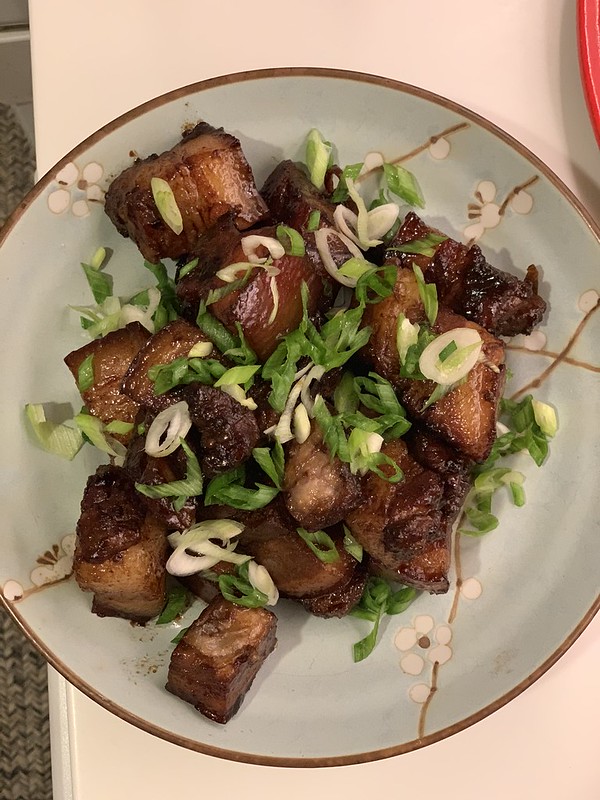
  • What do you feed a boy who just biked 108 miles with an elevation gain of 6,421 feet?

    Ingredients:
    2 pounds pork belly, skin on, in a single piece
    2 tbsps vegetable oil
    2 tbsps brown sugar
    1/2 inch knob ginger, peeled and finely sliced
    3 garlic cloves, finely sliced
    2 scallions, white part only, finely sliced
    2 star anise pods
    1 cinnamon stick
    3 tbsps Shaoxing wine
    1/4 cup light soy sauce
    Steamed rice for serving

    1. Bring a large saucepan of water to a boil over high heat. Add pork belly and cook for 5 minutes. Remove to drain and allow to cool slightly. Slice belly into 1-inch cubes.
    2. Wipe off the same sauce pan and heat the oil over medium heat. Add brown sugar and stir until mixture begins to caramelize, about 1 minute.
    3. Increase heat to high. Add ginger and garlic, and cook, stirring, until fragrant, about 30 seconds. Add star anise and cinnamon stick and cook, stirring, for 30 seconds. Add pork cubes, stirring until the meat is well-coated in caramel. Add soy sauce and Shaoxing wine and stir to combine.
    4. Add enough water to cover the pork and bring it to a boil. Reduce heat to low and simmer uncovered for 2 hours, stirring occasionally until sauce has thickened and is dark brown and glossy. If liquid begins to dry out, add enough water and continue simmering until sauce is sticky.
    5. Serve pork on top of rice, sprinkle with scallions, and top with remaining sticky sauce.

  • For July 4th, we had an awesome time at my friend’s farm in New Jersey. We had all our barbecue items ready until it started raining–the eggplants and corn didn’t make it to the grill. We ended up boiling the corns on the cob and put away the eggplants for later use. I then used the leftover corn and removed the kernels from the cob and mixed them with the eggplant to make this salad.

    Ingredients:
    2 large American eggplants, cut into 1 inch thick wedges
    2 boiled corn on the cob, kernels removed
    a generous handful of cilantro, finely chopped
    about 6 basil leaves, julienned
    1 shallot, finely chopped
    3 garlic cloves, minced
    a few jiggers of red wine vinegar
    cayenne pepper
    salt, pepper, oil

    1. Toss eggplant pieces in some salt. Drizzle some oil until just about glistening but not too wet. The eggplant will absorb most of the oil quickly anyway.
    2. In a skillet, heat some oil and then add the seasoned eggplants. Keep sautéing until cooked through, about 25 minutes. Turn off heat and let cool.
    3. In between sautéing, whisk together 1/3 cup of olive oil with the cilantro, basil, red onion, garlic, red wine vinegar, and cayenne pepper. Season with salt and pepper, and set aside. Stir in the corn kernels until well combined.
    4. Add the cooled eggplants to the corn salsa and toss well. Chill for a few minutes before serving.

  • It’s World Cup time again and I made the bold choice of picking Colombia going all the way since neither the Netherlands and the United States made it. During the first stage when Colombia played Poland, I invited my Colombian neighbors to watch the match in my apartment. They brought their family and we ended up being a full, fun house.

    How do you entertain die-hard Colombian fans watching soccer? You serve them one of their national soups, sancocho. Together with ajiaco, it’s one of the soups that I ended up always ordering while traveling around Colombia a few years ago. I will never forget how hearty it was with the potatoes, plantains, and corn. Even though the weather didn’t call for hot soup then, it didn’t stop me from ordering either one. And now that we are experience a heatwave in New York City, a bowl of it brings back those memories.

    Ingredients:
    7 cloves garlic
    3 medium carrots, chopped
    1 red bell pepper, deseeded, chopped
    1 green bell pepper, deseeded, chopped
    1 small white onion, chopped
    1 habañero chile, chopped
    1 bunch cilantro, chopped in 3 parts
    3 low-sodium chicken bouillon cubes
    1 tbsp cumin, grounded
    salt, pepper
    1 3-to 4-pound chicken, cut into 8 pieces
    1 small yucca, peeled, cut into 2-inch pieces
    1 green plantain, peeled, cut into 2-inch pieces
    2 ripe plantains, peeled, cut into 3-inch pieces
    5 medium-sized potatoes, quartered
    4 ears corn, cut in 3 pieces

    1. In a food processor, purée the garlic, carrots, peppers, onion, chile, and cilantro.
    2. In a large pot, combine the purée with about 1 gallon of water, the bouillon cubes, and cumin, and season with salt and pepper. Bring to a boil, lower the heat, and simmer for 30 minutes.
    3. Add the chicken pieces and simmer for another 20 minutes.
    4. Add the yucca and green plantain and simmer for 10 minutes more. Add the ripe plantains, potatoes, and corn and simmer for another 15 minutes or until the potatoes are cooked.

    Related post/s:
    Try the Colombian ajiaco too

  • Thanks to Christopher Kimball’s free Milk Street recipes every Tuesday, I always get an idea of what I can make for dinner that week. Za’atar is a Mediterranean spice blend that a lot of people use to grill meats. I was craving that grilled flavor, but because I don’t own a grill and I don’t really want to turn the oven on when it’s 90 degrees outside, I wanted some thinly-sliced meat that will cook through fast.

    The Arabic word za’atar also means “thyme”, but I didn’t have it handy so I skipped it in my own version and just made do with what I had in my pantry. The cumin made the chicken very earthy while the sumac added that lemon tartiness that lightened up the whole meal. I really liked the parsley-scallion salad idea here–I never thought I can make a “salad” out of 2 simple ingredients. It was the perfect match to this very flavorful chicken.

    Ingredients:
    For the za’atar:
    1 tbsp sumac
    1 tbsp cumin, grounded
    1 tbsp sesame seeds
    1 tbsp oregano
    1 tsp salt

    3 boneless chicken breasts, thinly sliced
    3 tbsps flour
    a handful of parsley
    2 scallions, chopped
    1 tbsp lemon zest
    lemon juice
    oil, salt, pepper

    1. Mix all your za’atar ingredients in a small bowl and transfer to a plate so it’s easier to coat the chicken. Set aside. Put the flour on a different plate and also set aside.
    2. Pound the chicken so they’re thinner and faster to cook through. Lay plastic wrap on a chopping block and put the chicken side by side on top of the wrap. Cover with another sheet of wrap. Gently pound with a rolling pin or a heavy knife handle. Pound until the chicken pieces are about half a thumbnail thin.
    3. Season the chicken with salt and pepper. Then cover with your homemade za’atar spices; shaking off the excess.
    4. Heat a large skillet and add some oil until shimmering. Now cover the spiced chicken pieces with flour; also shaking off the excess. Then add them to the pan and fry each side for 3 minutes. Use a grill press if you have one to weigh the chicken down. Do this in batches if your skillet is not big enough.
    5. Make your quick salad while cooking the chicken. In a bowl, combine the parsley and scallions, and season with some oil, zest, and lemon juice. Massage with your hands to mix well.
    6. When the chicken pieces are golden brown, remove to a plate and top with the parsley salad.

  • I can’t seem to get rid of the carrots and celery in my fridge. As I get ready for my big trip to Paris and San Sebastian this year, I need to clear the fridge to avoid as much food waste as possible. What else can I do with carrots and celery besides mirepoix for stews and soups? It’s been raining all week anyway and the sleepy weather calls for a spring stew that’s hearty at the same time.

    Chuck is the meat from around the shoulder of the cow; it’s a relatively cheap cut with good flavor and lots of connective tissue and fat, making it a very appealing choice for this stew. I had everything else in my pantry except the meat, but because I didn’t want to overbuy, I opted for loose beef chuck from my neighborhood butcher. Instead of buying them weighed and packaged from the supermarket, I asked for 5 2-inch pieces so that I just had enough for 3 servings.

    Ingredients:
    1/2-lb of beef chuck, about 5 pieces of 2-inch cuts
    1 small shallot, chopped
    1 carrot, chopped
    3 ribs celery, chopped
    a small knob of Parmesan and its rind
    1 can of chickpeas, washed and drained
    1 box of chicken broth
    2 scallions, chopped
    a handful of parsley, roughly chopped
    1 can of water chestnuts, washed and drained
    alfalfa sprouts, for garnish
    oil, salt, pepper

    1. In a deep skillet, heat some oil. Season beef pieces with salt and pepper, then add to pot to brown all sides.
    2. Add shallots and cook until translucent. Add carrots and sauté for a few minutes. Add the celery and the cheese and keep sautéing until flavors meld.
    3. Add the chickpeas and enough broth to cover the beef halfway. Cover and simmer for 1 hour, checking often to make sure that it’s not drying up. When the sauce thickens before the beef is cooked through, add just enough broth to keep cooking the meat.
    4. When the beef is easy to pull apart with a knife and fork, fold in the scallions and parsley to combine. Add a little more broth if necessary. You don’t want it to be too soupy, but you also don’t want it to be too thick. The cheese should be holding up the dish’s saltiness and umami flavor.
    5. Turn off the heat and add the water chestnuts. Mix to warm them with the rest of the stew. Ladle in a shallow bowl and top with alfalfa sprouts.

    Related post/s:
    This Cuisinart 5-1/2-Quart Saute Pan is deep enough for stews like this

  • I can’t even begin to tell you how much citrus-flavored pancakes I’ve been eating in the last few months. It might be the long-awaited spring weather, but all I’ve been wanting is that tangy taste with my fluffy carbs. On Mother’s Day, I had an incredible pistachio almond cake that was also gluten-free; I couldn’t believe how far gluten-free choices have come. I was inspired to do something similar for my niece’s 8th birthday, but with that subtle citrus taste.

    Did you know that tangerines belong in the mandarin sub-group? Therefore, all tangerines are classified as a type of mandarin orange, but not all mandarin oranges are tangerines. Got that? The tangerines in the supermarket were a little too wrinkled for my taste, so I opted for a bag of mandarins instead. Their peel is smoother and tighter and lends to easier zesting.

    And that’s really the only work you’ll do here. Once you zest all your mandarins and lemon, everything else is a matter of using your mixer and getting everything throughly combined. I burned mine a bit at 50 minutes, so I’m reducing the time here to 40. Feel free to add sliced blanched almonds to your batter. I had them on hand, but totally forgot to use them!

    Ingredients:
    5 mandarins, throughly washed and wiped dry
    1 lemon, throughly washed and wiped dry
    4 eggs
    1 cup sugar
    3 cups almond flour
    1 tsp baking powder
    1 small knob of butter, room temperature
    confectioner’s sugar for dusting

    1. Using a fine grater, grate all the mandarins for their zest. Do the same for the lemon. Set aside.
    2. Using an electric mixer, beat the eggs and sugar until light and creamy. Fold in the almond meal, both zests, baking powder. Mix until well combined.
    3. Coat the bottom and sides of a 9″ spring form pan. Pour the batter and try to even out with a spatula.
    4. Preheat oven at 350º. Bake for 40 minutes, or until lightly golden and a toothpick inserted in the center comes out clean. If the cake is browning too fast, cover loosely with a sheet of foil. Cool on a rack for 10 minutes, then remove from the pan to finish cooling. Dust with confectioner’s sugar.

    Related post/s:
    The Microplane Classic Zester and Grater is one of my most used tools in my kitchen

  • What do you do when you have enough farm eggs to last you for a few weeks? You have 2 eggs for breakfast everyday of course, but you also have eggs for dinner.

    This tagine, d’jaj souiri, is different from your traditional Moroccan tagine because it has a more Spanish influence: the eggs like a tortilla, or a Spanish omelet.

    Ingredients:
    3 chicken legs
    1 white onion, chopped
    saffron threads
    1 cinnamon stick
    5 eggs
    1/4 tsp cinnamon powder
    1/4 tsp cumin, grounded
    juice from 1 lemon
    a handful of parsley, finely chopped
    paprika
    oil, salt, peper

    1. Brown the chicken pieces by heating some oil in a deep, large skillet and then adding and cooking them until they are golden brown on both sides. Remove them to a plate.
    2. Using the same skillet, add a little more oil. Saute the onions, add saffron, and the cinnamon stick. Season with salt and pepper and then add 4 cups of water.
    3. Add the chicken and turn up the heat to boil. And then cover and turn down the heat medium-low. Let simmer for 25 minutes.
    4. In the meantime, beat the eggs in a bowl and season with cinnamon, cumin, salt, and pepper.
    5. Uncover the skillet and turn the chicken over. Continue to cook, uncovered, to thicken the sauce.
    6. Stir in the parsley and lemon juice. Pour the beaten egg all over the chicken and let it set, about 5 minutes. Sprinkle with paprika.